Dhaulagiri Base Camp Hidden Valley Trek - 19 Days

Dhaulagiri Base Camp Hidden Valley Trek - 21 Days
  • Duration19 Days
  • DestinationNepal
  • Difficulty Level Moderate Trek
  • Maximum Altitude 5,360 meters (17,585 ft)
  • Activity trekking
  • Group Size 1 - 20
  • Accommodation teahouse, Hotel
  • Meals Breakfast, Lunch, Dinner
  • Best Season Sept to November

Introduction

Some treks take you through beautiful scenery, and then there are journeys that fundamentally reshape the way you understand the world and your own place in it. The Dhaulagiri Base Camp Hidden Valley Trek belongs without question in that second, far rarer category. This is a 19-day expedition into the heart of one of the most remote, powerful, and visually overwhelming mountain landscapes on the surface of the planet  a route that carries you from the subtropical warmth of Nepal's lower river valleys all the way to the glacial silence of Dhaulagiri Base Camp, perched at 3,810 meters at the foot of the world's seventh-highest mountain.

Dhaulagiri, rising to a staggering 8,167 meters, translates from Sanskrit as "White Mountain",  a name that makes complete and immediate sense the moment its colossal south face fills your field of vision. Located in the western region of Nepal, this massif is surrounded by no fewer than 15 neighboring peaks above 7,000 meters, creating a mountain amphitheater of almost fictional grandeur. The Dhaulagiri base camp elevation sits at 3,810 meters, while the trek's maximum point,  the legendary French Pass, reaches a breathtaking 5,360 meters, making this one of the highest and most demanding trekking routes available to non-technical trekkers anywhere in the Himalayas.

The Dhaulagiri base camp trek is not a single-note adventure. It is a complete Himalayan experience layered with ecological diversity, cultural richness, historical mountaineering significance, and raw natural spectacle. The Dhaulagiri route weaves through ancient rhododendron forests, climbs over technically demanding high passes, crosses living glaciers, descends into the uninhabited Hidden Valley,  a secret alpine plateau that very few outsiders ever witness,  and ultimately exits through the legendary Kali Gandaki gorge near the charming village of Marpha. The Dhaulagiri base camp trekking experience begins with a guided sightseeing day in Kathmandu and ends with a scenic mountain flight from Jomsom to Pokhara, with every day in between earning its place in your permanent memory.

Why Choose the Dhaulagiri Circuit Trek?

With so many extraordinary trekking routes available in Nepal, the Everest Base Camp trail, the Annapurna Circuit, Langtang Valley, Manaslu Circuit, the reasonable question is why the Dhaulagiri circuit trek deserves your particular attention. The answer unfolds across several deeply compelling dimensions that distinguish this route from virtually everything else in the Himalayan trekking world.

Raw, Uncompromised Wilderness

The Dhaulagiri hike takes you into territory that the vast majority of trekkers in Nepal never see. While the Everest and Annapurna corridors have become increasingly well-traveled and commercially developed, the Dhaulagiri route remains beautifully, almost fiercely remote. The trail passes through zones so isolated that human footprints in the snow feel genuinely remarkable, places where the silence is absolute, the wildlife is undisturbed, and the landscape operates entirely on its own ancient terms. The Hidden Valley itself is a geographic secret: a vast, uninhabited glacial plateau ringed by peaks and ice that feels completely disconnected from the modern world. Reaching it is both a physical achievement and an experience of pure, unmediated wilderness that stays with you permanently.

The High Passes (French Pass and Thapa Pass)

The Dhaulagiri circuit trek is defined by its high-altitude crossings, and these passes are not casual affairs. The French Pass at 5,360 meters,  the route's maximum altitude point, is a serious alpine crossing involving pre-dawn starts, snow and ice terrain, and the physical and mental demands that come with moving your body at an elevation where the atmosphere contains roughly half the oxygen available at sea level. The Thapa Pass (Dhampus Pass) at 5,182 meters provides a second major crossing on the descent side. Standing atop either pass with Dhaulagiri blazing above you and the Hidden Valley spread silently below is an experience that belongs in an entirely different category from ordinary trekking achievement; it is one of those rare moments that people describe as genuinely life-changing, and that description is not an exaggeration.

The Italian Base Camp 

One of the most distinctive elements of the Dhaulagiri base camp route is the passage through the Italian Base Camp, a location whose name references the pioneering Italian mountaineering expeditions that used this site as their staging point during the first attempts on Dhaulagiri's summit in the mid-twentieth century. Trekking through this camp, you're walking in the footsteps of some of the most significant figures in Himalayan climbing history, and that historical dimension adds a layer of meaning to the physical journey that purely scenic routes simply cannot offer. There is also a reference to a Japanese Base Camp Dhaulagiri in the area's mountaineering history, further underlining how this mountain drew the world's greatest climbers for decades before its summit was finally reached.

Cultural Richness at Every Elevation

The Dhaulagiri round trek isn't exclusively a wilderness experience; it's also a journey through living Himalayan communities whose warmth and hospitality are legendary. The lower trail sections pass through villages where life moves in deep connection with the rhythms of the mountain seasons, and the approach to Marpha, the jewel of the Kali Gandaki valley, famously located in the deepest gorge in the world, delivers one of the most charming and culturally rich village experiences available on any trekking route in Nepal. Whitewashed stone houses, ancient monastery bells, apple orchards producing the famous local brandy, and the particular human warmth of the Thakali people make Marpha a highlight that lingers in the memory long after the passes have faded into general recollection.

Who Should Do the Dhaulagiri Circuit Trek?

Honesty matters here. The Dhaulagiri base camp trek is classified as one of the most challenging trekking routes in all of Nepal, and that classification is accurate and important. This is not a route designed for beginners or casual hikers looking for a relaxed mountain walk; it demands genuine physical fitness, proven high-altitude experience, and a mental resilience that can sustain effort and composure across multiple consecutive demanding days.

Experienced trekkers who have already completed routes like Everest Base Camp, Annapurna Base Camp, or the Manaslu Circuit, and found themselves hungry for something harder, wilder, and more remote, will find the Dhaulagiri circuit to be the natural and deeply satisfying next step. Prior experience trekking above 4,000 meters is genuinely important, not just helpful: your body needs to have demonstrated that it can acclimatize to serious altitude without developing dangerous symptoms.

Adventure seekers and explorers who crave experiences that push them beyond comfortable assumptions about their own limits will find this trek deeply rewarding. The combination of glacier crossings, remote terrain, challenging passes, and the extraordinary destination of the Hidden Valley creates an adventure of a quality and depth that is genuinely difficult to find elsewhere.

Photographers and nature enthusiasts will find the Dhaulagiri route almost overwhelming in its visual richness. The combination of massive Himalayan peaks, ancient glaciers, hidden valleys, flowering alpine meadows, and culturally fascinating villages creates an environment that makes every camera feel slightly inadequate to the task.

If you are a first-time trekker or have never trekked above 3,000 meters, this is not the right starting point, but it is an excellent long-term goal to build toward, and the commitment of preparing for it over 12–18 months will transform your fitness, your trekking skills, and your understanding of what you're capable of.

What Makes the Dhaulagiri Circuit Trek Special?

Several elements distinguish the Dhaulagiri base camp hidden valley trek from every other route in Nepal's extraordinary trekking portfolio, and together they create an experience that is genuinely unique in the world.

The Hidden Valley access is the most obvious differentiator. Very few trekking routes on Earth deliver you into a place as genuinely remote, pristine, and secret-feeling as Dhaulagiri's Hidden Valley, a high-altitude plateau that sits behind the French Pass in a kind of geographic concealment, invisible from the standard valleys below and accessible only via the demanding high pass crossing. Entering the Hidden Valley for the first time, after the physical effort of the French Pass, produces an emotional response that experienced trekkers consistently describe as one of the most powerful moments of their entire trekking lives.

The Dhaulagiri base camp weather and landscape environment are another distinctive element. At base camp, you are in a world shaped entirely by ice and altitude, a raw, moraine-strewn landscape where the Dhaulagiri base camp temperature can plunge well below freezing even in the trekking seasons, where glaciers groan and shift in the darkness, and where the south face of the mountain rises thousands of meters above your sleeping bag in a display of geological power that is almost impossible to mentally prepare for. This is not managed adventure tourism; this is the real Himalaya, unfiltered and unapologetic.

The route's ecological vertical range is extraordinary even by Himalayan standards. In a single trek, you move through subtropical forest, temperate woodland, alpine meadow, glacial moraine, and permanent snow, a full vertical transect of Nepal's mountain ecosystems that delivers a naturalist's paradise alongside the physical challenge.

Conclusion

The Dhaulagiri Base Camp Hidden Valley Trek is one of those rare travel experiences that genuinely delivers on its most ambitious promises. From the moment you leave the Kathmandu valley and begin the journey west toward the world's seventh-highest mountain, through the ecological diversity of the lower forests, across the demanding high passes at over 5,000 meters, into the secret world of the Hidden Valley, and back down through the deep cultural warmth of Marpha and the Kali Gandaki gorge,  every single element of this 19-day journey has been designed to create something lasting, meaningful, and irreplaceable.

The Dhaulagiri base camp trek cost reflects a comprehensive package that removes the logistical complexity from the adventure and lets you focus entirely on the experience, the mountains, the silence, the effort, and the extraordinary reward of standing in places that most people on Earth will never see. If the Dhaulagiri hike is calling to you,  if reading about the French Pass crossing or the Hidden Valley or the Italian Base Camp produces that particular pull of recognition in your chest, that instinct is worth following. Dhaulagiri is waiting, and it will deliver everything it promises.
Highlights
  • Dhaulagiri Base Camp, high passes,
  • Glacier trek, Treken Valley,
  • Monastery visit, Superb mountain views, spectacular scenery,
  • an impressive display of wild flowers, picturesque villages such as Marpha
  • the deepest gorge of the world, friendly people
Itinerary

Your journey begins at Kathmandu's Tribhuvan International Airport, where a trek representative meets you and transfers you to your hotel in approximately 40 minutes through the city's legendary, lively streets. The rest of the day is entirely free recover from your flight, explore the incense-filled alleys of Thamel in the evening, sample your first plate of dal bhat, and let Kathmandu's ancient, chaotic energy begin the process of shifting your mind away from ordinary life and toward the mountains that are waiting ahead.

  • Max. Altitude:1300m
  • Accommodation:Hotel
  • Time:40 mins drive from airport
  • Meals:Dinner

An early morning departure kicks off a long travel day roughly a 7–8 hour drive west through Pokhara and onward along mountain roads to Beni, the gateway town where Nepal's road network finally surrenders to the trail. After lunch in Beni, you strap on your pack and begin your first proper hike to Darbang at 1,030 meters, crossing suspension bridges over turquoise rivers and passing through lower villages buzzing with afternoon activity. This first stretch of footpath marks the true beginning of the adventure the moment the road disappears behind you and the mountains take over completely.

  • Max. Altitude:1,030m
  • Accommodation:Teahouse, Darbang
  • Time:2–3 hours
  • Meals:Breakfast, Lunch, Dinner

The trail from Darbang to Sibang moves through some of the most ecologically lush terrain of the entire route subtropical forests dripping with ferns and rhododendrons, log bridges over rushing streams, and small settlements where the hospitality is immediate and genuine. The altitude gain is gradual and forgiving, making this a perfect warm-up day that lets your body find its rhythm, your lungs begin adjusting, and your mind settle fully into the slow, purposeful pace of mountain trekking. The forest is alive with birdsong and color, and the first hints of distant white peaks occasionally appear above the ridgelines ahead like quiet promises.

  • Max. Altitude:1,520m
  • Accommodation:Teahouse
  • Time:5–6 hours
  • Meals:Breakfast, Lunch, Dinner

 becomes your constant companion today as the trail follows its churning course through increasingly dramatic gorge scenery sections where the path is literally carved into cliff faces above powerful rapids, and wider stretches where turquoise pools catch the afternoon light beautifully. The settlements grow progressively more remote as you climb toward Muri at 1,840 meters, and the lives playing out along the trail  farmers on terraced hillsides, women carrying enormous loads with effortless composure offer a fascinating and humbling window into a world entirely on its own terms.

  • Max. Altitude:1,840m
  • Accommodation:Teahouse
  • Time:5–6 hours
  • Meals:Breakfast, Lunch, Dinner

Today, the trail pushes deeper into the Myagdi Khola valley, and the sense of entering genuinely remote mountain territory becomes impossible to ignore. Peaks grow larger, vegetation thickens, and then thins, and the wild components of the landscape begin asserting themselves with increasing confidence. Boghara at 1,990 meters is a small but wonderfully welcoming village perched above the river gorge, and evenings here carry a particular magic: the temperature drops sharply after sunset, the teahouse kitchen fire becomes the social heart of the building, and a shared meal of dal bhat in that warm, firelit space with your trekking companions and the lodge family gathered together is one of those understated travel moments that lodges permanently in the memory.

  • Max. Altitude:1,990m
  • Accommodation:Teahouse
  • Time:6 hoors
  • Meals:Breakfast, Lunch, Dinner

Crossing the 2,000-meter threshold today, the landscape shifts noticeably. The subtropical lushness of the lower trail gives way to a drier, cooler alpine environment dominated by oak, juniper, and fern, and the air takes on that distinctive high-country freshness that makes every breath feel unusually satisfying. The trail demands more consistent effort on this day, with longer climbing sections and terrain that rewards careful, deliberate footwork. Dobang at 2,400 meters sits in a narrow valley section with a dramatic mountain backdrop, and arriving here in the late afternoon with the peaks catching the last horizontal light of the day delivers the kind of moment that quietly confirms this whole adventure was the right decision.

  • Max. Altitude:2,400m
  • Accommodation:Teahouse
  • Time:6 to 7 hours trek
  • Meals:Breakfast, Lunch, Dinner

The climb to Shalaghari at 2,820 meters is the day the Dhaulagiri massif truly announces itself, ascending steadily through increasingly alpine terrain. The mountain fills the northern horizon in a way that goes beyond scenic and becomes viscerally, almost confrontationally overwhelming in its scale. The trail crosses exposed ridges and traverses steep hillsides that add genuine adventure texture to the physical challenge, and the silence at Shalaghari after nightfall, deep, absolute, broken only by the occasional distant sound of ice shifting on the upper mountain, is one of those sensory experiences that stays with you for a very long time after the trek is over.

  • Max. Altitude:2,820m
  • Accommodation:Teahouse
  • Time:6–7 hours
  • Meals:Breakfast, Lunch, Dinner

This is the day the trek transforms entirely. The trail to the Italian Base Camp at 3,585 meters carries you across the tree line and into the serious high-altitude zone. Bare alpine meadows give way to glacial moraine, and the scale of the surrounding mountains becomes almost incomprehensible. The Italian Base Camp earned its name from the historic Italian mountaineering expeditions that used this precise location as their staging point during the landmark early attempts on Dhaulagiri's summit, and sleeping here connects you to one of the great chapters of Himalayan climbing history. The evening light on the surrounding peaks from this elevation is one of the most spectacular natural displays on the entire route.

  • Max. Altitude:3,585m
  • Accommodation:Teahouse
  • Time:5 to 6 hours trek
  • Meals:Breakfast, Lunch, Dinner

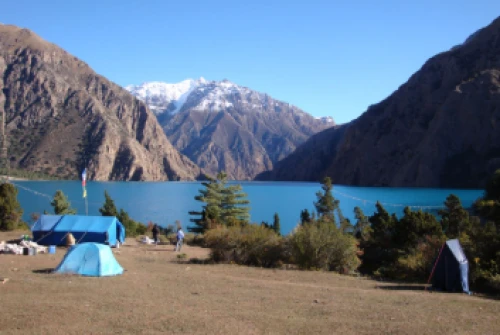
The approach to Dhaulagiri Base Camp crosses raw glacial terrain, moraine ridges, ice-carved valleys, and boulder fields shaped entirely by forces of unimaginable scale and the emotional quality of this walk is unlike anything that has come before. Arriving at 3,810 meters with the south face of Dhaulagiri rising thousands of meters directly above your tent, you are standing at the foot of the world's seventh-highest mountain in one of the most remote locations in all of Nepal, and that fact settles into your chest with a profound, quiet weight that no photograph has ever fully captured.

  • Max. Altitude:3,810m
  • Accommodation:Teahouse
  • Time:5 to 6 hours trek
  • Meals:Breakfast, Lunch, Dinner

This day is a critical physiological investment, not a rest day in any passive sense. Your body needs this full 24 hours at base camp altitude to continue its complex adaptation process increased red blood cell production, adjusted breathing rates, and cardiovascular recalibration that directly determines your safety and performance on tomorrow's French Pass crossing. Spend the morning on a short acclimatization walk above camp, drink water constantly throughout the day, eat well despite any altitude-suppressed appetite, check all gear and cold-weather layers thoroughly, and sleep early. The Dhaulagiri base camp temperature after dark will remind you, unmistakably, that tomorrow demands everything you have.

  • Max. Altitude:3,810m
  • Accommodation:Teahouse
  • Time:1 day
  • Meals:Breakfast, Lunch, Dinner

 This is the defining day of the entire trek. A pre-dawn start at 4:00–5:00 AM launches you into the crossing of the French Pass at 5,360 meters, the route's maximum altitude and the physical and emotional crescendo of the entire 19-day journey. Moving through darkness and bitter cold toward the looming pass by headlamp, climbing the final steep snow and ice slopes with complete focused attention, and then standing at the top with Dhaulagiri blazing above and the vast, silent Hidden Valley spreading out below this is the moment that separates this trek from virtually every other experience in the Himalayan trekking world. Descending into the Hidden Valley's pristine, uninhabited glacial plateau, you enter a place so remote and secret-feeling that even veteran trekkers describe it as one of the most powerful moments of their lives.

  • Max. Altitude:5,360m
  • Accommodation:Teahouse
  • Time:6 to 7 hours trek
  • Meals:Breakfast, Lunch, Dinner

 After the enormous intensity of the French Pass crossing, today offers a welcome and beautiful decompression a descent through the Hidden Valley in morning light that reveals details the previous evening's exhaustion may have obscured: the extraordinary blue of glacial ice, the absolute cathedral silence of an uninhabited plateau, the stark beauty of a landscape that sees very few human footprints in any given year. The trail continues to Yak Kharka at 4,050 meters  the traditional high-altitude grazing grounds where yak herders bring their animals during summer and most trekkers arrive here carrying a genuine lightness, the knowledge that the hardest work is behind them and the descent has truly begun.

  • Max. Altitude:4,050m
  • Accommodation:Teahouse
  • Time:6-7 hours
  • Meals:Breakfast, Lunch, Dinner

One final high-altitude challenge stands between you and the warmth of the Kali Gandaki valley the crossing of Thapa Pass (Dhampus Pass) at 5,182 meters. With the French Pass successfully behind you and your body thoroughly acclimatized, you approach this second great crossing with hard-earned confidence and a very different kind of ease than two days ago.

The descent from Thapa Pass into the Kali Gandaki Valley is one of the great geological revelations of the entire route. The gorge opens below you as the deepest in the world, and walking down into it after weeks in the wild upper reaches delivers a sense of dramatic transition that is almost cinematic. Marpha with its whitewashed stone lanes, apple orchards, ancient monastery bells, and legendary local brandy is the most charming village on the entire route and a profoundly satisfying place to spend the night after everything the mountains have asked of you.

  • Max. Altitude:5,182m
  • Accommodation:Teahouse
  • Time:5 hours
  • Meals:Breakfast, Lunch, Dinner

The trail from Marpha to Jomsom follows the broad, windswept floor of the Kali Gandaki Valley through high-desert scenery that looks more like Central Asia than the Nepal of popular imagination vast gravel flats, wind-sculpted cliffs, and the legendary afternoon gusts that roar up the valley with enough force to genuinely lean into. It is a short, relatively easy day by the standards of what has come before, and the brevity feels like a gift. Jomsom at 2,720 meters is the regional hub of the Mustang district, a proper town with restaurants, guesthouses, and the airstrip that will carry you out tomorrow morning, and after 13 days on remote mountain trails, even small urban comforts feel extraordinarily luxurious.

  • Max. Altitude:2,720m
  • Accommodation:Teahouse
  • Time:3 hours
  • Meals:Breakfast, Lunch, Dinner

The 20-minute mountain flight from Jomsom to Pokhara is one of the most spectacular short flights available anywhere in the world a low-altitude aerial journey that delivers sweeping views of both the Annapurna and Dhaulagiri ranges from an angle that makes even experienced Himalayan trekkers press their faces against the small aircraft windows in silent wonder. Landing at Pokhara's airport and stepping out into the relatively warm, oxygen-rich air of 820 meters produces a physical sensation of almost comic ease breathing feels effortless, movement feels weightless, and every small comfort of the lakeside city feels like an extraordinary luxury after three weeks in the high mountains.

  • Max. Altitude:820m
  • Accommodation:Hotel
  • Time:30 minutes
  • Meals:Breakfast, Lunch, Dinner

The scenic overland drive from Pokhara back to Kathmandu takes approximately 6–7 hours along the Prithvi Highway, cutting through Nepal's beautiful middle hills with continuous views of terraced hillsides, river valleys, and the occasional distant flash of white peaks. It is a day for quiet reflection watching Nepal's landscapes scroll past the window, processing the weight of everything the past two-plus weeks have contained, and beginning the slow, slightly reluctant mental transition back toward ordinary life. Arriving in Kathmandu in the late afternoon, the familiar chaos of the city feels both comforting and slightly surreal after so long in the mountains.

  • Max. Altitude:1,300m
  • Accommodation:Hotel
  • Time:6-7 hours
  • Meals:Breakfast, Lunch, Dinner

A full, unstructured day in Kathmandu after the intensity of the trek feels like an extraordinary gift, and it is entirely yours to spend as you. Explore the UNESCO World Heritage Sites, Boudhanath Stupa, Pashupatinath Temple, or Swayambhunath  that you may only have glimpsed on Day 1. Hunt for the perfect souvenir in Thamel's wonderfully chaotic shopping streets. Sit in a rooftop café and write in your journal. Or do nothing at all and simply let the experience settle into its permanent place in your memory. Your farewell dinner this evening is a genuine celebration of everything you have accomplished  a moment worth savoring fully and completely.

  • Max. Altitude:1300m
  • Accommodation:Hotel
  • Time:1 day
  • Meals:Breakfast, Lunch, Dinner

A final buffer day in Kathmandu serves multiple practical and personal purposes: last-minute souvenir shopping for anyone who ran short on time the previous day, dealing with any loose ends of travel administration, repacking bags that have been living out of for three weeks, and giving yourself a genuinely unhurried morning before the journey home begins. For those with early departure flights, this day provides essential flexibility. For those with later flights, it's one last opportunity to sit with a cup of Nepali chai somewhere beautiful and let Kathmandu do what it does so well: hold you in its ancient, noisy, incense-soaked embrace and remind you that this particular adventure has been genuinely worth every step.

    Your trek representative ensures a smooth, timely transfer to Tribhuvan International Airport for your international departure. As you move through the terminal and board your flight home, you carry something that didn't exist when you arrived: a deep, unshakeable knowledge of what you are capable of when the mountains ask everything of you. The Dhaulagiri Base Camp Hidden Valley Trek doesn't simply give you memories; it gives you a permanently revised understanding of your own limits, and that is a gift the mountains of Nepal have been delivering to those bold enough to accept the invitation for as long as humans have walked into them.

      Cost Details
      Includes
      • All airport/hotel transfers
      • 2 nights hotel in Kathmandu 2 nights in Pokhara
      •  farewell dinner
      • All accommodations and meals during the trek
      • A full-day sightseeing tour in Kathmandu Valley, including tour guide and entrance fees
      • Pickup and drop off to start your trek and from the ending point to your Hotel In Kathmandu or your destination.
      • An experienced English-speaking trek leader (trekking guide), assistant trek leader (6 trekkers:1 assistant guide), and Sherpa porters to carry luggage (2 trekkers:1 porter) including their salary, insurance, equipment, flight, food, and lodging
      •  All Nepal Hiking duffel bag  (to be returned after trip completion)
      • Sleeping bags can be rented fro $30
      • All necessary paperwork and permits (National Park permit, TIMS)
      • A comprehensive medical kit
      • All government and local taxes
      Excludes
      • Meals not specified in the 'Meal Inclusions' in the itinerary.'
      • Travel Insurance
      • International airfare
      • Nepal entry visa
      • Alcoholic, non-alcoholic drinks and water, soft drinks, etc.
      • Hot showers during the trek
      • Personal trekking equipment
      • Tips for trekking staff and driver (Tipping is respected, but it is not obligatory)
      Departure Dates
      Select a Departure Month
      Trip Date PriceStatus 
      Start DateStartsApr 04, 2026End DateEndsApr 22, 2026PriceUS$0StatusAvailable
      Start DateStartsApr 07, 2026End DateEndsApr 25, 2026PriceUS$0StatusAvailable
      Start DateStartsApr 14, 2026End DateEndsMay 02, 2026PriceUS$0StatusAvailable
      Start DateStartsApr 21, 2026End DateEndsMay 09, 2026PriceUS$0StatusAvailable
      Start DateStartsApr 28, 2026End DateEndsMay 16, 2026PriceUS$0StatusAvailable
      Useful Info

      Dhaulagiri Circuit Trek Distance

      The total trekking distance of the Dhaulagiri circuit trek covers approximately 160–170 kilometers of trail across the active trekking days of the itinerary, though this figure varies depending on the specific route variations and any additional acclimatization walks undertaken. Daily distances range from approximately 10 to 18 kilometers, depending on the terrain, with some of the lower valley days covering more ground on relatively gradual paths and the high-altitude days covering less distance but demanding significantly more physical effort per kilometer. The route begins at Beni (reached by an 8-hour drive from Kathmandu via Pokhara), follows the Myagdi Khola valley into the high mountains, reaches Dhaulagiri Base Camp, crosses the French Pass into the Hidden Valley, continues over Thapa Pass to Marpha, and concludes with the Jomsom flight connection to Pokhara. The Dhaulagiri base camp trek map shows a circuit-style route that loops around the Dhaulagiri massif, which is precisely what gives this trek its distinctive character, you approach from one side of the mountain and exit from the other, experiencing the full drama of the massif from multiple angles.

      Highlights of the Dhaulagiri Circuit Trek

      Feature

      Detail

      Maximum Altitude

      5,360m — French Pass

      Dhaulagiri Summit Elevation

      8,167m (7th highest in the world)

      Base Camp Elevation

      3,810m

      Italian Base Camp Altitude

      3,585m

      Trek Duration

      19 Days

      Surrounding Peaks >7,000m

      15 peaks

      Major Passes

      French Pass (5,360m), Thapa/Dhampus Pass (5,182m)

      Special Features

      Hidden Valley, glacier trekking, the deepest gorge in the world

      Starting Point

      Beni (via 8-hour drive from Kathmandu)

      End Point

      Jomsom (mountain flight to Pokhara)

      Trek Style

      Circuit (approach and exit via different valleys)

      The visual and experiential highlights of the route include: standing at Dhaulagiri Base Camp with the south face towering above; the pre-dawn crossing of the French Pass and first entry into the Hidden Valley; glacier trekking through genuinely wild alpine terrain; the historical significance of the Italian Base Camp Dhaulagiri; the village of Marpha in the world's deepest gorge; the mountain flight from Jomsom to Pokhara; and the extraordinary ecological diversity of the route from subtropical forest to permanent snow.

      Maximum Altitude of the Dhaulagiri Circuit Trek

      The maximum altitude of the Dhaulagiri circuit trek is 5,360 meters, reached at the summit of the French Pass on Day 12 of the itinerary. This is a serious altitude that demands thorough acclimatization preparation. At 5,360 meters, the available oxygen is approximately 50% of what exists at sea level, and your body's physical performance is significantly reduced even with full acclimatization. The Dhaulagiri base camp altitude of 3,810 meters is where the dedicated acclimatization day (Day 11) takes place before the high pass push, and this preparation is physiologically critical. The Italian Base Camp Dhaulagiri sits at 3,585 meters and marks the entry into the serious high-altitude zone. Other significant altitude points include Shalaghari at 2,820 meters, Dobang at 2,400 meters, and Boghara at 1,990 meters on the ascent profile.

      Understanding the Dhaulagiri base camp altitude profile is important for preparation: the route gains elevation gradually over the first 9 days, allowing meaningful progressive acclimatization before the high pass crossing. This intelligent altitude gain structure is one of the reasons that well-prepared trekkers with appropriate prior experience successfully complete this route; the body has time to adapt if the itinerary is respected and the acclimatization day is used properly.

      Accommodation During the Dhaulagiri Circuit Trek

      Accommodation on the Dhaulagiri base camp trek follows the characteristic pattern of remote Himalayan trekking: comfortable teahouse lodges in the lower and middle sections of the route, transitioning to more basic mountain camps in the upper reaches. In Kathmandu (Days 1–2) and Pokhara (Days 16–17 on return), you'll stay in well-appointed hotels with all expected amenities, private rooms, hot showers, reliable Wi-Fi, and a full range of dining options. These bookend days represent the package's most comfortable accommodation, and they serve as both a comfortable introduction and a well-earned recovery space at the journey's end.

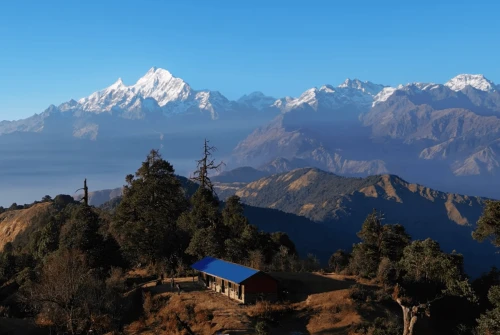
      Through the lower and middle sections of the trek, from Darbang through Boghara, Dobang, Shalaghari,  accommodation is in family-run teahouse lodges that provide basic but perfectly adequate private or dormitory rooms, communal dining rooms serving hot meals, and the essential warmth of a mountain kitchen fire in the evenings. These teahouses are the social heart of the Dhaulagiri trekking experience: the places where guides, porters, trekkers, and local families share space and stories in the particular intimate way that only remote mountain travel creates.

      In the high-altitude sections, at the Italian Base Camp and Dhaulagiri Base Camp itself, accommodation transitions to mountain camps with tents, sleeping bags (available to rent for $30 through the package), and the elemental simplicity that comes with sleeping at nearly 4,000 meters with a glaciated 8,000-meter peak filling the sky above you. The Hidden Valley section similarly involves camping, with the extraordinary addition of knowing that you are spending the night in one of the most remote and rarely visited places in all of Nepal.

      Level of Difficulty on the Dhaulagiri Circuit Trek

      The Dhaulagiri circuit trek is officially graded as strenuous to highly challenging, the most demanding category in standard Himalayan trekking classification. This grading reflects the combination of several distinct difficulty factors that operate simultaneously throughout the route.

      Altitude is the primary challenge. Reaching 5,360 meters at the French Pass requires your body to function effectively in an environment of significantly reduced oxygen availability, and the physiological demands of altitude,  increased breathing effort, reduced appetite, disturbed sleep, and potential headaches are constant companions in the upper sections. Daily trekking duration averages 6–8 hours per day across the active trekking days, with some of the high-altitude sections requiring even longer efforts due to slower movement at reduced oxygen levels. The remoteness of the route adds a dimension of psychological challenge that shouldn't be underestimated. On many sections of the Dhaulagiri trail, you are genuinely far from any evacuation route, and self-sufficiency and mental resilience become important qualities.

      The glacier sections and snow crossings, particularly on the approach to and crossing of the French Pass, require careful technique and complete attention, though they are manageable with proper footwear and the guidance of your experienced trek leader. The Dhaulagiri base camp temperature in the evenings and early mornings at high altitude can fall well below freezing even in the trekking seasons, requiring quality cold-weather gear and the mental adjustment to moving and functioning in genuinely cold mountain conditions.

      Best Time for the Dhaulagiri Circuit Trek

      The best time for the Dhaulagiri circuit trek falls into two distinct windows that offer the most reliable weather, safest pass conditions, and most spectacular mountain views.

      Spring (March to May) is widely considered the premier trekking season for the Dhaulagiri route. The rhododendron forests in the lower and middle elevations reach their full, explosive bloom through March and April, painting the trail in crimson and pink across elevations from 2,000 to 3,500 meters. The skies are generally stable and clear in the mornings, the temperatures at altitude are cold but manageable, and the overall conditions on the high passes, while still demanding serious respect, are typically more stable than in other seasons. May brings warmer temperatures throughout, but can introduce the first hints of pre-monsoon instability in the afternoons.

      Autumn (September to November) is the other ideal window, offering what many experienced Himalayan trekkers consider the clearest mountain visibility of the year. The post-monsoon clarity that settles over Nepal in late September and October produces mountain views of extraordinary sharpness,  the kind that make even veteran trekkers stop mid-stride and simply stare. October is generally regarded as the single best month for high-altitude trekking in Nepal, combining excellent visibility, stable weather patterns, and comfortable daytime temperatures across most elevation zones.

      Winter (December to February) is technically possible for highly experienced and well-equipped trekkers, but the high passes,  particularly the French Pass at 5,360 meters, can become genuinely dangerous under heavy snow and ice, and the extreme cold at altitude requires serious expedition-grade equipment. The monsoon season (June to August) is strongly not recommended due to heavy rainfall, trail erosion, leeches in the lower sections, and significantly reduced visibility that can obscure the mountain views that are the entire point of the journey.

      Food and Drinks on the Dhaulagiri Circuit Trek

      The food and drinks situation on the Dhaulagiri trek follows a pattern familiar to experienced Nepal trekkers, though with some important specifics given the route's remote nature. In the lower and middle sections, the trail's teahouses serve a reliable rotation of Himalayan trekking staples: dal bhat (the iconic lentil soup and rice combination that is simultaneously Nepal's national dish and the most practical high-energy trekking fuel in existence), noodle soups, fried rice, pasta, eggs prepared in various ways, pancakes, porridge, and the inevitable Snickers bars and instant noodles that appear on every Himalayan menu above a certain altitude. Dal bhat is genuinely the recommended choice; it's filling, nutritious, freshly prepared, and culturally authentic, and most teahouses offer unlimited refills as part of the standard serving.

      All breakfasts, lunches, and dinners throughout the trek are included in the package price, removing any logistical uncertainty about meals. Beverages, however,  including water, soft drinks, tea, coffee, and any alcoholic drinks, are not covered and must be purchased separately. It is strongly recommended to drink bottled or purified water throughout the trek rather than tap water, and to budget accordingly for this expense. At higher elevations where teahouses are less established or non-existent, the trekking team carries essential food supplies to ensure that nutrition remains consistent even in the most remote sections of the route. The Dhaulagiri base camp weather and temperature make hot drinks,  particularly ginger tea, lemon honey tea, and the ubiquitous black tea with milk, both a comfort and a practical warming tool throughout the colder upper sections.

      Insurance Required for the Dhaulagiri Circuit Trek

      Travel and trekking insurance is not optional on the Dhaulagiri circuit trek — it is an absolute necessity, and this point cannot be stated emphatically enough. The route reaches altitudes above 5,000 meters in genuinely remote terrain, and the combination of altitude-related illness risk, terrain-related injury possibility, and distance from medical facilities means that you must be properly covered before departure.

      Your insurance policy must specifically include high-altitude trekking coverage up to at least 6,000 meters (policies that only cover standard travel activities will be insufficient), emergency helicopter evacuation (helicopter rescue is frequently the only viable emergency evacuation option in this terrain, and costs can reach $5,000–$10,000 or more without coverage), and medical treatment costs for conditions including altitude sickness in its various forms. Verify that your policy covers the specific maximum altitude of this trek, 5,360 meters at the French Pass, and that helicopter evacuation from remote high-altitude locations is explicitly included, not merely implied.

      The package includes a comprehensive medical kit carried by your trekking team, which covers basic treatment for altitude sickness symptoms, injuries, digestive issues, and other common trail medical situations. Your lead guide is trained in wilderness first aid and altitude sickness recognition and response. However, none of this replaces personal travel insurance; it supplements it. Purchase your policy before departing your home country, keep the emergency contact numbers accessible at all times during the trek, and ensure your guide has a copy of your policy details.

      Trekking Permits Required for the Dhaulagiri Circuit Trek

      The Dhaulagiri circuit trek passes through protected mountain territory that requires specific official permits, all of which are included in the package price and handled entirely by your trekking team on your behalf,  eliminating one of the more administratively complex elements of independent trekking in Nepal.

      The Annapurna Conservation Area Permit (ACAP) is required for the sections of the route that fall within the Annapurna Conservation Area's jurisdiction, including the lower Myagdi valley approach sections and the Mustang district exit via Marpha and Jomsom. The TIMS Card (Trekkers' Information Management System) is a mandatory registration document required for all trekking routes in Nepal, providing the authorities with a record of trekkers operating in the backcountry and enabling rescue coordination if needed. Both permits are processed in Kathmandu on Day 2 of the itinerary (trek preparation day), using your passport details to generate the official documentation. Your guide carries these permits throughout the trek and presents them at the various checkpoints along the route. You simply need to ensure your passport is available for the processing step.

      It is worth noting that permit requirements and fees in Nepal are periodically reviewed and updated by the government, so confirming current requirements with your operator shortly before departure is always a sensible step.

      Tips for the Dhaulagiri Circuit Trek

      Start physical preparation at least 3–6 months before departure. The fitness demands of the Dhaulagiri base camp trek are serious, and arriving underprepared is genuinely risky at these altitudes and in this terrain. Focus on cardiovascular endurance (running, cycling, swimming), leg and core strength training, and weekend hiking with a weighted pack that simulates the actual experience of moving over varied mountain terrain with gear. The more physically prepared you are before arrival, the more you will enjoy the trek itself. There is a significant difference between surviving the daily distances and truly experiencing them.

      Respect the acclimatization schedule absolutely. The itinerary's built-in acclimatization day at Dhaulagiri Base Camp is not a day to push yourself harder or attempt optional extra ascents beyond what your guide recommends. This is a physiological investment time, and the return on that investment is directly expressed in your performance and safety on the French Pass crossing. The golden rule of high-altitude trekking, climb high, sleep low, applies throughout.

      Pack layers, not bulk. The Dhaulagiri base camp temperature varies enormously across the trek's elevation range, from warm and humid in the lower subtropical sections to genuinely arctic at the high passes. A well-considered layering system, moisture-wicking base layers, insulating mid-layers, and a quality windproof and waterproof outer shell- is far more effective and versatile than any single heavy garment. Quality trekking boots that are already broken in before you arrive are non-negotiable.

      Hydrate aggressively and consistently. At altitude, your body loses moisture faster than it does at sea level, and dehydration is one of the primary contributors to altitude sickness symptoms. The daily rule is simple: drink enough water that your urine remains clear throughout the day. This may seem basic, but it requires consistent, deliberate effort when you're physically tired, and the temperature is cold enough to suppress your natural thirst signals.

      Trust your guide completely. Your English-speaking lead guide has extensive experience on the Dhaulagiri route and carries both the technical knowledge and the local intuition that makes the difference between a safe, successful expedition and a dangerous situation. When your guide makes recommendations about pace, timing, weather, or health, listen carefully and follow the advice. Their job is to get you to the Hidden Valley and back safely, and respecting their expertise is fundamental to that outcome.

      Tip your trekking staff generously. While tips are entirely optional and not included in the package price, they are deeply appreciated and genuinely meaningful to guides and porters whose income from trekking work supports their families in mountain communities where economic opportunities are limited. A thoughtful tip at the end of the trek is one of the most direct and personal ways of acknowledging the skill, dedication, and care that your team brings to the experience every single day.