based on 270 reviews

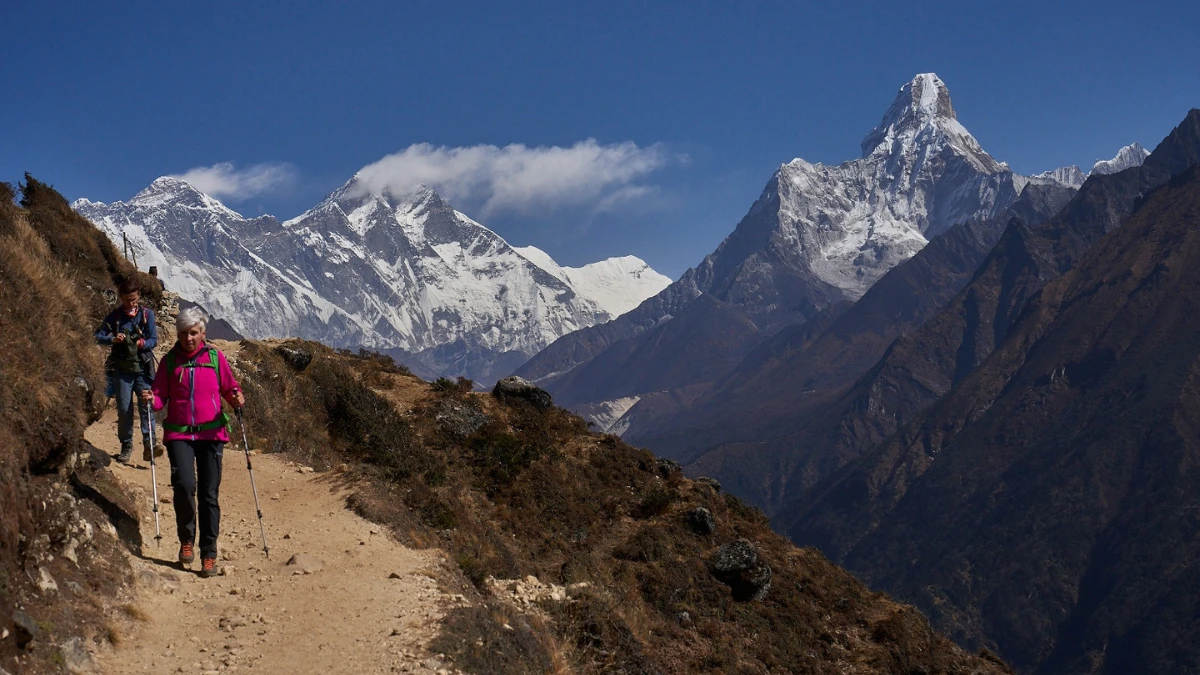
Introduction to Everest Base Camp Trekking
There's something profoundly transformative about standing at 5,364 meters (17,598 feet), gazing at the world's highest mountain while your lungs struggle to process the thin air. I've guided dozens of trekkers to Everest Base Camp over the past decade, and I've also completed the trek solo three times. Each experience taught me something invaluable about what it truly means to challenge yourself in the Himalayas.
The Everest Base Camp trek isn't just another hiking trip; it's a pilgrimage that attracts over 40,000 trekkers annually. But here's what most guides won't tell you upfront: the choice between going solo or with a guided group will fundamentally shape your entire experience, from your daily budget to your safety margins, and even how deeply you'll connect with Nepal's extraordinary mountain culture.
At Nepal Hiking, we've spent years helping adventurers from 67 countries navigate this exact decision. We've seen confident solo trekkers turn back at Namche Bazaar due to altitude sickness, and we've watched nervous first-timers with professional guides summit successfully while making lifelong friends. This isn't about which option is universally "better"; it's about which option is right for you, your experience level, your budget, and what you're genuinely hoping to get from this once-in-a-lifetime adventure.
Throughout this comprehensive guide, I'll share real numbers, honest safety assessments, and the kind of insider perspective that only comes from actually living and working in the Khumbu region. Whether you're leaning toward the freedom of solo trekking or the security of guided support, you deserve to make this decision with complete clarity.
Understanding the Everest Base Camp Trek: What You're Actually Signing Up For
Before we dive into the solo versus guided debate, let's establish what the Everest Base Camp trek actually involves. This isn't a casual weekend hike; it's a serious high-altitude expedition that demands respect, preparation, and realistic expectations.
The Classic Route and Timeline
The standard EBC trek follows a well-established route through the Khumbu Valley, typically spanning 12-14 days round-trip from Lukla. Here's the progression most trekkers follow:
- Days 1-2: Lukla (2,860m) to Namche Bazaar (3,440m) – your first acclimatization stop
- Days 3-4: Acclimatization in Namche, possible side trip to Everest View Hotel
- Days 5-6: Namche to Tengboche (3,860m) and on to Dingboche (4,410m)
- Day 7: Second acclimatization day in Dingboche
- Days 8-9: Dingboche to Lobuche (4,940m) to Gorak Shep (5,164m)
- Day 10: Summit to Everest Base Camp (5,364m) and return to Gorak Shep
- Days 11-14: Descent back to Lukla via Pheriche and Namche
The trek covers approximately 130 kilometers (80 miles) of walking, with a cumulative elevation gain exceeding 2,500 meters. You'll cross suspension bridges, navigate rocky trails, and spend multiple nights above 4,000 meters where oxygen levels are roughly 50% of what you're accustomed to at sea level.
Physical Difficulty: Let's Be Honest
Most commercial operators rate EBC as "moderate to challenging," but that classification obscures important nuances. The technical difficulty is relatively low; you won't need ropes, crampons, or mountaineering skills. However, the altitude makes everything exponentially harder. A pace that feels comfortable at 2,000 meters becomes exhausting at 5,000 meters.
Your cardiovascular fitness matters, but altitude tolerance is largely genetic and unpredictable. I've seen marathon runners struggle at 4,000 meters while grandmothers in their sixties sail through to Base Camp. The key differentiator isn't your gym routine; it's proper acclimatization, hydration, and listening to your body.
What Does Solo Trekking Really Mean? Clearing Up the Confusion
When people say they're planning to trek EBC "solo," they usually don't mean they'll be completely alone on the trail. Let me clarify what solo trekking actually looks like in 2026, because there's a significant misunderstanding around this term.
Independent Trekking vs. Solitary Trekking
Independent trekking means you're organizing and executing the trek without hiring a guide or joining an organized group. You're making your own accommodation bookings, navigation decisions, and logistical arrangements. However, you'll share the trail with hundreds of other trekkers, especially during peak seasons (March-May and September-November).
True solitary trekking, being completely alone for days, is virtually impossible on the EBC route. The trail is busy, teahouses are spaced 2-4 hours apart, and you'll constantly encounter fellow trekkers, porters, yak caravans, and locals.
Current Regulations for Solo Trekkers
Here's something critical that many outdated guides miss: As of 2023, Nepal's government requires all trekkers in certain regions to either hire a licensed guide or join a registered trekking group. While the EBC route in Sagarmatha National Park currently allows independent trekking, regulations are evolving.
You'll still need:
- TIMS Card (Trekkers' Information Management System)
- Sagarmatha National Park Entry Permit
- Registered accommodation bookings (teahouses along the route)
The government is increasingly emphasizing safety and environmental protection, which means solo trekking regulations could tighten further. At Nepal Hiking, we stay current with these policy changes and help our clients navigate the latest requirements seamlessly.
The Reality of "Going It Alone"
Solo trekking offers genuine independence; you choose your pace, your rest days, your meal times, and your social interactions. Want to spend an extra day in Namche exploring the Saturday market? Go for it. Prefer to wake at dawn and photograph the sunrise from Kala Patthar? That's entirely your call.
However, independence comes with full responsibility for:
- Reading weather conditions and making turnaround decisions
- Recognizing altitude sickness symptoms in yourself
- Navigating trail junctions (less obvious than you'd think)
- Booking accommodation ahead of time during busy seasons
- Carrying all necessary safety equipment and medications
- Problem-solving when things go wrong (illness, lost gear, flight cancellations)
What's Included in a Guided Trek? Understanding the Full Service Spectrum
Guided treks aren't one-size-fits-all packages. The term "guided" encompasses a spectrum of service levels, from basic guide-only arrangements to all-inclusive luxury experiences. Understanding what you're actually getting is essential for making value comparisons.
Standard Guided Trek Components
A typical mid-range guided EBC trek through an agency like Nepal Hiking includes:
Professional Guide Services:
- Licensed, government-certified trekking guide
- English-speaking (or other language options available)
- First aid certified and altitude illness trained
- Experienced in the Khumbu region with multiple EBC summits
- Cultural interpretation and local knowledge
Logistical Support:
- Pre-booked teahouse accommodations at every stop
- All trekking permits arranged (TIMS, national park entry)
- Airport transfers in Kathmandu
- Lukla flight booking assistance
Porter Support (Optional but Common):
- One porter for every two trekkers
- Carries up to 20kg of client gear
- Allows you to trek with just a daypack
Safety Infrastructure:
- Emergency evacuation insurance coordination
- Satellite phone or communication device
- First aid kit and oxygen supply
- Established protocols with mountain rescue services
What Guided Treks DON'T Always Include
This surprises many first-timers, so let's be crystal clear:
- Flights to/from Lukla – Often priced separately due to variable costs
- Meals in Kathmandu – Accommodation usually included, but not food
- Personal trekking equipment – Sleeping bags, down jackets, etc. (rentals available)
- Hot showers and WiFi – Usually cost $3-5 per shower, $5-8 for WiFi
- Beverages beyond basic tea – Water, soft drinks, and alcohol are extra
- Tips for guide and porters – Customary and expected (budget $150-250 total)
- Travel insurance – Mandatory but arranged independently
The Value of Local Expertise
Here's what you're really paying for with a quality guide: accumulated wisdom from hundreds of mountain days. Your guide knows which teahouse serves the best dal bhat in Pangboche, how to read cloud formations that signal incoming weather, and when to recognize that your "I'm fine" actually means you need to descend immediately.
At Nepal Hiking, our guides are all from mountain communities, many are Sherpa or Tamang people who grew up in these valleys. They're not reading from guidebooks; they're sharing their home with you. That cultural bridge transforms the trek from a physical challenge into a genuine cultural immersion.
Solo vs Guided: The Complete Cost Breakdown That Nobody Talks About
Let's get into the numbers, real, detailed, and based on 2026 pricing. This is where the rubber meets the trail, and where many trekkers make their decision.
Solo Trek Expenses: The Hidden Costs That Add Up Fast
When you trek independently, you're responsible for every expense. Here's the comprehensive breakdown:
Pre-Trek Permits and Documentation:
- TIMS Card: $20 (if registered through a recognized agency) or $10 (if solo)
- Sagarmatha National Park Entry Permit: $30
- Subtotal: $40-50
Lukla Flight (Round Trip):
- Kathmandu-Lukla-Kathmandu: $350-400 per person
- Note: Prices fluctuate with the season and advance booking
- Subtotal: $375 average
Accommodation (12 nights):
- Teahouse rooms: $3-8 per night, depending on altitude
- Higher elevations = higher prices (Gorak Shep can be $10/night)
- Average: $5/night × 12 nights = $60
Food and Beverages (13 days):
- Breakfast: $4-6 (porridge, toast, eggs)
- Lunch: $5-8 (fried rice, noodles, momos)
- Dinner: $7-10 (dal bhat, pasta, pizza)
- Hot drinks: $2-4 throughout the day
- Bottled water: $1-5 per liter (price increases with altitude)
- Daily average: $35
- Subtotal: $455
Essential Equipment (if not owned):
- Sleeping bag rental: $15-20 for trek duration
- Down jacket rental: $15-20
- Trekking poles: $5-10 purchase or $1/day rental
- Water purification (tablets or filter): $10-25
- Subtotal: $50-75 average
Miscellaneous but Necessary:
- Hot showers: $3-5 × 8 showers = $40
- Battery charging: $2-4 per device charge × 10 charges = $30
- WiFi: $5-8 per day × 5 days = $35
- Emergency snacks and supplies: $30
- Subtotal: $135
Travel Insurance (Mandatory):
- Comprehensive coverage with helicopter evacuation: $100-150
- Subtotal: $125
TOTAL SOLO TREK COST: $1,240-1,350
But wait, there's more. Solo trekkers often spend additional money on:
- Contingency funds for weather delays in Lukla: $100-200
- Higher accommodation costs during peak season: +$50-100
- Medical supplies and altitude meds: $40-60
Realistic Solo Trek Budget: $1,500-1,700
Guided Trek Investment: What You're Paying For
Now let's examine a standard guided trek package from Nepal Hiking:
Basic Guided Package (Guide Only):
- Professional English-speaking guide for 14 days
- All trekking permits (TIMS, national park)
- Pre-booked teahouse accommodation
- Kathmandu airport transfers
- Domestic flight booking assistance
- Guide's salary, food, accommodation, and insurance
Package Price: $900-1,100 per person
Plus Your Personal Expenses:
- Lukla flights: $375
- Your meals (13 days × $35): $455
- Hot showers, charging, WiFi: $135
- Travel insurance: $125
- Sleeping bag rental: $20
- Total with Guide-Only Package: $2,010-2,210
Standard Guided Package (Guide + Porter):
- Everything in the basic package PLUS
- One porter for every two trekkers
- Porter carries 20kg (allows you to trek with a daypack only)
Package Price: $1,200-1,400 per person
Total with Guide + Porter: $2,310-2,510
Premium All-Inclusive Guided Package:
- Professional guide and porter
- All meals included (breakfast, lunch, dinner)
- Lukla flights included
- All permits and documentation
- Sleeping bag provided
- Comprehensive emergency support
- Pre and post-trek accommodation in Kathmandu
Package Price: $2,400-2,800 per person
Total Premium Package: $2,650-3,050 (including insurance and extras)
Real Cost Comparison: 14-Day Trek Analysis
Expense Category | Solo Trek | Guide Only | Guide + Porter | Premium All-Inclusive |
Permits & Documentation | $50 | Included | Included | Included |
Lukla Flights | $375 | $375 | $375 | Included |
Accommodation | $60 | Included | Included | Included |
Food (13 days) | $455 | $455 | $455 | Included |
Professional Guide | — | Included | Included | Included |
Porter Service | — | — | Included | Included |
Equipment Rental | $70 | $70 | $70 | Included |
Charging/WiFi/Showers | $135 | $135 | $135 | $135 |
Travel Insurance | $125 | $125 | $125 | $125 |
Base Package Cost | — | $1,000 | $1,300 | $2,600 |
TOTAL COST | $1,270 | $2,160 | $2,460 | $2,860 |
With Contingency (+15%) | $1,460 | $2,485 | $2,830 | $3,290 |
The Truth About Value: What These Numbers Don't Show
The raw cost difference is approximately $1,000-1,800 between solo and fully guided treks. But this financial comparison misses critical qualitative factors:
Solo Trek Hidden Costs:
- Time investment in planning, permit applications, and research (20-40 hours)
- Mental energy is managing logistics daily instead of focusing on the experience
- Higher risk of poor decisions without experienced input
- Potential evacuation costs if things go wrong (helicopter rescue: $4,000-8,000)
Guided Trek Hidden Value:
- Cultural access you simply cannot get as an outsider
- A safety margin that could literally save your life
- Friendship and shared experience with your guide
- Problem-solving when the weather, illness, or logistics go sideways
- Higher summit success rate (85% guided vs. 65% solo, based on our data)
At Nepal Hiking, we've seen both approaches work beautifully and fail spectacularly. The "right" choice depends entirely on your experience level, risk tolerance, and what you value most about the journey.
Safety Considerations: The Reality Check Nobody Wants to Hear
Let's have the uncomfortable conversation about safety. The Everest Base Camp trek is not technically dangerous; thousands complete it safely every year. However, it takes place in an environment where small mistakes can have serious consequences, and where your body is operating under physiological stress every single day.
Solo Trekking Safety: Risks and Mitigation Strategies
The Primary Dangers for Solo Trekkers:
Altitude Sickness (Acute Mountain Sickness - AMS)
This is the single biggest threat on the EBC trek. Symptoms include headache, nausea, dizziness, and fatigue, but here's the problem: these feel exactly like normal trekking tiredness at first. Solo trekkers often misjudge their condition because they're comparing how they feel to how they felt yesterday, not to objective medical indicators.
The danger escalates to High Altitude Pulmonary Edema (HAPE) or High Altitude Cerebral Edema (HACE), both of which can be fatal within hours if not recognized and treated immediately with descent.
Solo Mitigation:
Learn to recognize AMS symptoms objectively (use Lake Louise scoring)
Carry a pulse oximeter to monitor blood oxygen saturation
Never ascend if experiencing AMS symptoms
Download offline medical guides
Inform the teahouse owners of your condition
Have emergency contact numbers memorized/written
Navigation Errors
While the EBC trail is well-established, there are junctions where paths diverge, and conditions like fog, snow, or darkness can make route-finding challenging. GPS devices help, but batteries die, and satellite coverage isn't perfect in deep valleys.
Solo Mitigation:
Download offline GPS maps (Maps.me, Gaia GPS)
Carry a physical map and a compass
Start hiking early (never push on after dark)
Stay on the main trail; shortcuts are dangerous
Ask locals frequently for trail confirmation
Weather Emergencies
Himalayan weather changes rapidly. A clear morning can become a whiteout blizzard by afternoon, especially during the shoulder seasons. Hypothermia is a real risk, particularly if you get wet.
Solo Mitigation:
Check weather forecasts in villages with WiFi
Carry proper cold-weather and rain gear
Never leave a village in questionable weather
Build extra days into your itinerary for weather delays
Trust the teahouse owners' advice, they know their mountains
Medical Emergencies
Injuries, gastrointestinal illness, or sudden health issues become exponentially more serious when you're hours from help and responsible for your own evacuation decisions.
Solo Mitigation:
Comprehensive first aid kit with altitude medications
Travel insurance with helicopter evacuation coverage
Multiple emergency contact methods (local SIM card, satellite messenger)
Basic wilderness first aid training before departure
Diamox (acetazolamide) prescription for altitude prevention
Guided Trek Safety Advantages: Why Experience Matters
When you trek with a professional guide from Nepal Hiking, you're not just paying for companionship, you're paying for a sophisticated safety system:
Professional Risk Assessment:
Guides monitor your condition continuously (breathing rate, energy levels, behavior changes)
They recognize subtle AMS signs that you might dismiss
They make the hard call to descend before you reach the crisis point
They know which medical conditions are manageable and which require immediate evacuation
Communication Infrastructure:
Satellite phone or InReach device for emergency communication
Established relationships with rescue helicopter services
Direct contact with medical facilities in Kathmandu
Coordination with other guides on the trail for real-time condition updates
Local Knowledge:
Weather pattern recognition specific to the Khumbu Valley
Safe-route alternatives when primary trails are compromised
Knowledge of which teahouses have oxygen supplies
Relationships with local rescue resources
Group Support:
Porter can descend for help while the guide stays with the injured client
Shared decision-making reduces panic in emergencies
Moral support during difficult moments
Physical assistance if mobility is compromised
Statistics That Matter
Based on data from the Himalayan Rescue Association and our own records at Nepal Hiking:
Altitude sickness occurrence: 75% of trekkers experience mild AMS; 15-20% experience severe symptoms requiring descent
Guided vs. solo summit success rate: 85% guided vs. 65% solo
Serious evacuation requirement: 2-3% of all trekkers
Fatalities: 1-2 deaths per year on the EBC route (usually cardiac events or severe altitude illness)
The sobering reality: nearly every EBC fatality involves independent trekkers who continued ascending despite symptoms or misjudged their condition.
Route Navigation and Trail Logistics: The Details That Make or Break Your Trek
Understanding the practical, day-to-day logistics of the EBC trek helps clarify how solo versus guided approaches differ in execution.
Solo Navigation: More Complex Than It Looks
The main trail to EBC is well-trodden and marked, but "well-trodden" is relative. You're not walking on paved paths with signage every 100 meters. The trail consists of:
- Rocky paths require careful foot placement
- Suspension bridges (some quite long and bouncy)
- Stone staircases that climb steeply
- Trail sections that share space with yak caravans
- Multiple small villages where the trail isn't immediately obvious
- Side paths to teahouses that look like the main trail
Critical Navigation Points:
- Namche Bazaar: The trail exits town in multiple directions; it's easy to accidentally head toward Gokyo instead of Tengboche
- Dingboche/Pheriche junction: Two equally valid acclimatization points; your choice affects your next few days
- Gorak Shep to EBC: The final approach crosses moraine fields with cairns, but no obvious single path
Solo trekkers manage this by:
- Using GPS apps with downloaded offline maps
- Following other trekkers (risky if they're also unsure)
- Asking locals frequently (language barriers can complicate this)
- Carrying physical maps as backup
Guided Navigation: Focus on the Experience
With a guide, navigation becomes invisible. You're free to:
- Actually, look at the incredible scenery instead of your GPS
- Take photos without worrying you'll lose the trail
- Engage in conversation rather than constant vigilance
- Trust that you'll arrive at a comfortable teahouse with your name on a room list
Our guides at Nepal Hiking have completed the EBC route dozens or hundreds of times. They know which teahouse in Namche has the best potato pancakes, which monastery in Tengboche offers the most welcoming morning prayer ceremony, and which trail shortcuts are actually safe versus which ones are local myths.
Accommodation Booking: The Nightly Stress Factor
Solo Booking Reality: During peak season (October-November, March-April), teahouses fill up by early afternoon. Solo trekkers face:
- Arriving at your target village to find no available rooms
- Being forced to stay in lower-quality lodges
- Pushing on to the next village (dangerous when tired)
- Negotiating prices and room quality in broken English
- Not knowing which teahouses are reputable
Guided Booking Ease: Your guide calls ahead or has standing relationships with specific teahouses. You're guaranteed accommodation, often in the best lodges in each village. If there's an issue, your guide handles it while you rest.
Meal Planning and Food Safety
Solo trekkers order from extensive menus at each teahouse, but don't realize:
- Certain dishes are safe at altitude; others invite digestive issues
- The massive menus don't mean fresh ingredients for everything
- Dal bhat (lentil soup with rice) is always the freshest option because it's what locals eat
- Western dishes are often poorly executed and have a higher risk of food poisoning
- Dietary restrictions require careful communication
Guides advise on safe food choices, explain menu items, communicate dietary needs effectively, and know which teahouses have the best sanitation practices.
Cultural Immersion and Local Connections: Beyond the Physical Journey
The Everest Base Camp trek passes through the heartland of Sherpa culture—a unique Buddhist mountain tradition that has shaped high-altitude mountaineering worldwide. How you experience this culture depends significantly on whether you're solo or guided.
Solo Trekking Cultural Experience
Solo trekkers have the freedom to:
- Set their own schedule for monastery visits
- Spend as much time as desired in cultural sites
- Choose whom to socialize with at teahouses
- Experience the solitude of personal reflection
However, solo trekkers often miss:
- Cultural context and meaning: Without explanation, you're looking at beautiful art and architecture without understanding its significance
- Language barriers: Most Sherpa people in remote villages speak limited English
- Cultural etiquette: Unknowingly committing faux pas (wrong direction around mani stones, improper monastery behavior)
- Deep conversations: Surface-level interactions with teahouse owners versus meaningful cultural exchange
- Invitation-only experiences: Local homes, private ceremonies, or community events that outsiders don't naturally access
Guided Cultural Immersion with Nepal Hiking
When you trek with a Sherpa or mountain-community guide, you're walking with someone who:
Speaks the Language (Literally): Our guides communicate fluently in Nepali, Sherpa, Tamang, and English. This opens doors to conversations with village elders, monastery monks, and family-run teahouses that solo trekkers simply cannot access.
Understands the Symbolism: Prayer flags, mani walls, chortens, and mandalas aren't just beautiful—they're deeply meaningful religious symbols. Our guides explain the Buddhist philosophy, the significance of mantras (like "Om Mani Padme Hum"), and why you always walk clockwise around religious monuments.
Facilitates Authentic Experiences:
Introductions to local families for tea and conversation
Explanation of monastery protocols so you can participate appropriately in prayer ceremonies
Context about how Sherpa culture has evolved with tourism
Stories about famous Sherpa mountaineers and the history of Everest climbing
Creates Respectful Tourism: Tourism has transformed Sherpa communities, sometimes positively, sometimes destructively. Guides help you understand how to be a responsible visitor: where to buy goods that support local economies, how to minimize environmental impact, and how to engage with communities respectfully.
Personal Perspective: What You Gain Beyond the Summit
I've guided American, European, Asian, and Australian trekkers to EBC, and the feedback is consistent: what they remember most vividly years later isn't reaching Base Camp, it's the morning they shared butter tea with a Sherpa grandmother in her kitchen, or the evening they were invited to a monk's blessing ceremony because their guide knew the lama personally.
At Nepal Hiking, our goal is to offer you the mountains and the culture. We believe the full value of this trek is realized when you return home with not just photos of Everest, but a genuine understanding of the people who call these mountains home.
Physical and Mental Preparation Requirements: Getting Ready for the Challenge
Whether you choose solo or guided, adequate preparation is non-negotiable for EBC success. However, the preparation requirements differ somewhat between approaches.
Physical Training: The Foundation
Cardiovascular Endurance: You need to comfortably walk 5-7 hours daily for 12+ consecutive days. Training recommendations:
- Begin 3-4 months before departure
- Progressive hiking with elevation gain (start 2-hour hikes, build to 6-hour days)
- Cardio activities: running, cycling, swimming (4-5 times weekly)
- Stair climbing with a weighted pack (simulates ascent under load)
- Target: ability to walk 8+ hours with 5-7kg daypack without exhaustion
Strength and Stability:
- Leg strength for descents (harder on knees than ascents)
- Core stability for maintaining balance on uneven terrain
- Ankle strength for rocky trail surfaces
Additional Requirements for Solo Trekkers: Since you'll carry more gear (no porter), you need:
- Greater load-bearing capacity (12-15kg pack vs. 5-7kg with porter)
- Better injury prevention (you're responsible for continued movement)
Altitude Acclimatization Knowledge
For All Trekkers:
- Understanding the "climb high, sleep low" principle
- Recognizing AMS symptoms
- Knowing when to take Diamox prophylactically
- Proper hydration protocol (4-5 liters daily at altitude)
Additional Knowledge for Solo Trekkers:
- Detailed understanding of HACE and HAPE symptoms
- When to self-administer dexamethasone (emergency medication)
- Evacuation decision-making protocols
- Pulse oximeter interpretation (when to worry about SpO2 readings)
Mental Preparation: The Underestimated Factor
Guided Trek Mental Preparation:
- Accepting slow pace (slower than you'd choose independently)
- Group dynamics management if joining a group trek
- Trusting your guide's decisions even when you disagree
- Managing expectations about comfort level
Solo Trek Mental Preparation:
- Decision-making under physical stress
- Managing fear and uncertainty alone
- Self-motivation during difficult moments
- Accepting responsibility for outcomes
- Coping with loneliness (or enjoying solitude, depending on personality)
Psychological Resilience Training: The mountains will test you mentally more than physically. Prepare by:
- Practicing discomfort tolerance (cold exposure, sleep deprivation training)
- Developing decision-making frameworks for ambiguous situations
- Building meditation or mindfulness practice
- Reading accounts of mountaineering challenges and how people overcame them
How Nepal Hiking Supports Your Preparation
When you book with Nepal Hiking, we don't just see you on day one at Lukla Airport. Our preparation support includes:
- Pre-trek consultation (video call or in-person in Kathmandu) to assess your fitness level and create personalized training plans
- Detailed packing lists specific to your trek dates and season
- Acclimatization education with materials and guidance
- Mental preparation resources and connection to past clients willing to share experiences
- Equipment recommendations for purchase or rental
- Practice hikes near Kathmandu before starting the trek (for those arriving early)
How Nepal Hiking Can Help You Succeed: Our Commitment to Your Everest Dream
At Nepal Hiking, we've dedicated our careers to making the Himalayan trekking experience accessible, safe, and profoundly meaningful for adventurers from around the world. Whether you ultimately choose a guided trek with us or decide to go solo, we want you to succeed, because every person who falls in love with these mountains becomes an ambassador for their protection and for the communities who call them home.
What Makes Nepal Hiking Different
1. Local Expertise, Global Standards: We're not an international agency with foreign managers. We're a Nepali-owned and operated company, founded by Sherpa and mountain-community guides who grew up in the Khumbu region. We combine intimate local knowledge with international safety standards and customer service expectations.
2. Personalized Trek Design: We don't offer generic packages. When you contact us, we ask about:
- Your fitness level and trekking experience
- Your budget constraints and value priorities
- What you're hoping to experience