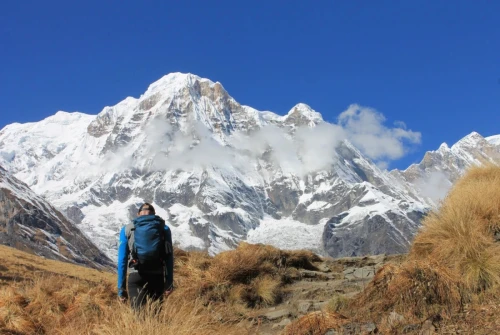
What is the Everest 3 Passes Trek in the Everest Region?
The Everest Three Passes Trek is widely considered the ultimate trekking circuit in Nepal. Unlike the standard EBC Trek, which is a linear route (up and back the same path), the Three Passes Trek forms a high-altitude loop around the Khumbu region.
It’s designed for experienced trekkers who want to see every corner of the Everest massif, explore remote valleys, and experience the majesty of the Himalayas without the heavy crowds found on the EBC trail.
The Three Legendary Passes
The trek is named after the three massive Himalayan passes it crosses. Each sits above 5,300 meters (17,388 ft) and presents unique challenges and views:
Kongma La (5,535 m / 18,159 ft)
The highest and often most difficult pass of the trek.
Connects Chhukung to Lobuche.
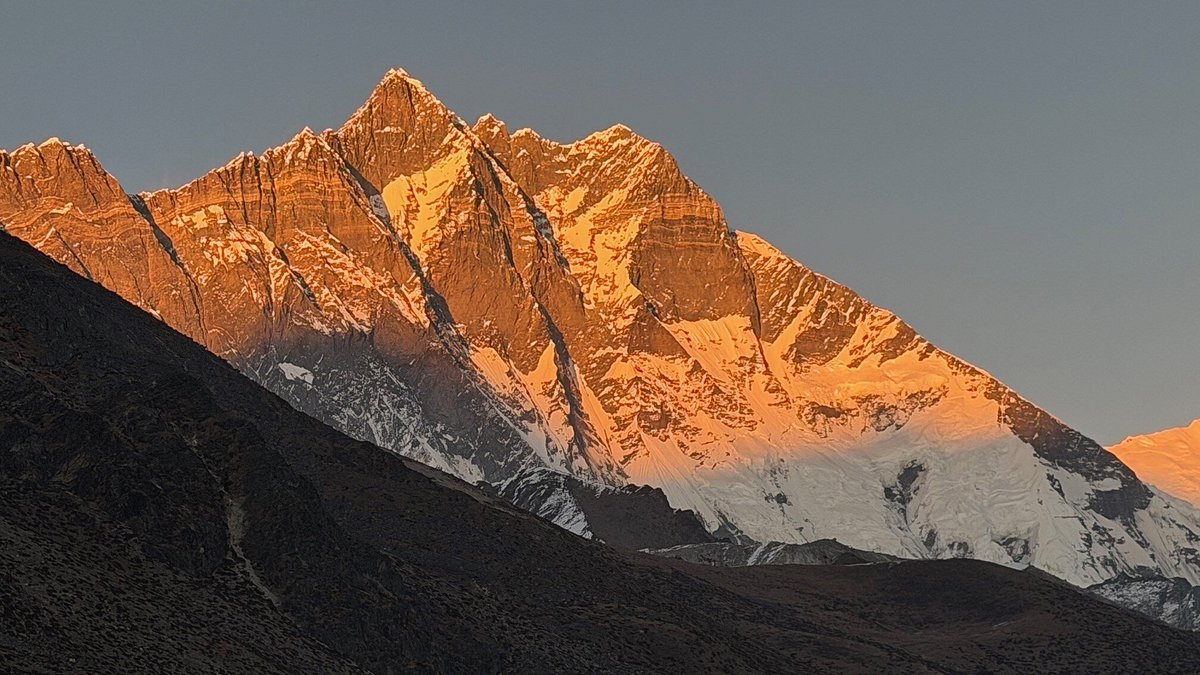
Offers breathtaking views of Lhotse and Makalu.
Cho La (5,420 m / 17,783 ft)
The most famous and technical pass.
Requires crossing a small, icy glacier (microspikes or crampons are essential).
Connects the Everest Base Camp area to the Gokyo Lakes region.
Renjo La (5,360 m / 17,588 ft)
Often called the Panoramic Pass.
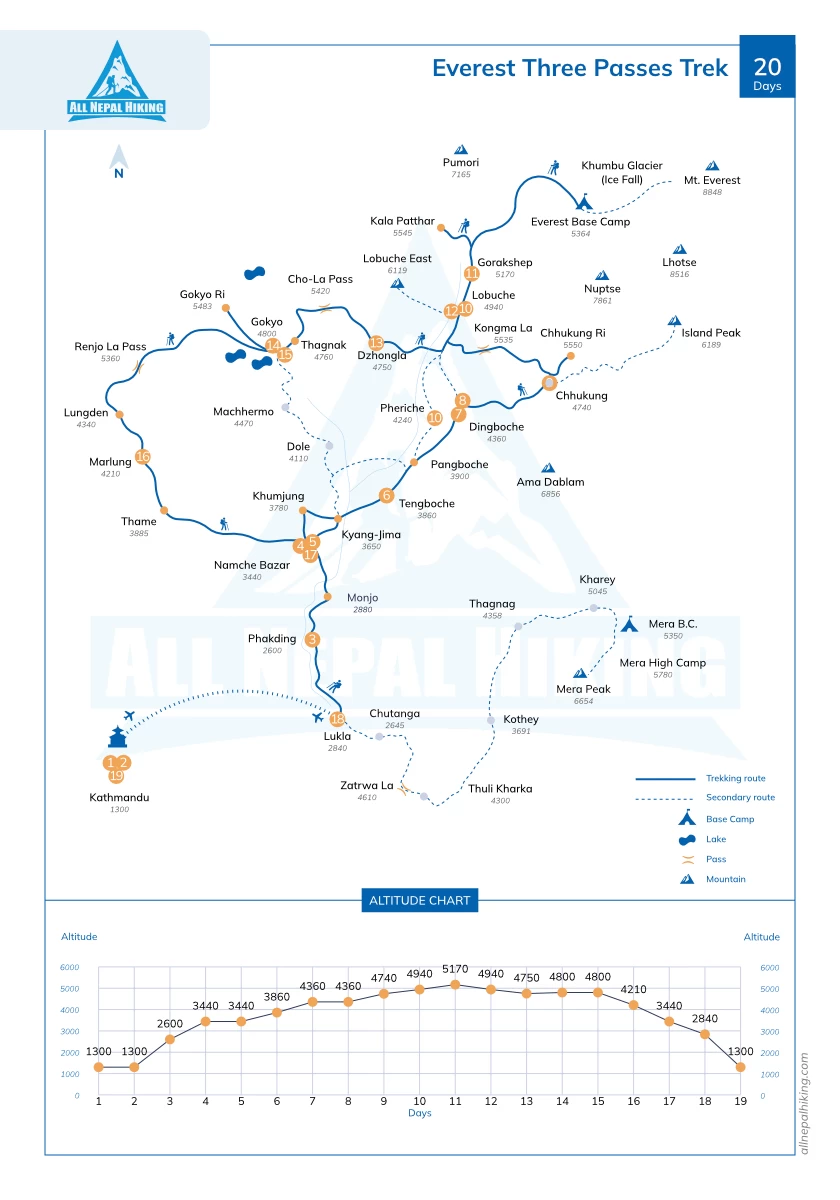
Provides one of the best views in the world: a wide-angle look at Mount Everest, the Ngozumpa Glacier, and the turquoise Gokyo Lakes all at once.
These three passes are what make the trek challenging, rewarding, and truly unique.

Beyond the Passes The Three Peaks
Most itineraries in 2026 include side-hikes to three non-technical peaks that serve as world-class viewpoints:
Kala Patthar (5,550 m / 18,208 ft)
Gokyo Ri (5,357 m / 17,575 ft)
Offers views of four 8,000m peaks: Everest, Cho Oyu, Makalu, and Lhotse.
A steep but non-technical climb.
Chhukung Ri (5,550 m / 18,208 ft)
Essential Quick Facts
Detail | Description |
Duration | 17–20 Days |
Difficulty | Strenuous (previous high-altitude experience recommended) |
Best Season | March–May (Spring) & September–November (Autumn) |
Daily Trekking | 6–9 hours on pass days |
Required Permits | Sagarmatha National Park Permit & Khumbu Rural Municipality Permit |
The Everest Three Passes Trek is not just a trek, it's a high-altitude adventure loop that lets you experience the full grandeur of the Khumbu region. From crossing three legendary passes to climbing viewpoint peaks like Kala Patthar, Gokyo Ri, and Chhukung Ri, trekkers get a 360° experience of Everest and its surrounding giants.
It is strenuous and requires good preparation, but for those who love high mountains, remote villages, and the thrill of glaciers and passes, this trek is the gold standard of Himalayan trekking.
Where is the Everest Three Passes Trek?
The Everest Three Passes Trek is located in the Solukhumbu District of northeastern Nepal, entirely within the boundaries of Sagarmatha National Park, a UNESCO World Heritage Site. Unlike the standard Everest Base Camp (EBC) trek, which is linear, this trek forms a 166 km (103 mile) loop that circles the most iconic Himalayan peaks, including Mount Everest, Lhotse, Nuptse, and Cho Oyu.
The Gateway to Lukla & Namche Bazaar
Lukla (2,860 m / 9,383 ft)
Starting point for almost all trekkers.
Accessible by a 35-minute flight from Kathmandu to the Tenzing-Hillary Airport.
Small airport, high-altitude landing, famous for its challenging approach and stunning views.
Namche Bazaar (3,440 m / 11,285 ft)
Known as the Sherpa Capital.
Amphitheater-shaped village and last major hub before entering high-altitude wilderness.
Essential stop for rest, acclimatization, and supplies.
The Three Everest Valleys
The trek loops through three Himalayan valleys, each with its own scenery, culture, and trekking experience:
Imja Valley (East)
Includes Dingboche and Chhukung.
Gateway to the first pass, Kongma La.
Offers some of the best views of Ama Dablam and the jagged eastern peaks.
Khumbu Valley (Center)
Known as the Everest Highway.
Home to Everest Base Camp and the Khumbu Glacier.
Bustling trail, popular among trekkers for classic Everest vistas.
Gokyo Valley (West)
Famous for the Gokyo Lakes and the Ngozumpa Glacier (Nepal’s largest glacier).
Accessed via the Cho La Pass.
Quieter, more remote, and considered one of the most photogenic sections of the trek.
Geographical Landmarks
Here’s how the trek sits in the broader Himalayan geography:
North: Borders Tibet (China).
East: Adjacent to Makalu Barun National Park.
West: Leads toward the Thame Valley, a traditional salt-trading route to Tibet.
In short, the Everest Three Passes Trek isn’t just a trek; it’s a high-altitude circuit of the Everest region, covering Lukla, Namche, Imja Valley, Khumbu Valley, and Gokyo Valley, all within Sagarmatha National Park. Trekking this route gives adventurers the most complete experience of the world’s tallest mountains, glacial landscapes, and Sherpa culture.
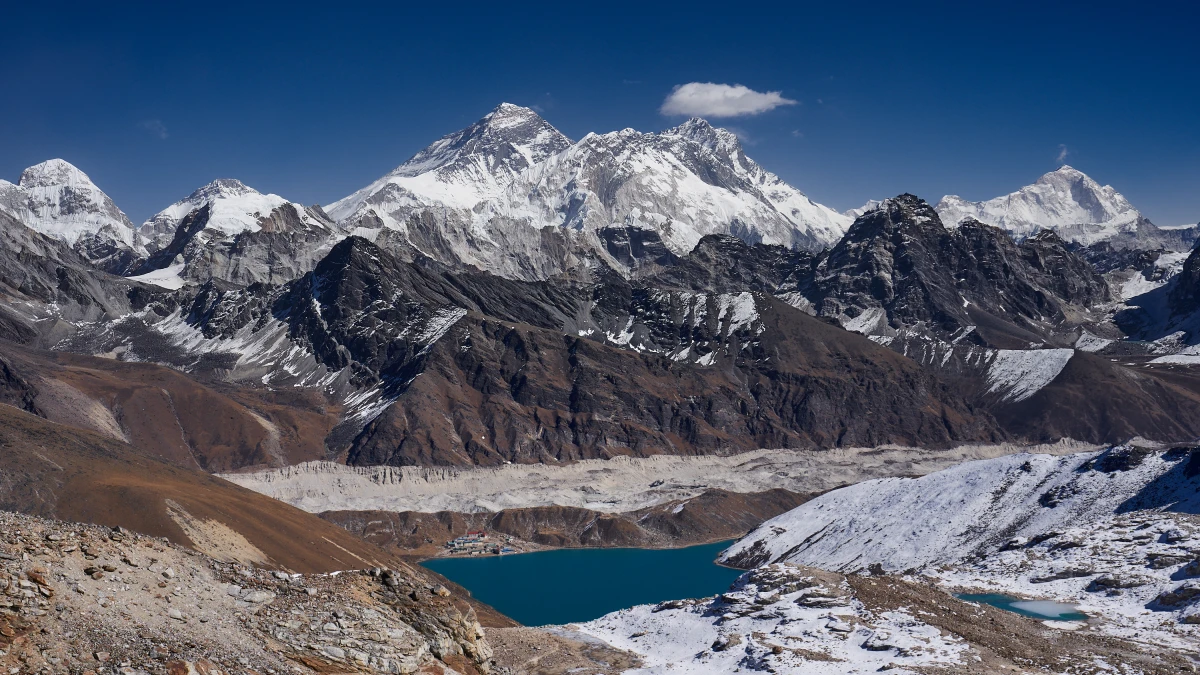
Why the Everest Three Passes Trek Map is Essential
A detailed trek map whether digital or physical is your Digital Sherpa. In 2026, it serves five critical functions that a standard EBC map cannot:
Glacial Navigation: The Ngozumpa Glacier (Nepal’s largest) and the Khumbu Glacier are constantly shifting. Modern maps highlight the safest seasonal cairn-marked paths to avoid crevasses.
Micro-Acclimatization Planning: With a map, you can visualize the climb high, sleep low strategy. For example, identifying Chhukung Ri or Gokyo Ri as ideal side-trip peaks for better oxygen adaptation.
Battery & Resource Management: 2026 maps now include Power & Wi-Fi icons for teahouses in remote spots like Lungden or Dzongla, helping you plan where to recharge your devices.
Emergency Escape Routes: If altitude sickness (AMS) hits, a Three Passes map shows lateral exit trails that lead back to the main EBC highway for faster evacuation.
Altitude Gain Monitoring: Tracking the steep 500m+ vertical climbs on pass days (like the ascent to Kongma La) is vital for pacing and preventing burnout.
20-Day Everest Three Passes Trek Itinerary
This Anti-Clockwise circuit is the gold standard for high-altitude acclimatization and panoramic views of four 8,000m peaks Everest, Lhotse, Makalu, and Cho Oyu.
Everest Three Passes Trek Phase 1 The Approach & Acclimatization
The first phase of the Everest Three Passes Trek focuses on approach, preparation, and acclimatization. This stage is crucial to get your body ready for the high-altitude challenges ahead, while also enjoying the cultural richness and scenic beauty of Nepal.
Day 1: Arrival in Kathmandu (1,400 m / 4,593 ft)
Arrive in Kathmandu and transfer to your hotel in Thamel, the heart of the city’s trekking hub.
Meet your licensed All Nepal Hiking trekking guide and support team for a pre-trek briefing.
Check your trekking gear, confirm permits, and go over the planned route.
Tips: Hydrate well, rest after your flight, and enjoy a local Nepali meal to kickstart your adventure.
Day 2: Kathmandu Sightseeing & Trek Preparations
Use this day to finalize your final preparation by gears and required things for trekking in the Everest region.
Optional: Explore cultural sites like Swayambhunath Stupa, Durbar Square, or the Thamel market.
Your guide will conduct a final gear check and review the trek itinerary.
Tips: Keep your passport, passport-size photos, and permits ready for quick access.
Day 3: Flight to Lukla (2,860 m / 9,383 ft), Trek to Phakding (2,610 m / 8,563 ft)
2026 Update: Peak-season flights often depart from Manthali (Ramechhap) instead of Kathmandu to reduce congestion.
Arrive in Lukla, the gateway to Everest, and meet your trekking crew.
Begin a 3-hour warm-up trek along the Dudh Koshi River to Phakding, enjoying suspension bridges, terraced fields, and local villages.
Tips: Take your time on this gentle stretch to start adjusting to altitude and enjoy the scenic route.
Day 4: Phakding to Namche Bazaar (3,440 m / 11,285 ft)
Trek through pine forests and alongside the Dudh Koshi River.
Pass the Sagarmatha National Park gate at Monjo, completing your official entry.
Climb the iconic Namche Hill, the final ascent to Namche Bazaar, the Sherpa capital of the Khumbu region.
Arrival: Explore the bustling market, cafés, and monasteries.
Tips: Take short rests, hydrate often, and enjoy the first panoramic views of Everest region Mountains.
Day 5: Namche Bazaar – Rest & Acclimatization
Important: This rest day is essential for acclimatization.
Optional hike: Head to the Everest View Hotel (3,880 m / 12,730 ft) for your first glimpse of Mount Everest and other surrounding peaks.
Explore the town, meet locals, and adjust to the higher altitude before continuing the trek.
Tips: Avoid overexertion, drink plenty of water, and take short hikes to get your body used to thinner air.
Everest Three Passes Trek Phase 2 Into the Imja Valley
Phase 2 of the Everest Three Passes Trek takes you into the heart of the Imja Valley, a region of towering peaks, glacial landscapes, and Sherpa culture. This section of the trek introduces you to higher altitudes, alpine terrain, and your first high passes, making acclimatization and pacing crucial.
Day 6: Namche Bazaar to Tengboche (3,860 m / 12,664 ft)
Trek through pine and rhododendron forests along the Dudh Koshi River.
Arrive at Tengboche Monastery, the spiritual heart of the Khumbu region.
Experience the tranquility of the monastery and panoramic views of Ama Dablam, Everest, Lhotse, and Thamserku.
Tips: Take time to explore the monastery and attend a morning or evening prayer if available. This is a perfect cultural and spiritual pause before heading higher.
Day 7: Tengboche to Dingboche (4,410 m / 14,469 ft)
Trek into the alpine zone, where trees disappear and jagged peaks dominate the skyline.
Enter Dingboche, a picturesque village in the Imja Valley, surrounded by Island Peak, Lhotse, and Ama Dablam.
Tips: Keep your pace steady as the air thins, and take breaks to admire the ever-changing vistas. This is also a great place to photograph terraced fields with snow-capped peaks in the background.
Day 8: Dingboche – Acclimatization Day
Optional hike: Nangkartshang Peak (5,083 m / 16,680 ft).
Purpose: Prepares your lungs for high-altitude trekking above 5,000 m.
Explore the surrounding valleys, glaciers, and nearby ridges.
Tips: Acclimatization days are critical; avoid strenuous trekking beyond short hikes. Focus on hydration, light meals, and rest.
Day 9: Dingboche to Chhukung (4,730 m / 15,518 ft) & Chhukung Ri (5,550 m / 18,208 ft)
Trek to Chhukung village, a quiet alpine settlement.
Afternoon climb to Chhukung Ri: a non-technical but steep ascent.
Reward: A massive view of the Lhotse South Face, the surrounding glaciers, and the Imja Valley.
Tips: Carry extra layers and snacks; high winds and snow can appear unexpectedly. Sunrise or late afternoon are the best times for photography.
Day 10: Cross Kongma La Pass (5,535 m / 18,159 ft) to Lobuche (4,940 m / 16,207 ft)
Your first high pass of the trek.
Navigate the rugged Khumbu Glacier moraine, where the trail is rocky and sometimes icy.
Descend to Lobuche, a small settlement with teahouses and breathtaking views of Everest, Lhotse, and Nuptse.
Tips: Microspikes, trekking poles, and careful foot placement are essential. Start early to avoid afternoon snow or cloud cover. Celebrate crossing your first major pass.
Everest Three Passes Trek Phase 3 The Everest Base Camp Detour
Phase 3 of the Everest Three Passes Trek is where trekkers get the classic Everest experience, visiting the base of the world’s highest peak while preparing for the second and third high passes. This section blends glacial landscapes, iconic peaks, and high-altitude adventure.
Day 11: Lobuche to Gorak Shep (5,164 m / 16,946 ft) & Everest Base Camp (5,364 m / 17,598 ft)
Trek along the Khumbu Glacier, with views of Everest, Lhotse, Nuptse, and Pumori.
Arrive at Gorak Shep, a small settlement at the base of the glacier.
Continue to Everest Base Camp (EBC), the launching point for climbers attempting the summit.
Experience the iconic Khumbu Icefall, stacked seracs, and expedition tents, all against the backdrop of Everest’s sheer face.
Tips:
Start early to maximize clear skies and avoid afternoon snowstorms.
Bring snacks, warm layers, and water; EBC facilities are basic.
Take your time to enjoy the surreal, once-in-a-lifetime atmosphere.
Day 12: Kala Patthar (5,550 m / 18,208 ft) & Trek to Dzongla (4,830 m / 15,837 ft)
Early morning hike to Kala Patthar, the ultimate viewpoint for Everest sunrise photography.
Witness Everest, Lhotse, and Nuptse bathed in morning light, a sight trekkers call breathtaking and unforgettable.
Descend toward Dzongla, the base for the Cho La Pass, crossing glacial moraines and high alpine terrain.
Tips:
Use trekking poles for stability during descent.
Dress in layers; mornings can be extremely cold at Kala Patthar.
Bring a good camera. The panoramic views from Kala Patthar are among the most photogenic in the world.
Phase 3 focuses on the Everest Base Camp experience while strategically positioning trekkers for the second and third high passes. Key highlights include:
Gorak Shep and Khumbu Glacier: Classic Everest landscapes
Everest Base Camp: Iconic destination for every trekker
Kala Patthar summit: Panoramic sunrise views of Everest and surrounding peaks
High alpine descent to Dzongla: Prepares trekkers for the Cho La Pass
By the end of this phase, trekkers have completed the classic Everest adventure, gained valuable high-altitude experience, and are ready to tackle the Cho La and Renjo La passes in Phase 4.
Everest Three Passes Trek Phase 4 Gokyo Lakes & The Final Passes
Phase 4 of the Everest Three Passes Trek takes you through Gokyo Valley, home to the stunning turquoise Gokyo Lakes, and challenges you with the final two high passes Cho La and Renjo La. This stage combines technical glacier crossings, panoramic peaks, and remote alpine scenery, offering some of the most spectacular vistas on the entire trek.
Day 13: Cross Cho La Pass (5,420 m / 17,783 ft) to Thagnak (4,700 m / 15,420 ft)
Begin the day early to tackle the second high pass, Cho La, one of the most technical sections of the trek.
Navigate the Cho La Glacier, where microspikes or crampons are essential for safety on ice and snow.
Descend to Thagnak, a small alpine village, after crossing the rugged glacier terrain.
Tips:
Use trekking poles for balance and safety.
Layer clothing; high winds and cold temperatures are common at the pass.
Take breaks and hydrate frequently, altitude is significant at over 5,400 m.
Day 14: Thagnak to Gokyo (4,750 m / 15,583 ft)
Trek across the Ngozumpa Glacier, the longest glacier in the Himalayas, witnessing icefalls, crevasses, and moraine ridges.
Reach Gokyo Village and the series of pristine turquoise lakes, considered among the most beautiful in the Himalayas.
Tips:
Keep an eye out for high-altitude wildlife like Himalayan marmots.
Take photos of the lakes with Cho Oyu, Everest, and Makalu in the background.
Day 15: Gokyo Ri (5,357 m / 17,575 ft) & 5th Lake Hike
Optional but highly recommended: Hike Gokyo Ri for a 360-degree panorama of the Everest, Lhotse, Makalu, and Cho Oyu massif.
Explore the 5th Gokyo Lake, part of the sacred lake system in the valley.
Tips:
Start early for sunrise views.
Wear sun protection; the reflection from the lakes intensifies UV exposure.
Pace yourself Gokyo Ri is a steep but non-technical climb.
Day 16: Cross Renjo La Pass (5,360 m / 17,585 ft) to Marlung (4,210 m / 13,812 ft)
Cross the final high pass, Renjo La, often called the Panoramic Pass.
Enjoy picture-perfect views of Everest, the Gokyo Valley, and the surrounding peaks from the pass.
Descend into the remote Bhotekoshi Valley, reaching the village of Marlung.
Tips:
Take your time at the summit for photos. The views are among the best on the entire trek.
The descent can be steep; trekking poles help maintain stability.
Celebrating this is the last major pass of your adventure.
By the end of this phase, trekkers have completed all three high passes, explored remote valleys, and witnessed the most iconic sights of the Khumbu region.
Everest Three Passes Trek Phase 5 The Descent
After conquering three high passes, glaciers, and iconic peaks, Phase 5 marks the descent back to civilization, giving trekkers time to reflect on the adventure, revisit cultural landmarks, and savor the last views of the Himalayas.
Day 17: Marlung to Namche Bazaar via Thame (3,750–3,440 m / 12,303–11,285 ft)
Trek through the remote Bhotekoshi Valley to the historic Thame Village.
Visit Thame Monastery, an important spiritual center and home to legendary Sherpa climbers, including Tenzing Norgay.
Continue descending to Namche Bazaar, reconnecting with the bustling hub of Sherpa culture.
Tips:
Take your time on the descent to protect your knees.
Use trekking poles and rest periodically.
Thame Monastery is worth a quiet visit to learn about Sherpa mountaineering history.
Day 18: Namche Bazaar to Lukla (2,850 m / 9,350 ft)
A long but rewarding final trek, descending through forested valleys and suspension bridges.
Celebrate your completion of the Everest Three Passes circuit as you return to Lukla.
Enjoy the last panoramic views of Everest, Lhotse, Ama Dablam, and surrounding peaks.
Tips:
Pack light today, as it’s mostly downhill.
Enjoy local tea houses along the trail for a final taste of Khumbu hospitality.
Day 19: Fly Lukla to Kathmandu (1,400 m / 4,593 ft)
Board your flight from Lukla to Kathmandu. Peak-season flights may depart from Manthali (Ramechhap) in 2026, depending on weather and schedules.
Arrive in Kathmandu and check into your hotel.
Optional farewell dinner to celebrate the completion of your trek with guides and fellow trekkers.
Tips:
Day 20: Departure
Transfer to Tribhuvan International Airport (TIA) for your flight home.
Reflect on a journey that spanned 166 km (103 miles), three legendary passes, and some of the most iconic landscapes in the world.
Congratulations you’ve completed the Everest Three Passes Kora.
By the end of Phase 5, trekkers leave the Khumbu region with memories of glaciers, high passes, turquoise lakes, and iconic Himalayan summits, truly one of the most comprehensive trekking experiences in the world.
18-Day Clockwise Everest Three Passes Itinerary
Day 1: Flight to Lukla, Trek to Phakding (2,610m)
Day 2: Phakding to Namche Bazaar (3,440m)
Day 3: Namche Bazaar (Acclimatization) Hike to the Everest View Hotel (3,880m).
Day 4: Namche to Thame (3,800m) Entering the clockwise route. Thame is a beautiful, traditional village often missed by EBC trekkers.
Day 5: Thame to Lungden (4,370m)
Day 6: Lungden to Gokyo via Renjo La Pass (5,360m)
Day 7: Gokyo Rest & Exploration Summit Gokyo Ri (5,357m) for sunrise. Explore the 4th and 5th lakes in the afternoon.
Day 8: Gokyo to Thagnak (4,700m) A short but technical walk across the massive Ngozumpa Glacier.
Day 9: Thagnak to Dzongla via Cho La Pass (5,420m)
Day 10: Dzongla to Lobuche (4,940m)
Day 11: Lobuche to Gorak Shep (5,164m) & Everest Base Camp (5,364m)
Day 12: Kala Patthar (5,550m) & Trek to Chhukung (4,730m)
Day 14: Chhukung to Pangboche (3,930m)
Day 15: Pangboche to Namche Bazaar
Day 16: Namche to Lukla
Day 17: Lukla to Kathmandu
Day 18: International Departure
Why this 18-Day Clockwise Route works
The 18-day Everest Three Passes Trek clockwise route is designed to maximize both the visual and safety aspects of this high-altitude Himalayan trek. Ascending Renjo La Pass clockwise gives trekkers a dramatic first glimpse of Mount Everest and the turquoise Gokyo Lakes as they crest the pass, creating a far more stunning panorama than approaching it the other way.
By the time you reach the most technical pass, Kongma La, your body has already spent over a week above 4,500 meters, allowing for better altitude acclimatization and making the challenging crossing safer. In essence, the clockwise route combines breathtaking scenery, panoramic Himalayan views, and thoughtful high-altitude trekking preparation, making it the optimal way to complete this epic Everest region trekking circuit.
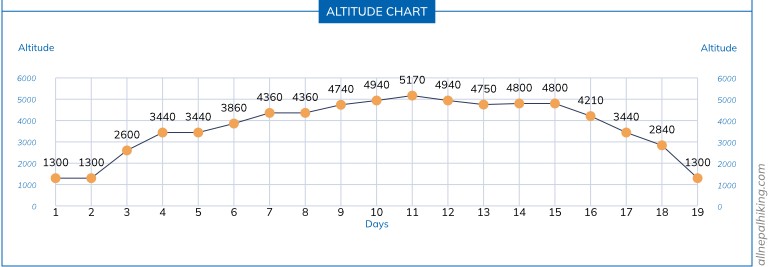
Everest Three Passes Trek Altitude Chart
Day | Location | Altitude (m) | Altitude (ft) |
3 | Lukla → Phakding | 2,650 | 8,562 |
4 | Phakding → Namche Bazaar | 3,440 | 11,285 |
5 | Namche Bazaar | 3,440 | 11,285 |
6 | Namche Bazaar → Tengboche | 3,860 | 12,664 |
7 | Tengboche → Dingboche | 4,390 | 14,402 |
8 | Dingboche | 4,390 | 14,402 |
9 | Dingboche → Chhukung | 4,730 | 15,518 |
10 | Chhukung → Lobuche (via Kongma La) | 4,925 | 16,158 |
11 | Lobuche → Gorak Shep → EBC | 5,364 | 17,598 |
12 | Kala Patthar → Lobuche | 5,555 → 4,925 | 18,208 → 16,158 |
13 | Lobuche → Dzongla | 4,830 | 15,833 |
14 | Dzongla → Gokyo (via Cho La) | 4,750 | 15,583 |
15 | Gokyo | 4,750 | 15,583 |
16 | Gokyo → Marlung (via Renjo La) | 4,300 | 14,108 |
17 | Marlung → Namche Bazaar | 3,440 | 11,285 |
18 | Namche Bazaar → Lukla | 2,850 | 9,350 |
19 | Lukla → Kathmandu | 1,400 | 4,593 |
Everest Three Passes Trek Map Highlights
Three Legendary High Passes: Kongma La (5,535 m), Cho La (5,420 m), Renjo La (5,360 m)
Highest Altitude Point: Kala Patthar (5,555 m / 18,208 ft) for unparalleled sunrise views of Everest
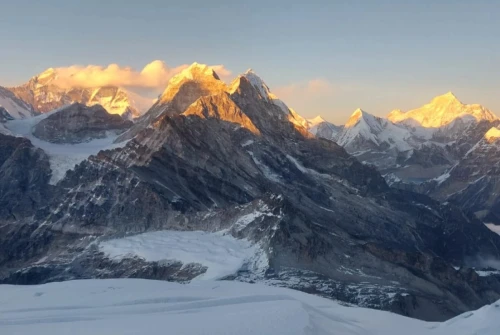
Iconic Peaks: Mount Everest, Lhotse, Nuptse, Ama Dablam, Cho Oyu, Makalu
Glacial Crossings: Kongma La and Cho La glaciers, with rugged moraine trails and icy sections
Stunning Lakes: Gokyo Lakes, including the 5th lake, surrounded by turquoise waters and snow-capped peaks
Cultural Experiences: Sherpa villages, Namche Bazaar, Tengboche Monastery, Thame Village
Scenic Valleys: Imja Valley, Khumbu Valley, Gokyo Valley with panoramic Himalayan landscapes
Adventure Highlights: High-altitude trekking, non-technical summits like Chhukung Ri, Gokyo Ri, and glacier navigation
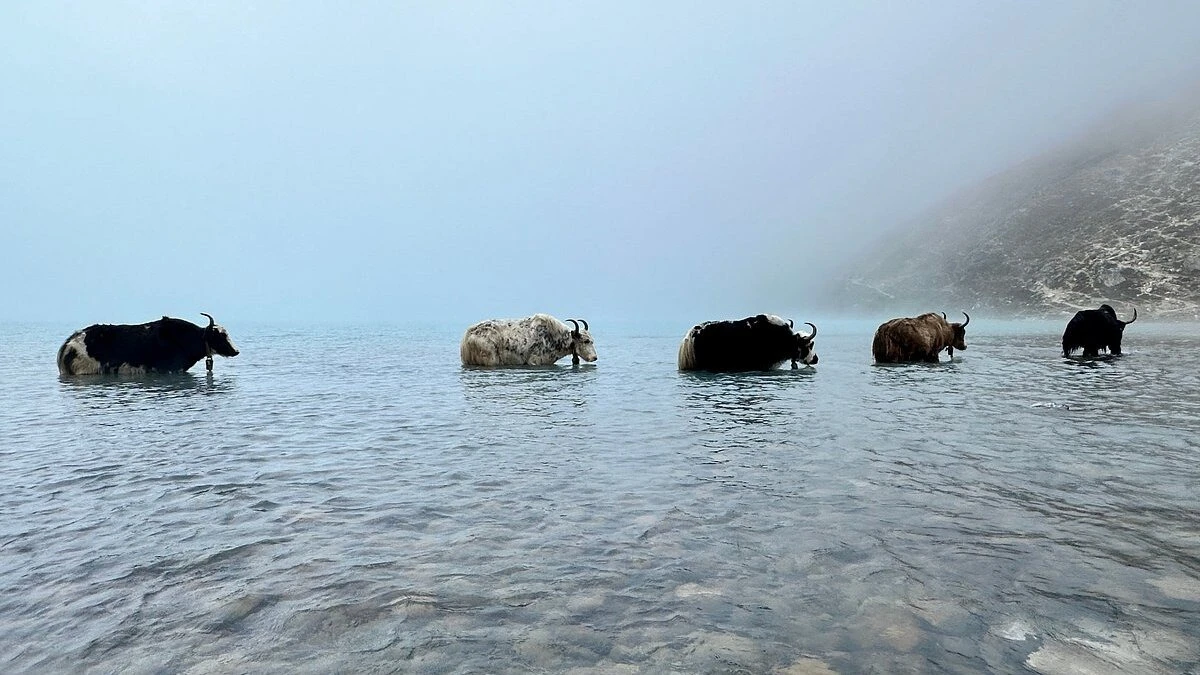
Wildlife & Flora: Himalayan marmots, yaks, pine and rhododendron forests in lower altitudes
Photography Opportunities: Panoramic viewpoints, sunrise at Kala Patthar, Everest Base Camp, and the turquoise Gokyo Lakes
Trekking Duration: 18–20 days covering approximately 166 km (103 miles)
Permits Required: Sagarmatha National Park Permit, Khumbu Pasang Lhamu Rural Municipality Permit
Practical Tips for the Everest Three Passes Trek
Acclimatization is key. Plan rest and acclimatization days at Namche Bazaar, Dingboche, and other high villages to reduce the risk of altitude sickness. Take it slow on long ascents and stay hydrated.
Combine maps and GPS for navigation, but remember the importance of offline maps. Even with a satellite messenger or phone app, connectivity is virtually non-existent in the high valleys. Ensure your maps are downloaded for offline use well before leaving Namche Bazaar. A physical map as a backup is also highly recommended.
Stay aware of weather conditions, especially on high passes like Kongma La and Cho La, where snow and ice can affect crossing safety. Check forecasts daily and be prepared to adjust your schedule if needed.
Pack smart: bring warm layered clothing, sturdy trekking boots, trekking poles, and microspikes or crampons for glacier sections. Don’t forget gloves, sunglasses, and sunscreen for high-altitude protection.
Health and safety are critical. Carry a first aid kit, water purification tablets, and familiarize yourself with evacuation points along the route. Include medications for common altitude issues and, if possible, trek with a guide.
Hydrate well and maintain energy with frequent meals and high-calorie snacks. The best trekking seasons are Spring (March–May) and Autumn (September–November), offering stable weather and clear views.
Respect local culture. Sherpa villages, monasteries, and community traditions should be treated with care. Ask before taking photos and avoid disruptive behavior.
For photography, early mornings and late afternoons provide the best lighting for Everest, Gokyo Lakes, and the high passes. Keep cameras and batteries protected from cold temperatures.
Finally, prepare mentally. The trek is strenuous, with multiple high passes and long days. A positive mindset and patience will enhance your experience of this epic Himalayan adventure.
Everest Base Camp Trek vs Everest Three Passes Trek
For trekkers trying to choose between the classic Everest Base Camp Trek and the more challenging Everest Three Passes Trek, understanding the differences by category can help align the route with your goals, fitness, and experience level.
The EBC Trek is a linear, in-and-out route, ideal for first-time high-altitude trekkers. It is moderately challenging and highly rewarding, offering iconic Himalayan views, cultural immersion in Sherpa villages, and the classic experience of reaching Everest Base Camp and Kala Patthar. The trail is well-established, busy, and beginner-friendly, making it a perfect bucket-list adventure with a social atmosphere.
In contrast, the Everest Three Passes Trek is a high-altitude circular loop designed for experienced adventurers seeking the ultimate Khumbu experience. It traverses three 5,000m+ passes Kongma La, Cho La, and Renjo La glaciers, and multiple valleys, offering panoramic vistas and remote wilderness. This trek is highly strenuous, off-the-beaten-path, and far less crowded, providing a true explorer’s journey where the focus is on the overall adventure rather than a single destination.
Feature | Everest Base Camp (EBC) Trek | Everest Three Passes Trek |
Route Type | Linear (In-and-Out) | Circular Loop |
Primary Goal | Reaching EBC / Kala Patthar | Crossing three 5,000m+ passes |
Difficulty | Moderate to Challenging | Highly Strenuous |
Crowd Levels | High (Busy) | Low (Remote / Quiet) |
Average Duration | 12–14 Days | 17–20 Days |
Diversity of Experience | Focused / Specific | High (Multiple valleys, glaciers, peaks) |
Best For | First-time high-altitude trekkers | Experienced / Seasoned adventurers |
The choice between the two treks depends on the type of challenge you seek. The EBC Trek is a classic bucket list adventure, walking in the footsteps of legendary climbers while enjoying a lively trekking atmosphere. The Three Passes Trek, however, is an explorer’s journey, emphasizing raw high-altitude adventure, solitude, and the satisfaction of traversing the full Khumbu region from end to end.
Conclusion
The Everest Three Passes Trek is more than a trek; it’s a journey that tests your endurance, rewards your spirit, and immerses you in the breathtaking landscapes of the Himalayas. Crossing Kongma La, Cho La, and Renjo La, witnessing the sunrise from Kala Patthar, and exploring the serene Gokyo Lakes makes this trek one of the most challenging yet unforgettable adventures in the world.
With a detailed Everest Three Passes Trek map and proper planning, your journey can be both safe and seamless. All Nepal Hiking, with its licensed guides and extensive experience in the Khumbu region, provides expert assistance in trekking permits, route planning, acclimatization schedules, and on-the-ground support, ensuring a fully immersive and memorable experience.
Whether you’re standing at the foot of Mt. Everest, gazing across glacial valleys, or exploring remote Sherpa villages, this trek leaves memories that last a lifetime. Prepare thoroughly, follow your map carefully, respect the mountains, and get ready to experience the ultimate Himalayan adventure with All Nepal Hiking as your trusted companion.
 based on 270 reviews



.webp)