based on 270 reviews

The Everest Base Camp trek stands as one of the most celebrated and sought-after adventures in the world, drawing thousands of trekkers annually to the heart of the Himalayas. This extraordinary journey through the Khumbu region of Nepal offers an unparalleled combination of natural grandeur, cultural richness, and physical challenge that captivates adventurers from every corner of the globe. We delve into the major attractions that make this trek an unforgettable experience, providing comprehensive insights into what awaits those who embark on this legendary path.
The Magnificent Trail Through Sagarmatha National Park
Our journey begins within the boundaries of Sagarmatha National Park, a UNESCO World Heritage Site that encompasses some of the most dramatic landscapes on Earth. This protected area spans over 1,148 square kilometers and serves as home to rare wildlife species, including the elusive snow leopard, red panda, and Himalayan tahr. The park's diverse ecosystems range from forested valleys to alpine meadows and eventually to the stark, otherworldly terrain of the high Himalayas.
The biodiversity within Sagarmatha National Park represents one of the trek's most compelling attractions. We traverse through rhododendron and pine forests that burst into spectacular displays of color during spring, creating a vibrant contrast against the snow-capped peaks. The park's conservation efforts ensure that trekkers experience pristine natural environments while contributing to the preservation of this unique ecosystem.
Lukla: The Gateway to Adventure
The Tenzing-Hillary Airport in Lukla marks the beginning of most Everest Base Camp treks and itself constitutes a major attraction. Renowned as one of the world's most dangerous airports, the flight into Lukla offers breathtaking aerial views of the Himalayan landscape. The short runway perched on a mountainside at 2,860 meters delivers an adrenaline-inducing introduction to the adventure ahead.
Lukla's bustling atmosphere reflects the convergence of trekkers, porters, and Sherpa guides preparing for their mountain journeys. The town's colorful prayer flags, traditional teahouses, and mountain gear shops create an authentic Himalayan ambiance that sets the tone for the entire expedition.
Namche Bazaar: The Sherpa Capital
Namche Bazaar, situated at 3,440 meters, represents the economic and cultural heart of the Khumbu region. This prosperous trading hub has served as a crucial stopover point for centuries, where Tibetan and Nepali traders once exchanged goods. Today, Namche functions as an essential acclimatization stop for trekkers while offering numerous attractions.
The town's amphitheater-like setting provides stunning panoramic views of Everest, Lhotse, and Ama Dablam. We find the Sherpa Culture Museum here, which showcases the history, traditions, and mountaineering heritage of the Sherpa people. The Saturday market brings together locals from surrounding villages, offering an authentic glimpse into mountain commerce and community life.
The abundance of bakeries, restaurants, and shops in Namche allows trekkers to enjoy unexpected luxuries at high altitude. Internet cafes and charging stations, while intermittent, provide connections to the outside world before venturing further into remote terrain.
Tengboche Monastery: Spiritual Heart of the Khumbu
Perched at 3,867 meters, Tengboche Monastery stands as the largest gompa in the Khumbu region and serves as one of the trek's most spiritually significant attractions. The monastery's dramatic location offers unobstructed views of Everest, Nuptse, Lhotse, Ama Dablam, and Thamserku, creating a backdrop of extraordinary beauty for Buddhist contemplation.
We witness the daily prayers and ceremonies performed by resident monks, whose chants echo through the mountain air. The monastery hosts the annual Mani Rimdu festival, a vibrant celebration featuring masked dances that depict the triumph of Buddhism over the ancient Bon religion. Even outside festival times, the monastery's peaceful atmosphere provides trekkers with moments of reflection amid their physical journey.
The surrounding area features numerous stupas, prayer wheels, and mani walls inscribed with sacred mantras, all contributing to the profound spiritual ambiance that distinguishes this location.
Kala Patthar: The Ultimate Viewpoint
While Everest Base Camp itself serves as the trek's nominal destination, Kala Patthar at 5,545 meters offers the trek's most spectacular mountain views. This rocky outcrop provides the closest accessible vantage point for unobstructed views of Mount Everest's summit. The pre-dawn ascent to Kala Patthar has become an integral part of most trekking itineraries.
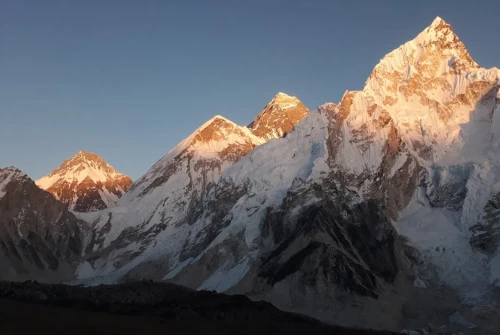
Standing atop Kala Patthar as sunrise illuminates the world's highest peak creates memories that last a lifetime. The 360-degree panorama encompasses the entire Khumbu Himalayan range, with Pumori, Changtse, Nuptse, and numerous other peaks creating a seemingly endless horizon of snow and rock.
The physical challenge of reaching Kala Patthar at such an altitude adds to the sense of accomplishment. We push through thin air and freezing temperatures, motivated by the promise of witnessing one of nature's most magnificent spectacles.
Everest Base Camp: Standing at the Foot of Giants
Everest Base Camp itself, located at 5,364 meters on the Khumbu Glacier, represents the culmination of the trek. During climbing season, the camp transforms into a temporary city of colorful tents as expeditions prepare for summit attempts. The Khumbu Icefall, with its towering seracs and deep crevasses, dominates the landscape, offering a sobering perspective on the challenges faced by mountaineers.
The constantly shifting glacier creates an ever-changing landscape of ice formations. Prayer flags flutter in the wind, carrying blessings across the mountains according to Buddhist tradition. We stand in the footsteps of legendary mountaineers, sharing the same views that inspired generations of climbers.
Sherpa Villages and Cultural Immersion
The traditional Sherpa villages scattered along the trekking route constitute one of the journey's most enriching attractions. Communities like Phakding, Pangboche, Dingboche, and Lobuche maintain centuries-old traditions despite increasing tourism. These settlements offer authentic insights into mountain life and Sherpa hospitality.
The architecture of stone houses with colorful window frames, surrounded by carefully maintained potato and barley fields, reflects generations of adaptation to harsh mountain conditions. We interact with locals whose families have lived in these valleys for centuries, learning about their customs, beliefs, and daily challenges.
Tea houses along the route provide more than just accommodation; they serve as cultural exchange centers where trekkers and locals share stories, meals, and experiences. The warmth of yak-dung stoves and cups of sweet milk tea create comfortable refuges from mountain cold.
The Khumbu Glacier and Ice Formations
The Khumbu Glacier, one of the world's highest glaciers, presents constantly evolving ice formations that fascinate trekkers and scientists alike. We traverse moraines and witness the glacier's dynamic nature, with melting and refreezing creating spectacular ice pinnacles, deep blue crevasses, and glacial lakes.
The glacier's movement, though imperceptible on a daily basis, shapes the entire valley landscape. Understanding glacial processes adds scientific interest to the aesthetic appeal of these massive ice rivers flowing from the high peaks.
Himalayan Wildlife Encounters
Despite the harsh environment, the Everest region supports surprising wildlife diversity. We may encounter Himalayan tahr grazing on impossible slopes, colorful Impeyan pheasants (the national bird of Nepal), and if extraordinarily fortunate, glimpses of the endangered snow leopard. Bird species, including griffon vultures, Himalayan monals, and various species of choughs, accompany trekkers throughout the journey.
The yak herds that transport goods between villages represent domesticated wildlife perfectly adapted to high altitude. These sturdy animals have sustained mountain communities for millennia, providing meat, milk, wool, and transportation.
Suspension Bridges and Mountain Infrastructure
The numerous suspension bridges spanning the Dudh Koshi River and its tributaries constitute both practical necessities and attractions in their own right. These swaying structures, often decorated with prayer flags, provide thrilling crossings high above rushing glacial waters. The longest and highest bridges offer exhilarating moments that test nerves while providing spectacular photography opportunities.
The entire trail system represents a remarkable engineering achievement, with stone steps, carved paths, and strategic route planning enabling safe passage through challenging terrain. We appreciate the countless hours of labor invested in maintaining these trails for the benefit of trekkers and local communities alike.
Acclimatization and the Challenge of Altitude
The physical and mental challenge of trekking at extreme altitude itself becomes a major attraction for many adventurers. The carefully planned acclimatization schedule, with strategic rest days and gradual altitude gain, teaches trekkers about their bodies' responses to thin air. Overcoming altitude-related challenges builds confidence and creates powerful personal growth experiences.
The shared experience of altitude acclimatization bonds trekking groups, as everyone faces similar physical demands regardless of fitness level or experience. We learn patience, respect for mountain environments, and appreciation for proper preparation.
Sunrise and Sunset Mountain Views
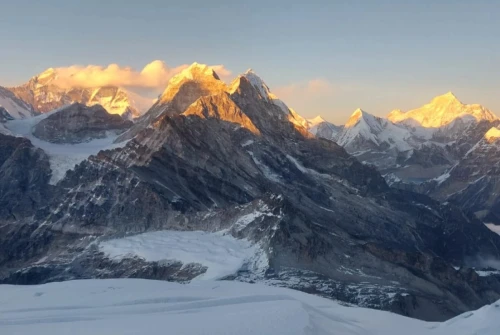
The dramatic lighting at dawn and dusk transforms the Himalayan peaks into otherworldly displays of color and shadow. We witness the phenomenon of alpenglow, where setting or rising sunlight paints snow-covered summits in shades of pink, orange, and gold. These fleeting moments of perfect light create some of the trek's most photographed and remembered scenes.
Clear mountain air at high altitude intensifies colors and sharpens distant features, allowing visibility that seems impossible at lower elevations. Star-filled night skies, unpolluted by artificial light, reveal the Milky Way in stunning clarity.
The Imja Khola Valley and Side Attractions
For those with additional time, the Imja Khola Valley and alternative routes offer extended exploration opportunities. The trek to Chhukung and Chhukung Ri provides different perspectives on Island Peak and the surrounding summits. The Gokyo Lakes alternative route showcases turquoise glacial lakes and offers views from Gokyo Ri that rival those from Kala Patthar.
These side trips allow trekkers to extend their Himalayan experience and reduce crowding on the main route, particularly during peak seasons. We discover more remote valleys and lesser-visited monasteries that provide quieter moments of mountain appreciation.
Seasonal Transformations
The changing seasons dramatically alter the trek's character and attractions. Spring brings blooming rhododendrons that paint hillsides in red, pink, and white. Autumn offers the clearest skies and most stable weather, with crisp air and perfect visibility. Winter transforms the route into a challenging snow-covered wonderland with fewer trekkers but harsher conditions. Monsoon season, while generally avoided, presents verdant landscapes and dramatic cloud formations, though views remain frequently obscured.
Each season offers unique photographic opportunities and different experiences of the same landscape. We adapt our expectations and preparations according to seasonal conditions, finding beauty in every variation.
Photography and Memory Creation
The photographic opportunities throughout the Everest Base Camp trek rank among the world's finest for mountain photography. Every turn in the trail reveals new compositions of peaks, valleys, villages, and cultural elements. From intimate portraits of weathered faces to vast landscape panoramas, the visual diversity challenges and rewards photographers of all skill levels.
The act of capturing memories through photography deepens engagement with the environment. We become more observant of light, composition, and fleeting moments that might otherwise pass unnoticed.
The Everest Base Camp trek delivers an incomparable combination of natural magnificence, cultural authenticity, physical challenge, and spiritual resonance. These major attractions work in harmony to create an experience that transcends simple adventure tourism, offering a transformative journey through one of Earth's most extraordinary landscapes. We return from this trek forever changed, carrying memories of towering peaks, warm hospitality, personal achievement, and profound connections to mountain environments that sustain both body and spirit.

.webp)