based on 270 reviews

Introduction
The Annapurna Base Camp Trek stands as one of Nepal's most spectacular mountain adventures, drawing thousands of trekkers annually to witness the majesty of the Annapurna Massif. Understanding the Annapurna Base Camp Trek distance is absolutely crucial for proper planning, pacing, and ensuring you'll have an unforgettable experience in the heart of the Himalayas. Whether you're a seasoned hiker or embarking on your first multi-day trek, knowing what lies ahead helps you prepare mentally and physically for this life-changing journey.
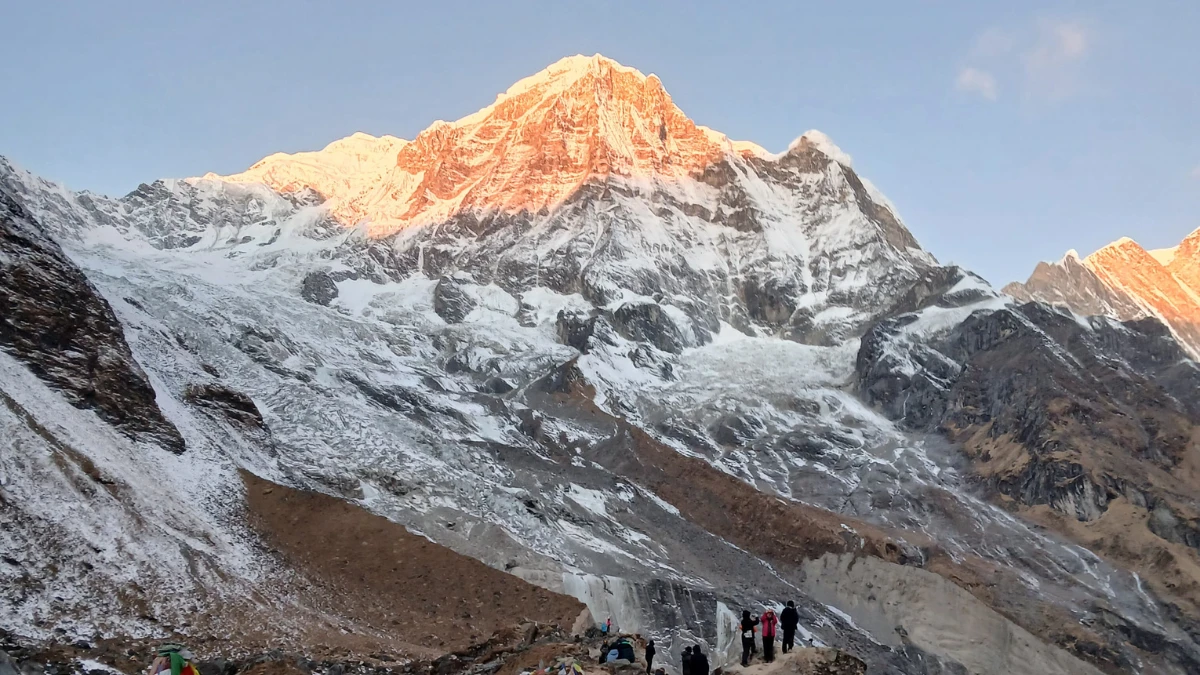
The trek weaves through diverse landscapes, from terraced farmlands and subtropical forests to alpine meadows and glacial moraines. You'll pass through traditional Gurung villages, cross suspension bridges over roaring rivers, and gradually ascend to the base camp at 4,130 meters (13,549 feet), where you're surrounded by towering peaks including Annapurna I, Machapuchare, and Hiunchuli. But it's not just about reaching the destination, it's about understanding the journey's distance, elevation changes, and daily challenges that'll shape your adventure.
What is the Total Distance of the Annapurna Base Camp Trek?
The Annapurna Base Camp Trek distance typically covers approximately 110 kilometers (68 miles) round trip, though this can vary based on your specific route and starting point. Most trekkers begin from Nayapul, which is accessible by road from Pokhara, and follow the classic route through Ghorepani, Tadapani, and Chhomrong before reaching the base camp.
It's important to note that the distance alone doesn't tell the complete story. The trek involves substantial elevation gain and loss, with the trail ascending from around 1,070 meters at Nayapul to 4,130 meters at Annapurna Base Camp. This represents a cumulative elevation gain of over 6,000 meters when you factor in all the ups and downs along the route.
The actual distance you'll walk depends on several factors, including whether you take side trips to viewpoints like Poon Hill, how many acclimatization days you incorporate, and whether you return via the same route or choose an alternative path. Some trekkers opt for shorter itineraries starting from Jhinu Danda or extend their journey by combining it with the Annapurna Sanctuary trek.
How Long Does It Take to Complete the ABC Trek?
The standard Annapurna Base Camp Trek typically takes 7 to 12 days to complete, with most trekkers opting for an 8-10 day itinerary. The duration depends primarily on your fitness level, acclimatization needs, and how much time you want to spend soaking in the mountain atmosphere.
A typical 8-day itinerary allows for a comfortable pace with adequate rest and acclimatization, while more condensed 7-day treks are possible for fit hikers who've already acclimatized. Conversely, 10-12 day itineraries provide additional buffer days for weather contingencies, rest, and exploration of side trails.
Your daily walking time ranges from 5 to 7 hours, though this varies significantly based on the day's terrain and elevation gain. The journey isn't a race, it's about finding your rhythm, listening to your body, and adapting to the high-altitude environment. Many seasoned trekkers recommend building in an extra day or two as a buffer for unexpected weather delays or if you need additional acclimatization time.
What is the Day-by-Day Distance Breakdown?
Understanding the daily distances helps you pace yourself and set realistic expectations for each day's trek. Here's a comprehensive breakdown of the classic route:
Day 1: Nayapul to Tikhedhunga
The first day covers approximately 11 kilometers (6.8 miles) and typically takes 4-5 hours. You'll start at Nayapul (1,070m) and follow the Modi Khola river valley, passing through Birethanti before reaching Tikhedhunga (1,540m). This gentle introduction involves a modest elevation gain of 470 meters, allowing your body to adjust to trekking with a loaded pack. The trail is well-maintained, crossing several suspension bridges and passing through small villages where you'll get your first taste of Gurung culture.
Day 2: Tikhedhunga to Ghorepani
Day two is one of the more challenging segments, covering 9 kilometers (5.6 miles) with a significant elevation gain. You'll climb the famous stone staircase—over 3,000 steps—from Tikhedhunga to Ulleri, then continue through rhododendron forests to reach Ghorepani at 2,860 meters. This day typically takes 6-7 hours and represents an elevation gain of approximately 1,320 meters. The climb can be demanding, but the reward is spectacular mountain views and the opportunity to visit Poon Hill the next morning.
Day 3: Ghorepani to Tadapani
This segment covers roughly 10 kilometers (6.2 miles) and takes about 5-6 hours. Many trekkers wake before dawn to hike up Poon Hill (3,210m) for sunrise views before returning to Ghorepani for breakfast. The trail then winds through dense rhododendron forests, following a relatively level path before descending slightly to Tadapani (2,630m). This day offers a more relaxed pace after the previous day's challenging climb.
Day 4: Tadapani to Chhomrong
You'll cover approximately 10 kilometers (6.2 miles) on this day, with the trail taking 5-6 hours. The path descends steeply to the Kimrong Khola river before climbing back up to Chhomrong (2,170m), one of the largest villages on the trek. This day involves significant elevation loss and gain, which can be tough on the knees. Chhomrong offers stunning views of Annapurna South and Machapuchare and serves as the gateway to the Annapurna Sanctuary.
Day 5: Chhomrong to Bamboo
This segment covers about 9 kilometers (5.6 miles) and takes 4-5 hours. You'll descend a long stone staircase from Chhomrong, cross the Chhomrong Khola on a suspension bridge, then climb through bamboo and rhododendron forests to reach Bamboo (2,310m). The trail becomes more remote as you enter the Annapurna Sanctuary, with fewer settlements and more wilderness atmosphere.
Day 6: Bamboo to Deurali
Day six covers approximately 8 kilometers (5 miles) but takes 5-6 hours due to the increasing altitude. You'll pass through Doban and Himalaya Hotel, following the Modi Khola gorge as it narrows dramatically. The vegetation becomes more alpine, and you'll reach Deurali at 3,230 meters. This is where many trekkers begin to feel the effects of altitude, making it crucial to maintain a slow, steady pace.
Day 7: Deurali to Annapurna Base Camp
The final push to base camp covers 10 kilometers (6.2 miles) and typically takes 5-6 hours, including a stop at Machapuchare Base Camp (3,700m). The trail opens up into the glacial valley, offering increasingly spectacular views as you approach ABC at 4,130 meters. This is the culmination of your journey, where you're surrounded by a 360-degree amphitheater of towering peaks. Most trekkers spend the afternoon at base camp before beginning the descent the following day.
What Factors Affect Your Trekking Distance?
Several variables influence the actual distance you'll cover on the Annapurna Base Camp Trek, and understanding these helps you plan more effectively. Your starting point significantly impacts total distance—beginning from Nayapul versus Kimche or Jhinu Danda can add or subtract several kilometers from your journey.
Weather conditions play a crucial role in determining your daily distance. Heavy rain can make trails slippery and slow progress, while snowfall at higher elevations may require you to take alternative routes or wait for conditions to improve. Monsoon season (June-August) often means dealing with muddy trails and leeches, while winter (December-February) brings snow and colder temperatures that can affect your pace.
Your fitness level and previous trekking experience dramatically impact how comfortable you are with the daily distances. First-time trekkers often need more rest breaks and may walk more slowly than experienced hikers. Altitude acclimatization also affects your pace, as you ascend higher, you'll naturally slow down to allow your body to adjust to decreasing oxygen levels.
Group dynamics matter too. If you're trekking with a group, you'll need to maintain a pace comfortable for all members, which might mean adjusting your daily distance expectations. Solo trekkers have more flexibility to set their own pace but should still follow recommended acclimatization schedules.
How Does Altitude Impact Your Daily Distance?
Altitude exerts a profound influence on your trekking performance and the distances you can comfortably cover each day. As you ascend beyond 2,500 meters, the air contains less oxygen, requiring your body to work harder to maintain the same level of exertion. This physiological reality means that what feels like a comfortable pace at lower elevations becomes challenging higher up.
The general rule of thumb for high-altitude trekking is to ascend no more than 300-500 meters per day once you're above 3,000 meters. This guideline sometimes conflicts with the actual trail distances and available accommodations, which is why strategic planning is essential. The trek from Deurali to Annapurna Base Camp involves significant elevation gain, so most itineraries include a stop at Machapuchare Base Camp to break up the ascent.
Altitude acclimatization requires you to slow your pace considerably at higher elevations. What might take you 3 hours to walk at 2,000 meters could take 5 hours at 4,000 meters, even though the actual distance is shorter. Your breathing becomes more labored, you'll need more frequent rest breaks, and your overall energy levels decrease as your body adapts to the thinner air.
Individual responses to altitude vary tremendously. Some people acclimatize quickly and maintain relatively strong performance at high elevations, while others struggle even with proper pacing. It's crucial to recognize signs of altitude sickness, headache, nausea, dizziness, fatigue, and be prepared to descend if symptoms worsen, regardless of your planned distance for the day.
What is the Difficulty Level Based on Distance?
The Annapurna Base Camp Trek is generally classified as moderate to moderately difficult, with the challenge coming not just from distance but from the combination of distance, elevation gain, and altitude. While the daily distances aren't extraordinarily long by trekking standards typically 8-11 kilometers per day, the vertical elevation changes and high-altitude environment add substantial difficulty.
The most challenging days involve either significant elevation gain (like the climb to Ghorepani) or trekking at high altitude (the final push to ABC). The constant up-and-down nature of the trail, with numerous stone staircases and steep sections, places considerable stress on your knees, quads, and cardiovascular system. Unlike some treks where you simply gain elevation gradually, the ABC trek involves repeatedly descending to cross rivers before climbing back up the opposite valley wall.
Your ability to complete the trek successfully depends more on your fitness level, mental determination, and proper acclimatization than on your experience with long-distance walking. Many regular hikers who can comfortably walk 15-20 kilometers at sea level find the shorter daily distances at altitude surprisingly challenging. Conversely, less experienced trekkers who train specifically for the trek and pace themselves appropriately often succeed admirably.
The trek doesn't require technical climbing skills or specialized equipment beyond good trekking boots and poles. However, it does demand consistent physical effort day after day, the mental fortitude to push through discomfort, and the wisdom to recognize when you need to slow down or take a rest day. Building a strong cardiovascular base and leg strength through preparation training significantly enhances your trekking experience.
How Should You Prepare for the Trek Distance?
Proper preparation is the foundation of a successful Annapurna Base Camp Trek, and your training should focus on building endurance for consecutive days of hiking with a loaded pack. Start your training at least 2-3 months before your trek, gradually increasing both distance and elevation gain in your training hikes.
Cardiovascular conditioning forms the core of your preparation. Aim for 3-5 training sessions per week, including a mix of activities: long hikes (4-6 hours) with a weighted pack, stair climbing, running or cycling, and hill repeats to simulate the constant elevation changes you'll encounter. Your weekend training should include at least one long hike of 15-20 kilometers with 800-1,000 meters of elevation gain.
Leg strength training is equally important. Include exercises like squats, lunges, step-ups, and calf raises to build the muscular endurance needed for long descents and ascents. Don't neglect your core strength either, a strong core helps maintain proper posture and reduces fatigue during long trekking days. Flexibility work through yoga or stretching helps prevent injuries and aids recovery.
Break in your trekking boots thoroughly during training, blisters can ruin your trek faster than any lack of fitness. Practice with the same pack you'll carry on the trek, gradually increasing the weight to 8-10 kilograms if you're carrying your own gear. Test all your clothing and equipment during training hikes to identify any issues before you're in the mountains.
Mental preparation shouldn't be overlooked. The trek involves consecutive days of physical challenge, often in uncomfortable conditions. Developing mental strategies for pushing through difficult moments, whether it's focusing on your breathing, breaking the day into small segments, or maintaining a positive mindset, will serve you well when you're tired and the summit seems far away.
What are the Different Route Options Available?
While the classic route described above represents the most popular approach to Annapurna Base Camp, several alternative routes and variations offer different experiences and distance options. Understanding these alternatives helps you customize your trek to match your available time, fitness level, and interests.
The Ghorepani-Poon Hill extension is the standard route for most trekkers, adding approximately 20 kilometers to your journey but offering spectacular sunrise views and a more gradual acclimatization profile. This route takes you through charming villages and diverse ecosystems before joining the main trail at Tadapani or Chhomrong.
Alternatively, the direct route via Jhinu Danda bypasses Ghorepani entirely, starting your trek from Jhinu or Siwai. This shorter option reduces your total distance by about 30 kilometers and can be completed in 5-7 days, making it ideal for trekkers with limited time. However, you'll miss the Poon Hill viewpoint and the varied scenery of the Ghorepani route.
The Annapurna Sanctuary trek extends beyond ABC to explore the glacier and surrounding peaks more thoroughly. This option adds 1-2 days and approximately 10-15 additional kilometers to your journey, requiring more advanced fitness and proper high-altitude experience. It's less common but offers a more wilderness-oriented experience.
Some trekkers combine ABC with the Mardi Himal Trek for a longer adventure spanning 12-15 days and covering over 150 kilometers. This combination provides a more comprehensive exploration of the Annapurna region and includes two distinct base camp experiences. You'll need strong fitness and adequate time for this extended option.
Your return journey offers flexibility too. Most trekkers return via the same route (retracing your steps), which has the advantage of familiarity and established accommodation. However, you can create a loop by descending via alternative villages or extending to Jhinu Danda's hot springs before exiting at a different trailhead. These variations can add or subtract kilometers based on your chosen path.
How Does Weather Affect Your Trekking Distance?
Weather conditions in the Himalayas can dramatically impact your daily distances, pace, and overall trekking experience. Understanding seasonal weather patterns helps you plan appropriately and set realistic expectations for your journey to Annapurna Base Camp.
During the spring season (March-May), conditions are generally favorable with clear skies and moderate temperatures. You can typically complete full-length trekking days without weather delays, though afternoon clouds sometimes obscure mountain views. The trails are in good condition, and you can confidently plan for standard daily distances. Spring is one of the best times for the trek, with blooming rhododendrons adding spectacular color to the landscape.
Autumn (September-November) offers the most stable weather, with crystal-clear skies and excellent visibility. This is peak trekking season when trails are dry and well-maintained, allowing you to maintain good pace and cover planned distances without weather-related delays. However, the popularity means more crowded trails and busier tea houses, potentially affecting your preferred pace if you're sensitive to congestion.
Monsoon season (June-August) presents significant challenges. Heavy rainfall makes trails muddy and slippery, slowing your pace considerably. Leeches become problematic at lower elevations, and there's increased risk of landslides blocking trails. You may need to take longer routes around affected areas or wait for clearance, adding unexpected kilometers to your journey. Many tea houses close during monsoon, limiting accommodation options and potentially forcing longer daily distances.
Winter (December-February) brings cold temperatures and snow, particularly at higher elevations. The trail to base camp may be impassable due to deep snow above Deurali, forcing you to turn back before reaching ABC. Daily distances may be reduced as you navigate icy trails carefully, and shorter daylight hours limit your walking time. However, winter offers spectacular clear views and far fewer trekkers if you're prepared for the challenging conditions.
What are the Best Months to Trek Considering Distance?
Timing your trek significantly influences not just weather conditions but also how comfortably you can cover the distances involved. The optimal months for the Annapurna Base Camp Trek are October-November and March-April, when the weather is most stable, and trail conditions support efficient distance coverage.
October and November represent peak season for excellent reasons. Post-monsoon clarity offers stunning mountain views, trails are in prime condition after summer maintenance, and comfortable temperatures make long trekking days manageable. You can confidently plan for full-length daily distances without weather contingencies. The main drawback is crowding, which might slow your pace on popular trail sections and require advance booking for accommodation.
March and April provide similar advantages with the added bonus of rhododendron blooms coloring the forests. The weather is slightly less stable than in autumn but still generally reliable. Temperatures warm as spring progresses, though you'll still encounter cold conditions at base camp. These months offer good conditions for completing planned daily distances with minimal weather delays.
December through February (winter season) can work for experienced trekkers willing to accept shorter daily distances and possible route changes. Snow above 3,000 meters may make the final approach to ABC challenging or impossible, and you'll need to account for shorter daylight hours and a slower pace on icy trails. However, crystal-clear skies and solitude appeal to some adventurous trekkers.
May and early June remain viable before the monsoon arrives in mid-June. Temperatures are warmer, which means less cold at altitude but more challenging conditions at lower elevations. You can generally complete standard daily distances, though afternoon clouds may obscure views. This shoulder season offers fewer crowds and still-favorable conditions for the trek.
The monsoon months (late June through August) are least recommended unless you specifically seek solitude and don't mind challenging conditions. You'll need to build flexibility into your itinerary as heavy rain may force shorter daily distances or rest days waiting for the weather to improve.
How Can You Shorten or Extend the Trek Distance?
The beauty of the Annapurna Base Camp Trek lies in its flexibility; you can adjust the distance and duration to match your available time, fitness level, and trekking goals. Understanding your options helps you create an itinerary that's perfect for your circumstances.
Shortening the trek can be accomplished in several ways. The most common approach is starting from a higher trailhead like Jhinu Danda or Kimche rather than Nayapul, eliminating 15-20 kilometers and 1-2 days from your journey. You can also skip the Ghorepani-Poon Hill detour, saving about 20 kilometers and focusing directly on the route to base camp via Chhomrong.
Combining vehicle access with trekking shortens the journey further. Drive to Chhomrong or even higher to Bamboo (when road conditions permit), then trek only the high-altitude section to base camp. This compressed itinerary can be completed in 4-5 days, but it sacrifices acclimatization time and increases altitude sickness risk. Only consider this option if you're already well-acclimatized to high altitude.
For the truly time-pressed, helicopter services operate from Pokhara to ABC (weather permitting), though this option eliminates the trekking experience entirely and is primarily used for rescues or by those physically unable to complete the walk. Some trekkers hike up to base camp and helicopter down, combining the trekking experience with a rapid return to Pokhara.
Extending the trek offers numerous possibilities for enhancing your experience. Add rest and acclimatization days at Chhomrong or Machapuchare Base Camp, allowing more time to explore, photograph, and adjust to altitude without rushing. This doesn't significantly increase total distance but improves your experience and success rate.
Combine ABC with side trips to places like Khopra Ridge, Mohare Danda, or Mardi Himal for a more comprehensive exploration of the Annapurna region. These additions can increase your total distance to 150-200 kilometers and extend your trip to 14-20 days, creating an epic Himalayan adventure.
The Annapurna Circuit-ABC combination represents an ambitious option for strong trekkers with 18-25 days available. This grand tour covers over 250 kilometers and circumnavigates the Annapurna Massif before diverting to ABC, offering one of the world's great long-distance treks.
What Should You Pack for This Distance?
Packing appropriately for the Annapurna Base Camp Trek's distance and conditions is crucial for comfort and success. Your goal is to carry everything essential while keeping pack weight manageable for long trekking days. Aim for a base pack weight (excluding water and snacks) of 8-10 kilograms if carrying your own gear, or 5-6 kilograms if hiring a porter.
Clothing should follow a layering system adaptable to varying conditions from subtropical valleys to alpine base camp. Include moisture-wicking base layers (2-3 sets), insulating mid-layers (fleece or down jacket), waterproof outer shell (jacket and pants), trekking pants (2 pairs), and warm layers for high altitude, including a quality down jacket. Don't forget a warm hat, sun hat, gloves, and several pairs of moisture-wicking socks.
Footwear deserves special attention, given the distance you'll cover. Well-broken-in trekking boots with ankle support and good tread are essential, plus lightweight camp shoes or sandals for tea house evenings. Trekking poles significantly reduce stress on your knees during long descents and provide stability on slippery trails.
Your backpack (40-50 liters) should fit comfortably and include a rain cover. Essential equipment includes a quality sleeping bag (rated to -10°C or lower), headlamp with extra batteries, sunglasses with UV protection, sunscreen (high SPF), water bottles or hydration system (2-3 liters capacity), water purification tablets or filter, first aid kit, and personal medications.
Technical items include your camera with extra batteries (cold-draining batteries quickly), charging cables, and a portable charger, trekking permit copies, and adequate cash (limited ATM access on the trail). A stuff sack for organizing gear and compression bags for clothing helps maximize pack space.
Optional but recommended items include gaiters for muddy or snowy conditions, trekking poles (if you don't already have them), hand sanitizer, toilet paper, earplugs for noisy tea houses, and a good book for rest days. Consider altitude sickness medication (Diamox) after consulting your doctor, along with any personal medications you regularly take.
How Does the Return Journey Distance Compare?
The return journey from Annapurna Base Camp typically covers the same distance as your ascent, approximately 55 kilometers, but the experience differs significantly due to descending rather than ascending and your body's adaptation to altitude and multi-day trekking.
Most trekkers find the descent faster and easier from a cardiovascular perspective since you're no longer fighting altitude, and gravity is working in your favor. What took 5-6 hours ascending might take only 3-4 hours descending, allowing you to cover more distance per day if desired. Many itineraries consolidate the return journey into fewer days, combining stages you separated on the way up.
However, descending presents its own challenges, particularly the impact on knees and joints. The constant downhill pounding over steep stone staircases can be brutal, especially after several days of trekking. Proper use of trekking poles and maintaining good form (knees slightly bent, controlled steps) helps minimize discomfort. Some trekkers find the descent more difficult than the ascent despite the shorter time.
You have flexibility in your return route. Most people retrace their steps along the same trail, which has the advantage of familiarity and knowing exactly where they're going. Accommodation is straightforward since you've already passed through these villages. This return typically takes 3-4 days from ABC back to Nayapul.
Alternative descent routes offer variety. You might descend via Jhinu Danda to enjoy the natural hot springs—a perfect reward after days of trekking. This route adds a few kilometers but provides a different perspective and the therapeutic benefits of a hot soak. Some trekkers exit via different valleys entirely, creating a partial loop rather than a complete out-and-back journey.
Your pace on the return depends on your time constraints and condition. If you have flexibility, maintaining a relaxed pace allows you to enjoy the journey and reduces injury risk. If you're racing to catch a flight, you can push for longer daily distances on the descent—but be cautious about overexertion leading to preventable injuries at the end of your trek.
What are Common Mistakes Related to Distance Planning?
Even experienced trekkers sometimes make planning errors that compromise their Annapurna Base Camp Trek experience. Learning from these common mistakes helps you avoid unnecessary difficulties and ensures a more successful adventure.
Underestimating total physical demand ranks as the most frequent error. Trekkers sometimes focus solely on daily distances without considering the cumulative effect of consecutive trekking days, elevation changes, and altitude. An 8-10 kilometer day doesn't sound challenging, but doing it six days in a row with a loaded pack at increasing altitude is genuinely demanding. Build adequate rest days into your itinerary and don't plan aggressive back-to-back long days.
Insufficient acclimatization causes problems when trekkers try to complete the route too quickly. The urge to "push through" and cover more distance per day to save time often backfires spectacularly when altitude sickness forces a retreat. Following proper acclimatization guidelines, ascending no more than 300-500 meters per day above 3,000 meters, is non-negotiable for safety and success.
Ignoring personal fitness level when planning daily distances leads to suffering. Be honest about your current conditioning and plan accordingly. An ambitious itinerary that looks good on paper becomes miserable when you're consistently struggling to complete each day's distance. It's better to plan conservatively and find yourself with extra time than to struggle and potentially fail to reach base camp.
Not building buffer days for weather or health issues is another common oversight. Mountain weather is unpredictable, and even with good forecasting, you may face delays. Having an extra day or two in your itinerary provides flexibility when conditions force shorter-than-planned daily distances or rest days. This buffer also reduces stress if you're working within a fixed timeframe.
Carrying too much weight makes every kilometer unnecessarily harder. Carefully evaluate each item's necessity and eliminate non-essentials. Consider hiring a porter to carry your main pack if you're concerned about managing the weight over the trek's full distance. The small additional cost is worthwhile for the significantly improved trekking experience.
Poor pacing strategy, particularly starting too fast, exhausts trekkers before they reach higher elevations. The classic mistake is racing through the first days when you feel strong, then struggling at altitude when you need your reserves most. Maintain a conservative pace throughout, especially in the first days, saving energy for when altitude and accumulated fatigue make each step more challenging.
Inadequate footwear causes blisters and foot problems that can end treks prematurely. Break in boots thoroughly before the trek and bring sufficient blister prevention and treatment supplies. Your feet carry you the entire distance; treat them well.
FAQs About Annapurna Base Camp Trek Distance
How many days do I need for the Annapurna Base Camp Trek?
You'll typically need 7-12 days for the complete Annapurna Base Camp Trek, with 8-10 days being the most common duration. This timeframe includes your trek from Nayapul to ABC and back, covering approximately 110 kilometers total. A 7-day itinerary is feasible for fit trekkers but offers limited buffer for weather or acclimatization issues. An 8-day trek provides a good balance between efficiency and proper pacing, while 10-12 days includes additional rest days, better acclimatization, and more flexibility for weather delays. Your required duration depends on your starting point, fitness level, chosen route (whether including Ghorepani-Poon Hill), and desired pace. Remember that rushing increases altitude sickness risk, so err on the side of more days rather than fewer.
Can beginners complete the ABC Trek distance?
Yes, beginners with good fitness and proper preparation can successfully complete the Annapurna Base Camp Trek. The trek doesn't require technical climbing skills or previous high-altitude experience, though it is classified as moderate to moderately difficult. Success for beginners depends on several factors: adequate physical preparation (2-3 months of training), choosing an appropriate itinerary (10-12 days rather than compressed versions), maintaining a conservative pace, following proper acclimatization protocols, and being mentally prepared for consecutive days of physical challenge. Many first-time trekkers complete ABC successfully by going with experienced guides, listening to their bodies, and being willing to adjust plans if needed. However, beginners should honestly assess their fitness and consider easier treks first if they have concerns about managing the distance and altitude combination.
What is the hardest day of the ABC Trek in terms of distance and elevation?
The hardest day is typically Day 2: Tikhedhunga to Ghorepani, which combines moderate distance (9 kilometers) with significant elevation gain (1,320 meters), including the famous 3,000+ stone steps from Tikhedhunga to Ulleri. This day tests your cardiovascular fitness and leg strength early in the trek when you're not yet trail-hardened. However, some trekkers find Day 7: Deurali to Annapurna Base Camp more challenging due to the high altitude (reaching 4,130 meters), even though the distance is similar and the elevation gain is less dramatic. The thin air makes every step harder, and you're dealing with accumulated fatigue from multiple trekking days. The "hardest" day varies by individual—those with strong cardiovascular fitness but poor altitude adaptation may struggle more at high elevations, while those sensitive to steep climbs find the Ghorepani day most challenging.
How does the ABC Trek distance compare to Everest Base Camp?
The Annapurna Base Camp Trek is significantly shorter than the Everest Base Camp (EBC). ABC covers approximately 110 kilometers round trip and typically takes 7-12 days, while EBC spans about 130 kilometers and usually requires 12-14 days minimum. More significantly, EBC reaches 5,364 meters, 1,234 meters higher than ABC creating greater altitude challenges and requiring more acclimatization days. ABC has