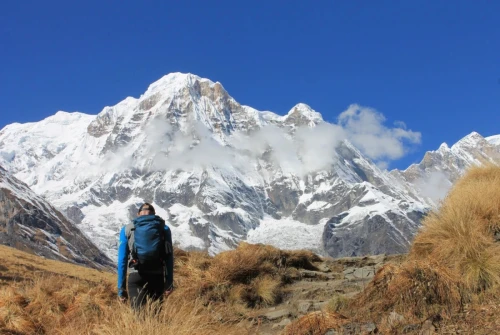
Mardi Himal Trek Overview
The Mardi Himal Trek is a hidden gem in the Annapurna region of Nepal, offering trekkers an unforgettable experience amidst stunning Himalayan landscapes. This trek is renowned for its breathtaking views of the Annapurna range, including iconic peaks like Machapuchare (Fishtail), Mardi Himal, and Hiunchuli. The trail takes you through lush rhododendron forests, alpine meadows, and picturesque villages, providing a perfect combination of nature and culture.
Ideal for those seeking a more peaceful, less crowded alternative to popular treks like the Annapurna Base Camp Trek or Ghorepani Poon Hill Trek, the Mardi Himal Trek offers a quiet and serene experience. The trek is considered moderate in difficulty, making it accessible to trekkers of all levels, from beginners to seasoned adventurers.
As you journey through the trail, you’ll also encounter the rich local culture of the Gurung and Magar people, who warmly welcome visitors into their communities. The Mardi Himal Trek is perfect for those looking to explore the Himalayas, enjoy spectacular views, and experience the tranquility of Nepal's less-traveled trekking routes.
Whether you're looking to reach Mardi Himal Base Camp or simply want to experience the beauty of the Annapurna region at a more relaxed pace, the Mardi Himal Trek is an excellent choice for a memorable trekking adventure.
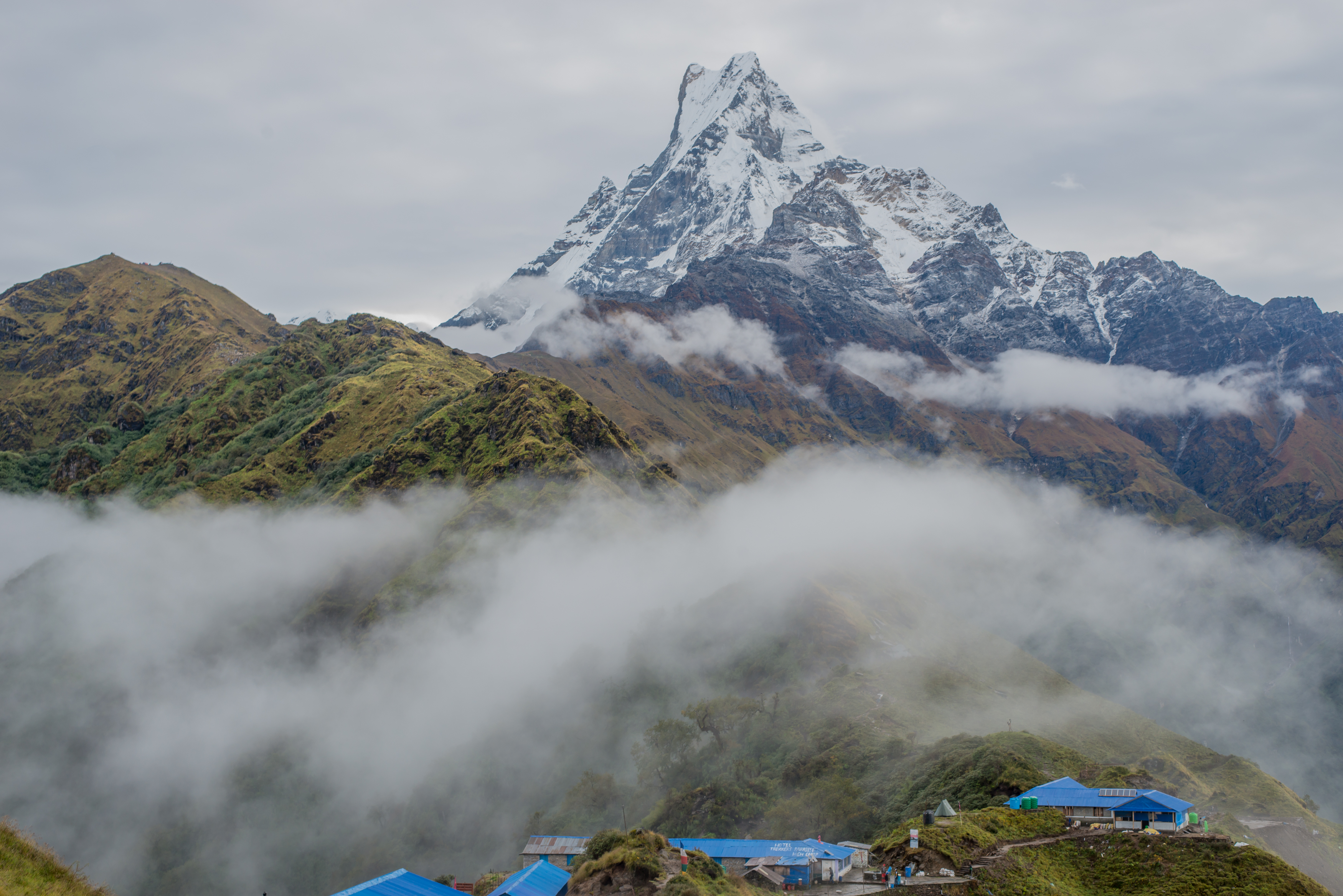
Mardi Himal Trek Highlights
1. Stunning Views of the Annapurna Range
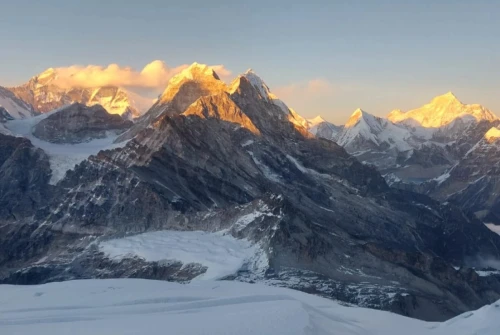
The Mardi Himal Trek offers trekkers some of the most spectacular panoramic views of the Annapurna Mountain Range. Key highlights include Machapuchare (Fishtail), Annapurna South, Mardi Himal, and Hiunchuli. The trek provides close-up views of these towering peaks, offering breathtaking landscapes that make the journey memorable. As you ascend, you'll be treated to some of the most stunning Himalayan vistas in Nepal, perfect for photography and outdoor enthusiasts.
2. Less Crowded, Peaceful Experience
One of the biggest draws of the Mardi Himal Trek is that it remains relatively less crowded compared to more famous treks like the Annapurna Base Camp or Ghorepani Poon Hill trek,Everest base camp trek . The quieter trails provide a peaceful and serene trekking experience, allowing trekkers to enjoy the beauty of the Annapurna region without the hustle and bustle of large crowds. It’s ideal for those looking to escape the crowds while still enjoying spectacular views and landscapes.
3. Diverse Landscapes and Ecosystems
The trek’s route takes you through a stunning variety of landscapes. Starting with lush rhododendron forests, the trail leads you into alpine meadows, past terraced farmland, and finally into the rugged, high-altitude alpine ridges near Mardi Himal Base Camp. The diversity in ecosystems gives trekkers the opportunity to experience everything from vibrant green hills to rocky mountain terrain, making every day on the trail feel new and exciting.
4. Rich Cultural Experience
The Mardi Himal Trek is not just about natural beauty it also offers an immersive cultural experience. Along the way, trekkers can interact with local communities such as the Gurung, Magar, and Rai people. These communities are known for their warm hospitality, and visitors often get a chance to learn about their unique traditions, customs, and way of life. This cultural aspect is one of the highlights of the trek, offering a deeper connection to the people of the Annapurna region.
5. Mardi Himal Base Camp – The Ultimate Viewpoint
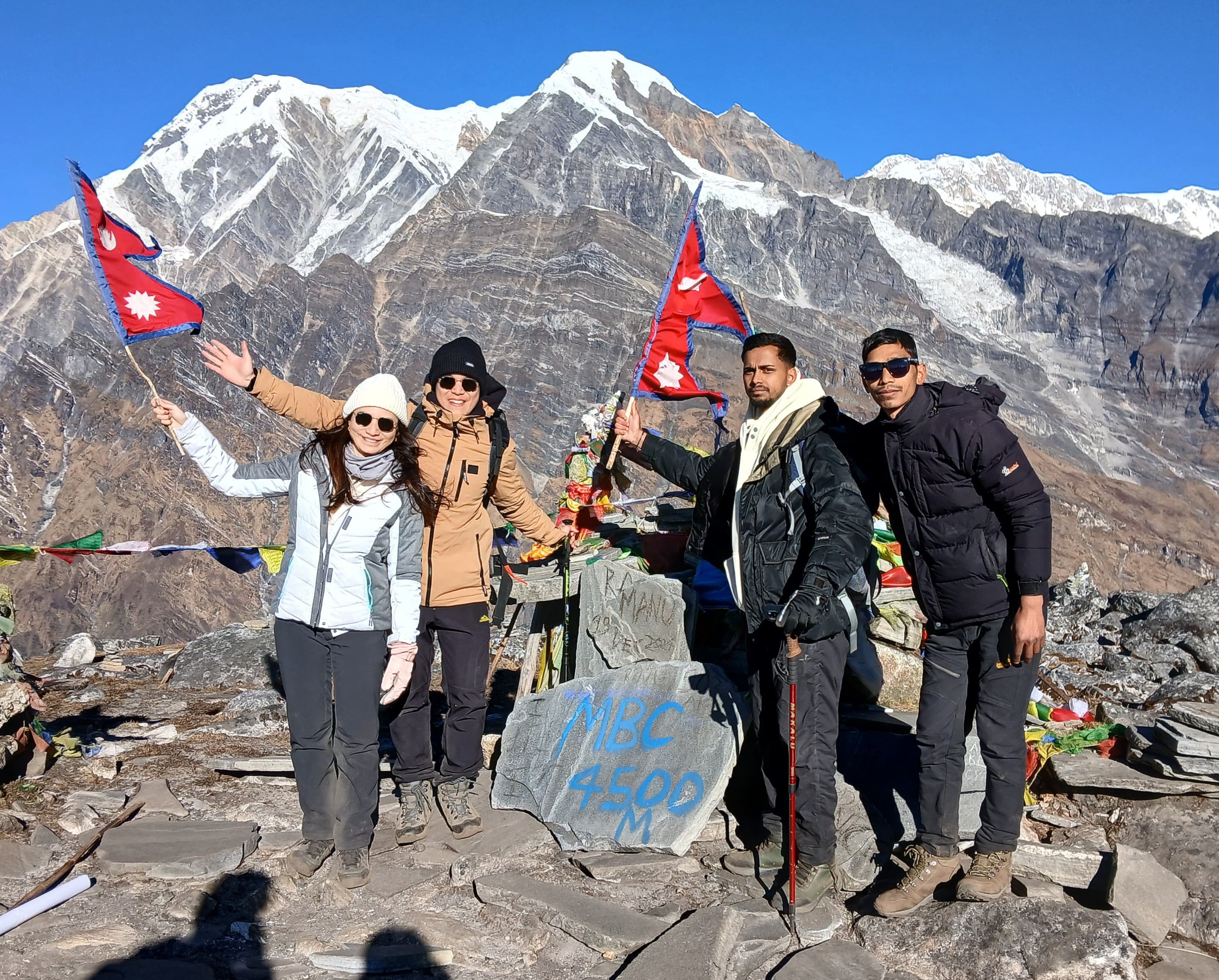
The highest point of the Mardi Himal Trek is the Mardi Himal Base Camp at 4,500 meters. From here, trekkers are treated to breathtaking views of some of the most famous peaks in the Annapurna range, including Machapuchare (Fishtail) and Annapurna South. The camp offers a serene, remote environment to relax and take in the spectacular surroundings, a perfect spot to reflect on the journey and enjoy the beauty of the Himalayas.
6. Off-the-Beaten-Path Adventure
Although it is becoming more well-known, the Mardi Himal Trek remains one of Nepal’s more off-the-beaten-path trekking routes. The trail offers a sense of discovery, winding through traditional villages, terraced fields, and dense forests, far from the usual tourist crowds. For those looking for a less commercialized trekking experience, Mardi Himal provides the perfect blend of adventure and tranquility.
7. Moderate Difficulty – Suitable for All Trekkers
The Mardi Himal Trek is considered moderate in difficulty, making it suitable for trekkers of various skill levels. Whether you’re a beginner or a seasoned trekker, the well-marked trail and gradual ascent make it a great option for those looking for a relatively short but challenging trek. It’s ideal for families, solo trekkers, and first-time adventurers who want to experience the Himalayas in a safe and accessible way.
8. A Perfect Blend of Adventure and Cultural Discovery
The Mardi Himal Trek strikes a perfect balance between cultural exploration and adventure trekking. As you explore the diverse landscapes, you’ll also have the opportunity to immerse yourself in the local culture, interacting with friendly villagers and learning about their lifestyles. This combination of natural beauty and cultural richness makes Mardi Himal one of the most rewarding trekking experiences in Nepal.
Reasons to Choose Mardi Himal Trek
The Mardi Himal Trek is one of Nepal's most rewarding trekking experiences, offering a unique combination of natural beauty, cultural immersion, and accessibility. Below are several compelling reasons why this trek should be at the top of your list for your next Himalayan adventure:
1. Short Duration Trek (3 to 7 Days)
If you're short on time but still want to experience the wonders of the Himalayas, the Mardi Himal Trek is perfect. The trek can be completed in just 3 to 7 days, making it ideal for those with limited time in Nepal. You’ll have the chance to witness breathtaking mountain views, explore lush forests, and visit local villages, all in a relatively short period. This flexibility in duration makes it an excellent choice for trekkers with tight schedules.
2. Less Commercialized, More Solitude
Unlike more famous routes like the Annapurna Circuit or Everest Base Camp, the Mardi Himal Trek is less commercialized and far less crowded. This means you can enjoy a peaceful and tranquil trekking experience without the large crowds that often accompany the more popular treks. If you’re seeking solitude in nature and want to hike away from the hustle and bustle, Mardi Himal offers an intimate and serene experience.
3. Stunning Views at Lower Altitudes
The Mardi Himal Trek provides jaw-dropping views of the Annapurna Range, including peaks like Machapuchare (Fishtail), Mardi Himal, and Annapurna South, all at relatively lower altitudes. The highest point of the trek, Mardi Himal Base Camp, is at an altitude of 4,500 meters high enough for incredible mountain views but low enough to significantly reduce the risk of high-altitude sickness. This makes Mardi Himal ideal for trekkers who want to enjoy the Himalayas without pushing their limits at extreme elevations.
4. Ideal for Beginners and Intermediate Trekkers
Compared to more strenuous treks like Everest Base Camp or Annapurna Circuit, the Mardi Himal Trek is considered moderate in difficulty. With its gradual ascent, well-marked paths, and manageable daily distances, this trek is perfect for beginners or intermediate trekkers who have some hiking experience but aren’t yet ready for more challenging, high-altitude routes. It offers a rewarding experience without being overwhelming, making it accessible to a wide range of trekkers.
5. Budget-Friendly Trek
For those traveling on a budget, the Mardi Himal Trek is one of the most affordable trekking routes in Nepal. The costs for permits, accommodation, and food are relatively low compared to other popular treks in the region. You’ll find plenty of teahouses and guesthouses offering basic but comfortable lodging, and the food is both delicious and reasonably priced. This makes the Mardi Himal Trek an excellent choice for budget-conscious travelers looking for an affordable way to experience the beauty of the Himalayas.
Mardi Himal Trek Distance
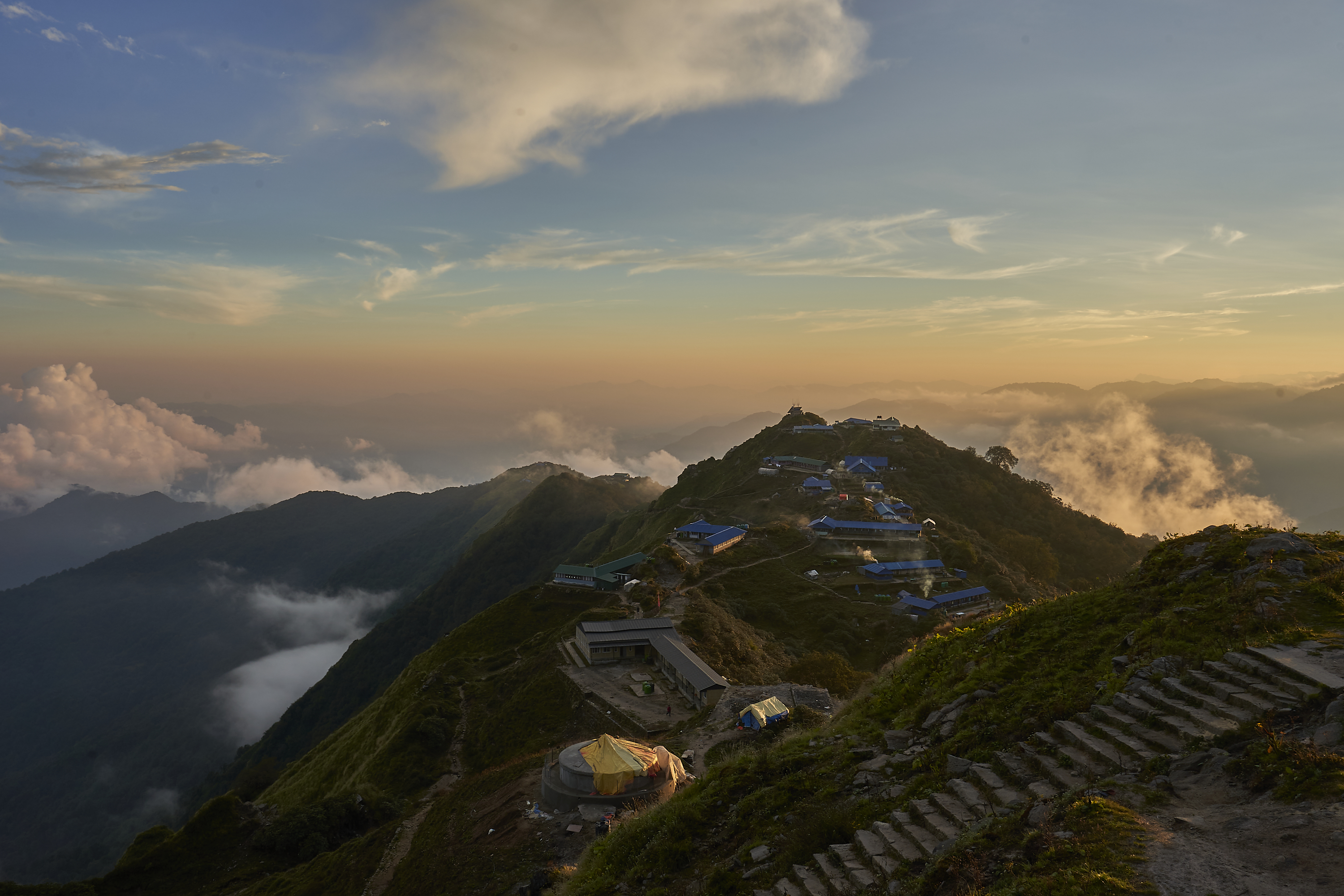
The Mardi Himal Trek typically starts from Kande, located 27 km north of Pokhara, and the trail passes through various beautiful stops such as Australian Camp, Pothana, Deurali, Forest Camp, Low Camp, Middle Camp (Badal Danda), High Camp, and finally to Mardi Himal Base Camp.
After reaching the base camp, trekkers retrace their steps and often deviate from Low Camp to reach Siding Village, completing the trek.
In total, the Mardi Himal Trek covers a distance of about 41 kilometers (25 miles). This distance can vary slightly depending on the specific route taken, but 41 km is generally considered the standard for the full trek.
From Pokhara:
If you’re starting from Pokhara, which is the most common entry point for the trek, it typically takes 3 to 7 days to complete the trek, depending on your pace and the specific itinerary you choose. The trail takes you through Kande, Forest Camp, and High Camp, before reaching the Mardi Himal Base Camp at 4,500 meters. After taking in the stunning mountain views at the base camp, you will retrace your steps and return along the same route.
From Kathmandu:
If you're starting from Kathmandu, the trek will require additional travel time to reach Pokhara, as Kathmandu is about a 6-8 hour drive or a 25-minute flight away from Pokhara. Many trekkers travel to Pokhara before beginning the Mardi Himal Trek, though some opt to start from Kathmandu and drive or fly to Pokhara to save time. Depending on how much time you spend in Kathmandu and traveling to Pokhara, the overall duration of the trip, including the travel time, can range from 7 to 9 days.
The trek itself covers 41 kilometers with a moderate ascent. The manageable distance and duration of the Mardi Himal Trek make it suitable for trekkers of various skill levels, and it provides a perfect opportunity to explore the beautiful Annapurna region without committing to a longer or more strenuous trek.
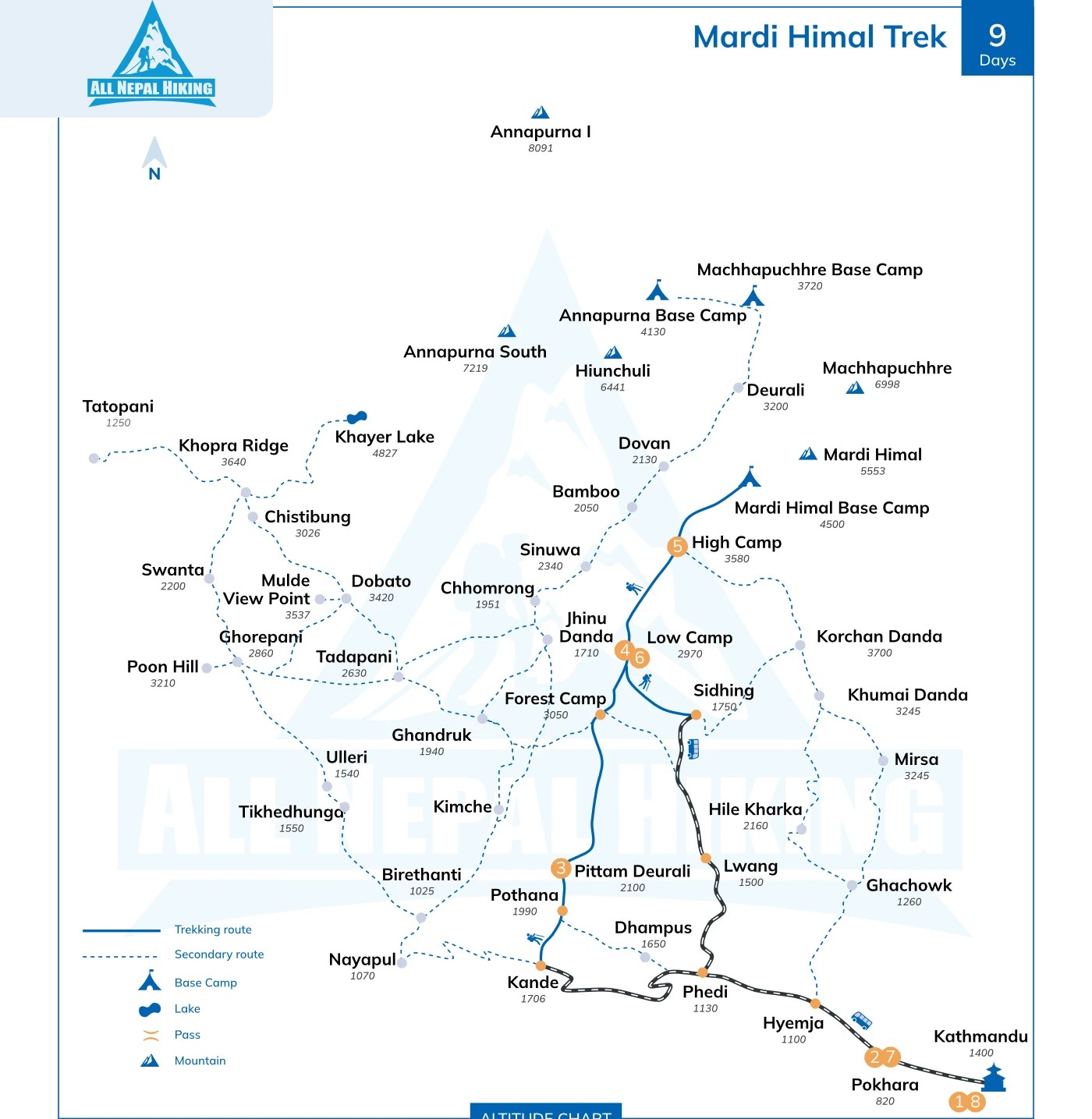
Mardi Himal Trek Altitude
The Mardi Himal Trek offers an exciting Himalayan adventure, with its highest point being the Mardi Himal Base Camp at 4,500 meters (14,764 feet). This altitude provides trekkers with spectacular views of the surrounding Annapurna peaks, including Machapuchare (Fishtail) and Annapurna South, making the effort to reach the base camp highly rewarding.
Here’s a quick overview of the altitudes at key stops along the Mardi Himal Trek:
- Pokhara: 827 meters (2,713 feet): The starting point for most trekkers, this picturesque city is located near the base of the Annapurna Range.
- Kande: 1,600 meters (5,249 feet):This is the initial starting point for many trekkers on the Mardi Himal route, offering views of the surrounding hills and valleys.
- Forest Camp: 2,550 meters (8,366 feet): As you leave the lower regions, you enter dense rhododendron forests. This spot offers an immersive experience in the wilderness.
- Low Camp: 2,970 meters (9,744 feet): Continuing through the forests and past terraced fields, the views start opening up, giving trekkers a glimpse of the mountains ahead.
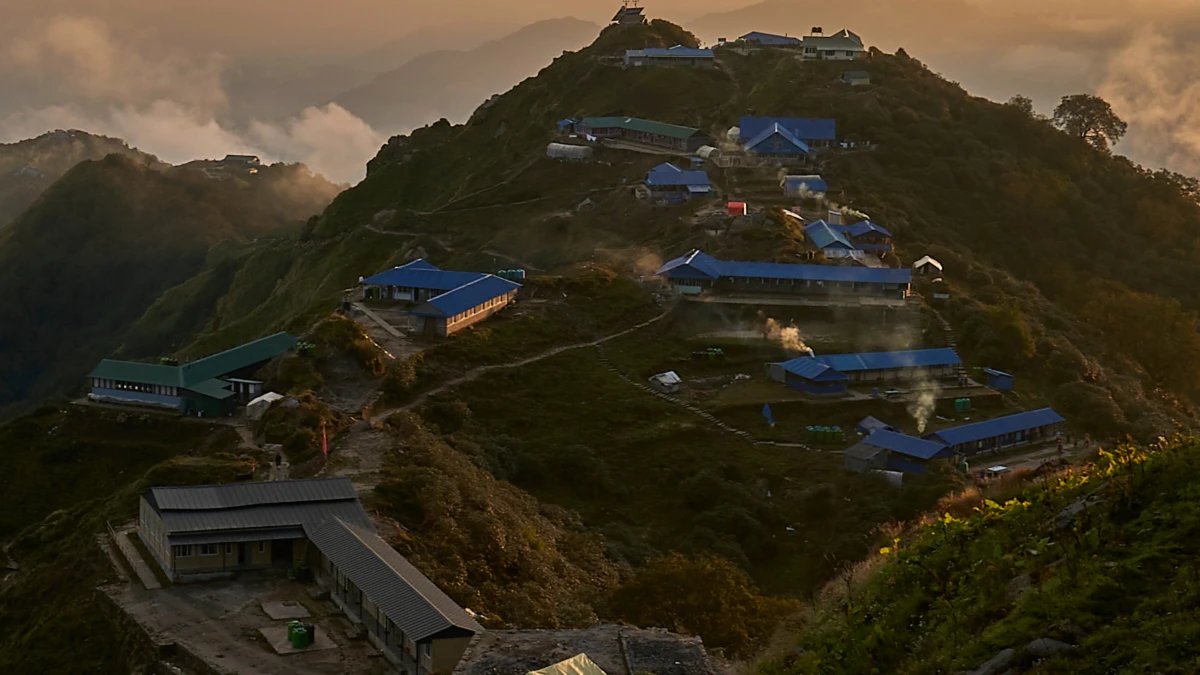
- High Camp: 3,580 meters (11,745 feet): High Camp is a popular overnight stop, offering incredible views of Machapuchare and Annapurna South. It’s the last stop before reaching Mardi Himal Base Camp.
- Mardi Himal Base Camp: 4,500 meters (14,764 feet): The highest point of the trek, Mardi Himal Base Camp offers unmatched views of Machapuchare (Fishtail) and surrounding peaks. The altitude here requires proper acclimatization, but with moderate fitness and pacing, it’s achievable for most trekkers.
Altitude Considerations: While the highest point of the trek is at 4,500 meters, it’s still considered a moderate trek, and most trekkers can reach the Mardi Himal Base Camp without too much difficulty. However, it’s important to acclimatize properly along the way to avoid altitude sickness. Most trekkers will experience gradual ascents, with plenty of breaks and opportunities to adjust to the altitude.
Mardi Himal Height
The Mardi Himal stands at an impressive 5,587 meters (18,330 feet) above sea level. It is considered a relatively accessible peak in the Annapurna range, making it a popular destination for trekkers seeking a taste of high-altitude trekking without the extreme challenges of higher mountains. The trek itself reaches Mardi Himal Base Camp at around 4,500 meters (14,764 feet), offering trekkers spectacular views of the surrounding peaks like Machhapuchhre (Fishtail) and Annapurna South.
Mardi Himal Location
The Mardi Himal is located in the Annapurna Conservation Area in the north-central region of Nepal. It lies to the east of Annapurna Base Camp and is nestled between Annapurna South and Machhapuchhre (Fishtail Peak). The trekking route passes through lush rhododendron forests, terraced farmlands, and traditional Gurung villages, leading to the base camp situated beneath the towering Mardi Himal peak. The trek starts from Pokhara, a popular tourist hub, and continues through villages like Kande, Pothana, Forest Camp, and High Camp before reaching the base camp.
Mardi Himal is known for its stunning, panoramic views and offers trekkers an opportunity to experience the Annapurna region's beauty with fewer crowds compared to other popular trekking routes.
When is the Best Time for Mardi Himal Trek?
The Mardi Himal Trek is open year-round, and each season offers unique experiences. However, choosing the right season can significantly enhance your trekking experience by offering clear skies, stable weather, and the most comfortable conditions. Here’s a breakdown of the best time to trek Mardi Himal based on weather, trail conditions, and overall experience.
1. Spring (March to May) – Best for Clear Views and Blooming Flora
- Weather & Temperature: During spring, the weather is mild, with moderate temperatures during the day and cool nights. Early mornings are mostly clear, offering great visibility for mountain views.
- Trail Conditions: The trails are dry and stable, with rhododendron forests in full bloom. The vibrant colors of the flowers add a magical touch to your trekking experience.
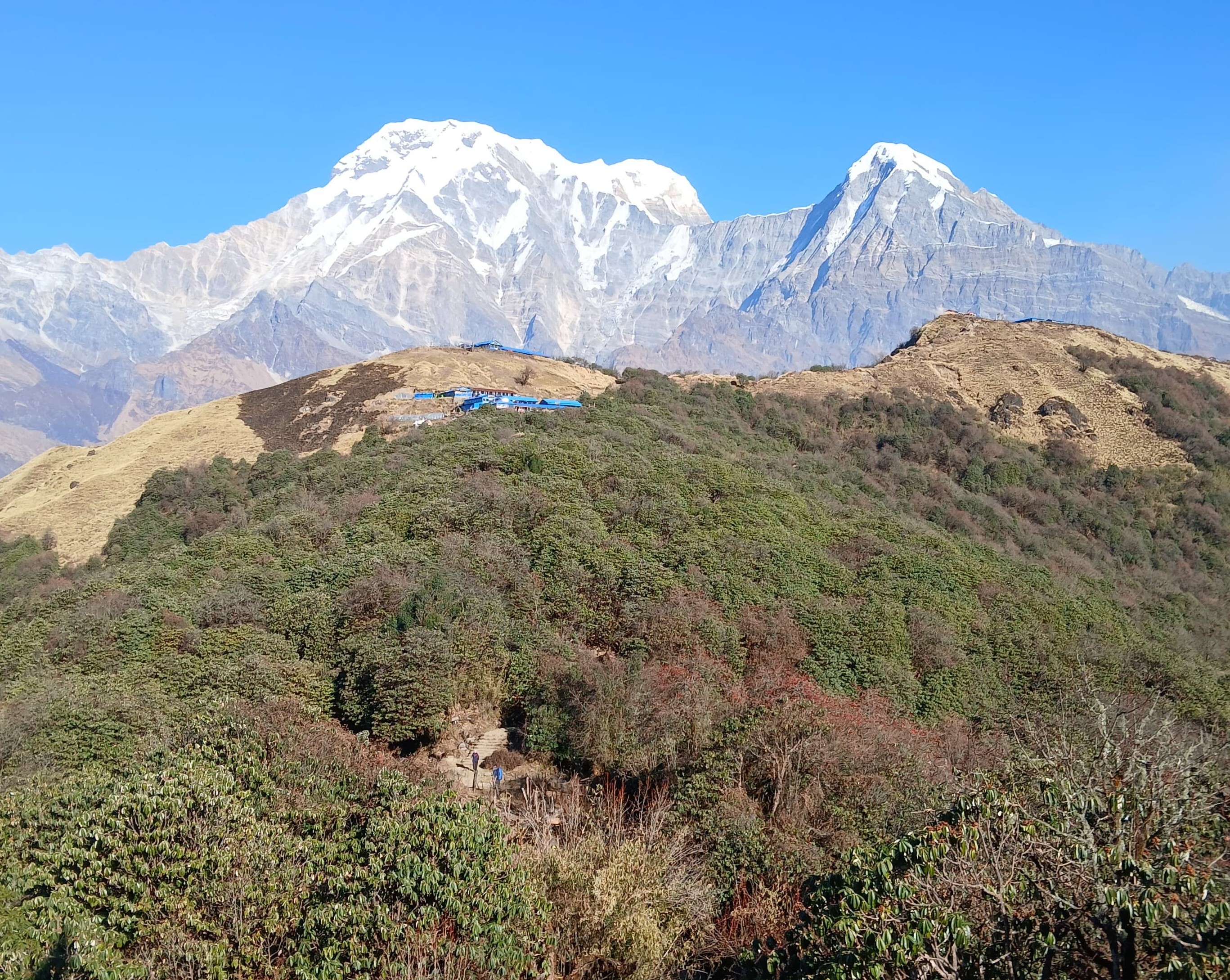
- Scenery & Experience: Spring offers crystal-clear views of the Annapurna, Machapuchare (Fishtail), and Dhaulagiri mountains, making it an excellent time for photography. The landscape is colorful and lush, with a perfect blend of comfortable trekking conditions and stunning views.
- Suitability: Ideal for trekkers who want perfect weather, vibrant scenery, and moderate temperatures. Spring is one of the most popular seasons for the Mardi Himal Trek, offering a balance of natural beauty and comfortable trekking conditions.
2. Autumn (September to November) – Peak Season for Trekking in Nepal
- Weather & Temperature: The weather is cool with clear skies and mild temperatures, making it the peak trekking season in Nepal. It's the most popular time to visit due to the stable weather conditions and clear visibility.
- Trail Conditions: The trails are dry and well-defined, providing ideal hiking conditions for trekkers. The clear weather and minimal rainfall during this period make it an excellent time to trek.
- Scenery & Experience: Autumn offers some of the best panoramic mountain views of the Annapurna region. You can also experience local festivals like Dashain and Tihar, which offer a cultural twist to your trekking adventure.
- Suitability: Perfect for those who want to enjoy unobstructed views of the Himalayas, encounter vibrant cultural events, and hike in stable weather. Autumn is the ideal season for those seeking the best trekking conditions.
3. Summer / Monsoon (June to August) – For Solitude and Lush Green Landscapes
- Weather & Temperature: Summer brings warm and humid weather, with frequent rainfall. The humidity can make it feel hotter than the actual temperature, especially during the afternoon hours.
- Trail Conditions: The trails tend to be muddy and slippery, and visibility can be reduced due to frequent cloud cover. The heavy rainfall during this season can make trekking more challenging.
- Scenery & Experience: Despite the challenges, the lush green landscapes during the monsoon are unparalleled. If you enjoy a quieter trekking experience with fewer tourists, this is the season to go. The mountains may be obscured, but the serene and quiet atmosphere can be highly rewarding.
- Suitability: Best for trekkers who seek solitude and don’t mind getting wet. If you're an experienced trekker and are prepared for the rain, you’ll enjoy the lush, vibrant landscape and quiet paths.
4. Winter (December to February) – For Peace and Snow-Capped Peaks
- Weather & Temperature: Winter brings cold mornings and nights, with crisp, clear days. Expect low temperatures at night and in the mornings, especially at higher altitudes. The daytime remains pleasant for trekking but can get chilly.
- Trail Conditions: The trails are typically dry but can have light snow at higher altitudes. Some sections, especially near the High Camp, may experience light snowfall.
- Scenery & Experience: Winter offers a peaceful environment, with fewer trekkers on the trail. The snow-capped peaks and clear skies provide perfect conditions for uninterrupted mountain views.
- Suitability: This season is best suited for experienced trekkers who can handle the cold and enjoy a quieter, serene trekking environment. The lack of crowds and the pristine beauty of snow-covered landscapes make it an appealing choice for some.
The best seasons to trek Mardi Himal are Spring (March to May) and Autumn (September to November). During these months, you can enjoy mild temperatures, clear skies, and breathtaking mountain views, making it the perfect balance between comfort, adventure, and natural beauty.
Both spring and autumn offer ideal trekking conditions, with dry trails, stable weather, and exceptional visibility of the Annapurna Range. These seasons are perfect for those looking to experience the Himalayas at their best while enjoying the most pleasant trekking conditions.
If you’re looking for a more tranquil experience, the monsoon season (June to August) still presents an opportunity for solitude. While there may be rain and slippery trails, trekkers who are experienced and well-prepared can still enjoy the lush green landscapes and peaceful environment with fewer crowds.
Mardi Himal Trek Required Permits
Trek in the Mardi Himal region, you must obtain the Annapurna Conservation Area Permit (ACAP). This permit helps support conservation efforts, local communities, and trail maintenance in the Annapurna region.
Annapurna Conservation Area Permit (ACAP) Fee Breakdown 2026
Category | Nationality | Permit Fee (NPR) | Remarks |
SAARC Nationals | Citizens of SAARC countries (India, Bhutan, Bangladesh, Sri Lanka, Maldives, Pakistan, Afghanistan) | 1,000 | Valid for one entry into the Annapurna Conservation Area |
Foreign Nationals | All non-SAARC international trekkers | 3,000 | Valid for one entry into the Annapurna Conservation Area |
Nepali Citizens | Nepali trekkers | Free | Must carry a valid citizenship or government-issued ID |
Where to Obtain the ACAP Permit for the Mardi Himal Trek
You can obtain your ACAP permit for the Mardi Himal Trek in two locations: in Pokhara, most trekkers arrange their permits at the ACAP Permit Counter located at Damside, while in Kathmandu, you can obtain them at the Tourism Office in Bhrikutimandap. Both offices are open from 9:00 AM to 5:00 PM, Sunday to Friday, excluding public holidays. The permit fees are payable in Nepalese Rupees (NPR), and only cash is accepted for payment. If you decide to book your trek through a registered travel agency like All Nepal hiking , the ACAP permit is often included in your package, and then we will handle all the paperwork, allowing you to focus entirely on your trekking adventure.
How Difficult to Trek Mardi Himal Nepal?
The Mardi Himal Trek is classified as a moderate trek, making it suitable for trekkers with basic fitness levels and no technical climbing experience. The trek usually takes between 3 to 7 days from Kathmandu and Pokhara , depending on your pace and chosen itinerary. For most trekkers, a 5 to 6-day duration is typical, allowing sufficient time to acclimatize and enjoy the natural beauty of the region. The highest point of the trek, Mardi Himal Base Camp, is located at 4,500 meters (14,764 feet), which poses a moderate risk of altitude sickness. However, this altitude is manageable for most trekkers as long as they trek slowly, drink plenty of water, and give themselves time to acclimatize properly.
The trail consists of a mix of steep ascents and moderate descents and is generally well-maintained, although it can be rocky and rugged in some sections, particularly as you approach the Mardi Himal Base Camp. The trek involves a series of stone steps and continuous ascending and descending that can be physically demanding, but it doesn’t require any technical climbing skills, making it accessible for most trekkers. For beginners, the trek is manageable, provided you are in good physical shape and take it slow. The key is to take regular breaks, stay hydrated, and not rush the climb.
Experienced trekkers will find the trek relatively easy and a perfect opportunity to experience the beauty of the Annapurna range without too much physical strain. The most challenging part of the trek is High camp to Upper Viewpoint and Mardi Himal Base Camp, where the trail becomes steep and narrow, requiring careful footing, especially during colder or windier weather.
During the winter season, the trail conditions can be tougher, especially from Forest Camp to Badal danda and toward the base camp of Mardi . The snow can make the trail slippery, and the stones are often covered in moss and lichen, which increases the difficulty. Therefore, it’s highly recommended to use trekking poles, micro spikes and wear good hiking boots to help navigate the slippery terrain.
Despite these challenges, the trek remains manageable in terms of elevation. With the highest point at 4,500 meters, most trekkers can handle it without significant issues, as long as they ascend gradually. The well-maintained trail, the manageable altitude, and the availability of teahouse accommodations along the way make the Mardi Himal Trek an ideal option for those looking for a less demanding trek in the Himalayas. The trek is well-suited for beginners who want to experience the majestic Himalayan scenery without the technical challenges of more advanced treks like the Annapurna Base Camp or Everest Base Camp.
How Long is Mardi Himal Trek?
The Mardi Himal Trek can typically be completed in 3 to 7 days, depending on your fitness level, available time, and preferred trekking pace. While some trekkers opt for a shorter, more intense 3-day trek, others prefer a relaxed 7-day trek that allows for better acclimatization and more exploration of the region.
Here’s a breakdown of the different durations for the Mardi Himal Trek:
For a 3-day trek, this option is ideal for experienced and physically fit trekkers who can manage 7 to 8 hours of walking per day. The trek follows a faster pace with limited rest and minimal exploration. It’s perfect for those on a tight schedule who still want to experience the beauty of Mardi Himal in a short period of time.
The 4-day trek is a moderate-paced itinerary, with 6 to 7 hours of trekking daily, which includes some challenging ascents. This itinerary provides a good balance of trekking and scenery, making it a great choice for trekkers with decent fitness levels who want a compact yet rewarding adventure.
The 5-day trek is the most recommended and balanced option. This duration allows trekkers to move at a comfortable pace, take time to enjoy the stunning landscapes, and adjust naturally to the increasing altitude. This itinerary is particularly suitable for beginner trekkers or those who want to enjoy a fulfilling trekking experience without feeling rushed.
The 6 to 7-day trek is ideal for trekkers who prefer a more relaxed journey with ample time for acclimatization and photography. By extending the trek, trekkers can reduce daily walking hours, allowing for longer stays at scenic spots such as Low Camp, High Camp, or the Upper Viewpoint. This option also provides a slower, more immersive experience of the Annapurna region.
Finally, the 9-day Mardi Himal Trek with All Nepal Hiking is designed for travelers seeking a rewarding Himalayan adventure with a balanced pace. This itinerary allows 5 days of trekking and ample time for travel, rest, and exploration in Pokhara. The extended duration provides a perfect combination of scenic walks, cultural experiences, and proper acclimatization within the stunning Annapurna region.
Overall, the Mardi Himal Trek offers flexibility in terms of duration and pace, allowing trekkers to choose the option that best fits their schedule and physical condition.
Mardi Himal Trek Itinerary
The Mardi Himal Trek Itinerary offers flexibility in its itinerary, allowing trekkers to choose between a 7-day trek for a leisurely and acclimatized experience or a 3-day trek for those with limited time or a faster-paced adventure. Here are the details of all itineraries:
Mardi Himal Trek 3 Days Itinerary
For those with limited time or looking for a quicker trek, the 3-day Mardi Himal Trek offers a compressed version of the experience. The itinerary skips some lower camps, focusing on reaching High Camp and Mardi Himal Base Camp directly.
Day 1: Pokhara to Kande & Trek to Low Camp (2,970m)
Day 2: Low Camp to High Camp (3,580m) and Mardi Himal Base Camp (4,500m)
Day 3: High Camp to Forest Camp & Drive to Pokhara
4-Day Mardi Himal Trek Itinerary
The 4-Day Mardi Himal Trek offers a moderately paced route, popular with families, corporate groups, and slower hikers. The trek starts in Dhampus village and passes through vibrant forests during the summer, showcasing beautiful flowers and foliage. If you prefer dramatic mountain views, consider the Kalimati route, which offers less time in the forest and more time above the treeline, with constant mountain vistas.
Day 1: Pokhara Drive to Kalimati & Trek to Rest Camp
- Duration: 4 hours of walking
- Route: Drive from Pokhara to Kalimati, then trek to Rest Camp.
- Highlights: A scenic drive followed by a gradual ascent through lush forests to Rest Camp.
Day 2: Rest Camp to High Camp
- Duration: 4-5 hours of walking
- Route: Trek from Rest Camp to High Camp.
- Highlights: Gradual climb through rhododendron forests with views of Machapuchare (Fishtail) and the Annapurna range.
Day 3: High Camp to Mardi Viewpoint & Trek to Badal Danda (Middle Camp)
- Duration: 5 hours of walking
- Route: Visit Mardi Viewpoint, then trek to Badal Danda (Middle Camp).
- Highlights: Mardi Himal Base Camp views, sunrise at Mardi Viewpoint, and panoramic mountain vistas. Enjoy breathtaking views of Machapuchare and Annapurna South.
Day 4: Badal Danda to Siding & Drive Back to Pokhara
- Duration: 4 hours of walking
- Route: Trek from Badal Danda to Siding, then drive to Pokhara.
- Highlights: Descend through beautiful forests, villages, and enjoy the spectacular mountain scenery. End your trek with a drive back to Pokhara.
Mardi Himal Trek 5-Day Itinerary
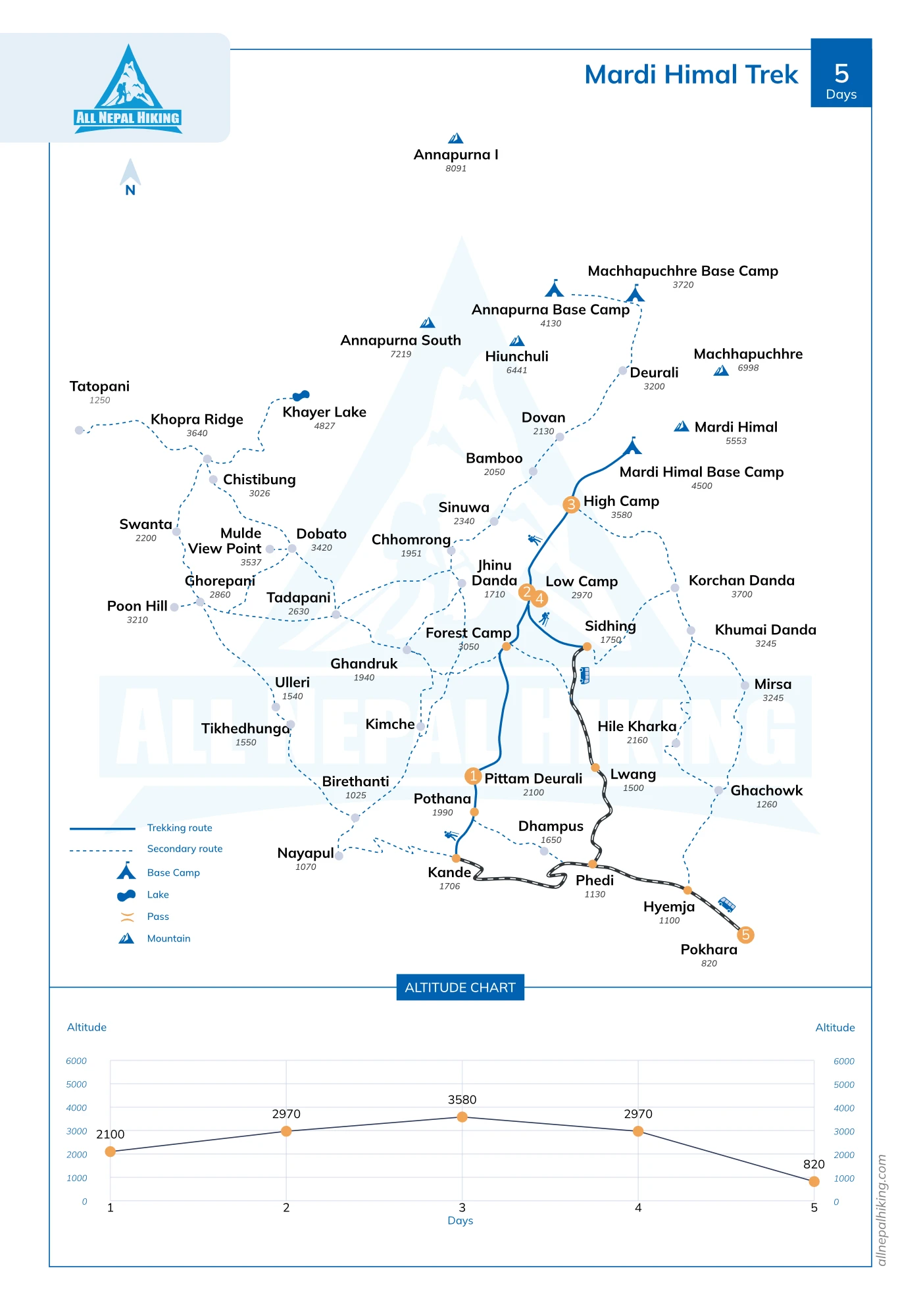
The 5-Day Mardi Himal Trek offers a perfect balance of trekking and acclimatization, allowing you to explore the Annapurna region at a moderate pace. Here's a detailed breakdown of your journey
Day 1: Drive to Kande and Trek to Deurali
- Duration: 5-6 hours
- Route: Drive from Pokhara to Kande (1,600m), then trek to Deurali (2,150m).
- Highlights: A scenic drive followed by a gradual ascent through lush forests and beautiful rhododendron trees. The trail offers stunning views of the surrounding hills and valleys as you head towards Deurali.
Day 2: Trek from Deurali to Low Camp
- Duration: 5-6 hours
- Route: Trek from Deurali to Low Camp (2,970m).
- Highlights: As you ascend, the trail becomes steeper, but you’re rewarded with incredible views of Machapuchare (Fishtail) and other surrounding peaks. The rhododendron forests continue, adding to the beauty of the day’s hike.
Day 3: Trek from Low Camp to High Camp
- Duration: 4-5 hours
- Route: Trek from Low Camp to High Camp (3,580m).
- Highlights: The trail continues to climb, offering closer views of Mardi Himal and Annapurna South. As you near High Camp, you’ll enjoy panoramic views of the Annapurna range. The atmosphere becomes more alpine, with fewer trees and more open space.
Day 4: Hike to Mardi Himal Base Camp and Return to Badal Danda(Middle Camp) or Low Camp
- Duration: 7-8 hours
- Route: Hike to Mardi Himal Base Camp (4,500m), then return to Low Camp.
- Highlights: The highlight of the trek, the Mardi Himal Base Camp offers stunning panoramic views of the Annapurna range, including Machapuchare. After spending time at the base camp, you’ll descend back to Low Camp for an overnight stay.
Day 5: Trek to Siding Village and Drive Back to Pokhara
- Duration: 5-6 hours
- Route: Trek from Low Camp to Siding Village, then drive back to Pokhara.
- Highlights: The final day involves a descent through forests and villages, with views of the Annapurna range in the distance. Once you reach Siding Village, you’ll drive back to Pokhara, where your trek concludes.
Mardi Himal Trek 7-Day Itinerary from Kathmandu By Flight
The Mardi Himal Trek 7-Day Itinerary from Kathmandu By Flight is a fantastic option for those who want to experience the beauty of the Annapurna region while allowing more time for exploration, acclimatization, and a comfortable trekking pace. Below is your detailed itinerary:
Day 1: Arrive Kathmandu Airport & Transfer to Hotel
- Arrival: Arrive at Kathmandu Airport (1,400m).
- Highlights: Upon arrival, you will be greeted by your representative and transferred to your hotel in Kathmandu. Use the rest of the day to relax, explore the city, or prepare for the trek ahead.
Day 2: Fly Kathmandu to Pokhara & Drive from Pokhara to Kande, Trek to Deurali
- Flight Duration: 25 minutes from Kathmandu to Pokhara.
- Trek Duration: 4-5 hours from Kande to Deurali (2,150m).
- Highlights: Take a scenic flight from Kathmandu to Pokhara, followed by a drive to Kande (1,600m). From there, begin your trek towards Deurali. The trail offers beautiful views as you pass through rhododendron forests and small villages, making for a relaxing introduction to the trek.
Day 3: Trek from Deurali to Low Camp
- Duration: 5-6 hours.
- Route: Trek from Deurali to Low Camp (2,970m).
- Highlights: The trek becomes steeper today as you climb towards Low Camp. Enjoy spectacular views of Machapuchare (Fishtail) and the surrounding peaks. The path leads you through lush forests, offering a peaceful and scenic experience.
Day 4: Trek from Low Camp to High Camp
- Duration: 4-5 hours.
- Route: Trek from Low Camp to High Camp (3,580m).
- Highlights: Today's trek takes you higher up, offering amazing panoramic views of the Mardi Himal, Annapurna South, and Machapuchare. As you ascend, the terrain becomes more alpine, and you’ll notice the thin air at higher altitudes.
Day 5: High Camp to Upper Viewpoint, Mardi Himal Base Camp & Return to Low Camp
- Duration: 7-8 hours.
- Route: Trek to Mardi Himal Base Camp (4,500m) and return to Low Camp.
- Highlights: Today is the highlight of the trek! Hike to Mardi Himal Base Camp for breathtaking views of the Annapurna range. Spend time at the base camp, soaking in the panoramic vistas, before descending back to Low Camp for an overnight stay.
Day 6: Trek from Low Camp to Sidhing Village & Drive Back to Pokhara
- Duration: 5-6 hours.
- Route: Trek from Low Camp to Sidhing Village, then drive to Pokhara.
- Highlights: Enjoy a pleasant descent as you leave Low Camp and make your way to Sidhing Village. Once in Sidhing, take a drive back to Pokhara, where you can relax and explore the city.
Day 7: Drive from Pokhara to Kathmandu
- Duration: 6-7 hours.
- Route: Drive from Pokhara to Kathmandu.
- Highlights: Enjoy a scenic drive back to Kathmandu. The route offers beautiful views of the Nepalese countryside and the Trishuli River. Once in Kathmandu, you will have free time to shop or explore the city before concluding your trip.
This 7-Day Mardi Himal Trek itinerary offers a balanced pace, combining the adventure of the trek with cultural experiences in Kathmandu and Pokhara, allowing trekkers to fully appreciate the Annapurna region’s beauty. Whether you're looking to experience high-altitude trekking or enjoy serene mountain views, this itinerary provides the perfect blend.
Mardi Himal Trek 9-Day Itinerary By Bus/ Jeep
This Mardi Himal Trek 9-Day Itinerary By Bus allows for a more relaxed pace and ample time to experience the beauty of the Annapurna region. It combines trekking through the mountains with sightseeing in Kathmandu and Pokhara, making it an ideal option for trekkers who want to fully immerse themselves in the adventure.
Day 1: Arrival in Kathmandu
- Arrival: Arrive at Kathmandu (1,400m).
- Highlights: Upon arrival at Tribhuvan International Airport, you will be greeted by your representative and transferred to your hotel. You’ll have the rest of the day to relax or explore the local sights of Kathmandu like Thamel or Durbar Square.
Day 2: Drive to Pokhara
- Duration: 6-7 hours.
- Route: Drive from Kathmandu to Pokhara (820m).
- Highlights: Take a scenic drive through the Trishuli River valley. Enjoy views of the countryside, hills, and mountains along the way. Upon arrival in Pokhara, enjoy a relaxing evening at Lakeside or visit Phewa Lake.
Day 3: Drive to Kande & Trek to Deurali
- Duration: 4-5 hours of trekking.
- Route: Drive from Pokhara to Kande, then trek to Deurali (2,150m).
- Highlights: The day starts with a scenic drive to Kande followed by a moderate trek to Deurali. As you ascend, you will pass through beautiful rhododendron forests, with panoramic views of the surrounding mountains.
Day 4: Trek from Deurali to Low Camp
- Duration: 5-6 hours of trekking.
- Route: Trek from Deurali to Low Camp (2,970m).
- Highlights: The trek today offers a gradual ascent through lush forests and provides the first views of Machapuchare (Fishtail) and the Annapurna range. The trail winds through traditional villages, offering insight into local culture.
Day 5: Trek from Low Camp to High Camp
- Duration: 4-5 hours of trekking.
- Route: Trek from Low Camp to High Camp (3,580m).
- Highlights: Today, the trail continues through the alpine zone, with spectacular views of Machapuchare, Annapurna South, and Mardi Himal. The landscape becomes more rugged as you approach High Camp, situated at an elevation of 3,580m.
Day 6: Hike to Mardi Himal Base Camp (4,500m) & Return to Low Camp
- Duration: 7-8 hours of trekking.
- Route: Trek to Mardi Himal Base Camp (4,500m), then return to Low Camp (2,970m).
- Highlights: This is the highlight of the trek. After an early start, you’ll reach Mardi Himal Base Camp, offering incredible panoramic views of the Annapurna range. After spending time at the base camp, you’ll descend back to Low Camp.
Day 7: Trek to Siding Village & Drive Back to Pokhara
- Duration: 5-6 hours of trekking, followed by a drive.
- Route: Trek from Low Camp to Siding Village (1,750m), then drive back to Pokhara.
- Highlights: Enjoy a pleasant descent through the lush forests and traditional villages. Once in Siding Village, you’ll take a drive back to Pokhara, where you can relax and explore the city.
Day 8: Drive to Kathmandu
- Duration: 6-7 hours.
- Route: Drive from Pokhara to Kathmandu.
- Highlights: Enjoy a scenic drive back to Kathmandu, passing through the Trishuli River valley and scenic countryside. Upon arrival, check in at your hotel and spend the evening at leisure in Kathmandu.
Day 9: Departure Day
Highlights: Depending on your flight schedule, you will be transferred to Tribhuvan International Airport for your departure. Take with you memories of an unforgettable adventure in the Annapurna region.
This 9-day Mardi Himal Trek itinerary combines the best of trekking and cultural exploration, allowing you to experience the breathtaking Himalayan views, local villages, and the vibrant cities of Kathmandu and Pokhara. It is ideal for those who want to enjoy a more leisurely pace while exploring Nepal’s stunning landscapes.
Trekking Alternatives to Mardi Himal Trek
While the Mardi Himal Trek is a fantastic short trek offering breathtaking views and a unique experience, there are several other trekking routes in the Annapurna region that also promise incredible landscapes, cultural immersion, and varying levels of difficulty. If you’re considering alternative treks, here are some of the most popular options:
1. Annapurna Base Camp Trek
- Duration: 7-14 days
- Difficulty: Moderate
- Highlights: The Annapurna Base Camp Trek is one of the most famous treks in Nepal. It offers a classic Himalayan trekking experience, taking trekkers through terraced farmlands, dense rhododendron forests, and traditional Gurung and Magar villages. The trek culminates at Annapurna Base Camp (4,130m), where you are surrounded by towering peaks like Annapurna I, Machapuchhre, and Hiunchuli. This trek is ideal for those who have a bit more time and want to enjoy magnificent mountain views with cultural diversity.
- Why Choose It: Perfect for trekkers who want to experience the Annapurna range in a more immersive way, with a moderate level of challenge.
2. Ghorepani Poon Hill Trek
- Duration: 4-5 days
- Difficulty: Easy to Moderate
- Highlights: The Ghorepani Poon Hill Trek is a shorter and easier trek in the Annapurna region, known for its beautiful sunrise views from Poon Hill (3,210m), which offers panoramic views of Annapurna and Dhaulagiri ranges. The trail meanders through vibrant rhododendron forests, traditional villages, and gently sloping mountain ridges. It’s perfect for beginners or those with limited time.
- Why Choose It: Ideal for trekkers looking for a relatively short trek with stunning views, perfect for those on a tight schedule or new to trekking.
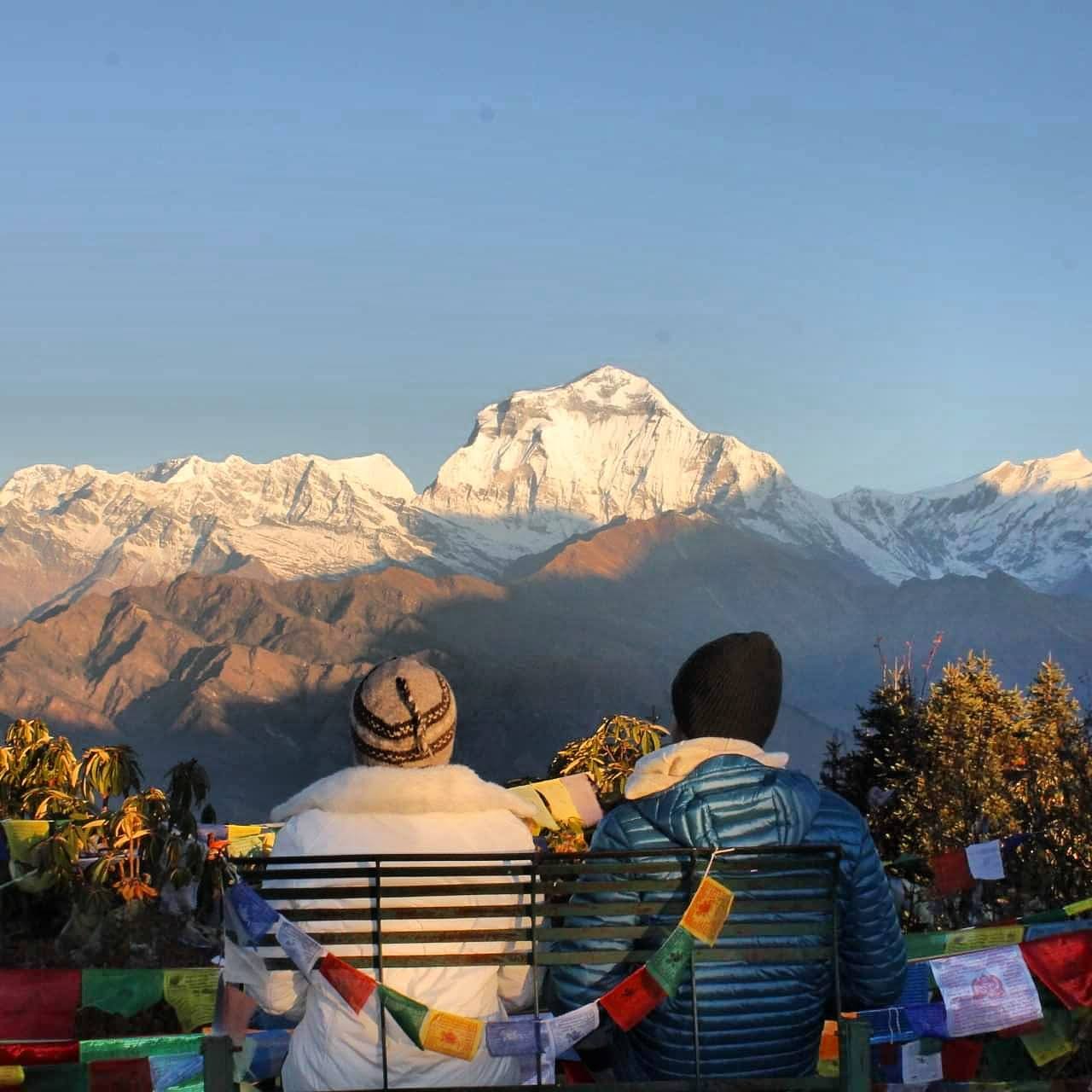
3. Mohare Danda Trek
- Duration: 7-9 days
- Difficulty: Moderate
- Highlights: The Mohare Danda Trek offers a quieter, less crowded alternative to the popular Poon Hill trek. Located between the Annapurna and Dhaulagiri ranges, this trek provides equally stunning sunrise and sunset views from Mohare Danda (3,313m) but with fewer trekkers. The route promotes community-based tourism, where you stay with local families, immersing yourself in authentic Nepali culture.
- Why Choose It: Perfect for those seeking solitude, peace, and cultural immersion in a more tranquil setting.
4. Annapurna Circuit Trek
- Duration: 14-21 days
- Difficulty: Challenging
- Highlights: The Annapurna Circuit Trek is one of Nepal's most iconic and challenging treks, known for its diverse landscapes, cultural diversity, and high-altitude crossings. The trek takes you around the Annapurna massif, passing through Tibetan villages, dense forests, and ascending to the Thorong La Pass (5,416m), one of the highest trekking passes in the world. The route offers panoramic views of Annapurna, Dhaulagiri, and Machapuchhre.
- Why Choose It: Ideal for experienced trekkers who want to explore the full spectrum of Nepal's Himalayas, from lowland forests to high-altitude deserts.
Each of these treks offers something unique, whether you're looking for a short trek, a cultural experience, or a more challenging Himalayan adventure. Depending on your time, fitness level, and interests, these trekking alternatives in the Annapurna region provide excellent opportunities to discover the natural beauty and cultural richness of Nepal.
Trekking Routes to Mardi Himal Trek
The Mardi Himal Trek offers several route variations, each providing a unique perspective of the Annapurna region. Whether you're looking for a short and scenic trek or a longer, more immersive journey, you can customize your adventure to match your preferences. All itineraries typically begin with a flight or drive from Kathmandu to Pokhara, followed by a scenic drive to your chosen trailhead. Here are some of the most popular routes:
1. Starting from Dhampus
The Dhampus route is a classic and popular starting point for the Mardi Himal Trek. It’s located about 45 minutes to an hour's drive from Pokhara. The scenic drive offers a relaxing start to the adventure. The trail begins in the beautiful Dhampus village and gradually climbs through dense forests, past traditional villages, and continues to Pothana and Deurali, where the official Mardi Himal trek starts. This route provides panoramic views and an authentic cultural experience as you pass through Gurung settlements.
2. Starting from Kande or Phedi
Another popular trailhead is Kande or Phedi, offering access to Australian Camp, known for its panoramic views of the Annapurna range. From Australian Camp, the trail reconnects with the main Mardi Himal route at Deurali. This option gives trekkers a chance to experience the lower Annapurna region's beautiful landscapes before diving into the more challenging sections of the trek.
3. Mardi Himal with Annapurna Base Camp (ABC) Extension
For those seeking a longer adventure, the Mardi Himal with Annapurna Base Camp (ABC) Extension combines two of Nepal’s most iconic treks. After reaching the Upper Viewpoint or Mardi Himal Base Camp, the trek continues through High Camp, Badal Danda, and Low Camp before heading towards Landruk. From Landruk, trekkers can connect to Sinuwa and follow the trail to Annapurna Base Camp. Alternatively, the route can pass through Ghandruk and Tadapani for a slightly longer yet richer experience.
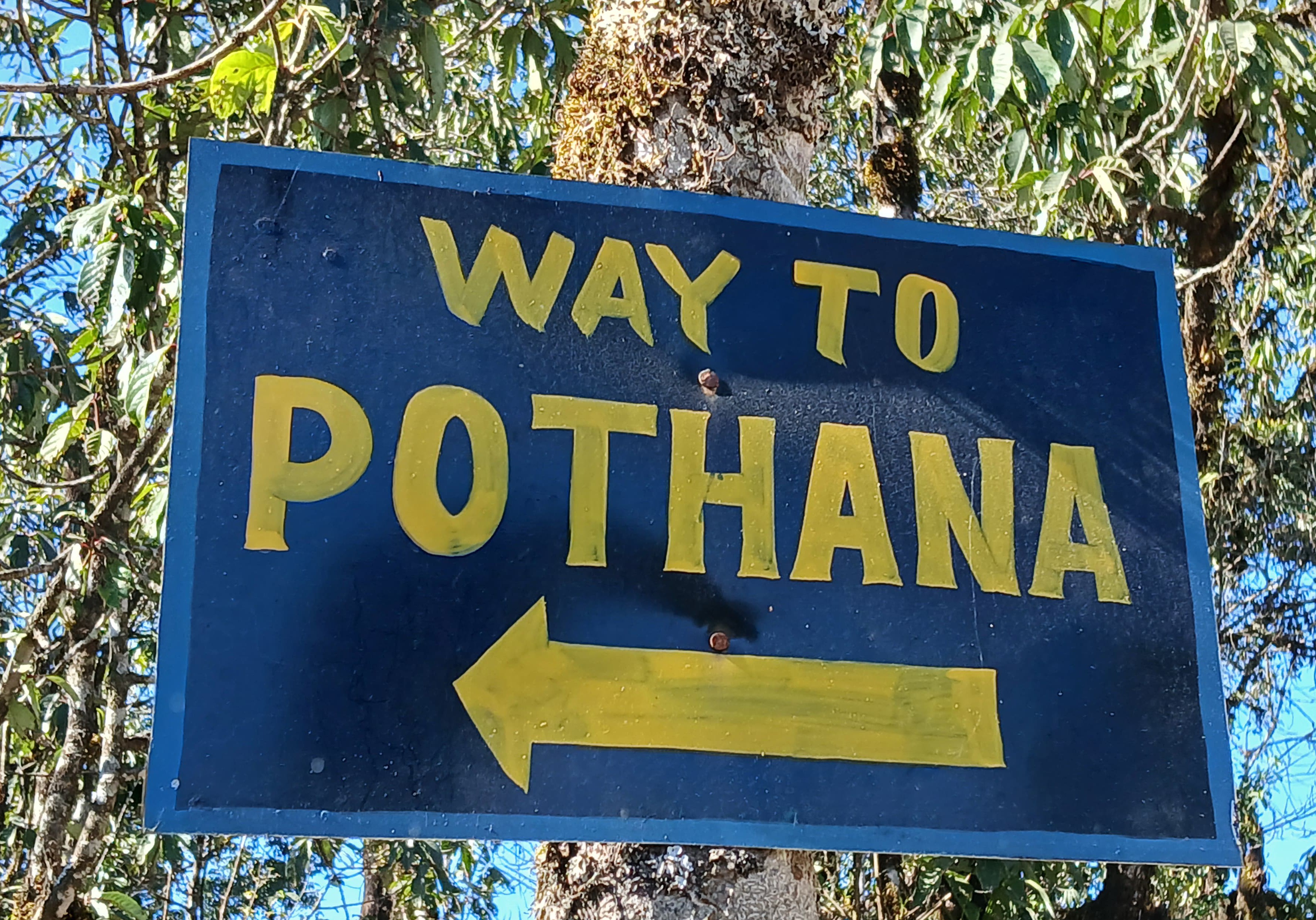
4. Mardi Himal with Ghorepani Poon Hill Extension
For trekkers seeking the perfect balance of mountain views and cultural exploration, the Mardi Himal with Ghorepani Poon Hill Extension is a fantastic option. After reaching Mardi Himal Base Camp, trekkers descend to Landruk and continue on the trail to Tadapani and Ghandruk, where they can connect to the Ghorepani Poon Hill route. Poon Hill is one of the most famous viewpoints for watching the sunrise over the Annapurna and Dhaulagiri ranges, making this extension a great choice for scenic photography and cultural exploration.
5. Extended Journey: Mardi Himal to Lwang Village
For trekkers looking for a deeper cultural experience, the journey can be extended to Lwang Village, which is known for its Gurung culture and stunning views. This extension adds both cultural immersion and scenic variety to the Mardi Himal trek, allowing you to interact with the locals and experience the beauty of rural mountain life. It’s an ideal extension for those who want to explore authentic Nepali village life while enjoying the majestic Himalayas.
Customizing Your Mardi Himal Trek Experience
The Mardi Himal Trek is one of the most customizable treks in the Annapurna region, allowing trekkers to choose the perfect route and length based on their preferences. Whether you are short on time or want to extend your adventure to experience the full beauty and culture of the Annapurna region, there is a route option for you.
For those looking to reduce travel time, All Nepal Hiking offers a 9-day Mardi Himal Trek package that includes comfortable tourist bus travel between Kathmandu and Pokhara, with the option to upgrade to a scenic domestic flight for an additional cost.
The trek officially begins in Kande, a charming hillside village reached via a short drive from Pokhara. From here, trekkers move through Pothana and Pitham Deurali, where the Mardi Himal trail officially kicks off. As the trek progresses, you will ascend through rhododendron forests and scenic ridges to High Camp, which sits at 3,550 meters and offers stunning views of the surrounding peaks. After the Upper Viewpoint or Mardi Himal Base Camp, the trek continues with a descent through Badal Danda, Low Camp, and Siding Village, before returning to Pokhara by sharing a group or private jeep.
Mardi Himal Trek Cost For 2026-2027
The cost of Mardi Himal Trek depends on several factors, including group size, trek duration, accommodation choices, and whether you opt to trek independently or hire a guide and porter. Below is a breakdown of the Mardi Himal Trek cost for foreign trekkers and Nepali national, highlighting the key expenses to expect.
Mardi Himal Trek Cost for Foreign
For foreigners, the cost typically includes permits, guide and porter fees, accommodation, and meals. The required permits include the Annapurna Conservation Area Permit (ACAP), which costs around $30 USD.
Guide and porter fees are essential if you prefer assistance during your trek. A guide will cost around $25 to $30 USD per day, while a porter charges between $20 and $25 USD per day. For trekkers looking for a more authentic trekking experience or extra comfort, hiring both a guide and a porter will significantly add to the cost.
Accommodation along the Mardi Himal Trek is typically in tea houses, with prices ranging from $5 to $10 USD per night. Meals cost between $3 and $7 USD per meal, providing a budget-friendly yet delicious option to fuel your trekking adventure.
For a Mardi Himal Trek, the total cost for a foreigner generally falls between $500 and $900 USD. This price includes all necessary permits, accommodation, meals, and guide/porter fees.
Mardi Himal Trek Cost for Nepali
For Nepali nationals, the cost of the Mardi Himal Trek is much lower, primarily due to reduced permit free and the option to trek without a guide or porter. Accommodation and food costs are the same for Nepali trekkers and foreigners, but since Nepali nationals don’t need to hire a guide or porter, their overall cost is significantly lower. For a 5-7day trek, Nepali trekkers typically spend between NPR 10,000 and NPR 15,000 (approximately $75 to $120 USD), depending on their choice of accommodation and meals.
This makes the Mardi Himal Trek an affordable trekking option for both foreign and Nepali trekkers, offering a perfect blend of adventure, cultural experiences, and breathtaking Himalayan views at a reasonable price.
Food and Water on the Mardi Himal Trek
The Mardi Himal Trek provides a fantastic opportunity to experience traditional Nepali food, while also ensuring trekkers are well-nourished for the challenging yet rewarding journey. Along the trail, teahouses serve a mix of local delicacies and familiar international dishes. Meals are prepared to sustain trekkers through varying altitudes and long trekking hours.
Food on Mardi Himal Trek
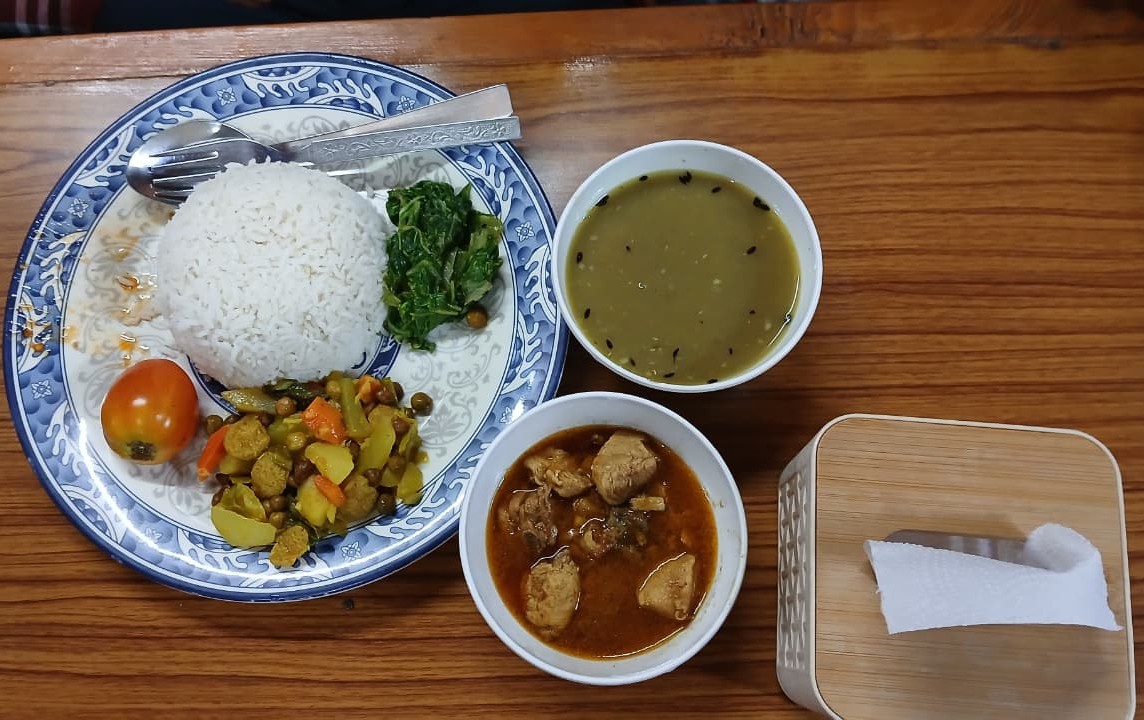
The trail offers local Nepali dishes, such as dal bhat (a lentil soup served with rice), momos (dumplings), and noodles. These are staples on the trek and provide great energy. You’ll also find Western options like pasta, sandwiches, and pancakes in most teahouses. As you gain altitude, the food options may become simpler, but they still focus on offering comforting, hearty meals.
For breakfast, you can enjoy porridge, eggs, Tibetan bread, or pancakes, typically accompanied by tea or coffee. These meals provide the necessary carbohydrates and protein to keep you energized for the day’s trekking.
The signature meal, dal bhat, is particularly beloved by trekkers, as it provides unlimited refills, ensuring you stay full and energized. This meal consists of rice, lentil soup, vegetables, and pickles, offering a healthy balance of carbohydrates and protein. For evening meals, lighter dishes such as garlic soup, vegetable noodle soup, or boiled potatoes are common, helping trekkers with digestion and acclimatization.
As you trek higher, prices for meals increase due to the added difficulty of carrying supplies to higher altitudes, but the food remains fresh, nutritious, and satisfying.
Water on the Mardi Himal Trek
Staying hydrated is crucial when trekking at high altitudes. Water management is an essential aspect of the Mardi Himal Trek due to the dry air and the physical exertion involved. There are several options for water along the route:
- Bottled mineral water: Available up to Rest Camp, bottled water usually costs between 100–150 NPR per bottle. However, as bottled water generates plastic waste, it's recommended to use refillable water bottles as much as possible.
- Boiled or filtered water: After Rest Camp, most teahouses offer safe water refills (either boiled or filtered). Prices typically range from 150 NPR per liter near Rest Camp to about 300 NPR per liter at High Camp, reflecting the difficulty in providing clean water at higher altitudes.
- Tap or spring water: Available in villages and along the trail, but should always be treated with purification tablets, a UV SteriPEN, or a portable water filter to ensure safety.
- Hot water: Available in most teahouses, often served in thermoses or bottles for a small fee. Trekking in the cold mornings or evenings makes hot water especially appealing, as it provides warmth and helps maintain hydration in freezing conditions.
By using reusable water bottles and purifying local water sources, trekkers can reduce their environmental impact while staying hydrated during the trek.\
Accommodation for Mardi Himal Trekking
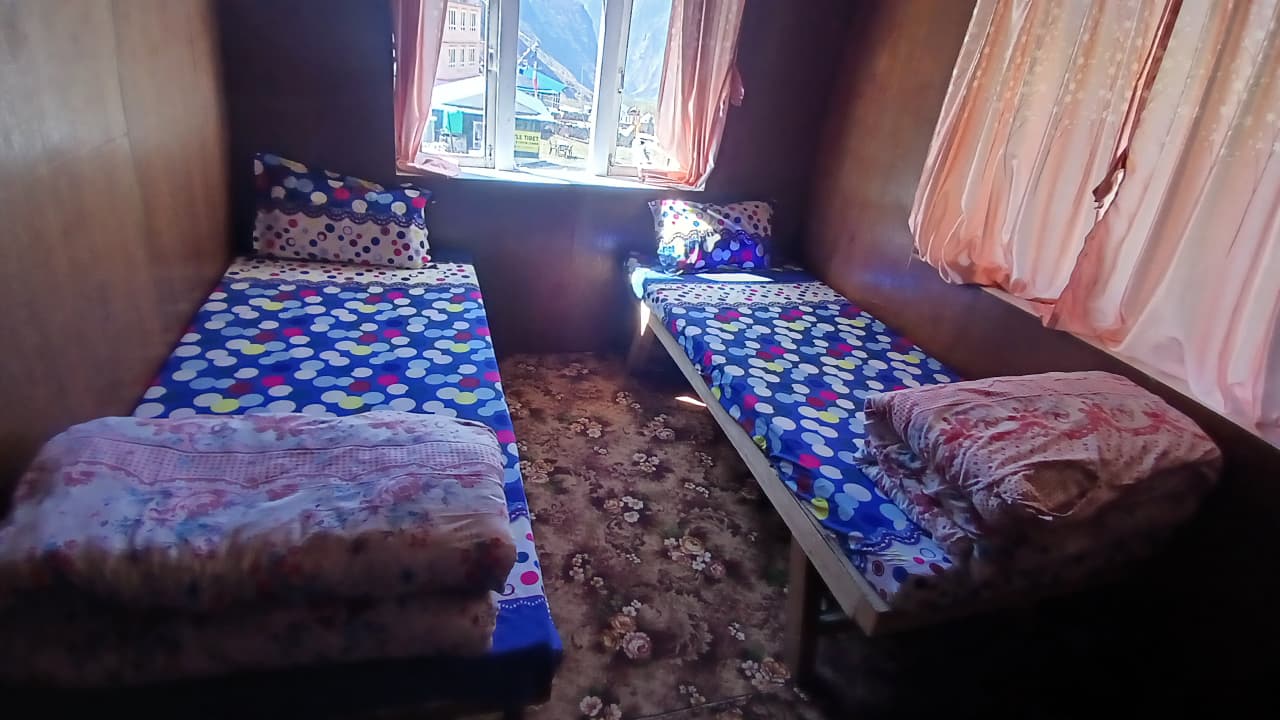
Accommodation along the Mardi Himal Trek is simple, yet comfortable, and offers a glimpse into the local culture of the Annapurna region. The trail features teahouses and lodges, primarily family-run establishments, where you’ll experience genuine hospitality and traditional Nepali warmth. These teahouses typically offer basic, dormitory-style rooms with two to four single beds, blankets, and sometimes additional layers of bedding. The rooms are functional but cozy, perfect for a good night’s rest after a day of trekking.
As you ascend the trail, the facilities become increasingly basic, especially as you approach High Camp. While most rooms come with a bed and blankets, temperatures can drop significantly in the higher altitudes. Therefore, it’s advisable to bring your own sleeping bag for added warmth, especially at higher camps. At High Camp, where the weather can be colder at night, layering with a down jacket or using a sleeping bag can make a big difference in comfort.
Cost: The price for accommodation generally ranges between $5–$10 USD per night, depending on the season and location. During peak trekking seasons (Autumn and Spring), prices may be slightly higher due to increased demand, while off-seasons might offer more budget-friendly options. The prices are generally per bed or per room, with some flexibility based on availability and the level of comfort.
Teahouse Experience: The teahouses are often run by local Gurung families, and staying in these homes offers trekkers a warm, homely atmosphere. Not only does this provide a place to rest, but it also allows for immersion into the authentic Nepali mountain culture. The teahouses serve freshly prepared meals made from locally sourced ingredients, allowing trekkers to experience the true flavors of the region. Popular dishes include dal bhat (lentil soup with rice), noodles, fried rice, soup, pancakes, and a variety of beverages like tea or coffee.
At higher altitudes, especially around High Camp, meals can become simpler, but the taste and hospitality remain excellent. The meals are filling, providing essential energy to continue your trek. The pricing for meals increases with altitude as well, given the difficulty and cost of transporting food supplies to these remote areas.
Facilities: Most teahouses provide electricity and Wi-Fi, though they are solar-powered and can be limited during cloudy days or nighttime. Charging points are typically found in the main dining area, where you can charge your devices while socializing with fellow trekkers. Wi-Fi connectivity is often available in common areas but may be unreliable, especially in remote spots or during bad weather.
Security and Luggage: When you make your final ascent to the Upper Viewpoint or Mardi Himal Base Camp, you can leave your main bags at the teahouse in High Camp. The lodge owners are typically very trustworthy, ensuring that your belongings are stored safely while you venture higher up the trail.
Cultural Experience: Staying in these teahouses plays an important role in supporting the local economy. Each stay contributes to the livelihood of mountain families, helping preserve their traditional lifestyle and culture. Sharing meals with the locals and hearing their stories adds an enriching layer to the trek, making it not just a scenic adventure, but also a culturally immersive experience.
In conclusion, accommodation on the Mardi Himal Trek offers a blend of comfort, simplicity, and local hospitality, providing trekkers with a warm, inviting place to rest while enjoying the stunning landscapes and engaging with the local culture. The teahouses make the trek memorable by offering a balance of basic amenities and authentic experiences in the heart of the Himalayas.
Mardi Himal Trek Map
A Mardi Himal Trek map is essential for navigating the route and ensuring you stay on track. You can purchase maps in Kathmandu ,thamel or Pokhara at trekking gear shops or online. These maps display key landmarks, villages, altitude markers, and the main trekking route.
The map typically includes trekking routes, showing the most common trails and variations, helping you navigate from Forest Camp to Mardi Himal Base Camp. It also marks significant altitude markers to assist with acclimatization. Nearby villages are also highlighted, indicating locations of teahouses, accommodations, and supply points. Important landmarks, such as the Upper Viewpoint with panoramic views of Machhapuchhre, Annapurna, and Hiunchuli, are also shown.
For additional navigation, some trekkers use offline navigation apps like Maps.me or Google Maps, which can be downloaded for offline use. Some also prefer GPS devices for more accurate route tracking. Having a Mardi Himal Trek map ensures a smooth and safe trekking experience as you explore the stunning Annapurna region.
Guides and Porters for Mardi Himal Trek: Why You Should Hire Them
Guides and Porters for Mardi Himal Trek play a vital role in ensuring a smooth, safe, and enjoyable trekking experience.
Guides: Although not legally required for Mardi Himal, hiring a guide enhances your adventure by providing local knowledge, ensuring you stay on the correct path, and offering assistance in case of emergencies. They also share valuable insights into the culture and traditions of the Gurung communities along the trail, making your trek more immersive and educational. With their help, you'll navigate through forested paths, steep ascents, and changing weather conditions with confidence.
Porters: If you prefer not to carry heavy luggage, hiring a porter is an excellent option. They carry your main bag, typically up to 18-20 kilograms, while you focus on the trek with a lighter daypack. Porters help reduce physical strain, allowing you to maintain a steady pace and enjoy the stunning scenery without being weighed down.
With agencies like All Nepal Hiking , you can trek with licensed guides and insured porters who are trained and familiar with the region. The company ensures fair treatment and ethically operated practices, making for a smooth and culturally enriching trek. Each porter is assigned to carry luggage for two trekkers (up to 10 kg per person), enhancing your comfort while supporting local communities.

Solo Trekking for Mardi Himal Trek
Solo Trekking on the Mardi Himal Trek is possible for experienced trekkers, offering an accessible adventure in Nepal's Annapurna region. The route is well-marked, but the remote and high-altitude conditions can pose risks. Solo trekkers should carry a map, stay familiar with the trail, and always inform someone of their itinerary.
Although solo trekking is allowed year-round, it's not highly recommended for those unfamiliar with the terrain or altitude. The trail can become tricky, especially in foggy or forested sections. Guided trekking offers an extra layer of safety, as guides are trained to navigate difficult sections and handle emergencies.
Having a guide also provides a richer experience, offering insights into local Gurung culture, spiritual significance, and mountain life. For solo adventurers, a guide ensures safe pacing, timely weather updates, and a deeper cultural connection.
While you can trek independently, partnering with a licensed guide from a local agency like All Nepal Hiking guarantees a secure, enjoyable, and culturally engaging experience.
Restroom Facilities During Mardi Himal Trek
Restrooms on the Mardi Himal Trek are generally basic and consist of squat toilets. While some teahouses might offer western-style toilets, they become increasingly rare at higher altitudes. At more remote stops, especially near High Camp, restrooms are often in open-air setups.
Water for washing is usually provided in buckets and is often cold, particularly at higher elevations. As you ascend, the facilities become more rudimentary, reflecting the isolated mountain environment.
For convenience and hygiene, trekkers are strongly advised to carry toilet paper, wet wipes, and hand sanitizer, as these may not be readily available, especially in higher regions of the trail.
Since the trek takes you through remote and high-altitude areas, restroom facilities may not meet the comfort standards of urban areas. Therefore, preparation and maintaining personal hygiene are essential for ensuring a comfortable trek on this off-the-beaten-path adventure.
Hot Showers During Mardi Himal Trek
Hot showers are available at most teahouses along the Mardi Himal Trek, especially up to High Camp. However, you will usually need to pay an extra fee, which typically ranges from 300 to 700 NPR (around $2–$5 USD), depending on the altitude and the facilities of the lodge. As you ascend higher, hot showers become less common due to limited resources. Above High Camp, water is usually heated using either solar or gas-powered systems, with gas-heated showers being more reliable, especially in areas where sunlight is limited.
A warm shower after a day of trekking is a refreshing and much-needed comfort, helping to rejuvenate your body and spirit. While the availability of hot water may become scarce as you climb higher, it remains a valued luxury amidst the rugged beauty of the mountains.
Travel Insurance for Mardi Himal Trek
Travel insurance is strongly recommended for the Mardi Himal Trek. Ensure your policy covers:
- Medical expenses and treatment
- Emergency evacuation (especially for high-altitude sickness)
- Trip cancellations or interruptions
- Lost luggage and personal belongings
- High-altitude coverage up to 4,500 meters
Choose insurance that includes coverage for trekking at high altitudes, ideally up to 4,500 meters, as Mardi Himal Base Camp is at that elevation. Proper insurance provides peace of mind, ensuring you can enjoy the trek worry-free.
Mardi Himal Trek Tips: Essential Advice for First-Time Trekkers
The Mardi Himal Trek is a beautiful and accessible trek in Nepal's Annapurna region. To make the most of your adventure, here are some key tips for first-time trekkers:
- Acclimatize Properly:Altitude sickness can occur even at moderate altitudes like Mardi Himal. Take it slow, drink plenty of water, and if you feel unwell, descend to a lower altitude to acclimatize.
- Pack Light but Smart:Bring only essential items. Lightweight trekking gear, good quality shoes with ankle support, layered clothing for fluctuating temperatures, a sleeping bag, water bottle, and snacks are all you need.
- Stay Hydrated and Energized:The trek can be physically demanding, so always carry water and snacks. Use purification tablets or filters for drinking water, especially at higher altitudes.
- Respect Local Culture:The villages along the trail are home to the friendly Gurung and Magar communities. Be mindful of local customs, and always ask permission before taking photographs, especially of people.
- Weather Awareness:Weather in the Himalayas can change quickly. Be prepared with a light waterproof jacket and warm layers for the colder evenings and mornings.
- Book Permits in Advance:The Annapurna Conservation Area Permit (ACAP) and TIMS Card are required for the trek. Obtain these in Pokhara or Kathmandu, or through a All Nepal Hiking local trekking agency.
- Choose the Right Guide or Porter While the trek can be done independently, a guide or porter can enhance your experience, provide local insights, and lighten your load.
By following these simple yet crucial tips, you'll be well-prepared for a rewarding Mardi Himal Trek!
FAQs About the Mardi Himal Trek
- How difficult is the Mardi Himal Trek?
While it is considered a moderate trek, Mardi Himal Trek can still be challenging, especially due to the high-altitude portions like the climb to Mardi Himal Base Camp. However, with proper preparation, most trekkers can complete it without issues.
- Can I do Mardi Himal Trek independently?
Yes, you can trek independently without a guide or porter. However, it’s advisable to have a map, carry enough food and water, and be aware of the weather conditions. Solo trekkers should be well-prepared for high altitudes and changing conditions.
- What is the food like on the Mardi Himal Trek?
Along the trail, the teahouses serve typical Nepali food, such as dal bhat (lentil soup with rice), noodles, and Tibetan-style dishes like momos (dumplings). Western food options are also available, but they can be pricier as you get higher up.
- Do I need a guide for the Mardi Himal Trek?
It’s not mandatory, but hiring a guide adds value to your experience. They can provide safety, knowledge of the trail, and help with language barriers, especially in remote villages. A guide can also ensure you stick to the correct route.
- Is the Mardi Himal Trek suitable for beginners?
Yes! The trek is relatively short compared to other Himalayan treks, making it accessible for beginners. However, if you are not accustomed to hiking at high altitudes, some challenges may arise. It's important to be prepared, physically fit, and to take it slow.
- How long is the Mardi Himal Trek?
The Mardi Himal Trek can be completed in a variety of durations. The shortest version can take 2 days, but the most popular options are 3 to 5 days. For the average trekker, a 3 to 5-day itinerary provides the best balance of time, acclimatization, and experience.
- Where does the Mardi Himal Trek start?
The starting point of the Mardi Himal Trek depends on the length of your trek. For a short 3-day trek, Kalimati, Pitam Deurali, or Siding are the typical starting points. For a 5-day trek, Dhampus Pothana village is a great choice, offering more gradual ascents And 7 days mardi trekking started from kande way to Nayapul.
- Is the Mardi Himal trek difficult?
The trek is moderate to easy, but the difficulty depends on the route you choose. Starting from Siding Village involves a lot of stairs and ascents, which could be challenging for those with knee or breathing problems. Dhampus Pothana village or Kalimati are better options for an easier journey.
- How do I prepare for the Mardi Himal Trek?
Proper trekking gear is essential. You’ll need seasonal clothing, good walking boots, hiking poles, rain jackets, and crampons (if trekking in winter). If you're trekking during the monsoon, salt can help ward off leeches. Physically, prepare 1-2 months in advance by doing activities like cycling, yoga, or running.
- Is the Mardi Himal Trek easy?
The Mardi Himal trek is generally considered easy to moderate. The difficulty largely depends on the route and your fitness level. The shortest route can be more challenging due to steep ascents, while longer routes tend to be more gradual and easier.
- Which is better, Poon Hill or Mardi Himal?
Both treks are fantastic but offer different experiences. Mardi Himal is better for close-up views of the mountains and dramatic landscapes, while Poon Hill offers panoramic views. If you're looking for intimate mountain views, Mardi Himal is ideal; if you prefer expansive vistas, Poon Hill is a better choice.
- How many kilometers is the Mardi Himal Trek?
The total distance of the Mardi Himal Trek depends on the chosen route. Generally, the trek covers a distance of 35 to 41 kilometers, depending on the starting point and itinerary.
Conclusion: Mardi Himal Trek A Beautiful and Accessible Himalayan Adventure
The Mardi Himal Trek is a stunning and relatively accessible trek that offers dramatic views of the Annapurna range without the heavy crowds seen on other popular routes like Annapurna Base Camp or Poon Hill. Whether you choose a short itinerary or a longer trek, you’ll be rewarded with incredible scenery, immersive experiences with local culture, and the satisfaction of hiking in one of the world's most stunning regions.
To make the most of your Mardi Himal Trek experience, it’s essential to plan carefully, select the best season for trekking, and always keep safety a top priority. The trek promises breathtaking mountain views, lush forests, and scenic landscapes that will leave you with memories to last a lifetime.
With the right preparation, this trek offers an unforgettable Himalayan adventure, giving you the chance to explore the Annapurna region's pristine beauty up close.
 based on 270 reviews




.webp)