based on 270 reviews

The Nar Phu Valley Trek is one of Nepal's most breathtaking and remote trekking routes, nestled between the Annapurna and Manaslu ranges. It takes you through ancient Tibetan villages, past rugged terrain, and up to high-altitude passes, offering an experience that’s untouched by the crowds. If you're planning on exploring this hidden gem, here’s everything you need to know before trekking to the Nar Phu Valley.
Things to Know Before Trekking to Nar Phu Valley: A Comprehensive Guide
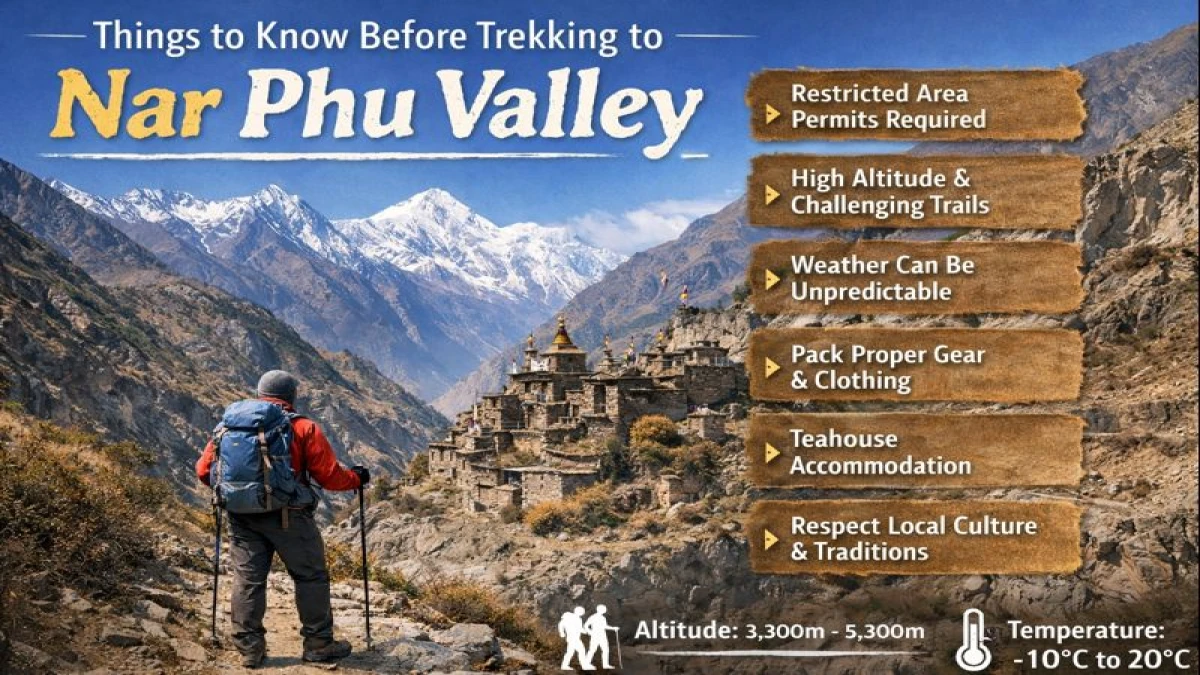
Understanding the Nar Phu Valley Trekking Route
The Nar Phu Valley trekking route is a unique and off-the-beaten-path adventure, perfect for trekkers looking for solitude and authentic experiences. Unlike popular treks like the Everest Base Camp or Annapurna Circuit, the Nar Phu trek takes you to remote villages, ancient monasteries, and offers incredible Himalayan vistas. The trek crosses Kang La Pass and weaves through narrow ridges and high-altitude terrain. Though not technically difficult, the trek is physically demanding due to the steep ascents, rocky paths, and thin air.
The Best Time to Trek Nar Phu Valley
For enjoy the best conditions, the ideal time for the Nar Phu Valley trek is during the spring (March to May) and autumn (September to November). These months provide clear skies, stable weather, and stunning views of the Himalayas. However, be aware of the unpredictable weather in the upper sections, where snowstorms or strong winds can strike unexpectedly, especially at higher altitudes.
Altitude and Acclimatization in the Nar Phu Trek
Trekking at high altitudes is one of the most significant challenges of the Nar Phu trek. Reaching altitudes over 4,000 meters (13,123 feet), particularly in Phu Village, requires proper acclimatization. Without sufficient acclimatization, trekkers risk suffering from altitude sickness. Spending extra days in Phu Village for acclimatization helps your body adjust to lower oxygen levels before moving forward to more demanding sections like Kang La Pass.
Trek Permits for Nar Phu Valley
As the Nar Phu Valley is a restricted area, trekkers need special permits to access this region. You must obtain the Annapurna Conservation Area Permit (ACAP) and the Nar Phu Restricted Area Permit. These permits are usually arranged through a trekking agency and require a licensed guide. It’s crucial to plan ahead, as solo trekking is not allowed due to the remote and restricted nature of the region.
Trekking Experience and Fitness Level
While the Nar Phu Valley trek does not involve technical climbing, it demands good physical fitness. The terrain can be rugged with steep ascents and narrow ridges. Trekkers should have prior trekking experience and be able to endure long days of hiking, typically lasting 5 to 7 hours per day. Training in cardio, strength exercises, and regular hiking before the trek will significantly improve endurance and performance on the trail.
Trekking Gear You Will Need
Having the right trekking gear is crucial for a successful and safe Nar Phu Valley trek. Essentials include:
- Sturdy hiking boots with ankle support
- Waterproof jacket and warm layers for changing weather
- Sleeping bag rated for cold temperatures
- Trekking poles for better stability
- First aid kit, headlamp, and snacks
Proper gear will help make the trek more comfortable and secure, especially when trekking through remote villages where facilities are limited.
Weather Conditions in the Nar Phu Valley
Weather conditions in the Nar Phu Valley are unpredictable, and trekkers must be prepared for sudden changes. While spring and autumn offer the best conditions, trekkers may encounter snowstorms, rain, or strong winds in higher sections of the trail. In winter, heavy snow can block trails, making trekking dangerous. Be prepared for extreme conditions by packing appropriately for cold weather and high-altitude trekking.
The Importance of Acclimatization Days
Acclimatization days are vital for a successful trek. Spending extra time at Phu Village allows your body to adjust to the high-altitude conditions and lowers the risk of altitude sickness. Acclimatization is about more than rest; it’s also essential to stay hydrated, eat nourishing meals, and ensure adequate rest before tackling more challenging parts of the trek.
Trekking Groups vs. Solo Trekking
Solo trekking is not permitted in the Nar Phu Valley due to its restricted nature. Trekkers are required to trek with a licensed guide. Group trekking can offer motivation and support during difficult days, as well as additional safety in case of an emergency. Plus, having a guide ensures you’re well-informed about local culture, terrain, and emergency procedures.
The Rewarding Experience of the Nar Phu Valley Trek
Despite the challenges, the Nar Phu Valley trek offers incredible rewards. From stunning views of the Himalayas, to the opportunity to explore Tibetan villages and ancient monasteries, every step on this trek is filled with awe and wonder. Crossing Kang La Pass, visiting Phu Village, and trekking through the untouched beauty of the region make this journey one of Nepal’s most authentic and enriching experiences.
Frequently Asked Questions (FAQs) About Nar Phu Valley Trek
1. What is the best time to trek in Nar Phu Valley?
The best time to trek the Nar Phu Valley is during spring (March to May) and autumn (September to November). These seasons offer clear skies, stable weather, and ideal trekking conditions. However, trekkers should always be prepared for sudden weather changes, especially at higher altitudes.
2. Is Nar Phu Valley trek suitable for beginners?
The Nar Phu Valley trek can be challenging for beginners due to its high altitude, remote location, and rugged terrain. However, with good physical fitness, proper preparation, and the guidance of an experienced trekking agency, beginners with hiking experience can complete the trek. It's important to be in good shape and acclimatize properly to avoid altitude sickness.
3. How difficult is the Nar Phu Valley trek?
The Nar Phu Valley trek is considered moderately difficult due to its steep ascents, rocky paths, and high-altitude sections. While there is no technical climbing involved, trekkers must be prepared for long hiking days (5-7 hours) and the effects of the thin air at higher elevations. Acclimatization days are crucial to help your body adjust to the altitude.
4. Do I need a guide for the Nar Phu Valley trek?
Yes, a licensed guide is required for the Nar Phu Valley trek due to its status as a restricted area. Solo trekking is not permitted, and a guide will help you navigate the remote trails, ensure safety, and provide insight into local culture and history.
5. What permits do I need for the Nar Phu Valley trek?
To trek in Nar Phu Valley, you will need two main permits:
- Annapurna Conservation Area Permit (ACAP): Costs around $30 USD.
- Nar Phu Restricted Area Permit (RAP): $100 USD for peak season (Sept-Nov), or $75 USD for off-season (Dec-Aug), with additional fees for extra days.
These permits can be arranged through trekking agencies, and they require a licensed guide.
6. What is the altitude of the Nar Phu Valley trek, and how do I deal with altitude sickness?
The Nar Phu Valley trek reaches altitudes of over 4,000 meters (13,123 feet), with the highest point being Kang La Pass at 5,240 meters (17,192 feet). Altitude sickness can be a concern, so it's crucial to take acclimatization days (such as in Phu Village) to allow your body time to adjust. Drinking plenty of water, eating nutritious food, and avoiding overexertion will also help reduce the risk of altitude sickness.
7. How long is the Nar Phu Valley trek?
The Nar Phu Valley trek typically lasts between 10-14 days, depending on your pace, itinerary, and whether you include any extra days for acclimatization or side trips. The trek covers a distance of approximately 70-86 kilometers (43-53 miles), with daily walks ranging from 10 to 20 kilometers (6-12 miles).
8. What kind of accommodation is available on the Nar Phu Valley trek?
Accommodation along the Nar Phu Valley trek mostly consists of basic teahouses in remote villages. These teahouses offer simple rooms with basic facilities like beds, blankets, and communal dining areas. In some places, such as Manang, you may find slightly more comfortable guesthouses. Some trekkers opt for homestays to experience authentic local culture.
9. What type of trekking gear do I need for Nar Phu Valley?
Essential trekking gear for the Nar Phu Valley trek includes:
- Sturdy hiking boots with ankle support
- Waterproof jacket and warm layers (for cold evenings)
- Sleeping bag rated for cold temperatures
- Trekking poles for stability
- First aid kit, headlamp, and snacks
Be sure to pack for both cold weather and unpredictable conditions, especially in higher regions.
10. Is it possible to trek to Nar Phu Valley solo?
Solo trekking is not allowed in the Nar Phu Valley because it is a restricted area. You must have a licensed guide and a minimum group size of two trekkers to obtain the necessary permits. A guide will ensure your safety, help you with navigation, and provide valuable cultural insights.
11. How much does the Nar Phu Valley trek cost in 2026?
The Nar Phu Valley trek cost ranges from $800 to $2,500, depending on the package you choose (budget, standard, or luxury). On average, trekkers spend around $1,500 to $2,000 for a 12-day trek, including permits, guide services, accommodation, meals, and transportation.
12. Can I trek to Nar Phu Valley during the winter?
Winter treks (December to February) are possible but challenging due to snowstorms, freezing temperatures, and blocked trails at higher elevations. The reward, however, is crystal-clear skies and near solitude, making it an attractive option for experienced trekkers prepared for extreme conditions.
Conclusion
The Nar Phu Valley trek is one of Nepal's most rewarding and challenging journeys. With proper preparation, the right gear, and the necessary permits, this trek offers an unparalleled experience of the Himalayan wilderness and Tibetan culture. Whether you're an experienced trekker or a prepared beginner, the trek provides a once-in-a-lifetime opportunity to explore a pristine region of Nepal. Follow these essential tips and you'll be ready for an adventure of a lifetime.
Shankar Neupane
Call us on WhatsApp+977 9851074814OrChat with us


.webp)