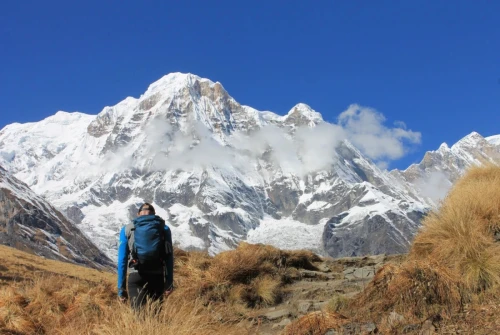
What is the Official Height of Mount Everest in 2026?
Mount Everest's official height was last updated in 2020 through a joint survey by China and Nepal, which confirmed the mountain's height as 8,848.86 meters (29,031.7 feet) above sea level. This was a slight increase from the previous measurement of 8,848 meters (29,029 feet). Although the official height may not change in the near future, continuous geological activities like earthquakes, glacial melting, and shifting tectonic plates could impact the height in the years to come. So, while the current official height stands at 8,848.86 meters, future measurements could slightly alter this figure.
The height of Mount Everest has been a subject of debate for many years, with different countries and surveys providing varying measurements. The height of the mountain can also be influenced by factors like seismic shifts, glacial melting, and the Earth's ever-changing landscape.
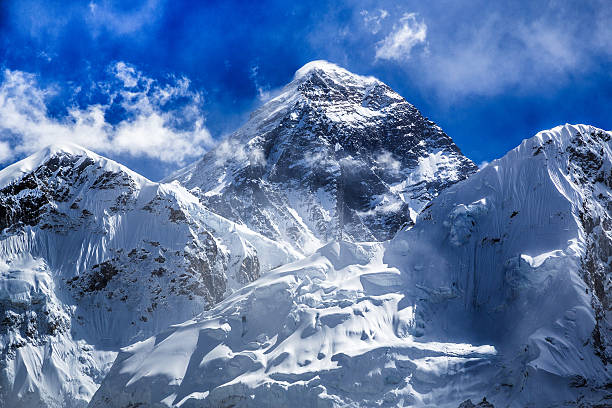
History of Mount Everest Height Measurements
The journey of measuring Mount Everest’s height dates back to the 19th century when the British surveyor Andrew Waugh first estimated its height in 1856. At that time, the mountain was referred to as “Peak XV,” and the height was recorded as 8,840 meters (29,002 feet).
Since then, numerous surveys and measurements have been conducted, some with varying results. The most famous early surveys were carried out by The Survey of India and the Great Trigonometric Survey in the mid-1800s. Modern measurements have been conducted using advanced technologies such as satellite positioning and GPS, leading to more accurate data in the 21st century.
The most recent official measurement in 2020 involved both Nepal and China, marking the most accurate and internationally recognized height of 8,848.86 meters.
Climbing History and Routes of Mount Everest
Mount Everest has a rich and storied history of climbing attempts and successful summits. The first successful summit of Mount Everest was achieved on May 29, 1953, by legendary climbers Sir Edmund Hillary from New Zealand and Tenzing Norgay from Nepal. Their historic ascent remains one of the most iconic moments in mountaineering history and marked a milestone for both the Himalayan region and the world of high-altitude climbing.
Since then, Everest has seen thousands of climbers attempt to reach its summit. The mountain’s challenging conditions and unpredictable weather make it a significant achievement for mountaineers. The most popular and widely used climbing route is the South Col route, which begins from Nepal. This route is favored due to its relatively lower technical difficulty and the infrastructure that has developed in Nepal to support expeditions.
The North Col route from Tibet (China) is also frequently used by climbers, though it is generally considered more difficult and requires a different set of logistical and bureaucratic preparations due to the political complexities between Nepal and China.
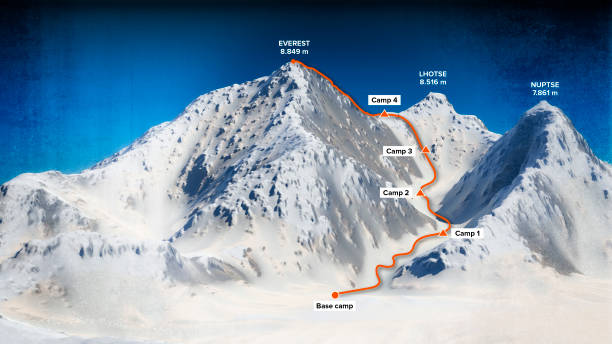
Both routes present challenges such as altitude sickness, harsh weather conditions, and the infamous Khumbu Icefall (on the South Col route), which climbers must navigate early in their ascent. Over time, climbers have used various tools and technologies to improve the safety and efficiency of their expeditions.
In addition to these major routes, other less traveled paths, like the West Ridge and East Ridge, have been attempted by a few advanced climbers seeking to experience more challenging routes up Mount Everest.
Why Does the Height of Mount Everest Keep on Changing?
The height of Mount Everest is not fixed and may fluctuate for several reasons:
- Tectonic Movements: Mount Everest sits on the boundary of two tectonic plates: the Indian Plate and the Eurasian Plate. These plates are still moving, causing the Himalayan region to rise incrementally, which can affect Everest's height.
- Earthquakes: Large-scale earthquakes, such as the 2015 Nepal Earthquake, can lead to shifts in the land’s elevation, which could change Everest’s height.
- Glacial Melting: Mount Everest’s snow and ice caps are gradually melting due to climate change, which can affect the mountain's elevation from sea level measurements. The reduction in glaciers can slightly lower its height over time.
- Surveying Technology: As technology advances, scientists are able to measure Everest's height with greater precision, leading to adjustments and refinements in the recorded height. Satellite-based measurements have provided more reliable data.
How is Mount Everest’s Height Measured?
Measuring Mount Everest's height involves sophisticated and accurate techniques. Some of the common methods include:
- Trigonometric Surveys: This method involves measuring the angles between various reference points on the ground and using these angles to calculate distances and elevations. This is how the initial measurements were done.
- GPS Measurements: In modern times, scientists use Global Positioning System (GPS) technology to measure the height of Everest. This involves placing GPS units at the summit and tracking their coordinates relative to sea level.
- LiDAR and Radar Technology: Light Detection and Ranging (LiDAR) and radar are used to map Everest's precise elevation. These technologies help create highly accurate 3D models of the mountain, which allow scientists to calculate its height more accurately.
- Barometric Pressure: Scientists can also use barometric pressure measurements to calculate height. This technique compares atmospheric pressure readings taken at the summit with those taken at sea level, accounting for temperature changes to adjust the data.
Why Does Mount Everest's Height Matter?
The Mount Everest elevation is significant for a few reasons:
- Global Recognition: Mount Everest is universally known as the tallest point on Earth. It represents the pinnacle of human achievement in mountaineering and exploration.
- Scientific Interest: Geologists and scientists study the mountain to better understand Earth's geological evolution. Mount Everest is part of the tectonic plate boundary, where the Indian Plate collides with the Eurasian Plate.
- Cultural Significance: In Nepal, Mount Everest holds spiritual significance. The local Sherpa people believe that the mountain is the home of the gods and a sacred place to be revered. Its majestic beauty has inspired countless legends, and it holds great meaning for those who live in its shadow.
Location of Mount Everest
Mount Everest is located in the Himalayas, the mountain range that stretches across five countries: Nepal, China, India, Bhutan, and Pakistan. The summit lies on the border between Nepal and Tibet, with the south face in Nepal and the north face in China.
The mountain is part of the Mahalangur Range in the central Himalayas. It is situated in the Sagarmatha National Park in Nepal, which is a UNESCO World Heritage site.Coordinates: 27°59′17″N latitude and 86°55′31″E longitude
Where is Mount Everest Located: Nepal, India, or China?
Mount Everest, the tallest mountain in the world, stands on the border between Nepal and Tibet (an autonomous region of China). The summit of Mount Everest marks the boundary between these two regions, making it one of the most iconic geopolitical landmarks in the world. The southern part of Mount Everest lies in Nepal, while the northern part extends into Tibet, China.
This unique location makes Everest a critical geographical feature, with its height of 8,848 meters (or 29,029 feet) being a significant point of interest for both adventurers and geopolitical discussions. The Everest border is particularly important in terms of international relations, especially when considering the Nepal-China relationship.
The Mount Everest geography is defined by its position in the Himalayas, and its summit serves as a natural divide between the countries of Nepal and China. The mountain's global significance also makes it a major symbol of mountaineering and world geography.
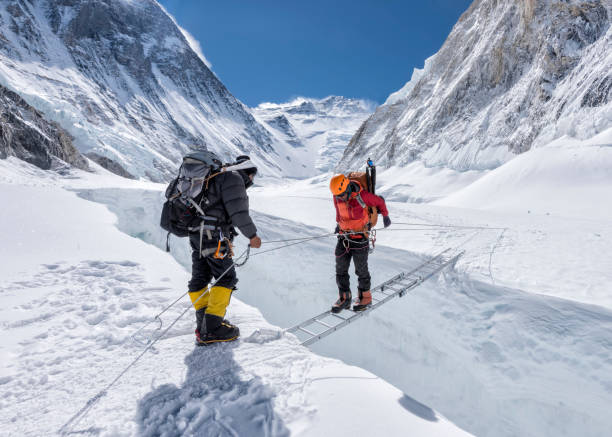
Climbing Mount Everest: A Challenging feat
Climbing Mount Everest is no easy task. It requires immense preparation, skill, and determination, as well as a deep understanding of mountaineering. Over 300 people have successfully reached the summit, but hundreds more have lost their lives attempting to conquer it. The journey to the top of Mount Everest is fraught with difficulties, and the following factors make the climb challenging:
- Altitude: The extreme altitude presents a significant challenge. The thinning air at higher altitudes means that climbers must deal with a lack of oxygen, which can lead to altitude sickness. At 8,848 meters, the oxygen levels are only about one-third of those at sea level, making breathing difficult.
- Weather Conditions: The weather on Mount Everest is unpredictable, with heavy snowfalls, high winds, and freezing temperatures. Storms can hit suddenly, making the climb more treacherous.
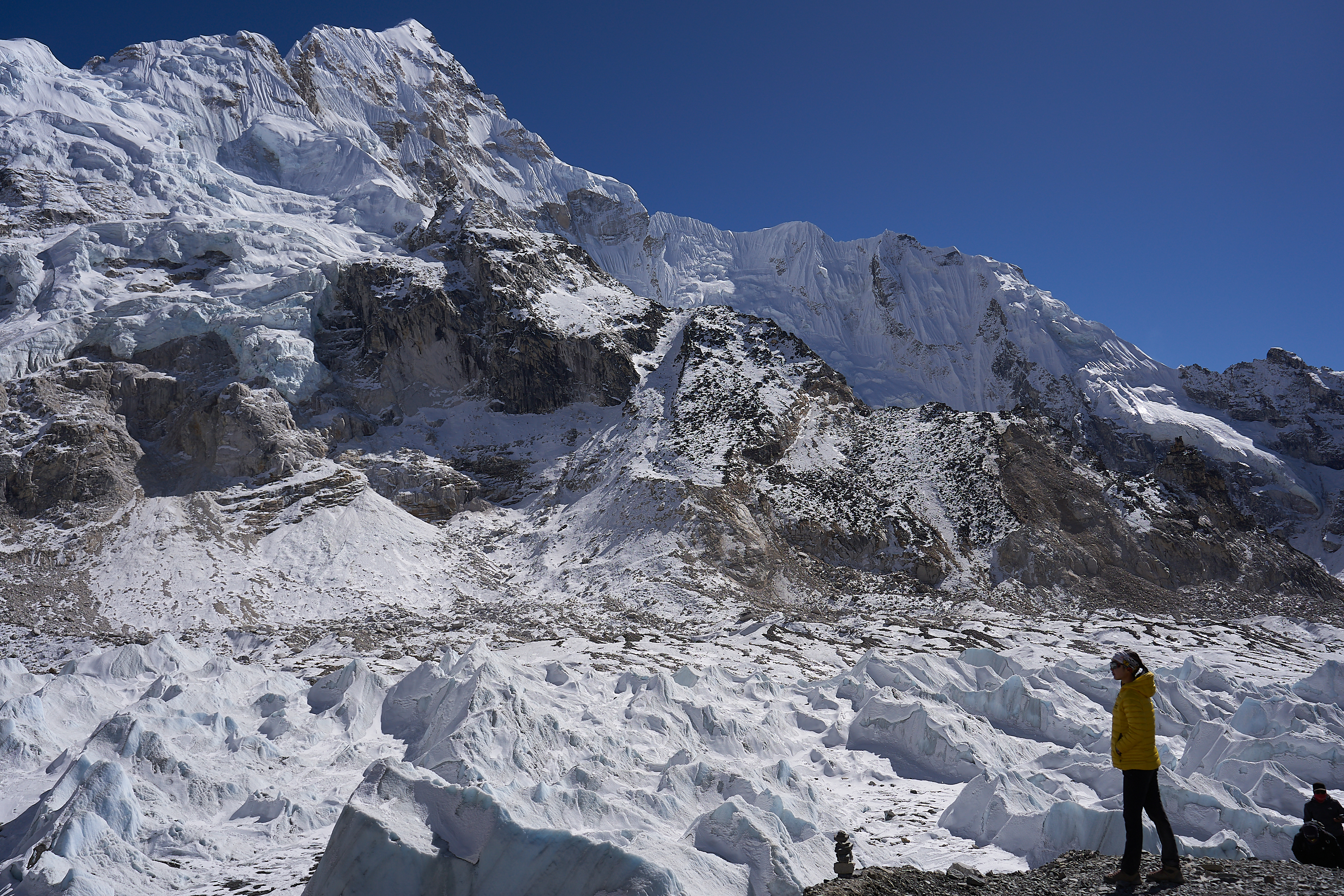
- The Khumbu Icefall: One of the most dangerous sections of the Everest climb, the Khumbu Icefall is a vast field of shifting glaciers and towering ice seracs (ice formations). Climbers navigate this section early in the climb, and its unstable nature makes it a high-risk area.
- The "Death Zone": Above 8,000 meters, climbers enter the "Death Zone," where the body starts to deteriorate due to a lack of oxygen. This part of the climb is extremely dangerous, and climbers often require supplemental oxygen to survive.
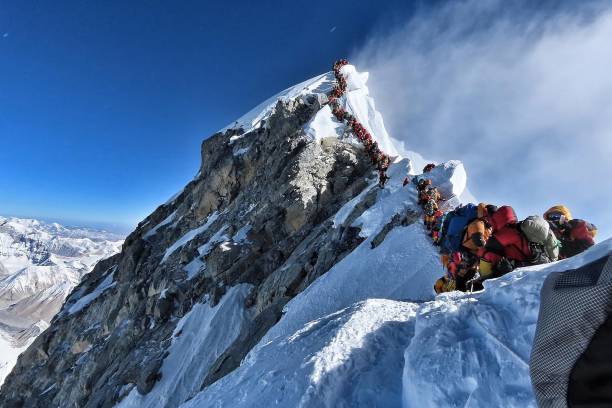
- Crowding: In recent years, overcrowding at the summit has become a problem. Due to the increasing number of climbers attempting the summit, long queues often form at the top, increasing the risks associated with summit attempts.
Best Time to Climb Mount Everest
The best time to climb Mount Everest is during the pre-monsoon season (from April to early June) and the post-monsoon season (from September to October). Most climbers prefer to attempt the summit in the spring (pre-monsoon), when weather conditions on Everest are more stable, and the longer daylight hours make climbing safer and more manageable. This time of year offers the best opportunity for summiting Mount Everest with the least amount of risk.
The spring season (pre-monsoon) is the most popular period to climb Everest. During this time, the weather is relatively calm, and the climbing route is more accessible, making it a favorable choice for both seasoned climbers and those attempting Everest for the first time. The stable weather and optimal climbing conditions during this season help ensure a safer journey to the summit.
The autumn season (post-monsoon) is another viable window for Everest expeditions, although fewer climbers choose this time due to colder temperatures and the chance of snowstorms. However, it offers a quieter and less crowded experience for those who prefer to avoid the busy spring season on Everest. For climbers who prefer fewer crowds and are prepared for colder conditions, autumn can still be a great option for summiting Mount Everest.
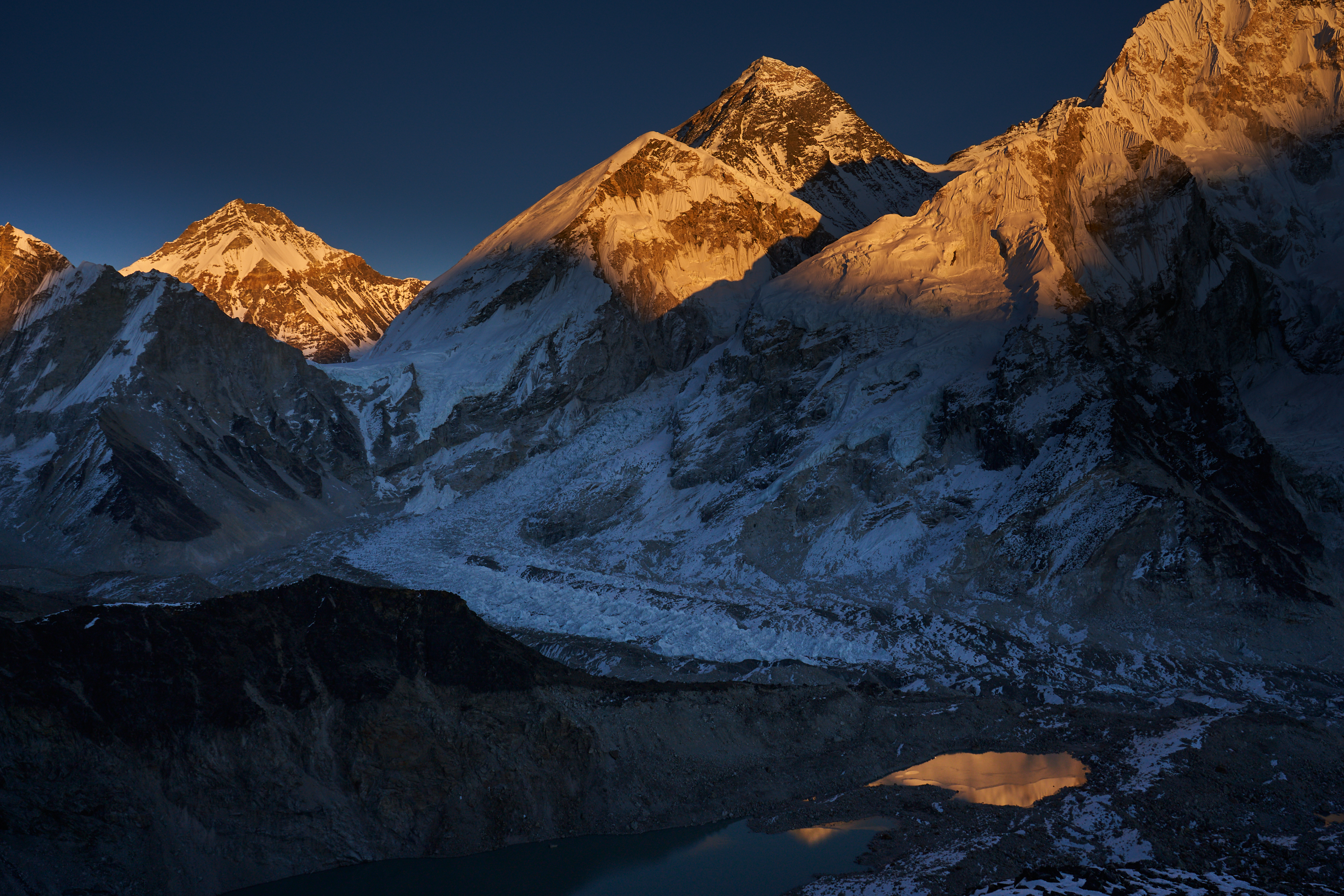
Key Landmarks on the Everest Trek
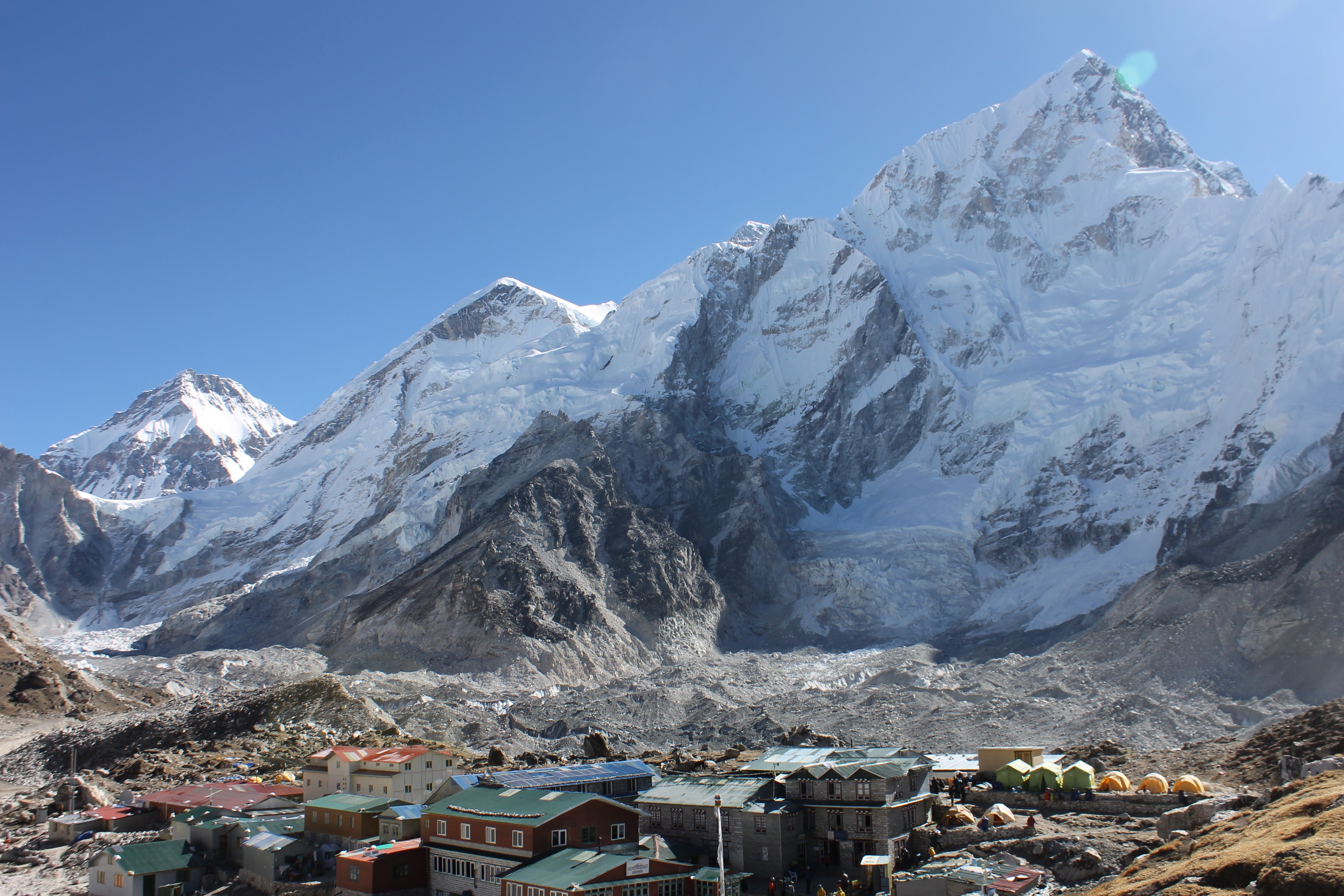
Everest Base Camp is the starting point for climbers attempting to summit Mount Everest, located at 5,364 meters (17,598 feet) on the south side of the mountain in Nepal. This is where climbers begin their journey, using the camp as a crucial location for acclimatization, rest, and preparation for the summit push. The camp serves as a vital staging area before heading higher into the Everest region.
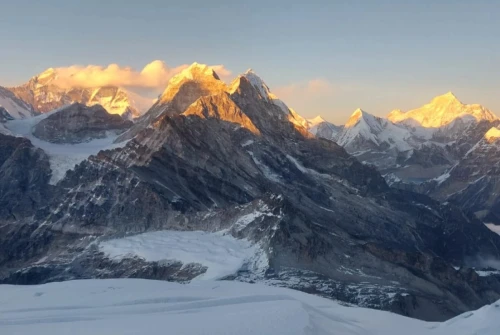
Kala Patthar, located just above Base Camp at 5,545 meters (18,192 feet), is another iconic landmark on the Everest trek. Although not part of the climbing route, Kala Patthar offers one of the best panoramic views of Mount Everest and the surrounding Himalayas, making it a popular spot for trekkers to take photos and enjoy a stunning view of the mountain's summit.
The South Col, located at 7,906 meters (25,938 feet), is the last camp before the final ascent to the summit. Situated between Everest and Lhotse, it is a key resting point where climbers can regain energy before pushing through the final stretch to the summit. The South Col offers a unique vantage point and plays a critical role in ensuring climbers are well-prepared for the extreme conditions they will face at the top of Everest.
The Hillary Step is one of the most famous and challenging features near the summit of Mount Everest. Located just below the summit at around 8,790 meters (28,839 feet), it is a near-vertical rock face that climbers must navigate. It is a technical obstacle that requires skill and careful maneuvering, often making it one of the most dangerous parts of the climb. In recent years, some reports suggest that the Hillary Step has been altered due to shifting conditions, but it remains a critical point on the final ascent.
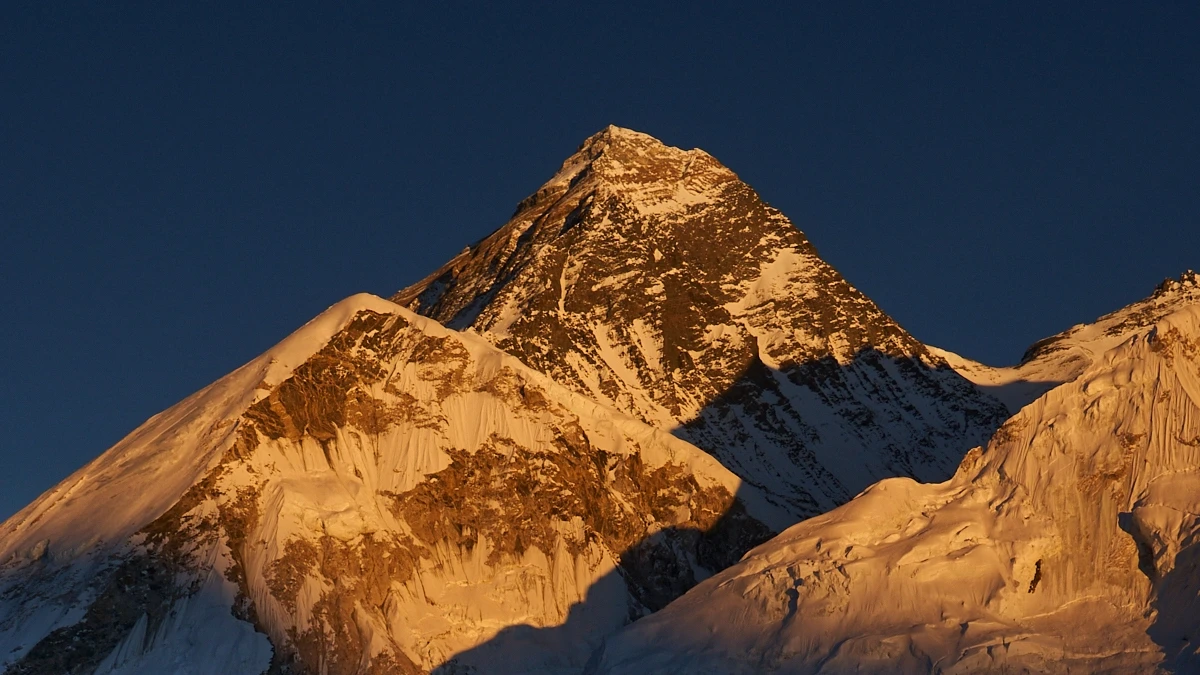
Finally, the summit of Mount Everest, at an elevation of 8,848.86 meters (29,031.7 feet), is the ultimate goal for any Everest expedition. At this height, climbers are rewarded with breathtaking views of the surrounding Himalayan mountain range. The sight of the endless peaks and valleys below is an unparalleled experience, making the summit one of the most sought-after and challenging achievements in the world of mountaineering.
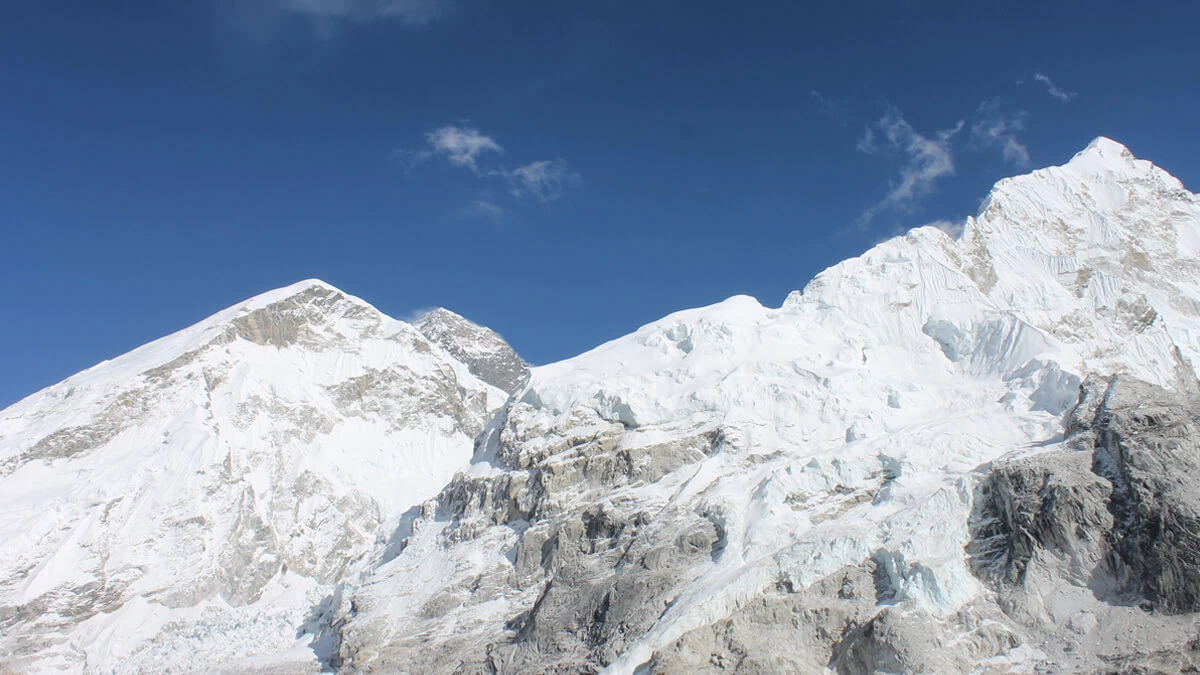
Interesting Facts About Mount Everest
First Successful Ascent of Mount Everest
In 1953, Sir Edmund Hillary from New Zealand and Tenzing Norgay, a Sherpa from Nepal, became the first climbers to successfully reach the summit of Mount Everest. Their historic achievement marked a turning point in mountaineering, establishing Everest as the ultimate challenge for climbers worldwide.
The "Everest Effect"
Mount Everest has a unique magnetic allure, often called the "Everest Effect", which attracts not only experienced climbers but also individuals without professional climbing backgrounds. This phenomenon has led to a surge in the number of people attempting the summit, contributing to an increase in accidents and fatalities. The overwhelming desire to conquer the world's tallest peak has also raised concerns about safety and crowding on the mountain.
The "Death Zone"
At altitudes above 8,000 meters (26,247 feet), climbers enter the dangerous "Death Zone", where the oxygen level is too low to support prolonged human life. In this area, climbers can only stay for a few hours before descending. Prolonged exposure to such high altitudes without supplemental oxygen can lead to severe health issues such as hypoxia and, in many cases, death.
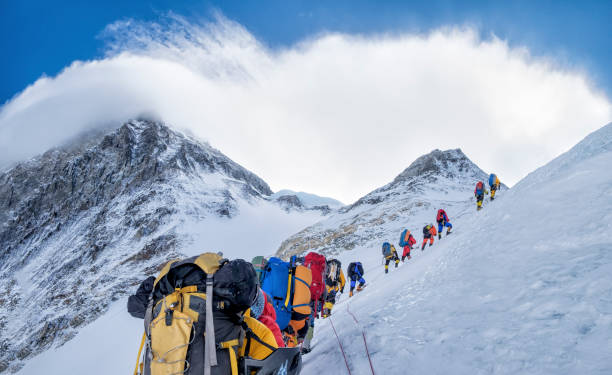
The Number of Climbers on Mount Everest
As of 2025, more than 6,500 climbers have successfully reached the summit of Mount Everest. This number continues to increase year after year, driven by advances in climbing technology and expedition support. However, the growing number of climbers attempting the summit each year has sparked concerns over overcrowding, which can impact both safety and the environment. Overcrowding has become a significant challenge, particularly during the peak climbing seasons in spring and autumn.
Fun Fact About Mount Everest’s Height
Despite being the tallest mountain on Earth, the height of Mount Everest remains a topic of debate. The height of Everest is typically measured from sea level, which can fluctuate due to tides, erosion, and other natural processes. Interestingly, while Mount Everest is the highest point above sea level, it may not be the farthest point from the Earth’s center. That title goes to Mount Chimborazo in Ecuador, which, due to the Earth's equatorial bulge, actually reaches farther into space when measured from the Earth's core.
Adventure and Trekking Opportunities Around Mount Everest
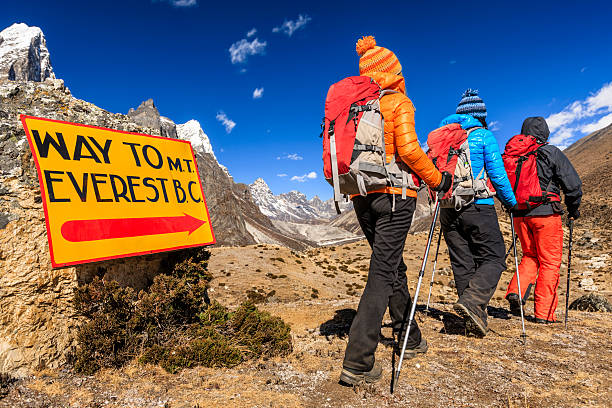
For those not looking to summit Mount Everest, trekking around Everest Base Camp is a popular and rewarding alternative. The Everest Base Camp Trek offers breathtaking panoramic views of Mount Everest, along with other towering peaks like Lhotse, Nuptse, and Makalu. This trek provides trekkers with the opportunity to explore the Khumbu region, a stunning area known for its rugged terrain, traditional Sherpa villages, and spiritual significance. Along the way, trekkers also encounter monasteries, suspension bridges, and glaciers, offering an immersive cultural and natural experience.
The trek to Everest Base Camp is not only about the awe-inspiring views of Mount Everest, but also about the unique chance to experience the Himalayan lifestyle and Sherpa culture. This trek, while physically demanding due to the high altitudes, remains one of the most popular trekking routes in the world, attracting thousands of trekkers each year.
For those seeking more variety, other nearby treks, such as the Annapurna Circuit and the Langtang Valley Trek, offer alternative Himalayan trekking experiences. The Annapurna Circuit Trek takes trekkers through diverse landscapes, from subtropical forests to high-altitude deserts, with majestic views of Annapurna and Dhaulagiri. Meanwhile, the Langtang Valley Trek offers a more off-the-beaten-path adventure with fewer crowds but equally stunning views of the Langtang Himal range.
These treks allow adventure seekers to experience the beauty of the Nepal Himalayas without the technical challenges of summiting Everest itself. Whether you are a seasoned trekker or a first-time adventurer, these routes offer incredible opportunities to explore the natural beauty and rich culture of the region.
Sherpa Communities and Cultural Exploration Around Mount Everest
The Sherpas are the indigenous people of the Everest region and play a vital role in expeditions as guides and porters. Their rich cultural heritage is deeply intertwined with Mount Everest, and their knowledge of the mountain's terrain is invaluable to climbers and trekkers. Many Sherpa communities live in remote villages like Namche Bazaar, a popular stop on the Everest Base Camp trek, and Lukla, which serves as the gateway to the region. These villages offer a glimpse into the Sherpa way of life, where traditions, rituals, and Buddhist practices are central to the community. Visiting these villages provides trekkers with an opportunity to experience the unique Sherpa culture, including their festivals, cuisine, and the iconic Tibetan Buddhist monasteries that dot the landscape.
Flora and Fauna in the Everest Region
The Everest region is home to a fascinating array of flora and fauna. At lower altitudes, trekkers can explore vibrant rhododendron forests, which bloom in spring, creating a colorful contrast to the snow-covered peaks. As one ascends, the landscape changes dramatically, transitioning into barren, high-altitude terrain near the summit of Mount Everest. Despite these harsh conditions, the region is home to a number of iconic animals, such as the elusive snow leopard, yaks, and Himalayan tahr. Mountain goats, red pandas, and various species of birds, including the Himalayan griffon vulture, can also be spotted. The region’s biodiversity makes it a critical area for conservation efforts, as it serves as a habitat for many rare and endangered species.
Environmental and Conservation Efforts in the Everest Region
Environmental preservation around Everest is becoming an increasingly important issue. Waste management, glacier protection, and sustainable tourism practices are at the forefront of conservation efforts. The Everest region is experiencing rising pressure from the growing number of trekkers and climbers, which has led to significant environmental degradation. In response, the Nepalese government and local organizations have introduced stricter regulations to ensure the sustainability of tourism. These include initiatives to reduce waste left behind by climbers, such as mandatory waste removal and the establishment of designated campsites for trekkers. Efforts to protect the glaciers and high-altitude ecosystems are also critical, with a focus on limiting human impact and promoting responsible trekking and climbing practices.
Regulatory Frameworks on Mount Everest
Climbing Mount Everest requires permits from both Nepal and China. The Nepalese government has introduced stricter regulations to ensure safety and sustainability, with rules governing climbing permits, the number of climbers, and the amount of waste produced. In recent years, Nepal has also implemented a deposit system to ensure that climbers bring down the waste they generate during their expeditions. On the Tibetan side of Everest, climbers must also obtain permits from the Chinese government. Tibet has its own set of regulations for trekkers and climbers attempting to approach from the north, making the regulatory environment a bit more complex. These regulations are intended to maintain the integrity of the region and protect both the local communities and the environment.
Call for Global Responsibility
As Mount Everest continues to rise in popularity as a destination for climbers and trekkers, there is an increasing call for global responsibility to protect both the mountain’s environment and the local communities. Sustainable tourism practices, such as reducing the carbon footprint, respecting the cultural heritage of the region, and ensuring proper waste management, are essential for the long-term future of Everest. Climbers and trekkers are encouraged to be mindful of their impact on the environment and the Sherpa communities that call the region home. The mountain’s fragile ecosystem and the local culture need to be preserved, not only for future generations of adventurers but for the Sherpas and the indigenous people who rely on the region’s health and vitality.
Cost of Climbing Mount Everest
Climbing Mount Everest is a significant financial commitment. The cost of a permit to climb from Nepal typically ranges around $15,000 for the spring season, which is considered the prime time for Everest expeditions. However, this is just the base cost, and climbers will need to budget for a variety of additional expenses, including guides, porters, equipment, and oxygen tanks. These can push the total cost of climbing Mount Everest anywhere from $40,000 to $100,000, depending on the level of service and support required.
In addition to the permit fees, climbers will need to factor in costs for base camp logistics, travel expenses, and high-altitude food. The overall cost also depends on the route taken: the South Col route from Nepal is the most popular and well-supported, but the North Col route from Tibet (China) can also be an option for those who prefer a less crowded ascent. The Tibet route often comes with its own set of additional expenses, including the requirement for Chinese permits and other logistical challenges.
The range of costs reflects the level of support that climbers choose to have. Some opt for a guided expedition, which includes professional mountain guides and a full support team, while others may choose a self-supported expedition, reducing the overall cost but increasing the difficulty and risk of the climb.
Mount Everest Climbing Routes
There are two main climbing routes for Mount Everest:
South Col Route (Nepal): The South Col Route is the most popular and accessible climbing route for summiting Mount Everest. This route begins from Nepal and involves navigating through the Khumbu Icefall, one of the most dangerous sections of the climb, followed by the Lhotse Face and South Col before reaching the summit of Everest. The South Col route is known for being more heavily supported, with established base camps and more climbers, making it the go-to route for most expeditions. It provides some of the most iconic views of Mount Everest and its surrounding peaks.
North Col Route (Tibet): The North Col Route is the northern approach to Mount Everest, starting from Tibet (China). This route is less crowded, offering climbers a quieter and more remote experience. The route traverses the Tibet Plateau before ascending the North Ridge to the summit of Everest. Though the North Col route is considered to be technically more challenging than the South Col route, it is favored by those seeking a more isolated and less commercialized climb. The approach from Tibet also involves more logistical challenges, including securing permits and dealing with the political complexities of climbing in China.
Both routes offer a unique experience, and the choice between the South Col and North Col routes often depends on climbers’ preferences for crowd levels, difficulty, and logistics.
FAQs About Mount Everest Hight
- How tall is Mount Everest?
Mount Everest stands at an official height of 8,848.86 meters (29,031.7 feet) above sea level, making it the tallest mountain on Earth. This measurement was confirmed in 2020 through a joint survey by China and Nepal, using modern GPS and satellite-based techniques.
- Where is Mount Everest located?
Mount Everest lies on the border between Nepal and Tibet (China). The southern route to Everest begins in Nepal, while the northern route starts in Tibet. The summit marks the international boundary between the two regions, making Everest a significant geopolitical landmark.
- Why did Mount Everest's height change in 2020?
The height of Mount Everest was updated in 2020 due to a joint survey by China and Nepal. Using advanced GPS technology and satellite mapping, the countries obtained a more accurate reading of Everest's elevation, which led to a slight adjustment in its height from the previously accepted figures.
- What is the official height of Mount Everest in 2026?
The most recent official measurement of Mount Everest's height was confirmed in 2020 at 8,848.86 meters (29,031.7 feet). While this is the official height for now, tectonic shifts and earthquakes could potentially lead to slight future changes in the mountain's elevation.
- Will Mount Everest's height change in the future?
Yes, Everest's height may fluctuate slightly due to ongoing tectonic plate movements, earthquakes, and climate change. The mountain's dynamic geological features ensure that its elevation may continue to shift over time.
- How is Mount Everest’s height measured?
Mount Everest's height is determined through a combination of GPS technology, trigonometric calculations, and geodetic surveys. Ground surveys, combined with satellite data, provide the most accurate and reliable measurements, as demonstrated by the 2020 joint China-Nepal survey.
- Which is the tallest mountain after Mount Everest?
The second tallest mountain in the world is K2, standing at 8,611 meters (28,251 feet). It is located in the Karakoram Range, on the border between Pakistan and China, and is known for its challenging terrain and extreme climbing conditions.
- How long does it take to climb Mount Everest?
Climbing Mount Everest typically takes around 2 months, including time for acclimatization, setting up camps, and weather delays. The Everest expedition involves multiple stages, from reaching base camp to summiting the peak, and requires climbers to be well-prepared for the mountain's extreme conditions.
- Can you trek to the top of Mount Everest?
No, trekking to the summit of Mount Everest is not possible. While trekkers can reach Everest Base Camp on the South Col route from Nepal, summiting the mountain requires technical climbing skills, specialized equipment, and permits. The trek to Everest Base Camp offers breathtaking views of Everest and surrounding peaks, without the dangers of high-altitude climbing.
- How much does it cost to climb Mount Everest?
The cost of climbing Mount Everest can range from $40,000 to $100,000. This includes the permit fees, guides, porters, oxygen tanks, and equipment. The South Col route (Nepal) is more popular and comes with a lower cost than the North Col route (Tibet), which requires additional permits and logistical arrangements.
- Is there any special training required for Everest expeditions?
Yes, extensive training is essential for anyone attempting to climb Mount Everest. Climbers need to prepare physically and mentally for the harsh conditions, including high-altitude training, ice climbing, and technical mountaineering skills. Prior experience with other 8,000-meter peaks is often recommended.
- Has global warming affected the height of Mount Everest?
While global warming has not yet changed Mount Everest's height directly, it is affecting the Himalayan glaciers and snow coverage around the mountain. Melting glaciers and rising temperatures contribute to shifting terrain and changing weather patterns, which could impact Everest's structure and accessibility in the long term.
- Why does the height of Mount Everest keep changing?
Everest's height is not static due to the mountain's geological nature. Tectonic shifts, earthquakes, and changes in glacier dynamics can cause slight changes in its elevation. For example, the 2015 Nepal earthquake may have caused a minor shift in the mountain's height.
- What are some interesting facts about Mount Everest's height?
Although Mount Everest is the tallest mountain above sea level, it is not the farthest point from Earth's center. Due to the Earth’s equatorial bulge, Mount Chimborazo in Ecuador actually reaches farther from the planet’s center.
The summit of Everest is a moss-covered rock that can be hidden by snow, depending on the season.
Everest grows by approximately 4 millimeters per year due to the ongoing tectonic activity between the Indian and Eurasian plates.
- What is the best time of year to climb Mount Everest?
The best time to climb Mount Everest is during the spring season (late April to early June) or the autumn season (September to October). The spring season is the most popular time for expeditions because of favorable weather conditions, while the autumn season offers less crowded conditions, though it can be slightly colder and riskier.
- How many people have summited Mount Everest?
As of 2025, more than 6,500 people have successfully summited Mount Everest. This number continues to grow as climbing technology improves and access to the mountain becomes more common through organized expeditions.
- What are the dangers of climbing Mount Everest?
Climbing Mount Everest is extremely dangerous due to altitude sickness, extreme weather, high winds, avalanches, and falling rocks. The Khumbu Icefall is one of the most dangerous sections, with shifting ice and crevasses. Additionally, climbers are at risk of frostbite, exhaustion, and dehydration. The death zone above 8,000 meters presents a critical challenge due to lower oxygen levels.
- How do climbers prepare for the altitude on Mount Everest?
Climbers prepare for high-altitude conditions on Mount Everest through acclimatization – a process of gradually ascending to higher altitudes to allow the body to adapt to lower oxygen levels. Climbers spend several weeks in Everest Base Camp, making rotations to higher camps before returning to rest. Oxygen tanks are used above 7,000 meters to assist with breathing.
- Is it possible to summit Mount Everest without supplemental oxygen?
Climbing Mount Everest without supplemental oxygen is extremely difficult and risky, especially above 8,000 meters, which is known as the death zone. Few climbers have achieved the summit without oxygen, and it requires exceptional physical conditioning and acclimatization. However, most climbers use oxygen to reduce the risks of altitude sickness and increase their chances of success.
- What is the Everest Base Camp Trek?
The Everest Base Camp Trek is a popular trekking route that takes adventurers to the base of Mount Everest without the need to summit the mountain. It offers stunning views of Everest, Lhotse, Nuptse, and other peaks, while also providing an opportunity to experience the culture of the Sherpa communities in the Khumbu region. The trek is usually 12-14 days long and is suitable for people of average fitness, though the altitude requires careful acclimatization.
- Can you see Mount Everest from India?
Yes, Mount Everest can be seen from parts of India, specifically from the Sikkim region, and Darjeeling in West Bengal, although the view is much more distant compared to being in Nepal or Tibet. The best views of Everest are still from the Everest Base Camp Trek on the Nepalese side or the northern side from Tibet.
- Why is Mount Everest called the "Roof of the World"?
Mount Everest is often referred to as the "Roof of the World" because it is the highest point on Earth, towering at 8,848.86 meters (29,031.7 feet) above sea level. The mountain represents the ultimate challenge for climbers and symbolizes the majesty and grandeur of the Himalayan Range.
- Are there any alternative climbing routes for Mount Everest?
In addition to the popular South Col and North Col routes, there are alternative, less-traveled routes for advanced climbers, such as the West Ridge and East Ridge. These routes are more technical and have fewer established support structures, making them suitable for climbers seeking a more challenging ascent. However, they are not as commonly used due to their complexity and increased risk.
- How much trash is left on Mount Everest?
Mount Everest has been affected by environmental pollution, with significant amounts of trash left behind by climbers and trekkers over the years. In recent years, both Nepal and China have implemented stricter regulations, including the requirement for climbers to bring down their waste, and efforts have been made to clean up the mountain. In 2019 alone, Nepal retrieved over 10 tons of garbage from the mountain.
- What is the "Death Zone" on Mount Everest?
The Death Zone refers to altitudes above 8,000 meters (26,247 feet) where the oxygen levels are so low that the human body cannot survive for extended periods. Climbers are at high risk of altitude sickness, exhaustion, and hypoxia. At these elevations, supplemental oxygen is typically required to help climbers breathe and maintain their physical strength.
- What permits are required to climb Mount Everest?
To climb Mount Everest, climbers need to obtain two permits:
Nepalese permit: If you are climbing from the South Col route in Nepal, you must obtain a climbing permit from the Nepalese government. The cost for a permit can range from $15,000 for a spring season ascent, depending on the route and the number of climbers.
Tibetan permit: For those approaching from the North Col route in Tibet, a permit issued by the Chinese government is required. This involves more complex logistics and additional paperwork.
- Are there any age restrictions for climbing Mount Everest?
Yes, there are age restrictions for climbers attempting to summit Mount Everest. The minimum age for climbers in Nepal is generally 16 years old, while the maximum age can vary depending on the expedition operator and the climber's physical condition. Some expedition companies have set upper limits at around 70 years old, though there are exceptions for exceptionally fit individuals.
- Can solo climbers summit Mount Everest?
Solo climbers are allowed to summit Mount Everest, but it is highly discouraged, particularly without the proper experience, training, and support. The Nepalese government has tightened rules in recent years, requiring solo climbers to demonstrate that they have climbed other 8,000-meter peaks and are well-prepared for the extreme conditions of Everest. Expedition guides are typically mandatory for safety reasons, especially in high-risk areas like the Khumbu Icefall and death zone.
- Are there any restrictions for women climbers on Mount Everest?
There are no specific restrictions for women climbers on Mount Everest. Female climbers must adhere to the same regulations as male climbers, including obtaining permits, using supplemental oxygen above 7,500 meters, and having the required mountaineering experience. In recent years, more women have successfully summited Everest, with several breaking records, such as Apa Sherpa's daughter, Lhakpa Sherpa, who has summited Everest multiple times.
- How many people have died on Mount Everest?
As of 2025, over 300 people have died on Mount Everest since the first recorded death in 1922. The number of fatalities continues to rise each year due to a combination of factors such as altitude sickness, extreme weather, physical exhaustion, and crowding. Many deaths occur in the death zone above 8,000 meters where the oxygen levels are too low to sustain human life for extended periods.
- Why are there dead bodies on Mount Everest?
Many climbers' bodies remain on Mount Everest due to the extreme difficulty of recovering them from the death zone above 8,000 meters. The conditions are harsh, with freezing temperatures, low oxygen, and difficult terrain. Bodies, such as the famous "Green Boots" near the summit, are often visible to climbers on their way up and down. The recovery of bodies is risky and logistically challenging, leading to many remaining frozen in place as grim reminders of the mountain's dangers.
- What is Sleeping Beauty in Mount Everest?
The term "Sleeping Beauty" on Mount Everest refers to Francys Arsentiev, an American climber who tragically died on the mountain in 1998. After successfully reaching the summit of Everest, she became stranded during her descent. Due to the extreme conditions at high altitude, Francys was unable to descend in time and eventually succumbed to hypothermia and cerebral edema. Her body was discovered near the South Summit, lying in a peaceful, fetal position, which led to her being called "Sleeping Beauty". Her tragic story remains one of the most poignant and haunting reminders of the dangers of climbing at such extreme altitudes.
- Has Sleeping Beauty Been Removed from Everest?
Yes, Francys Arsentiev's body (known as the "Sleeping Beauty" of Mount Everest) was removed from the South Summit in 2007. After nine years of being visible to climbers who passed by her body in the death zone, her remains were located by Woodall, a mountaineer and recovery expert. On May 23, 2007, following a brief ritual to honor her, Woodall moved her body to a lower location on the mountain, where it would be out of sight of climbers. Her body had become an eerie landmark for many climbers who passed by, and the decision to remove it was made to respect her memory and remove the haunting reminder of the dangers of Everest.
- Why Does the 2 PM Rule Exist on Mount Everest?
The 2 PM rule on Mount Everest exists to enhance safety by ensuring that climbers descend before darkness sets in. Reaching the summit of Mount Everest is only part of the journey; getting back down is equally, if not more, dangerous. In the death zone (above 8,000 meters), climbers are already facing extreme conditions like low oxygen, exhaustion, and treacherous terrain. The 2 PM rule is designed to make sure climbers have enough time to descend and return to a safer altitude before nightfall, when visibility is poor, temperatures drop, and the risks of hypothermia and disorientation rise significantly.
- What is the 2 PM Rule on Mount Everest?
The 2 PM rule on Mount Everest is a safety regulation that dictates climbers must start their descent by 2 PM, regardless of whether they have reached the summit or not. The rule helps ensure that climbers don't get trapped at high altitudes after dark, which is extremely dangerous. Climbers typically start their ascent around 2 AM, and by midday, they reach the summit. Afterward, they must begin their descent immediately to avoid climbing in the death zone during the night. Bill Zipp, an expert on high-altitude climbing, explains that this cutoff time is crucial for preventing accidents and fatalities that can result from descending in the dark.
Conclusion
In conclusion, Mount Everest, at an awe-inspiring height of 8,848.86 meters (29,031.7 feet), remains the highest mountain in the world. This iconic peak, known for its challenging climbs and breathtaking beauty, attracts adventurers from across the globe. The history of Everest's height, along with its cultural and spiritual significance, continues to inspire exploration and human determination. Whether you dream of summiting this majestic peak or simply admire its grandeur from afar, Mount Everest symbolizes the pursuit of greatness. As the world's tallest mountain, it will forever captivate those fascinated by its unparalleled natural beauty and extreme altitude.
 based on 270 reviews


.webp)