based on 270 reviews

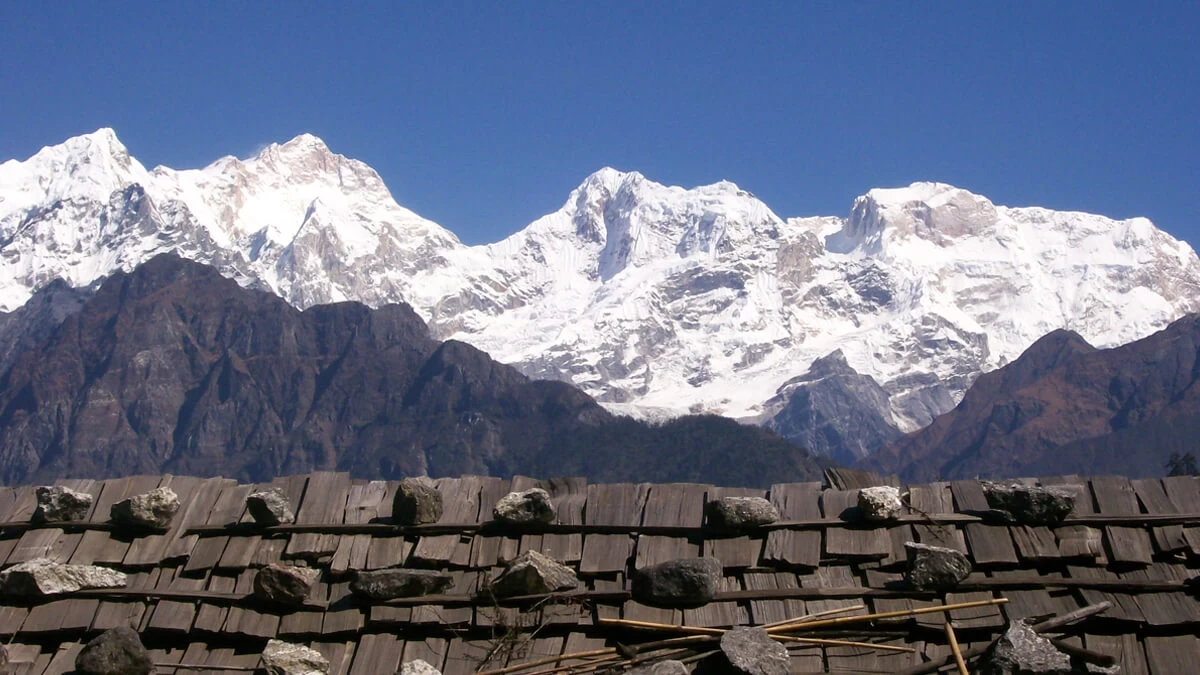
Spring in Nepal is not merely a season; it is an event. From the rhododendron forests ablaze in crimson and pink below Annapurna's flanks to the cloud-free panoramas of Everest gleaming against an impossibly blue sky, spring trekking in Nepal stands as one of the most rewarding adventures available anywhere on Earth. Whether you are a first-time trekker lacing up your boots or a seasoned alpine traveller returning to the Himalayas, March, April, and May offer conditions that are, in almost every respect, ideal. This guide covers everything, routes, weather, permits, packing, altitude safety, and culture, so that you can plan the trek of a lifetime with complete confidence.
Why Spring Is the Best Season to Trek in Nepal
Nepal experiences four distinct seasons, but two are considered prime trekking windows: spring (March–May) and autumn (September–November). Spring edges ahead for several compelling reasons.
Temperature and Visibility
Daytime temperatures at lower elevations (1,000–2,500 m) range from a comfortable 15°C to 25°C, while high-altitude camps sit between -5°C and 10°C during the day. Crucially, mornings are almost universally clear. The pre-monsoon clouds that build each afternoon rarely arrive before noon, giving trekkers extended hours of crystalline mountain visibility. Peaks such as Manaslu, Dhaulagiri, Annapurna I, and Mount Everest appear in their full, staggering scale.
Rhododendron Blooms
Nepal is home to over 30 species of rhododendron, the country's national flower. In spring, forests between 2,000 m and 3,500 m transform into seas of red, pink, white, and purple. Trekking through Ghorepani on the Annapurna Circuit or climbing toward Thyangboche on the Everest Base Camp trail while surrounded by blooming rhododendrons is an experience that defies easy description.
Wildlife Activity
Spring coincides with the breeding season for many Himalayan bird species. The Danphe (Himalayan Monal), Nepal's national bird, is frequently spotted at higher elevations. Red pandas, Himalayan tahr, musk deer, and snow leopards (rarely but memorably) are all more active than in winter.
Climbing Season
Spring is the primary summit season for the world's highest peaks. Hundreds of international expeditions attempt 8,000-metre giants, including Everest, Lhotse, and Makalu. Trekkers on the Everest Base Camp trail witness this spectacle directly — a rare privilege that autumn trekkers miss entirely.
Top Trekking Routes in Nepal for Spring
1. Everest Base Camp Trek (EBC)
- Duration: 12–16 days
- Maximum Altitude: 5,364 m (Everest Base Camp) / 5,545 m (Kala Patthar)
- Difficulty: Moderate to Strenuous
- Best For: Iconic Himalayan experience, mountaineering culture
The Everest Base Camp trek is the most celebrated trekking route on the planet, and spring is its finest hour. Flying into Lukla's Tenzing-Hillary Airport (itself a thrilling experience), trekkers ascend through the Sherpa heartland of the Khumbu Valley — through Namche Bazaar, Tengboche, Dingboche, and Lobuche, before reaching the glacial moraine that leads to Base Camp itself.
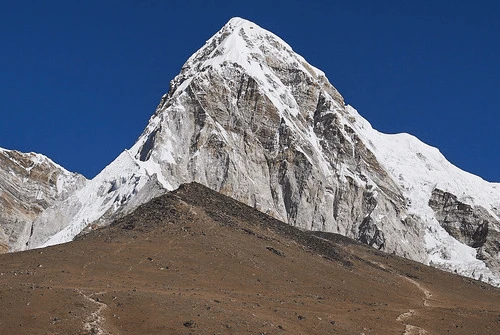
In spring, the route is animated by summit-bound expeditions. Icefall doctors work on the Khumbu Icefall, climbing ropes and ladders are fixed, and the Base Camp itself is a vast, organised city of coloured tents. Standing at Kala Patthar (5,545 m) at sunrise and watching the sun ignite the South Face of Everest is among the defining moments in outdoor adventure anywhere in the world.
Key Highlights:
- Namche Bazaar Saturday market
- Tengboche Monastery against the Ama Dablam backdrop
- Everest, Lhotse, and Nuptse panorama from Kala Patthar
- Active expedition camps at EBC
2. Annapurna Circuit Trek
- Duration: 14–21 days
- Maximum Altitude: 5,416 m (Thorong La Pass)
- Difficulty: Moderate to Strenuous
- Best For: Diversity of landscape, culture, and altitude
The Annapurna Circuit is widely regarded as one of the greatest long-distance treks in the world, and for good reason. It circles the entire Annapurna massif, passing through subtropical river valleys, dense rhododendron forests, high alpine meadows, and the stark, wind-swept plateau of the Mustang rain shadow.
The centrepiece is the crossing of Thorong La Pass (5,416 m), best attempted in the clear, stable morning weather that spring reliably delivers. On the western descent lies Muktinath, one of the most sacred pilgrimage sites in the Hindu and Buddhist worlds, a powerful cultural counterpoint to the physical achievement of the pass.
Key Highlights:
- Rhododendron forests between Ghorepani and Tatopani
- Thorong La Pass crossing
- The medieval walled city of Manang
- Apple orchards and gompa monasteries of Marpha
- Poon Hill sunrise viewpoint (3,210 m)
3. Annapurna Base Camp Trek (ABC)
- Duration: 7–12 days
- Maximum Altitude: 4,130 m
- Difficulty: Moderate
- Best For: First-time high-altitude trekkers, dramatic amphitheatre scenery
The Annapurna Base Camp trek is arguably the single most photogenic route in Nepal. From Pokhara, trekkers ascend through terraced farmland, Gurung villages, and the rhododendron-thick forests of Chomrong and Sinuwa before entering the dramatic Modi Khola gorge.
The gorge narrows to barely 500 metres wide as towering peaks, Annapurna South, Hiunchuli, Machapuchare (Fishtail), rise vertically on all sides. Emerging into the high glacial bowl of Annapurna Base Camp at 4,130 m, surrounded by seven peaks above 7,000 metres, is a moment of pure awe. Spring brings a thin blanket of snow at the camp itself and exceptionally vivid dawn alpenglow on the surrounding summits.
4. Langtang Valley Trek
- Duration: 7–10 days
- Maximum Altitude: 4,984 m (Tsergo Ri)
- Difficulty: Moderate
- Best For: Budget-conscious trekkers, cultural immersion, off-peak feel
Just 50 km north of Kathmandu, the Langtang Valley offers extraordinary Himalayan scenery without the crowds of Everest and Annapurna routes. The valley was devastated by the 2015 earthquake, but has been magnificently rebuilt by its resilient Tamang communities, and trekking here now carries a meaningful dimension of sustainable tourism support.
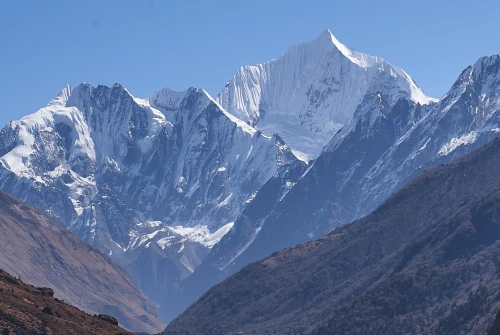
Spring brings wildflowers carpeting the lower valley and excellent visibility up to Langtang Lirung (7,227 m) and across the Tibetan plateau. The Kyanjin Gompa monastery at 3,870 m serves as a perfect acclimatisation base before the demanding ascent of Tsergo Ri, which rewards climbers with a 360-degree panorama spanning dozens of Himalayan giants.
5. Manaslu Circuit Trek
- Duration: 14–18 days
- Maximum Altitude: 5,160 m (Larkya La Pass)
- Difficulty: Strenuous
- Best For: Experienced trekkers seeking solitude and raw adventure
For those who find the main Everest and Annapurna routes too well-trodden, the Manaslu Circuit is the answer. Encircling the world's eighth-highest peak (Manaslu, 8,163 m), this restricted-area trek requires a special permit and must be done with a registered guide, rules that effectively cap visitor numbers and preserve an atmosphere of genuine wilderness.
The crossing of Larkya La Pass (5,160 m) is among the most spectacular high passes in Nepal, with views across a vast snowfield to Manaslu's ice-armoured north face. Spring is ideal: the pass is free of winter's deep snow, but the route is uncrowded compared to autumn.
Spring Trekking Permits and Regulations in Nepal
All trekkers in Nepal require permits. Here is a current summary of the essential documentation:
| Permit | Cost (Approx.) | Required For |
|---|---|---|
| TIMS Card (Trekkers' Information Management System) | USD 20 (individual) | Most popular trekking routes |
| Sagarmatha National Park Permit | NPR 3,000 (~USD 23) | Everest Base Camp, Gokyo |
| Annapurna Conservation Area Permit (ACAP) | NPR 3,000 (~USD 23) | All Annapurna routes |
| Manaslu Restricted Area Permit | USD 100/week (Mar–Nov) | Manaslu Circuit |
| Langtang National Park Permit | NPR 3,000 (~USD 23) | Langtang Valley |
Permits are obtained through the Nepal Tourism Board (NTB) offices in Kathmandu (Bhrikuti Mandap) or Pokhara, or via registered trekking agencies. Ensure all permits are carried at all times, as checkposts are thorough and regular.
Altitude Sickness: Prevention and Management on Himalayan Treks
Acute Mountain Sickness (AMS) is the most serious risk on any high-altitude trek in Nepal. Spring conditions, clear air and the temptation of perfect summit windows can encourage dangerously rapid ascent. Strict adherence to acclimatisation protocols is non-negotiable.
The Golden Rules of Acclimatisation
- "Climb high, sleep low" Ascend to higher altitudes during the day, return to a lower sleeping elevation each night.
- Do not ascend more than 300–500 m per day once above 3,000 m.
- Take a rest day every 3 days of ascent above 3,000 m.
- Never ignore symptoms like headache, nausea, fatigue, and loss of appetite, which are early warning signs.
- Descend immediately if symptoms worsen or if High Altitude Pulmonary Edema (HAPE) or High Altitude Cerebral Edema (HACE) are suspected.
Diamox (Acetazolamide) is widely used as a prophylactic medication and is available in Kathmandu pharmacies. Consult a physician before departure regarding dosage and suitability.
What to Pack for Spring Trekking in Nepal
Packing correctly for spring in Nepal requires balancing warmth for high-altitude mornings with lighter layers for warm valley afternoons. Here is a comprehensive checklist:
Clothing
- Moisture-wicking base layers (2–3 sets)
- Insulating mid-layer (fleece or down jacket)
- Waterproof, windproof outer shell jacket
- Trekking trousers (convertible recommended)
- Thermal leggings for above 4,000 m
- Warm hat and balaclava
- Sun hat (UV radiation is intense at altitude)
- Lightweight gloves and heavy-duty liner gloves
- Moisture-wicking trekking socks (5–7 pairs)
Footwear
- Waterproof, ankle-supporting trekking boots (broken in before departure)
- Camp sandals or lightweight shoes (for teahouses)
- Gaiters (for snow sections above 4,500 m)
Equipment
- 35–50 litre trekking backpack
- Trekking poles (essential for Thorong La and steep descents)
- Sleeping bag rated to -10°C (teahouses provide blankets, but quality varies)
- Headlamp with spare batteries
- UV-400 glacier sunglasses
- High-SPF sunscreen and lip balm (SPF 50+ minimum)
- Hydration system or water bottles
- Water purification tablets or a filter
- First aid kit including blister care, Diamox, Ibuprofen, Imodium
Teahouse Trekking: Accommodation and Food on the Trail
One of Nepal's greatest assets for trekkers is its teahouse system, a network of family-run lodges offering accommodation and meals along virtually every major route. In spring, most teahouses are fully operational and increasingly comfortable, with private rooms, attached bathrooms, and wifi (intermittent above Namche Bazaar) available on popular routes.
What to Eat
Dal Bhat, a plate of steamed rice, lentil soup, vegetable curry, and pickles, is the trekker's staple and for good reason: it provides slow-release carbohydrates and is refillable at most teahouses ("Dal Bhat power, 24 hour" is a trail saying that rings true). Other reliable options include:
- Tsampa porridge (roasted barley flour, a Sherpa breakfast tradition)
- Tibetan bread with honey or jam
- Noodle soups and thukpa
- Momos (steamed dumplings)
- Potato dishes (abundant above Namche)
- Yak cheese and yak butter tea (an acquired taste, but authentically Himalayan)
Avoid meat above Namche Bazaar, cold storage is unreliable, and food poisoning at altitude is severely debilitating.
Hiring Guides and Porters: Why It Matters
Nepal mandates that trekkers in restricted areas use a licensed guide, but even on open routes, hiring a TAAN-certified guide and a porter is strongly recommended, practically, ethically, and experientially.
Practically, a knowledgeable guide navigates route changes, manages teahouse bookings during peak season, and can identify and respond to altitude-related health deterioration.
Ethically, employing local guides and porters channels trekking revenue directly into Himalayan communities, communities that bear the environmental impact of trekking but have historically received a disproportionately small share of its economic benefits.
Experientially, a Sherpa or Gurung guide transforms a walk through extraordinary scenery into a deep cultural immersion. Their knowledge of local flora, village history, Buddhist and Hindu traditions, and mountain lore enriches every hour on the trail.
A fair daily wage for a porter in 2025 is approximately USD 15–20, plus food, accommodation, and mandatory insurance. Guides earn USD 25–40 per day. Never allow a porter to carry more than 25 kg.
Cultural Etiquette for Trekkers in Nepal
Trekking in Nepal is trekking through living cultures, not museum exhibits. Respectful conduct is essential.
- Dress modestly in villages and at religious sites; cover shoulders and knees.
- Walk clockwise around stupas, mani walls, and prayer flags; always keep them to your right.
- Remove shoes before entering monasteries and homes when invited.
- Ask permission before photographing people, particularly monks, elderly residents, and women.
- Avoid public displays of affection; they are considered disrespectful in Himalayan communities.
- Use your right hand for giving, receiving, and eating.
- Learning a few words of Nepali or Sherpa, "Namaste" (greeting), "Dhanyabad" (thank you), "Bistaarai" (slowly/carefully) go a long way.
Responsible and Sustainable Trekking in Nepal
Nepal's Himalayan environment is under significant and growing pressure. Spring trekkers share a responsibility to minimise their impact.
- Carry all non-biodegradable waste out of wilderness areas. Do not leave anything at campsites or on trails.
- Use a refillable water bottle and purification system rather than purchasing single-use plastic bottles. Most teahouses now provide boiled water for a small fee.
- Stay on established trails to prevent erosion and damage to alpine vegetation.
- Do not collect plants, fossils, or wildlife; it is illegal and ecologically damaging.
- Choose operators committed to fair wages and environmental responsibility. Look for membership of the Trekking Agencies' Association of Nepal (TAAN) and the Nepal Mountaineering Association (NMA).
Getting to Nepal: Flights and Entry
Tribhuvan International Airport (KTM) in Kathmandu is the principal international gateway. Direct flights operate from major Asian hubs including Delhi, Dubai, Doha, Singapore, Bangkok, Hong Kong, and Guangzhou. Connections from Europe and North America typically route through these cities.
Most nationalities receive a visa on arrival at Kathmandu airport or at land border crossings. A 15-day visa costs USD 30, a 30-day visa costs USD 50, and a 90-day visa costs USD 125. The Nepal e-Visa portal (online.nepalimmigration.gov.np) allows pre-application, which is strongly recommended to avoid queues during the spring peak season.
Spring Trekking in Nepal: Final Practical Tips
- Book flights and teahouses early, spring is Nepal's busiest trekking season. Popular teahouses at Namche Bazaar, Tengboche, Dingboche, and Gorakshep on the EBC trail fill weeks in advance.
- Purchase comprehensive travel insurance that specifically covers high-altitude trekking and helicopter evacuation; rescue costs without insurance can exceed USD 5,000.
- Acclimatise in Kathmandu (1,400 m) or Pokhara (822 m) for 1–2 days before flying to Lukla or beginning high-altitude trekking.
- Carry sufficient Nepali Rupees (NPR), ATMs exist in Namche Bazaar and Lukla, but are often out of service; there are no ATMs above Namche on the EBC trail.
- Download offline maps (Maps.me or Gaia GPS) before departure, as mobile data is limited above the lower valley towns.
- Travel with a quality headtorch, extra lithium batteries, and a portable power bank; cold temperatures drain standard batteries rapidly above 4,000 m.
Conclusion: Spring Is Nepal's Gift to the World's Trekkers
From the first rhododendron blooms brightening the Modi Khola gorge in early March to the last clear pre-monsoon summit views of late May, spring trekking in Nepal delivers an unmatched convergence of natural beauty, cultural richness, and high-altitude adventure. The routes are diverse enough to suit every experience level, the teahouse infrastructure is among the world's finest, and the warmth of Nepal's mountain communities, Sherpa, Tamang, Gurung, Magar, Thakali, adds a human dimension that no other trekking destination on Earth can replicate.
Nepal does not merely offer mountains. It offers a transformation. Lace up, acclimatise carefully, respect the land and its people, and let the Himalayas do the rest.
We recommend booking your spring Nepal trek at least three to six months in advance to secure permits, quality guides, and teahouse accommodation on your preferred dates. The mountains will be waiting, magnificent, patient, and utterly worth it.
for trekkers who take their adventures seriously. Always trek with a licensed guide, appropriate insurance, and deep respect for the communities and ecosystems that make Nepal the trekking capital of the world.