based on 270 reviews

Nepal is one of the most culturally and naturally rich countries on the planet. Packed into a land area smaller than many individual states, Nepal holds 10 UNESCO World Heritage Sites, a remarkable concentration of human civilization and natural wonder that rivals destinations many times its size. From the highest mountain on Earth to the birthplace of the Buddha, from medieval temple cities to tiger-roamed jungles, each site is a world unto itself.
This comprehensive guide covers all 10 World Heritage Sites of Nepal in full detail, what they are, why they matter, what to see, and exactly how to visit them.
How Nepal Has 10 UNESCO World Heritage Sites
Nepal's 10 listed heritage properties are drawn from four UNESCO inscriptions:
- Sagarmatha National Park (1979)
- Kathmandu Valley (1979), comprising 7 individual monument zones
- Chitwan National Park (1984)
- Lumbini, Birthplace of the Lord Buddha (1997)
The 7 monument zones of the Kathmandu Valley are each distinct and independently significant, bringing the total to 10 sites. We cover every single one in depth below.
1. Sagarmatha National Park
Location: Solukhumbu District, Koshi Province UNESCO Inscription: 1979 | Type: Natural
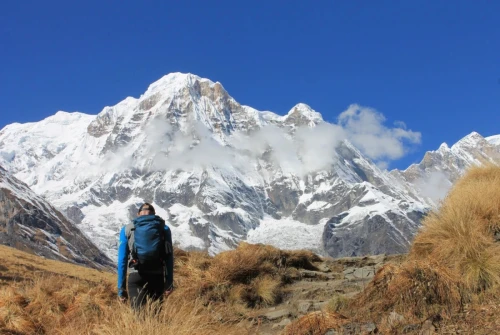
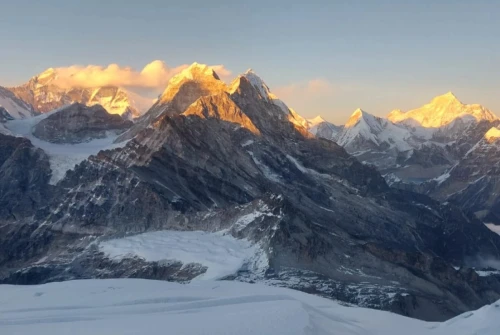
Sagarmatha National Park protects one of the most dramatic high-altitude environments on Earth. At its heart stands Mount Everest (8,848.86 m), the world's highest peak, known locally as Sagarmatha ("Forehead of the Sky"). The park covers 1,148 square kilometers of spectacular Himalayan terrain, including glaciers, icefalls, deep river valleys, and alpine meadows.
What to See and Do:
- Trek the world-famous Everest Base Camp Trail (EBC), a 12–14 day journey through Sherpa villages and dramatic mountain scenery
- Visit Tengboche Monastery at 3,867 m, one of the most photographed monasteries in the Himalayas
- Spot snow leopards, red pandas, Himalayan tahrs, and over 118 bird species
- Explore the market town of Namche Bazaar, gateway to the Khumbu region
Best Time to Visit: October–November and March–May
2. Kathmandu Durbar Square
Location: Kathmandu, Bagmati Province UNESCO Inscription: 1979 | Type: Cultural
Kathmandu Durbar Square (also called Hanuman Dhoka) was the royal palace complex of the Malla and Shah dynasties and served as the seat of Nepalese royalty for centuries. The square is a dense collection of palaces, courtyards, temples, and statues built between the 12th and 18th centuries.
Highlights include:
- Kumari Ghar — the living palace of the Kumari, Nepal's revered living goddess
- Taleju Temple, the tallest structure in the square, is dedicated to the royal goddess
- Kasthamandap — a three-story pavilion believed to be built from a single tree, from which Kathmandu gets its name
- The Hanuman Dhoka Palace Museum, housing royal artifacts and architecture
The square was significantly damaged in the 2015 Gorkha Earthquake, but extensive UNESCO-supported restoration work is ongoing.
3. Patan Durbar Square
Location: Lalitpur (Patan), Bagmati Province UNESCO Inscription: 1979 | Type: Cultural
Often regarded as the most beautiful of Nepal's three Durbar Squares, Patan Durbar Square sits at the heart of Lalitpur, one of the oldest Buddhist cities in the world. The square is a masterpiece of Newari architecture, densely packed with temples, courtyard shrines, and the magnificent Old Royal Palace.
Must-See Attractions:
- Krishna Mandir — a stunning 17th-century stone temple built entirely in the shikhara style, depicting scenes from the Mahabharata and Ramayana
- Hiranya Varna Mahavihar (Golden Temple) — a gilded Buddhist monastery dating to the 12th century
- Patan Museum — widely considered the finest museum in Nepal, housed inside a restored palace wing
- Mahabouddha Temple — the "Temple of a Thousand Buddhas," covered entirely in terracotta Buddha images
Patan is also Nepal's capital of traditional arts and crafts, with metal artisans, thangka painters, and wood carvers working in centuries-old traditions.
4. Bhaktapur Durbar Square
Location: Bhaktapur, Bagmati Province UNESCO Inscription: 1979 | Type: Cultural
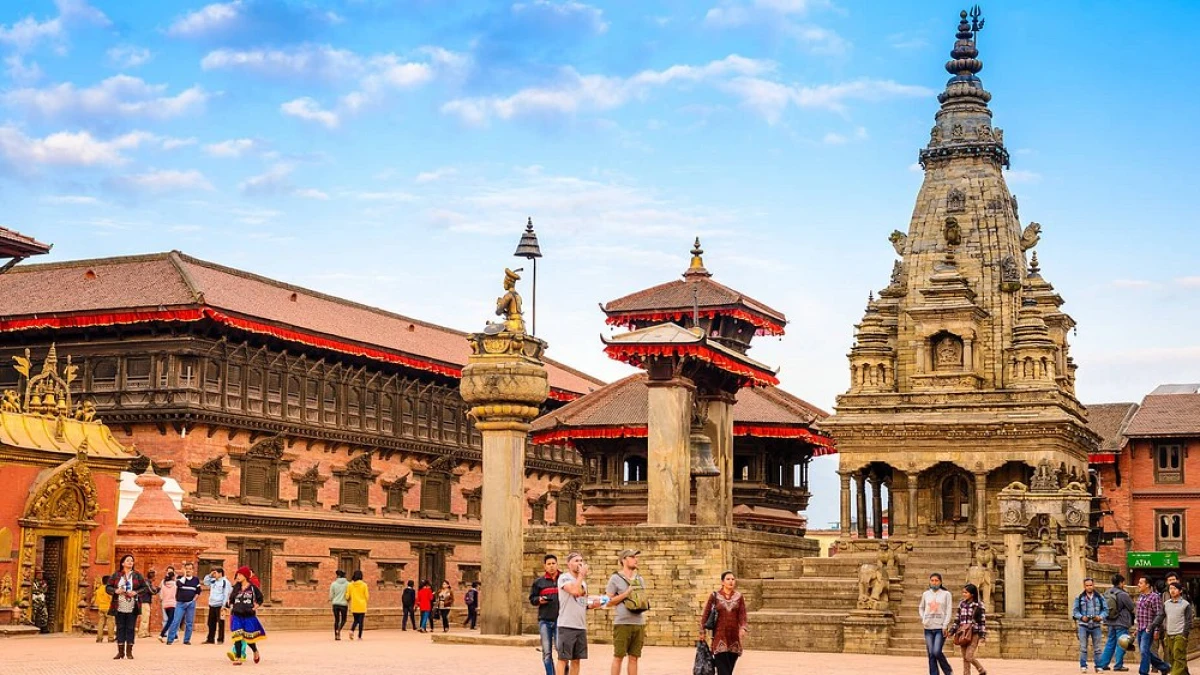
Bhaktapur (City of Devotees) is the best-preserved medieval city in Nepal and arguably the most atmospheric heritage destination in the entire Kathmandu Valley. The city was once the capital of the valley during the Malla dynasty and retains an almost entirely intact medieval urban fabric.
Key Landmarks:
- 55-Window Palace — a 15th-century royal palace featuring extraordinarily ornate carved wooden windows, considered a masterpiece of Newari craftsmanship
- Nyatapola Temple — Nepal's tallest pagoda temple (five stories, 30 meters), standing perfectly intact since 1702
- Dattatreya Temple — one of the oldest structures in Bhaktapur, predating the Durbar Square complex
- Pottery Square (Kumale Tol) — a living traditional pottery workshop where artisans still shape clay on hand-turned wheels
Bhaktapur is also renowned for Juju Dhau (King Curd), a thick, sweet yogurt that every visitor must try.
5. Changu Narayan Temple
Location: Changunarayan Municipality, Bhaktapur District UNESCO Inscription: 1979 | Type: Cultural
Perched atop a forested hilltop at 1,541 meters, Changu Narayan is Nepal's oldest surviving temple, believed to have been originally constructed in the 4th century CE during the Licchavi period. Dedicated to Lord Vishnu, the two-tiered pagoda is surrounded by some of the finest ancient stone sculptures and metal artworks in the entire Subcontinent.
Why It Is Extraordinary:
- Houses a 5th-century stone inscription of King Mandeva, the oldest dated stone inscription found in Nepal
- Contains exceptional Licchavi-era sculptures, including a ten-headed, ten-armed Vishnu and a magnificent Garuda figure
- The surrounding Changu village preserves traditional Newari rural life largely unchanged
Changu Narayan is less visited than other Kathmandu Valley sites, making it ideal for travelers seeking authentic, crowd-free heritage exploration.
6. Swayambhunath Stupa
Location: Swayambhu Hill, Kathmandu UNESCO Inscription: 1979 | Type: Cultural
Swayambhunath, affectionately known as the "Monkey Temple" due to the holy monkeys that inhabit it, is one of the oldest and most revered religious sites in Nepal. Crowning a forested hill above Kathmandu, the stupa's iconic all-seeing eyes of the Buddha gaze out in the four cardinal directions, a symbol recognized worldwide as the face of Nepal.
Highlights:
- The Great Stupa, painted in brilliant white with a golden spire, surrounded by prayer wheels, butter lamps, and votive shrines
- A 360-degree panoramic view of the entire Kathmandu Valley, especially spectacular at sunrise
- Harati Temple (Ajima Temple), dedicated to the goddess of smallpox and children, still actively worshipped
- A harmonious blend of Hindu and Buddhist religious practice in a single sacred space
The climb to the top via 365 stone steps is itself a pilgrimage, lined with statues of deities and animals.
7. Boudhanath Stupa
Location: Boudha, Kathmandu UNESCO Inscription: 1979 | Type: Cultural
Boudhanath Stupa is one of the largest spherical stupas in the world and the most important center of Tibetan Buddhism outside Tibet itself. With a base circumference of 100 meters, the stupa dominates the skyline of its neighborhood and is surrounded by over 50 Tibetan monasteries (gompas).
The Experience:
- Join thousands of Buddhist pilgrims and monks in the ancient ritual of kora, circumambulating the stupa clockwise while spinning prayer wheels and chanting mantras
- Explore the vibrant monastery rooftops for elevated views of the stupa and the valley beyond
- Browse the surrounding lanes for authentic Tibetan jewelry, thangka paintings, singing bowls, and butter lamps
- Time your visit during Losar (Tibetan New Year) for extraordinary cultural celebrations
Boudhanath is a living, breathing religious community, not merely a monument, and its spiritual energy is palpable at any hour of the day.
8. Pashupatinath Temple
Location: Deopatan, Kathmandu (on the banks of the Bagmati River) UNESCO Inscription: 1979 | Type: Cultural
Pashupatinath Temple is the holiest Hindu temple in Nepal and one of the most sacred Shiva temples in the entire world. Every year, hundreds of thousands of Hindu pilgrims from Nepal, India, and beyond make the journey to Pashupatinath, particularly during the festival of Maha Shivaratri, when over a million devotees converge on the site.
What Makes It Unique:
- The main pagoda, with its golden roof and silver doors, dates to the 5th century CE in its current form, though the site's sanctity is far older
- Arya Ghats, the sacred cremation platforms on the Bagmati riverbank, where open-air cremations have been performed for centuries, offering profound reflections on life and death
- Dozens of subsidiary temples, ashrams, and shrines across the 246-hectare complex
- Sadhus (Hindu holy men), their bodies smeared with ash and adorned in saffron, reside on the temple grounds and are willing to be photographed in exchange for a small donation
Note: The inner sanctum of the main temple is accessible only to Hindus, but the entire surrounding complex is open to all visitors.
9. Royal Chitwan National Park
Location: Chitwan District, Bagmati & Gandaki Provinces UNESCO Inscription: 1984 | Type: Natural
Chitwan National Park is Nepal's oldest and most celebrated national park, established in 1973 and inscribed as a UNESCO World Heritage Site in 1984. Covering 952 square kilometers of subtropical lowland forests, grasslands, and river systems, Chitwan is one of the last remaining undisturbed Terai ecosystems in Asia.
Wildlife Encounters:
- Greater One-Horned Rhinoceros — Chitwan is a global stronghold for this species, with the population having recovered from near-extinction
- Bengal Tiger — elusive but present, sightings are possible on jeep safaris
- Gharial and Marsh Mugger Crocodiles along the Narayani and Rapti Rivers
- Gangetic River Dolphin in the Narayani River
- 650+ bird species, making it a world-class birdwatching destination
Activities: Jungle jeep safaris, elephant bathing experiences, canoe rides, guided nature walks, and visits to Tharu cultural programs in surrounding villages.
10. Lumbini (Birthplace of the Lord Buddha)
Location: Rupandehi District, Lumbini Province UNESCO Inscription: 1997 | Type: Cultural
Lumbini is arguably the single most spiritually significant destination in all of Nepal. It is here, in approximately 563 BCE, that Queen Maya Devi gave birth to Siddhartha Gautama, the prince who would become the Buddha — the Enlightened One — and whose teachings would shape the lives of over 500 million people worldwide.
The Sacred Core:
- Maya Devi Temple — built directly over the Marker Stone indicating the exact birth spot, surrounded by ancient ruins and the sacred Ashoka bathing pond
- Ashoka Pillar (249 BCE) — erected by the Mauryan Emperor Ashoka bearing an inscription that confirms: "Here the Buddha, the Blessed One, was born."
- Puskarini Pond — where Maya Devi bathed before giving birth, still considered sacred
The Monastic Zone: Lumbini's master plan, designed by Japanese architect Kenzo Tange, divides the surrounding area into an East Monastic Zone (Theravada Buddhist monasteries) and a West Monastic Zone (Mahayana and Vajrayana Buddhist monasteries), with beautifully designed temples from Sri Lanka, Japan, China, South Korea, Thailand, Myanmar, Germany, France, and dozens more nations.
The World Peace Pagoda, built by Japanese Buddhist monks, rises luminously above the flat plains and is visible for miles.
Essential Visitor Information for All 10 Sites
| Site | Entry Fee (Approx.) | Best Season | Distance from Kathmandu |
|---|---|---|---|
| Sagarmatha NP | USD 30 | Oct–Nov, Mar–May | ~140 km (fly to Lukla) |
| Kathmandu Durbar Sq | USD 15 | Year-round | City center |
| Patan Durbar Square | USD 10 | Year-round | 5 km south |
| Bhaktapur Durbar Sq | USD 15 | Year-round | 13 km east |
| Changu Narayan | USD 5 | Year-round | 22 km east |
| Swayambhunath | USD 5 | Year-round | 3 km west |
| Boudhanath | USD 5 | Year-round | 8 km east |
| Pashupatinath | USD 15 (non-Hindu) | Year-round | 5 km east |
| Chitwan NP | USD 25 | Oct–March | ~150 km southwest |
| Lumbini | USD 5 | Oct–March | ~280 km southwest |
Top Travel Tips for Maximizing Your Heritage Experience in Nepal
- Plan at least 10–14 days to cover all major heritage sites without rushing
- Hire licensed local guides at every site — their knowledge transforms a visual experience into a deeply informed one
- Dress respectfully — cover shoulders and knees at all religious sites; remove footwear before entering temples
- Early mornings are magical — Boudhanath at dawn, Pashupatinath at sunrise, and Patan at first light are unforgettable
- Combine a valley circuit with a wildlife safari in Chitwan for a perfectly balanced Nepal itinerary
- Book accommodation in advance during peak season (October and November fill up quickly)
Final Word: Nepal's Heritage Is Humanity's Heritage
Nepal's 10 UNESCO World Heritage Sites are not relics behind glass, they are living places where people pray, cremate their loved ones, carve statues, tend monasteries, and guide their elephants through ancient grasslands. As an international visitor, you are not merely a spectator. You are a guest in one of humanity's most precious cultural and natural landscapes.
Travel with curiosity. Move with respect. Leave with memories that will last a lifetime.
Nepal does not just show you the world, it shows you something deeper than the world.

.webp)