based on 251 reviews

Introduction to Changunarayan Temple
Perched gracefully on a hilltop in Bhaktapur, the Changunarayan Temple stands as one of the most ancient, revered, and culturally significant temples in Nepal, offering visitors a rare opportunity to witness a living monument that has preserved over 1,500 years of history. As part of the Kathmandu Valley UNESCO World Heritage Site, this temple is not just a religious destination but a timeless expression of Nepalese art, devotion, and civilization. Surrounded by peaceful forests and traditional villages, the temple offers an atmosphere of calmness and authenticity, making it an ideal escape for travelers seeking both spiritual connection and cultural depth. From the moment we arrive, the serene environment, ancient stone pathways, and intricate architecture immediately transport us into a different era where history and faith exist in perfect harmony.
Historical Significance of Changunarayan Temple
The Changunarayan Temple holds immense historical value as it is widely regarded as the oldest temple in Nepal, with origins tracing back to the Licchavi period around the 4th century. What makes this temple exceptionally important is the presence of the oldest known inscription in Nepal, dating back to 464 AD, which was commissioned by King Mandeva and remains a cornerstone in understanding the country’s early political and cultural history.
As we explore the temple complex, we encounter ancient stone sculptures, inscriptions, and relics that vividly narrate stories of Nepal’s past, showcasing the evolution of art, religion, and governance. These historical elements are not confined to museums but are preserved in their original setting, allowing visitors to experience history in its most authentic form. The temple thus serves as a living archive of Nepalese heritage, making it an essential destination for historians, researchers, and culturally curious travelers.
Architectural Excellence and Artistic Brilliance
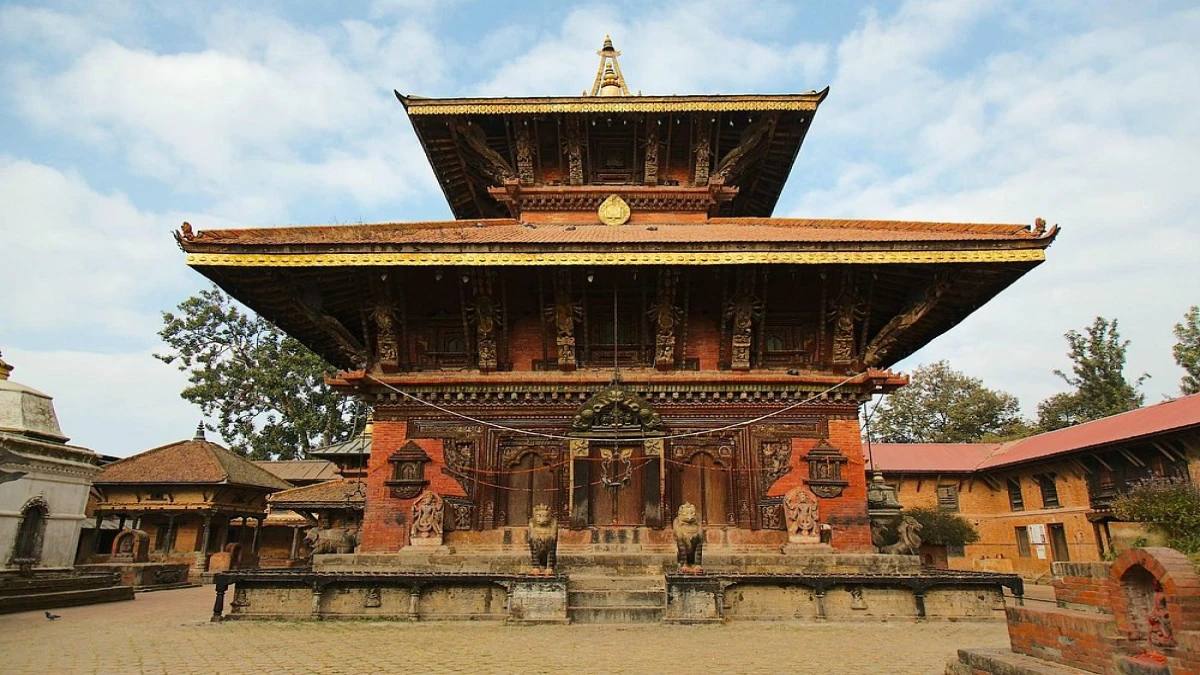
The architectural beauty of Changunarayan Temple is a striking example of traditional Nepali pagoda-style design, characterized by its two-tiered roof, finely crafted wooden struts, and richly decorated stone sculptures. Every detail of the temple reflects the extraordinary craftsmanship of ancient artisans, particularly the intricate wood carvings that depict various deities, mythical creatures, and symbolic motifs. As we move through the temple courtyard, we encounter remarkable stone statues of Lord Vishnu in different forms, including Narasimha and Trivikrama, each carved with exceptional precision and artistic expression.
The presence of the iconic Garuda statue, kneeling in devotion at the entrance, further enhances the spiritual ambiance of the temple. The combination of wood, stone, and metal artistry not only showcases the technical skill of the time but also represents the deep religious beliefs embedded in every element of the structure, making the temple a masterpiece of both architecture and devotion.
Religious Importance and Spiritual Experience
Changunarayan Temple is dedicated to Lord Vishnu, one of the principal deities in Hinduism, revered as the preserver of the universe. The temple holds profound religious significance, attracting devotees from across Nepal and beyond who come to seek blessings, peace, and spiritual fulfillment. The daily rituals performed by priests follow centuries-old traditions, creating a deeply spiritual atmosphere that resonates throughout the temple परिसर.
During major festivals such as Hari Bodhini Ekadashi, the temple becomes especially vibrant, filled with devotees, rituals, and cultural celebrations that reflect the enduring faith of the people. Visiting Changunarayan is not merely about observing rituals; it is about experiencing a sense of inner calm and spiritual connection, where the sacred energy of the place allows us to pause, reflect, and reconnect with ourselves amidst the ancient surroundings.
Best Time to Visit Changunarayan Temple
The experience of visiting Changunarayan Temple is greatly enhanced by choosing the right season, as the surrounding landscapes and weather conditions play a significant role in shaping the overall journey. The autumn season (September to November) is considered one of the best times to visit, offering clear skies, comfortable temperatures, and breathtaking views of the surrounding hills and distant Himalayan ranges.
Similarly, the spring season (March to May) provides a refreshing environment with blooming flowers and lush greenery that add to the beauty of the temple परिसर. Visiting early in the morning or during the late afternoon allows us to enjoy the temple in a more शांत and peaceful setting, with soft natural light illuminating the intricate carvings and enhancing the overall ambiance.
How to Reach Changunarayan Temple
Located approximately 22 kilometers from Kathmandu, Changunarayan Temple is easily accessible through various transportation options, making it a convenient day-trip destination for travelers. We can reach the temple by hiring a private taxi or vehicle, which offers the most comfortable and flexible journey, especially for those traveling in groups or with limited time. Public buses are also available up to Bhaktapur, from where a short ride or a scenic hike leads us to the temple. For those seeking a more immersive experience, the hiking route from Bhaktapur to Changunarayan is highly recommended, as it takes us through traditional villages, terraced fields, and rural landscapes that provide a deeper insight into local life. This journey not only connects us to the destination but also enriches the overall travel experience.
Nearby Attractions and Cultural Exploration
A visit to Changunarayan Temple can be beautifully combined with nearby attractions, allowing us to explore more of the cultural and natural richness of the region. The nearby Nagarkot is famous for its spectacular sunrise and sunset views over the Himalayas, offering a breathtaking visual experience that complements the spiritual journey of Changunarayan. Additionally, Bhaktapur is home to the historic Durbar Square, where ancient palaces, temples, and traditional Newari architecture create a vibrant cultural landscape.
Walking through Changunarayan village itself provides an authentic glimpse into local life, where traditional houses, friendly locals, and quiet surroundings offer a refreshing contrast to urban environments. Together, these experiences create a well-rounded journey filled with history, culture, and natural beauty.
Final Thoughts
The Changunarayan Temple stands as a remarkable testament to Nepal’s rich heritage, offering a unique combination of history, spirituality, and artistic brilliance that cannot be found elsewhere. It is not just a destination we visit but a place we experience deeply, where every carving, inscription, and ritual tells a story of devotion and tradition. For travelers seeking a meaningful and immersive journey, Changunarayan provides an unforgettable experience that captures the true essence of Nepal.