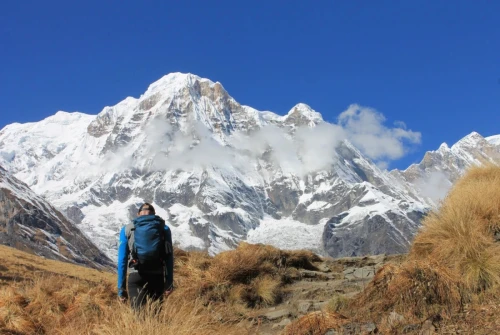
Comfort Everest Base Camp Trek with helicopter Return Trip Overview
Destination | Everest Base Camp, Nepal |
Duration | 11 Days |
Trekking Region | Khumbu / Everest Region |
Starting Point | Kathmandu |
Trek Starting Point | Lukla |
Everest Base Camp Elevation | Approx. 5,364 m |
Highest Point | Kala Patthar, approx. 5,545 m |
Difficulty | Challenging |
Acclimatization Days | Namche Bazaar & Dingboche |
Accommodation | Kathmandu hotel & mountain teahouses |
Best Seasons | Spring and autumn |
Trekking Style | Guided teahouse trek |
Why Choose the Everest Base Camp Trek with Helicopter ?
A traditional Everest Base Camp trek takes longer because trekkers must retrace their route back toward Lukla after reaching Base Camp. This 9-day Everest Base Camp trek with helicopter return offers a faster and more rewarding alternative.
You’ll experience the essential trekking route through the legendary Khumbu Valley, including acclimatization days and the iconic Everest Base Camp and Kala Patthar, before returning to Kathmandu by helicopter.
- Experience the Classic Everest Base Camp Route
Walk through the spectacular Khumbu Valley and experience traditional Sherpa villages, suspension bridges, monasteries, glaciers, and dramatic Himalayan landscapes rather than simply flying directly to Everest Base Camp.
- Two Dedicated Acclimatization Days
The itinerary includes acclimatization days in Namche Bazaar and Dingboche, giving your body valuable time to adjust to the increasing altitude before continuing toward Everest Base Camp.
Stand at approximately 5,364 metres (17,598 feet) at the legendary Everest Base Camp, surrounded by some of the world's highest and most spectacular mountains.
- Witness the Kala Patthar Sunrise
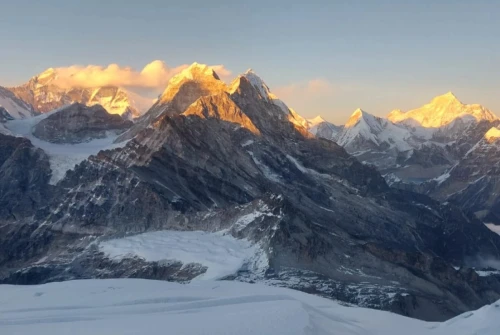
Climb to approximately 5,545 metres (18,192 feet) at Kala Patthar for an unforgettable sunrise over Mount Everest, Nuptse, Pumori, and the surrounding Himalayan peaks.
- Save Time with a Helicopter Return
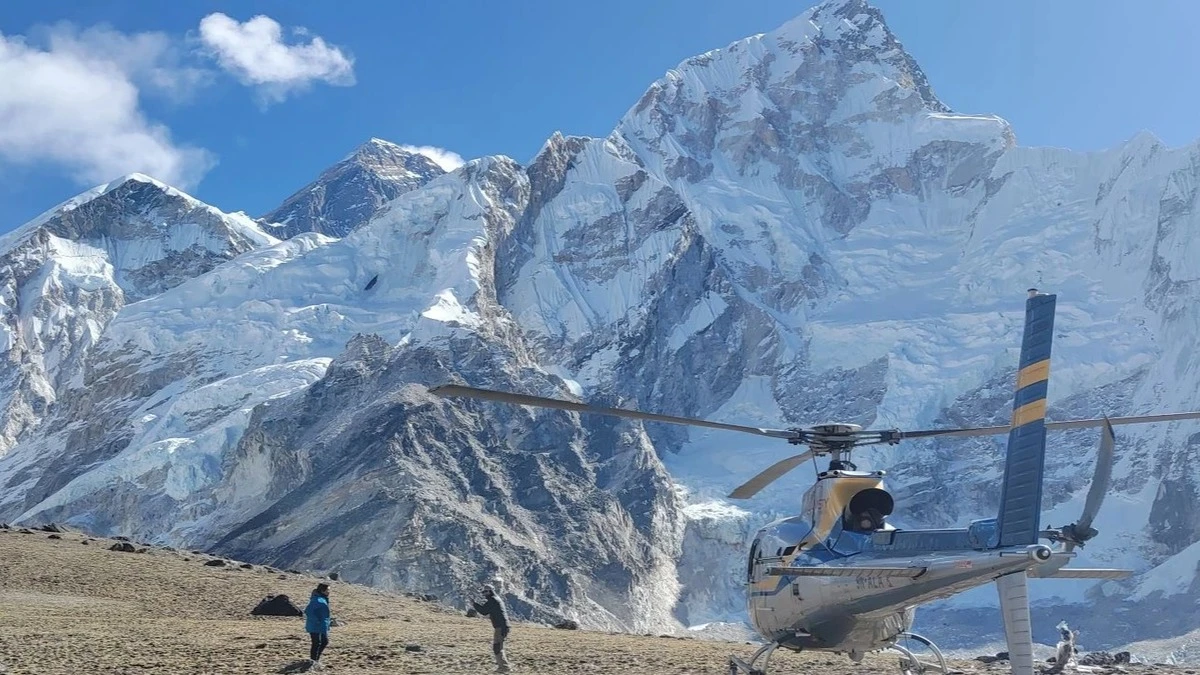
After completing the high-altitude trekking section, avoid several days of walking back toward Lukla. The helicopter return allows you to complete the adventure in just 9 days while enjoying breathtaking aerial views of the Everest region.
- See the Himalayas from the Air
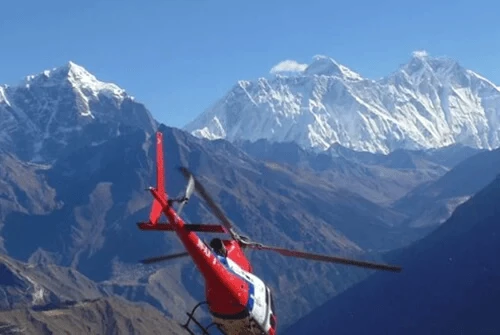
After experiencing the mountains on foot, enjoy an entirely different perspective from above. The helicopter flight offers spectacular views of glaciers, deep valleys, Sherpa villages, mountain ridges, and the vast Himalayan landscape.
In short, the Everest Base Camp trek with helicopter return combines the adventure of a classic EBC trek with the convenience, time savings, and unforgettable views of a helicopter journey.
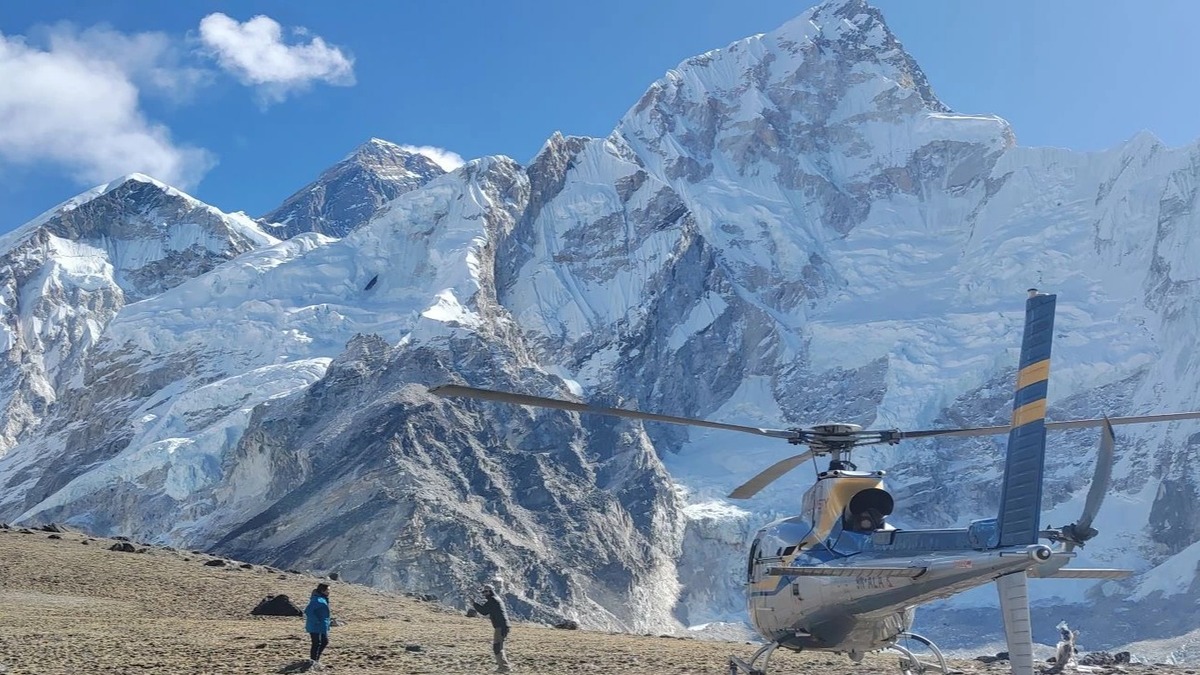
Luxury Everest Base Camp Trek with Helicopter Return Highlights
Scenic helicopter flight to Lukla — Begin your Himalayan adventure with breathtaking aerial views of the mountains and valleys.
Dudh Koshi Valley — Trek through the beautiful river valley surrounded by lush forests, dramatic cliffs, and Himalayan scenery.
Iconic suspension bridges — Cross spectacular suspension bridges decorated with colorful Buddhist prayer flags.
Sagarmatha National Park — Explore the UNESCO-listed national park, home to exceptional Himalayan landscapes and wildlife.
Namche Bazaar — Discover the lively Sherpa capital and an important trading hub in the Everest region.
Everest View Hotel — Enjoy panoramic views of Everest, Ama Dablam, Lhotse, and surrounding peaks.
Tengboche Monastery — Visit one of the most important Buddhist monasteries in the Khumbu, set against an extraordinary Himalayan backdrop.
Ama Dablam and Himalayan giants — Trek beneath some of the world's most spectacular peaks, including Ama Dablam, Lhotse, Nuptse, and Everest.
Dingboche acclimatization — Spend valuable time acclimatizing in the beautiful high-altitude village of Dingboche.
Nangkartshang Ridge hike — Enjoy a rewarding acclimatization hike with spectacular views of Ama Dablam, Makalu, and the surrounding mountains.
Thukla Pass and Everest memorials — Pay your respects at the memorials dedicated to climbers who lost their lives in the Himalayas.
Khumbu Glacier & high-altitude moraine — Experience the rugged landscape of glaciers, ice, rock, and moraine as you approach Everest Base Camp.
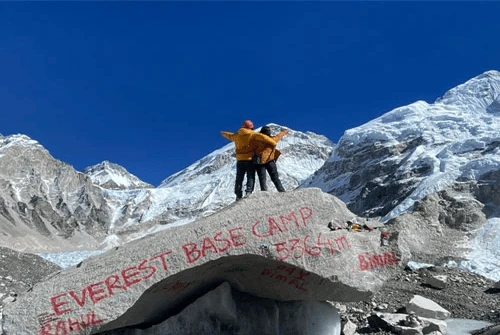
Everest Base Camp 5,364 m — Reach the legendary base camp at the foot of Mount Everest and experience one of the world's greatest trekking destinations.
Kala Patthar sunrise 5,545 m — Rise early for an unforgettable sunrise over Mount Everest and the surrounding Himalayan peaks.
Scenic helicopter return to Kathmandu — Complete your adventure in style with a spectacular helicopter flight from the Everest region back to Kathmandu, avoiding several days of trekking on the return journey.
Luxury Everest Base Camp Trek with Helicopter Return Elevation
Altitude is one of the defining challenges of the Luxury Everest Base Camp Trek with Helicopter Return. The route gradually climbs from Kathmandu to the high Himalayas, with acclimatization days in Namche Bazaar and Dingboche.
Location | Elevation |
Kathmandu | 1,400 m |
Lukla | 2,840 m |
Phakding | 2,610 m |
Namche Bazaar | 3,440 m |
Tengboche | 3,860 m |
Dingboche | 4,410 m |
Lobuche | 4,940 m |
Gorakshep | 5,164 m |
Everest Base Camp | 5,364 m |
Kala Patthar | 5,545 m |
The highest point is Kala Patthar at 5,545 m, offering spectacular sunrise views of Mount Everest and the surrounding Himalayas. After completing the trek, enjoy a scenic helicopter return to Kathmandu, subject to weather and operational conditions.
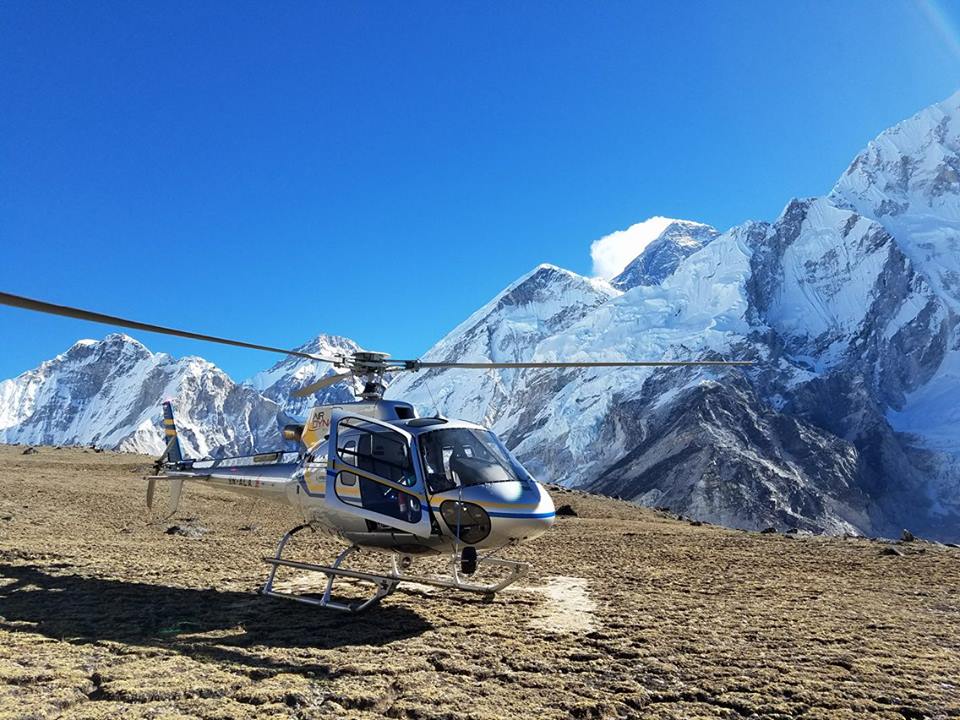
Everest Base Camp Trek with Helicopter back Distance and Walking Hours
The Everest Base Camp Trek with Helicopter Back involves approximately 4–8 hours of walking per day, depending on the route, altitude, weather, and trail conditions.
The most demanding sections are the approaches to Lobuche, Everest Base Camp, and Kala Patthar, where high altitude and rugged terrain make even shorter distances challenging.
Trek Section | Approx. Distance in Km | Walking Time |
Lukla – Phakding | 8 km | 3–4 hrs |
Phakding – Namche | 12 km | 5–7 hrs |
Namche – Tengboche | 11 km | 5–6 hrs |
Tengboche – Dingboche | 11 km | 5–6 hrs |
Dingboche – Lobuche | 9 km | 4–6 hrs |
Lobuche – EBC – Gorakshep | 12 km | 7–9 hrs |
Gorakshep – Kala Patthar – Gorakshep | 3–4 km | 2–3 hrs |
How Difficult Is the Everest Base Camp Trek and Fly Back Helicopter?
The Everest Base Camp Trek and Fly Back Helicopter is a challenging high-altitude trek. You do not need to be an elite athlete, but good fitness and preparation are important for several consecutive days of walking in mountainous terrain.
Main Challenges
High altitude and reduced oxygen
Long trekking days
Steep ascents and descents
Rocky and uneven trails
Cold temperatures
Early-morning starts
Basic mountain accommodation
Changing Himalayan weather
Altitude is the biggest challenge. Even fit trekkers can experience fatigue or breathlessness above 4,000 metres. A slow, steady pace, proper hydration, acclimatization, and regular rest are essential.
The helicopter return to Kathmandu reduces the need for several additional days of downhill trekking, making this itinerary a more time-efficient option while still providing the complete Everest Base Camp trekking experience.
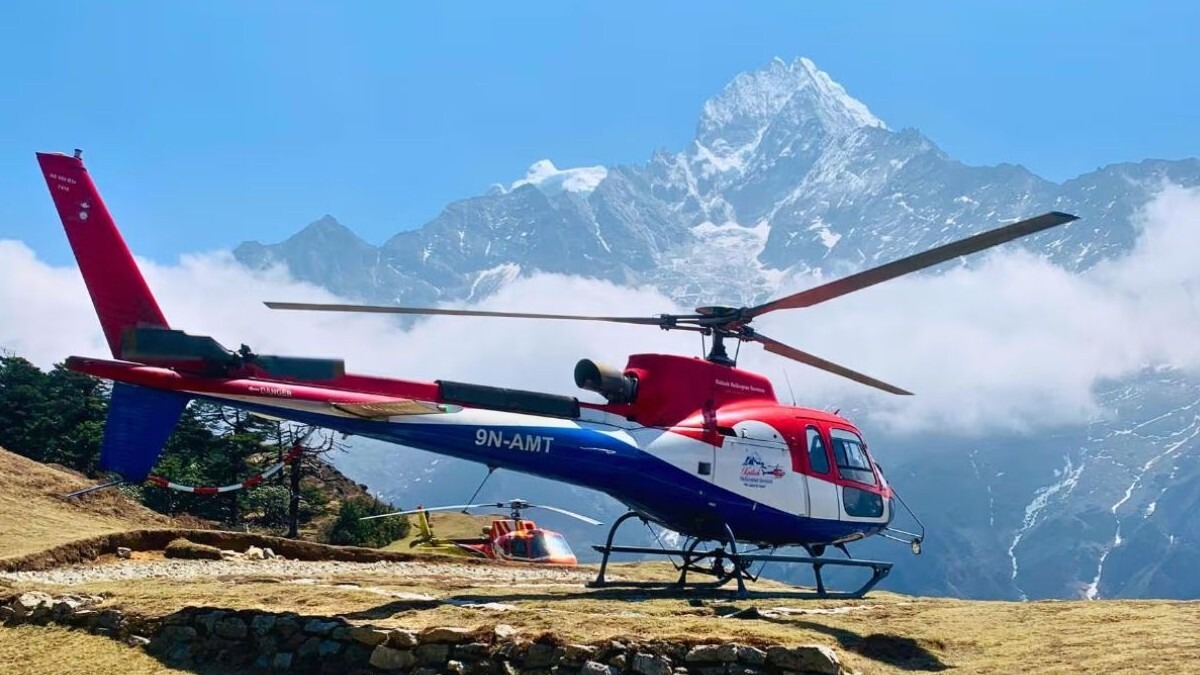
Luxury Everest Base Camp Trek with Helicopter Return Itinerary
Day 1 – Arrival in Kathmandu Altitude: 1,400 m
Welcome to Nepal,Upon arrival at Tribhuvan International Airport, you will be warmly welcomed by the All Nepal Hiking team and transferred to your hotel in Thamel.
The airport is approximately 6 km from Thamel, and the transfer generally takes around 20–30 minutes, depending on traffic.After checking into your hotel, the remainder of the day is kept relaxed so you can recover from your international journey.
You will meet your trekking guide for a pre-trek briefing covering the itinerary, altitude, weather, safety procedures and trekking preparations. This is also the ideal time to check your equipment and organize your trekking baggage.
Enjoy a relaxed evening in Kathmandu and have an early rest before your Himalayan adventure begins.
- Airport: Tribhuvan International Airport – approx. 1,400 m
- Transfer: Airport To Thamel | Approx. 6 km | 20–30 minutes
- Overnight: Kathmandu Hotel, Thamel
Day 2 – Helicopter from Kathmandu to Lukla and Trek to Phakding
Lukla: approximately 2,840 m
Phakding: approximately 2,610 m
After an early breakfast, you will travel to the helicopter departure point for your flight toward Lukla.
The aerial journey is one of the exciting moments of the trek as the landscape changes from the Kathmandu Valley to the dramatic Himalayan terrain. Depending on the operating arrangement and conditions, the flight time is generally around 45–60 minutes for a helicopter journey toward Lukla.
Lukla sits at approximately 2,840 metres above sea level. After landing, you will meet your trekking team, organize your baggage and begin walking toward Phakding.The trek covers approximately 8 km and takes around 3–4 hours.
The trail follows the Dudh Koshi River through beautiful Sherpa settlements, pine forests and traditional mountain homes. Along the route, you will see mani walls, prayer wheels, colorful prayer flags and small suspension bridges.
The route includes gentle ascents and descents, making it a relatively comfortable introduction to trekking in the Khumbu.
Phakding is located at approximately 2,610 metres, so the overall elevation is slightly lower than Lukla, although the trail is not continuously downhill.After reaching Phakding, check into your teahouse, enjoy a warm meal and rest.
Because your body has moved rapidly from Kathmandu to almost 2,800 metres, hydration and a relaxed pace are important.
- Helicopter Kathmandu to Lukla | Approx. 45–60 minutes
- Trek from Lukla (2,840 m) to Phakding (2,610 m)
- Distance: Approx. 8 km
- Walking: Approx. 3–4 hours
- Overnight: Phakding Teahouse
Day 3 – Phakding to Namche Bazaar
Phakding: 2,610 m
Namche Bazaar: 3,440 m
Today is your first major trekking day.After breakfast, you will begin walking through the Dudh Koshi Valley toward Namche Bazaar. The trail passes through pine forests, Sherpa settlements and several spectacular suspension bridges.
As you approach Monjo, you enter Sagarmatha National Park. The park is home to some of the world's most famous Himalayan landscapes and includes the Everest region.
From Monjo, the route continues toward Jorsale before reaching the suspension bridges over the Dudh Koshi River.After crossing the final major bridge, the trail begins the long climb toward Namche Bazaar.
This is one of the first sections where the effects of altitude become noticeable. Walk slowly and maintain a comfortable rhythm rather than trying to maintain your normal low-altitude walking speed.The trail climbs through a series of forested switchbacks before eventually reaching Namche Bazaar.
Today's trek covers approximately 12 km and generally takes 5–7 hours.Namche Bazaar sits at approximately 3,440 metres and is the commercial and cultural centre of the Khumbu region.
Depending on weather conditions, you may see Thamserku, Kongde and other surrounding peaks, with Everest visible from higher viewpoints around Namche.After checking into your lodge, enjoy a warm meal and rest.
- Trek: Phakding (2,610 m) → Namche Bazaar (3,440 m)
- Distance: Approx. 12 km
- Walking: Approx. 5–7 hours
- Elevation Gain: Approx. 830 m
- Overnight: Namche Bazaar Lodge
Day 4 – Acclimatization Day in Namche Bazaar
Namche Bazaar: 3,440 m
Highest hiking point: approximately 3,880 m
Today is an important acclimatization day.Rather than taking a complete rest day, you will undertake a short hike to a higher elevation before returning to Namche to sleep.
After breakfast, you will hike toward the Everest View Hotel, located at approximately 3,880 metres.Depending on your condition, weather and your guide's recommendation, you may continue toward Khumjung or another nearby viewpoint.
The acclimatization hike generally covers approximately 5–8 km and takes around 3–5 hours, including rest stops.The goal is to expose your body to a higher elevation while returning to sleep at Namche's lower altitude.From the viewpoints, you can enjoy impressive views of Everest, Lhotse, Ama Dablam, Thamserku and Kongde when visibility is good.
After returning to Namche, spend the afternoon relaxing or exploring the town.You may visit the local market, bakeries, shops or viewpoints.This is also a good opportunity to charge electronic devices, reorganize your backpack and prepare for the higher sections of the trek.
- Acclimatization Hike: Namche → Everest View Hotel → Namche
- Distance: Approx. 5–8 km
- Hiking: Approx. 3–5 hours
- Highest Point: Approx. 3,880 m
- Overnight: Namche Bazaar Lodge
Day 5 – Namche Bazaar to Tengboche
Namche Bazaar: 3,440 m
Tengboche: 3,860 m
After breakfast, you will leave Namche Bazaar and continue deeper into the Khumbu Valley.The trail initially follows the mountainside above the Dudh Koshi Valley, offering spectacular views of the surrounding Himalayan peaks.
Today's trek covers approximately 11 km and generally takes 5–6 hours.The trail gradually descends toward Phunki Thenga, located at approximately 3,250 metres, before crossing the river and beginning the main climb toward Tengboche.The climb passes through beautiful pine and rhododendron forests.As you gain elevation, the forest gradually opens and the mountain scenery becomes more dramatic.
Eventually, you reach Tengboche at approximately 3,860 metres.Tengboche is famous for Tengboche Monastery, one of the most important Buddhist monasteries in the Everest region.The monastery's location is particularly impressive, with Ama Dablam rising dramatically behind it.If timing permits, you can visit the monastery and experience the peaceful atmosphere of this remarkable Himalayan setting.Temperatures will be colder than in Namche, so keep your warm clothing accessible.
- Trek: Namche → Phunki Thenga → Tengboche
- Distance: Approx. 10–11 km
- Walking: Approx. 5–6 hours
- Elevation Gain: Approx. 420 m overall
- Overnight: Tengboche Lodge
Day 6 – Tengboche to Dingboche
Tengboche: 3,860 m
Dingboche: 4,410 m
Today you continue toward Dingboche and gradually move above the tree line.The trail initially descends through forest toward the Imja Khola, where you cross the river before continuing through traditional villages and stone-walled agricultural fields.
The route passes through areas such as Pangboche and Shomare, with magnificent views of Ama Dablam and the surrounding peaks.As you gain altitude, the vegetation becomes increasingly sparse.The dense forests gradually disappear and are replaced by rocky slopes, open valleys and stone walls.
Today's trek covers approximately 11 km and takes around 5–6 hours.Dingboche sits at approximately 4,410 metres, making this a significant altitude gain from Tengboche.At this elevation, even fit trekkers may notice that walking becomes slower and more demanding.Maintain a steady pace, drink plenty of water and take regular breaks.After arriving in Dingboche, check into your teahouse and spend the remainder of the day resting.Tomorrow's acclimatization hike will be important before continuing toward Lobuche and Gorakshep.
- Trek: Tengboche → Pangboche → Shomare → Dingboche
- Distance: Approx. 11 km
- Walking: Approx. 5–6 hours
- Elevation Gain: Approx. 550 m
- Overnight: Dingboche Lodge
Day 7 – Acclimatization Day in Dingboche
Dingboche: 4,410 m
Nangkartshang Ridge: approximately 5,000–5,100 m
Today is your second major acclimatization day.After breakfast, you will hike toward Nangkartshang Ridge, allowing your body to experience a higher altitude before returning to Dingboche to sleep.The hike generally covers approximately 5–8 km and takes around 4–5 hours, depending on the turnaround point, weather and trail conditions.
The route can reach approximately 5,000–5,100 metres, although reaching the highest point is not essential. Your guide will determine the appropriate turnaround point according to conditions and how you are feeling.The climb should be slow and controlled.From the higher viewpoints, you can enjoy spectacular views across the Imja Valley, with Ama Dablam and other Himalayan peaks dominating the landscape.After spending some time at altitude, you descend carefully back to Dingboche.
The afternoon is dedicated to recovery.Eat well, hydrate, organize your equipment and prepare your daypack for the high-altitude section ahead.Make sure your headlamp, batteries, gloves, warm layers and other essentials are easily accessible.
- Acclimatization Hike: Dingboche → Nangkartshang Ridge → Dingboche
- Distance: Approx. 5–8 km
- Hiking: Approx. 4–5 hours
- Highest Point: Approx. 5,000–5,100 m
- Overnight: Dingboche Lodge
Day 8 – Dingboche to Lobuche
Dingboche: 4,410 m
Lobuche: approximately 4,940 m
Today marks the beginning of the final high-altitude approach toward Everest Base Camp.After breakfast, you leave Dingboche and follow the valley toward Thukla, located at approximately 4,620 metres.The trek covers approximately 8–9 km and takes around 4–6 hours.The landscape becomes increasingly barren as you gain altitude.After Thukla, the trail climbs more noticeably toward the Everest memorial area.
This is a physically demanding section because of the altitude, so the pace should remain slow and steady.At the memorial area, you will see stone monuments and prayer flags commemorating climbers and mountaineers who lost their lives in the Himalayas.It is a quiet and emotional part of the trek. Take some time to appreciate the surroundings before continuing.From the memorial area, the trail gradually continues toward Lobuche.
The landscape is now almost completely treeless, with glaciers, rocky mountains and snow-covered peaks dominating the horizon.Lobuche sits at approximately 4,940 metres.After arriving, check into your teahouse and keep the evening relaxed.Temperatures can become extremely cold after sunset, and sleeping at this altitude can be challenging.
- Trek: Dingboche → Thukla → Everest Memorials → Lobuche
- Distance: Approx. 8–9 km
- Walking: Approx. 4–6 hours
- Elevation Gain: Approx. 530 m
- Overnight: Lobuche Lodge
Day 9 – Lobuche to Everest Base Camp and Gorakshep
Lobuche: 4,940 m
Gorakshep: 5,164 m
Everest Base Camp: 5,364 m
Today is the main objective of the trek.You will leave Lobuche early in the morning and begin following the high-altitude trail toward Gorakshep.The trek covers approximately 12–13 km in total and takes around 7–9 hours, depending on your pace, trail conditions, weather and rest stops.The trail follows the rocky moraine and glacier landscape of the Khumbu region.Progress is slower at this elevation because of the thin air and uneven terrain.After several hours, you reach Gorakshep at approximately 5,164 metres.
You can leave unnecessary belongings at the lodge and take a short break before continuing toward Everest Base Camp.The final approach follows rocky moraine and glacial terrain toward the Base Camp area.As you get closer, the surrounding landscape becomes increasingly dramatic.Finally, you reach Everest Base Camp at approximately 5,364 metres.This is the culmination of the trekking portion of your journey.Spend time taking photographs and appreciating the achievement.
Depending on the season, Base Camp may look different because of climbing expeditions, tents and changing glacier conditions.After enjoying the moment, you retrace the route toward Gorakshep.The return walk can feel particularly difficult after several hours at high altitude, so take your time and conserve energy.Once back at Gorakshep, enjoy dinner and prepare for the following morning's pre-dawn Kala Patthar climb.
- Trek: Lobuche → Gorakshep → Everest Base Camp → Gorakshep
- Distance: Approx. 12–13 km
- Walking: Approx. 7–9 hours
- Maximum Elevation: 5,364 m
- Overnight: Gorakshep Lodge
Day 10 – Kala Patthar Sunrise and Helicopter Return to Kathmandu
Gorakshep: 5,164 m
Kala Patthar: approximately 5,545 m
Today is the spectacular finale of your Everest adventure.You will wake before dawn, usually around 4:30–5:00 AM, depending on the season, weather and your guide's recommended timing.After dressing in warm clothing and preparing your headlamp, water and camera, you begin the climb toward Kala Patthar.The hike covers approximately 3–4 km round trip and generally takes around 2–3 hours, depending on pace and conditions.
You will gain approximately 380 metres, reaching a maximum elevation of around 5,545 metres.Although the distance is short, the climb is challenging because you are starting from more than 5,000 metres.There is no advantage in rushing.The goal is to reach the viewpoint safely before sunrise.As daylight appears, the Himalayan peaks gradually change colour.From Kala Patthar, you can enjoy spectacular views of Mount Everest, Nuptse, Pumori, Lhotse and the surrounding Himalayan giants.
Watching the first sunlight illuminate the mountains is one of the most memorable moments of the trek.After enjoying the sunrise and taking photographs, descend carefully to Gorakshep.Have breakfast, collect your belongings and prepare for your helicopter departure.
The helicopter return provides a completely different perspective of the landscape you have spent days crossing on foot.From the air, you can look down over glaciers, valleys, villages, ridges and sections of the trekking route.The exact helicopter timing and routing depend on weather, visibility, wind, air traffic and operational conditions. The flight should therefore not be considered guaranteed at a specific time.After reaching Kathmandu, transfer to your hotel, enjoy a hot shower and relax after your high-altitude adventure.
- Hike: Gorakshep → Kala Patthar → Gorakshep
- Distance: Approx. 3–4 km
- Hiking: Approx. 2–3 hours
- Highest Point: Approx. 5,545 m
- Helicopter: Everest Region → Kathmandu
- Overnight: Kathmandu Hotel
Day 11 – Kathmandu to Home
Your final morning in Nepal is relaxed, with no trekking activities scheduled.After breakfast, you can complete your final packing and make sure you have your passport, travel documents, personal belongings and electronic equipment.Depending on your flight schedule, you may have time for a final meal or short visit around Kathmandu.Your All Nepal Hiking team will arrange your airport transfer according to your confirmed departure time.
The drive from Thamel to Tribhuvan International Airport is approximately 6 km and generally takes 20–30 minutes, depending on traffic.For international flights, allow sufficient time for airport check-in and security procedures.Your Everest Base Camp adventure officially comes to an end as you board your flight home with memories of the Khumbu Valley, Everest Base Camp and the sunrise over Everest from Kala Patthar.
- Airport: Tribhuvan International Airport
- Altitude: Approx. 1,400 m
- Transfer: Thamel → Airport | Approx. 6 km | 20–30 minutes
Luxury Everest Base Camp Trek with Helicopter Return Cost
The Luxury Everest Base Camp Trek with Helicopter Return is an all-inclusive package starting at US$3,899 per person, with special group discounts available.
All-Inclusive Price Per Person: US$3,899
Group Size | All-Inclusive Price Per Person |
1 pax | US$3,999 |
2 pax | US$3,899 |
3–4 pax | US$3,799 |
5+ pax | US$3,599 |
The package includes accommodation, meals during the trek, permits, professional guide, porter service where applicable, helicopter transportation, airport transfers, and other services listed below.
Cost Includes
Airport pickup and drop-off
5 star Kathmandu hotel accommodation
Trekking permits and government fees
Professional trekking guide
Assistant guide for larger groups
Premium Teahouse accommodation during the trek
Meals during the trek
Helicopter flight from Kathmandu to Lukla
Helicopter return from the Everest region to Kathmandu
Sleeping bag and trekking equipment where specified
Trekking poles upon request
Duffel bag and porter service where included
First-aid and emergency support
Luggage storage in Kathmandu
Trek completion certificate
Applicable taxes and local charges
Cost Excludes
The following personal and international travel expenses are generally not included:
International airfare
Nepal visa
Personal travel insurance
Personal trekking equipment
Additional Kathmandu accommodation and meals
Hot showers, Wi-Fi, and charging fees
Alcoholic and soft drinks
Personal expenses
Special filming or drone permits
Tips and gratuities
Unforeseen expenses caused by weather or operational disruptions
Note: This is an all-inclusive trekking package, covering the major services required for the itinerary. Exact inclusions and exclusions may vary by departure date and should be confirmed in your final booking document.
Everest Base Camp Trek with Return Back Helicopter Acclimatization
Acclimatization is one of the most important parts of the Everest Base Camp Trek with Return Back Helicopter. This itinerary includes two dedicated acclimatization days to help your body adjust to increasing altitude.
Namche Bazaar – 3,440 m
The acclimatization hike toward the Everest View Hotel allows you to climb higher during the day before returning to Namche to sleep.
Dingboche – 4,410 m
The hike toward Nangkartshang Ridge provides an opportunity to reach approximately 5,000 m or higher, depending on conditions, before descending to Dingboche.
The basic principle is “climb high, sleep lower.” However, altitude affects everyone differently. Even fit trekkers can experience symptoms at high elevations.
Walk at a steady pace, stay hydrated, follow your guide’s advice, and communicate immediately if you feel unwell.
Altitude Sickness on the Everest Base Camp Trek with Helicopter Return to Kathmandu
Altitude sickness is one of the main risks associated with the Everest Base Camp Trek with Helicopter Return to Kathmandu. It can affect anyone at high elevation, regardless of age or fitness level.Common Symptoms
The most important rule is: do not ignore worsening symptoms.
If you feel unwell, inform your trekking guide immediately. Depending on the severity, the safest response may be resting, stopping further ascent, descending to a lower elevation, or arranging medical assistance or evacuation.The itinerary includes acclimatization days in Namche Bazaar and Dingboche, but no trekking itinerary can completely eliminate altitude-related risks.We strongly recommend arranging travel insurance that specifically covers high-altitude trekking and emergency helicopter evacuation before starting your Everest Base Camp trek.
Best Time for EBC Trek with Helicopter Return
The best time for the EBC Trek with Helicopter Return is generally spring and autumn, when weather, visibility, and trekking conditions are most favorable.
Spring – March to May: Spring offers stable trekking conditions, pleasant daytime temperatures, and clear Himalayan views on many days. Lower elevations are often covered with colorful rhododendron blooms, while the Everest region becomes active with mountaineering expeditions during the climbing season.
Autumn – September to November: Autumn brings clear skies after the monsoon, excellent mountain visibility, and dry, comfortable trekking trails. October and November are especially popular for Everest Base Camp trekking, offering favorable weather and spectacular Himalayan views.
How to Get to Lukla by Helicopter for the Everest Base Camp Trek
For the Everest Base Camp Trek with Helicopter, the adventure begins with a scenic helicopter flight from Kathmandu to Lukla. This comfortable and time-saving journey offers spectacular aerial views of the Kathmandu Valley, hills, valleys, and Himalayan mountains.
The helicopter flight to Lukla generally takes around 35-45 minutes, depending on weather and operating conditions. After landing at Lukla (2,840 m), you meet your trekking team and begin your journey toward Everest Base Camp.
Helicopter flights to Lukla are subject to weather, visibility, wind, and operational conditions, so flight times may vary. All Nepal Hiking will monitor conditions and coordinate the safest available flight arrangements.
Everest Base Camp Trek with Helicopter Fly Out Permits
Trekkers on the Everest Base Camp Trek need the required Sagarmatha National Park entry permit and Khumbu Pasang Lhamu Rural Municipality entry permit. The Nepal Tourism Board currently lists the Sagarmatha National Park fee for foreign visitors at NPR 3,000 per person.
The Khumbu Pasang Lhamu Rural Municipality fee is currently listed at USD 20 per person per week for the first four weeks, with USD 25 per week thereafter.
Permit fees and regulations can change, so current requirements should be confirmed before departure. When booking with All Nepal Hiking, the applicable permits and government charges included in your package will be clearly explained.
Everest Base Camp Hike and Helicopter Flight Out Packing List
Packing properly is essential for comfort and safety on the Everest Base Camp Hike and Helicopter Flight Out. Keep your luggage practical and focus on lightweight, warm, and weather-resistant gear.
Clothing
Footwear
Quality trekking boots
Comfortable camp shoes
Spare trekking socks
Optional gaiters
Trekking Gear
Daypack and duffel bag
Sleeping bag
Trekking poles
Headlamp
Water bottles
Sunglasses
Backpack rain cover
Power bank and camera
Personal Essentials
Pack only what you genuinely need. If porter service is included in your package, use your duffel bag for heavier items and keep your daypack light with essentials needed during the day's trek.
What Food Can You Expect on the Everest Heli Base Camp Trek?
Food on the Everest Base Camp Trek with Helicopter Return is generally simple, hearty, and designed to provide energy for long trekking days. Typical meals include dal bhat, rice, noodles, pasta, potatoes, soup, eggs, bread, pancakes, momos, Tibetan-style dishes, porridge, tea, and coffee.
Dal bhat, made with rice, lentil soup, and vegetables, is one of the most popular and filling trekking meals. Food choices become more limited at higher elevations, so choosing familiar, easy-to-digest meals is recommended.
Accommodation During the Everest Base Camp Trek Heli Tour
Accommodation on the Everest Base Camp Trek with Helicopter Return is primarily provided in traditional Himalayan teahouses and lodges, with twin-sharing rooms commonly available. Facilities become more basic as you gain altitude.
At lower elevations, you may find comfortable dining areas, charging facilities, and hot showers, while higher-altitude lodges may offer fewer facilities and charge extra for hot showers or charging.Staying in these mountain lodges allows you to experience the local communities and authentic Himalayan atmosphere.
Is the Helicopter Return Guaranteed?
Yes, the helicopter return is included and guaranteed as part of the itinerary, subject to safe flying conditions and aviation regulations.
The helicopter return from the Everest region to Kathmandu is planned and arranged by our team. However, actual flight operations depend on weather, visibility, wind, cloud conditions, air traffic, helipad conditions, aircraft availability, and operational restrictions.For safety reasons, the pilot and operator have the final authority to determine when the flight can safely operate. If weather or other conditions prevent the flight, it may be delayed or rescheduled until conditions improve.
Our team will monitor the situation closely and coordinate the safest available arrangement so you can complete your Everest Base Camp Helicopter Return as planned whenever conditions permit.
Why Both way Heli Ride Back EBC Trek with All Nepal Hiking?
Choosing the right trekking company is an important part of planning your Everest Base Camp Hike with Helicopter Return.
All Nepal Hiking is a locally operated trekking company providing experienced guides, reliable mountain support, and carefully organized Himalayan adventures.
Our focus is on:
Carefully planned itineraries
Responsible acclimatization
Experienced local guides
Clear communication and support
Safety-conscious trekking
Comfortable teahouse arrangements
Airport assistance
Permit coordination
Helicopter logistics
Personalized service
We believe an unforgettable Everest Base Camp Hike with Helicopter Return is about more than reaching Everest Base Camp. It is about enjoying a safe, comfortable, well-organized, and memorable journey from Kathmandu to the Himalayas and back.
Everest Base Camp Trek: Final Thoughts
The Everest Base Camp Trek with Helicopter Return is much more than a trek to a famous destination. It is a journey through the spectacular Khumbu Valley, from Kathmandu and the Dudh Koshi River to Sherpa villages, Namche Bazaar, Tengboche, Dingboche, and the high Himalayan landscape.
The journey reaches its highlight at Everest Base Camp (5,364 m), followed by the unforgettable sunrise from Kala Patthar (5,545 m). The scenic helicopter return then offers a completely different perspective of the valleys, glaciers, villages, and towering Himalayan peaks you experienced on foot.
The combination of trekking, acclimatization, Sherpa culture, Everest Base Camp, Kala Patthar, and helicopter return makes this 11-day itinerary an exciting and memorable way to experience the Everest region.
Ready to Experience Everest Base Camp?
Your Everest adventure begins with the first step. With All Nepal Hiking, you can explore the legendary Khumbu region with an experienced local team, carefully planned acclimatization, reliable trekking support, and a scenic both way helicopter to Kathmandu.
Contact All Nepal Hiking to check availability, confirm your travel dates, and start planning your Everest Base Camp Hike with Helicopter Return.
Frequently Asked Questions About Everest Base Camp Trek with Helicopter Return
If you're planning an Everest Base Camp Trek with Helicopter Return, these frequently asked questions cover the essential details, including the Everest Base Camp trek itinerary, helicopter return from Gorak Shep, trek duration, cost, altitude, best time to trek, permits, and difficulty level.
What is the Everest Base Camp Trek with Helicopter Return?
The Everest Base Camp Trek with Helicopter Return is a popular trekking package that combines a classic trek to Everest Base Camp with a scenic helicopter flight back to Kathmandu. Instead of retracing the entire trekking route, you fly from the Everest region after reaching Base Camp, saving time and reducing the physical effort required for the return journey.
How long does the Everest Base Camp Trek with Helicopter Return take?
Usually, the trek takes around 9–12 days, depending on the itinerary, acclimatization schedule, Lukla flights, weather conditions, and helicopter arrangements. A typical itinerary includes trekking from Lukla to Namche Bazaar, acclimatizing at Namche, continuing toward Tengboche, Dingboche, Lobuche, and Gorak Shep, visiting Everest Base Camp, and returning by helicopter.
How much does the Everest Base Camp Trek with Helicopter Return cost?
The Everest Base Camp Helicopter Return cost varies depending on the season, group size, helicopter sharing or private charter, itinerary, accommodation, permits, guide services, and included meals and flights. Normally cost for heli trek start from USD 2999 to 3900 USD per person and Shared helicopter returns are generally more affordable than private helicopter charters.
Where does the helicopter pick up trekkers after Everest Base Camp?
Helicopter pickup is generally arranged from Gorak Shep, the settlement closest to Everest Base Camp with a practical landing area. Depending on weather, flight regulations, and operational conditions, the helicopter may land at another suitable location in the Everest region.
Can I take a helicopter directly from Everest Base Camp to Kathmandu?
Generally, trekkers do not simply finish the trek at Everest Base Camp and board a helicopter there. The usual arrangement is to trek back from Everest Base Camp to Gorak Shep, where the helicopter pickup is organized. Actual landing and pickup locations depend on weather, safety, and aviation conditions.
Is the Everest Base Camp Trek with Helicopter Return difficult?
Yes. The trek is considered moderately to highly challenging because of the high altitude, long walking days, steep terrain, cold temperatures, and thinner air. The helicopter return makes the trip easier by eliminating several days of descending, but it does not reduce the difficulty of reaching Everest Base Camp at 5,364 meters (17,598 feet).
What is the best time for Everest Base Camp Trek with Helicopter Return?
The best seasons for the Everest Base Camp Trek are generally spring (March–May) and autumn (September–November). These periods typically offer better trekking conditions and clearer mountain views. Winter is colder, while the monsoon season can bring clouds, rain, and flight disruptions.
Do I need acclimatization days on the Everest Base Camp trek?
Yes. Acclimatization is essential for a safe and enjoyable Everest Base Camp trek. Most itineraries include acclimatization stops, particularly around Namche Bazaar and Dingboche, allowing your body to gradually adapt to increasing altitude.
What permits are required for Everest Base Camp Trek?
Trekkers generally need the required Sagarmatha National Park permit and the applicable local trekking permit for the Everest region. Your trekking agency or guide can normally assist with obtaining and arranging the necessary permits.
What happens if the helicopter cannot fly because of bad weather?
Helicopter flights in the Everest region are highly dependent on weather and visibility. If poor weather prevents the helicopter from flying, you may need to wait for improved conditions or continue descending by trekking route. It is therefore important to keep some flexibility in your itinerary.
Is the helicopter return safe?
Helicopter travel in the Everest region is subject to weather, altitude, visibility, aircraft limitations, and aviation regulations. Reputable operators use experienced pilots and follow applicable safety procedures. However, mountain flights can never be considered completely risk-free, and final flight decisions depend on operational and weather conditions.
What should I pack for the Everest Base Camp Trek with Helicopter Return?
Essential Everest Base Camp trekking gear includes warm layered clothing, trekking boots, down jacket, sleeping bag, gloves, hat, sunglasses, sunscreen, water bottles, personal medications, a first-aid kit, headlamp, trekking poles, and a suitable backpack. Because you'll return by helicopter, you may be able to pack more efficiently than on a full round-trip trek, but baggage and helicopter weight restrictions still apply.
Can beginners do the Everest Base Camp Trek with Helicopter Return?
Yes, beginners can trek to Everest Base Camp if they are reasonably fit, properly prepared, and follow an itinerary with adequate acclimatization. Previous high-altitude trekking experience is helpful but not mandatory. Physical preparation and a gradual ascent are more important than simply having extensive trekking experience.
What are the major attractions during the trek?
The journey offers spectacular views of Mount Everest, Lhotse, Nuptse, Ama Dablam, Thamserku, and other Himalayan peaks. Major highlights include Lukla, Namche Bazaar, Tengboche Monastery, Dingboche, Lobuche, Gorak Shep, Everest Base Camp, and the scenic helicopter flight over the Himalayas.
Why choose a helicopter return from Everest Base Camp?
The main advantages are saving time, reducing the number of descending trekking days, enjoying an aerial Himalayan view, and adding comfort to the overall adventure. It is particularly attractive to travelers who want to experience Everest Base Camp but have limited vacation time.
Is the Everest Base Camp Helicopter Return available year-round?
The trekking route can be accessed during much of the year, but helicopter operations are strongly influenced by weather, visibility, wind, and aviation conditions. Spring and autumn generally provide more favorable conditions, although flights can still be delayed or canceled.
Can I customize the Everest Base Camp Trek with Helicopter Return itinerary?
Yes. Many trekking companies offer customizable itineraries based on your available time, fitness level, acclimatization requirements, preferred accommodation, and helicopter arrangements. You can also combine the trek with destinations such as Gokyo Valley if your schedule and physical preparation allow.
What is the biggest advantage of this Everest Base Camp trekking package?
The biggest advantage is the combination of an authentic Everest Base Camp trekking experience with a fast and scenic helicopter return. You get to experience the major highlights of the Khumbu region while avoiding several days of walking back down the same trail.
 based on 270 reviews



.webp)