based on 270 reviews


Most travelers dream of the Everest Base Camp (EBC) Trek for its towering 8,000-meter peaks and Sherpa culture. Yet, the trail through Nepal’s Khumbu Valley is also one of the richest high-altitude ecosystems on Earth.
Protected inside Sagarmatha National Park—a 1,148 sq. km UNESCO World Heritage Site established in 1976—this trail climbs from lush pine and bamboo forests up to windswept glacial moraines. Along the way, you walk through four distinct ecological zones, each home to rare plants, colorful birds, and elusive mountain wildlife.
Quick Overview: Everest Biodiversity by Altitude
| Elevation Zone | Key Trail Stops | Dominant Flora (Plants) | Notable Fauna (Wildlife) |
|---|---|---|---|
| Lower Temperate Forest (2,600 m – 3,400 m) | Lukla, Phakding, Monjo, Namche Bazaar | Blue pine, oak, bamboo, rhododendron, wild orchids | Red panda, musk deer, Himalayan black bear, Langur monkeys |
| Subalpine Zone (3,400 m – 4,000 m) | Tengboche, Deboche, Pangboche | Himalayan birch, silver fir, juniper, medicinal herbs | Himalayan monal (Danphe), blood pheasant, golden eagle |
| Alpine Meadows (4,000 m – 5,000 m) | Dingboche, Pheriche, Lobuche | Dwarf juniper, primulas, edelweiss, hardy shrubs | Himalayan tahr, blue sheep (Bharal), Tibetan snowcock |
| Nival / Glacial Zone (Above 5,000 m) | Gorakshep, Everest Base Camp (5,364 m), Kala Patthar | Hardy lichens and mosses (plant growth stops around 5,750 m) | Snow leopard (rare), Himalayan griffon vulture, yellow-billed chough |
Flora: Plants & Flowers Along the EBC Trail
Because the trail gains nearly 2,500 meters in elevation from Lukla to Base Camp, the plant life transforms dramatically every couple of days.
1. Rhododendrons (Nepal’s National Flower)
Between Lukla, Phakding, and Namche Bazaar, dense forests burst into vibrant shades of red, pink, and white during spring. Over a dozen varieties of rhododendron grow in the Khumbu region, providing vital nectar for mountain birds and pollinators.
2. Blue Pine, Fir, and Oak Forests
In the lower river valleys around Phakding and Jorsalle, towering Himalayan blue pines (Pinus wallichiana), oaks, and bamboo groves create cool, mossy canopies. These damp forests shelter wild ferns, hanging lichens, and colorful spring orchids clinging to tree bark.
3. Fragrant Juniper & Himalayan Birch
As you climb past Namche Bazaar toward Tengboche (3,860 m), tall conifers give way to Himalayan birch—easily recognized by its papery white bark that peels in thin sheets—and evergreen juniper bushes. Local Sherpa communities and monasteries burn dried juniper branches as sacred incense during morning prayers.
4. Alpine Wildflowers: Edelweiss & Primulas
Above the tree line near Dingboche (4,410 m) and Pheriche, hardy wildflowers hug the ground to survive freezing winds and intense UV rays:
- Edelweiss: Famous for its fuzzy, star-shaped white petals that trap warmth.
- Primulas & Gentians: Bright purple, yellow, and blue blossoms that carpet rocky pastures in late spring and summer.
- Mosses & Lichens: Above 5,000 meters, only crusty orange and green lichens survive on boulders until the permanent snowline takes over around 5,750 meters.
Fauna: Rare Wildlife & Birds to Spot on the Trek
While most large mammals stay shy of busy footpaths, keeping your eyes open during quiet morning walks often rewards you with unforgettable sightings.
Mammals of the Everest Region
- Himalayan Tahr (Mountain Goat): The most frequently spotted large mammal on the trail. With thick reddish-brown coats and curved horns, herds of Himalayan tahr are often seen grazing effortlessly on steep rocky cliffs between Namche Bazaar and Dingboche.
- Musk Deer: A small, shy forest deer without antlers, known for its fang-like upper canines and scent gland. Look for them quietly browsing in the birch and rhododendron woods near Tengboche and Deboche at dawn or dusk.
- Red Panda: One of Nepal’s most endangered and beloved creatures, living in bamboo-rich temperate forests between 2,800 m and 3,600 m. Sightings in Sagarmatha National Park are rare, as they spend most of their time sleeping high in mossy trees.
- Snow Leopard: Known as the "Ghost of the Mountains," this elusive apex predator stalks high alpine valleys above 4,000 meters, hunting Himalayan tahr and blue sheep. Because of their natural rock-colored camouflage, spotting one in the wild is a once-in-a-lifetime stroke of luck.
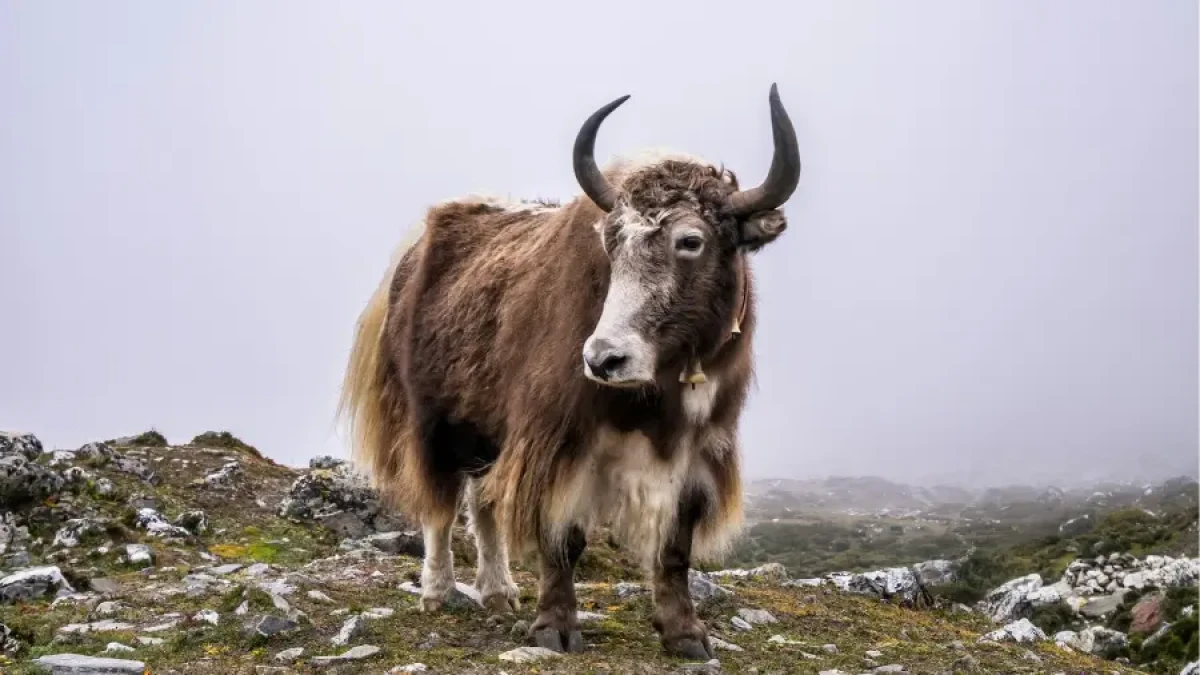
- Domestic Yaks & Dzopkyos: While not wild, woolly yaks and yak-cattle hybrids (dzopkyos) are iconic sights on the trail, carrying expedition gear and supplies across high mountain passes.
Iconic Birds of the Khumbu Valley
Sagarmatha National Park protects over 118 species of birds, including several high-altitude spectacles:
- Himalayan Monal (Danphe): Nepal’s national bird. Males dazzle trekkers with metallic rainbow feathers of iridescent blue, green, purple, and copper. You have a strong chance of spotting them along the trails between Namche Bazaar, Kyanjuma, and Tengboche.
- Tibetan Snowcock: Plump, grey-and-white alpine birds often seen foraging right near teahouses in Dingboche and Lobuche. Unlike most wildlife, they are remarkably fearless around hikers.
- Golden Eagle & Himalayan Griffon Vulture: Look up toward the ridges around Pangboche and Tengboche to see massive birds of prey riding thermal wind currents across the valley.
- Yellow-Billed Chough: Glossy black birds with bright yellow beaks and red legs that perform acrobatic flights even above Everest Base Camp.
- Bar-Headed Goose: Famous among biologists as one of the highest-flying birds on Earth, equipped with specialized hemoglobin that lets them migrate directly over high Himalayan peaks.
Best Time to See Flora and Fauna on the EBC Trail
- Spring (March to May) — Best for Flowers & Birds: Mild temperatures awaken the entire mountain. Lower forests glow with blooming rhododendrons and orchids, alpine meadows sprout wildflowers, and bird activity peaks.
- Autumn (September to November) — Best for Clear Wildlife Spotting: Crisp post-monsoon skies give clear visibility across open ridges, making it easier to scan cliffs for Himalayan tahr, monals, and soaring eagles.
- Winter (December to February): Most high-altitude animals migrate down to lower, warmer forests, though winter snow occasionally pushes elusive predators like snow leopards closer to valley floors.
Responsible Wildlife Etiquette for Trekkers
High-altitude ecosystems grow slowly and recover very delicately from human disturbance. Follow these simple park rules to protect Sagarmatha National Park:
- Never Feed Wild Animals: Offering snacks to Tibetan snowcocks or rodents disrupts their natural foraging habits and harms their health.
- Keep a Respectful Distance: Use binoculars or a telephoto zoom lens rather than approaching grazing Himalayan tahr or nesting birds.
- Stay on Marked Trails: Walking off-trail tramples fragile alpine mosses and medicinal herbs that take decades to grow back.
- Pack Out All Trash: Carry all plastic wrappers, batteries, and non-biodegradable waste back down to Kathmandu.
Explore Everest’s Wilderness with All Nepal Hiking
Walking to the foot of the world’s highest mountain is even more rewarding when your guide knows every bird call, medicinal plant, and hidden wildlife trail along the route.
At All Nepal Hiking, our licensed Sherpa and local guides lead safe, eco-conscious journeys through Sagarmatha National Park—handling all national park permits, flights, and teahouse logistics while respecting local conservation rules.
- Ready to experience the Khumbu Valley firsthand? Explore our classic Everest Base Camp Trek itinerary.
- Want to combine panoramic Everest views with mindful mountain pacing? Check out our Everest Panorama Yoga Trek or browse our guide to the Best Beginner Treks in Nepal.