based on 270 reviews

The devastating Rasuwa flood of August 26, 2026 has understandably raised questions among travelers planning to trek in Nepal this autumn.
We have received messages from trekkers who are already in Nepal, travelers preparing for upcoming departures, and people who are simply concerned after seeing the international news. Those concerns are completely understandable. The images from Rasuwa are heartbreaking, and the scale of the disaster has made many people wonder whether they should cancel their Nepal trekking plans altogether.
The important thing to understand is that Nepal is a large and geographically diverse trekking destination. The August 26 disaster was concentrated along the Bhote Koshi–Trishuli river corridor in and downstream from Rasuwa. It does not mean that every trekking region in Nepal has been affected.
However, the situation is still developing. Road conditions, rescue operations, and access to the Langtang area can change quickly. Trekkers should therefore make decisions based on the latest information from their trekking agency, local authorities, and official travel advisories rather than relying on older information online.So, is Nepal safe to trek after the August 2026 Rasuwa floods? The answer depends largely on where you are trekking.
Nepal Trekking Safety After the Rasuwa Flood
The August 26 flash flood severely affected the Rasuwa and Bhote Koshi corridor, including areas such as Timure and Syabrubesi.The biggest immediate concern for trekkers is therefore the Langtang and Gosaikunda area and the roads used to access them.Other major trekking destinations, including the Everest, Annapurna, Manaslu, Kanchenjunga, and Makalu regions, are geographically separate from the flood-affected corridor.That distinction is important.At the same time, we recommend avoiding absolute statements such as 100% safe. Mountain travel always involves weather, landslide, road, altitude, and other natural risks, and conditions can change rapidly during the monsoon and post-monsoon period.
Trekking Region | August 2026 Flood Impact | Current Consideration |
Everest Region | No direct impact reported | Continue to monitor flights and weather |
Annapurna Region | No direct impact reported | Continue to monitor local conditions |
Manaslu Region | No direct impact reported | Check road and trail conditions before departure |
Kanchenjunga Region | No direct impact reported | Check current local conditions |
Makalu Region | No direct impact reported | Check current local conditions |
Langtang Region | Access corridor severely affected | Check current access before traveling |
Gosaikunda Region | Access affected by Rasuwa road disruption | Alternative approaches may need consideration |
What Happened in Rasuwa on August 26, 2026?
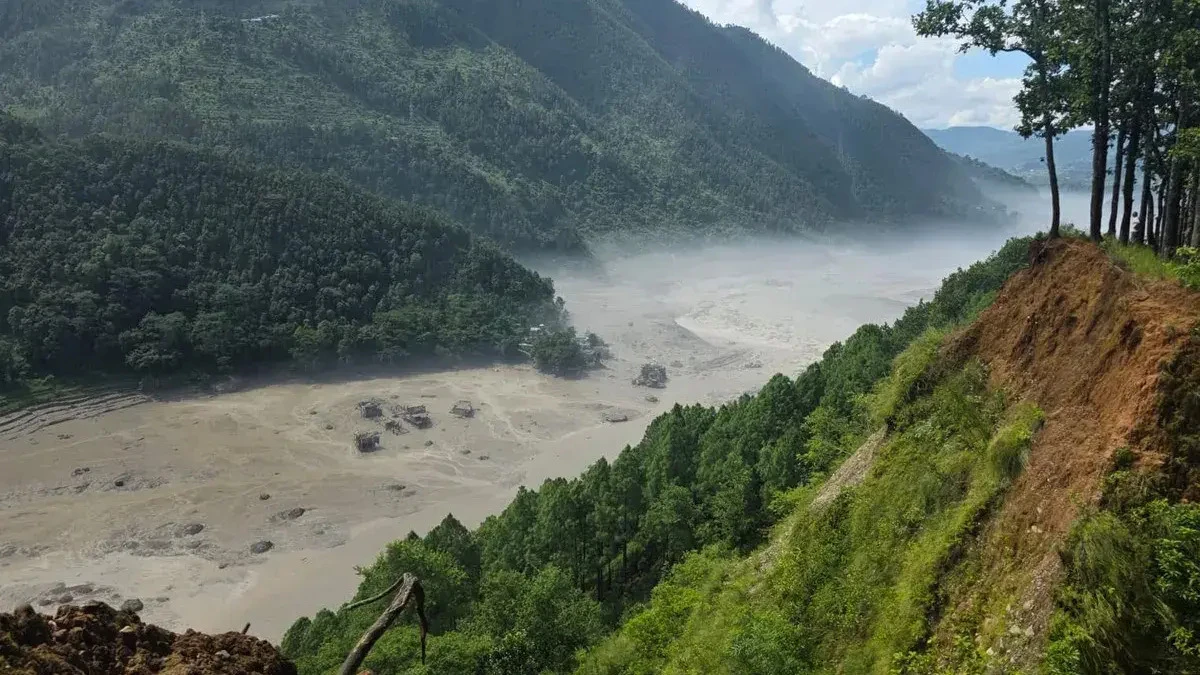
On the morning of August 26, 2026, a catastrophic flash flood struck Rasuwa District in northern Nepal, near the country's border with Tibet. The disaster began after a massive glacier and rock collapse on the Tibet side of the border sent an enormous surge of ice, rock, water and debris into the Lhende Khola, which then flowed into the Bhote Koshi River and downstream into the Trishuli River system.
The sudden flood caused widespread destruction along the river corridor, damaging or destroying homes, roads, bridges, hydropower infrastructure and other critical facilities. Communities and transportation routes in Rasuwa and downstream districts were severely affected, with the flood cutting off roads and isolating some areas. The disaster happened with extraordinary speed. Preliminary scientific assessments indicate that the initial glacier and rock collapse created a massive debris flow and sudden rise in river levels, leaving people in the affected corridor with very little time to react or evacuate.
The consequences have been devastating. Hundreds of people have been confirmed dead and thousands remain missing, while large-scale search-and-rescue and recovery operations continue in Nepal and across the border in Tibet. The latest reports also warn of continued flood and landslide risks as authorities monitor river levels and unstable terrain.
This is not simply a travel inconvenience or a temporary transportation disruption. Rasuwa and the surrounding communities are facing a major humanitarian disaster, and rescue, recovery and infrastructure-rebuilding efforts are still underway.
For travelers planning to visit Nepal, it is important to understand the geographical scope of the disaster. The most severe impacts are concentrated along the Rasuwa–Bhote Koshi–Trishuli corridor, which is particularly important for access to northern trekking areas such as Langtang and Gosaikunda. Other major trekking regions of Nepal are located in different parts of the country and should be assessed separately rather than assuming that the entire country has been affected.
Does the Rasuwa Flood Affect All Trekking in Nepal?
No.One of the most important points for international trekkers is that the major trekking regions of Nepal are spread across a huge mountainous area and do not share the same roads, valleys or river systems.
The Everest region, for example, is reached through the Lukla corridor and follows the Dudh Koshi drainage system.
The Annapurna region lies much farther west and includes trekking routes such as the Annapurna Circuit, Annapurna Base Camp and Mardi Himal.
The Manaslu region is accessed through a different part of central Nepal.
Farther east, Kanchenjunga and Makalu are also outside the Rasuwa flood corridor.
Therefore, a disaster in Rasuwa should not automatically be interpreted as a nationwide closure of trekking in Nepal.
However, not directly affected does not mean that every individual road, flight or trail is guaranteed to operate normally. Weather and infrastructure conditions should always be checked shortly before departure.
Everest Base Camp Trek After the Rasuwa Flood
If you are planning the Everest Base Camp Trek, the August Rasuwa flood is not located on the Everest trekking route.The Everest trekking region is geographically separate from Rasuwa's Bhote Koshi corridor. Your main considerations should instead be the normal risks associated with Everest travel, including weather, flight disruptions, altitude and trail conditions.
For trekkers flying to Lukla, it is particularly important to check the latest flight situation before departure because Himalayan weather can cause delays independently of the Rasuwa disaster.Bottom line: the Rasuwa flood does not mean that the Everest Base Camp Trek has been cancelled.
Annapurna Trekking After the Rasuwa Flood
The Annapurna region is also geographically separate from the Rasuwa disaster.Popular routes including:
Annapurna Circuit Trek
Annapurna Base Camp Trek
Mardi Himal Trek
Poon Hill Trek
Upper Mustang Trek
are located west of the affected area.
Travelers should still check current road, weather and trail conditions before departure, particularly because Nepal's monsoon season can produce landslides and transportation disruptions in many mountain districts.But the Rasuwa flood itself is not a reason to assume that Annapurna trekking has stopped.
Manaslu Circuit Trek After the Rasuwa Flood
The Manaslu Circuit Trek is another major Himalayan route that is geographically separate from the Rasuwa flood corridor.The trek approaches the Manaslu region through different roads and valleys, with the trail eventually following the Budhi Gandaki valley.If you have a Manaslu trek planned, your trekking agency should continue to monitor road access, weather and trail conditions, but the August 26 Rasuwa disaster does not automatically require cancellation of a Manaslu itinerary.
Kanchenjunga and Makalu Trek
The Kanchenjunga and Makalu trekking regions are located in eastern Nepal, far from the Rasuwa/Bhote Koshi corridor.Neither should be treated as part of the directly affected flood zone.
These are remote Himalayan destinations, however, so travelers should always receive a current local assessment before starting a trek. Remote trails can be affected by weather, landslides and transportation conditions even when there is no connection to a particular disaster elsewhere in Nepal.
What About the Langtang Trek?
This is where travelers need to be much more careful.Langtang is the trekking region most closely connected to the affected Rasuwa corridor.
The Langtang Valley itself follows the Langtang Khola, while the catastrophic flooding occurred along the Bhote Koshi corridor. This geographical distinction is important because the flood did not simply wash through every part of the Langtang trekking valley.However, the access infrastructure is a major issue.Syabrubesi is the traditional roadhead for the Langtang Valley Trek, and the surrounding Rasuwa transportation corridor suffered severe damage in the disaster.
Current reporting indicates that road access through the affected corridor remains disrupted, meaning that the question for Langtang trekkers is not simply whether the hiking trail itself exists.The bigger question is:
Can trekkers safely and legally reach the trailhead?
That answer can change from day to day as rescue, road-clearing and reconstruction work continues.For this reason, we do not recommend telling travelers simply that Langtang is safe or Langtang is closed.The reality is more nuanced.
Is the Langtang Valley Trek Cancelled?
Not necessarily.The trekking valley and the road access to it are two different things.The most responsible approach is to evaluate each departure individually based on:
Current road conditions
Official local instructions
Trail conditions
Weather forecasts
Bridge and infrastructure status
Accommodation availability
The condition of the trekking party's access route
If you already have a Langtang Valley Trek booked, speak with your trekking operator before traveling toward Rasuwa. Do not assume that information published before August 26 still applies.
What About the Dhunche Alternative?
Dhunche is an important gateway for trekking in the Langtang and Gosaikunda region, and alternative approaches may be possible depending on the condition of roads and trails.Some trekking operators are evaluating routes that avoid the most severely affected sections of the traditional access corridor.
However, we would not recommend promising a fixed Dhunche alternative or an additional one-day itinerary until road and trail conditions have been verified for the specific departure date.Current reports indicate that access through the Pasang Lhamu Highway corridor has been seriously disrupted.For that reason, travelers should treat any alternative route as subject to confirmation, rather than as a guaranteed replacement.
Is Gosaikunda Trek Safe After the Rasuwa Flood?
The Gosaikunda Trek also deserves special attention because the traditional approach uses the Rasuwa road corridor.Gosaikunda itself is not synonymous with the flooded Bhote Koshi river corridor, but getting there can involve infrastructure that has been affected by the disaster.
Alternative trekking approaches from the Kathmandu side may be considered in some circumstances, but the appropriate route depends on current trail conditions and local guidance.If your Gosaikunda trek is scheduled soon, contact your trekking operator before traveling to Dhunche or other trailheads.
Should You Cancel Your Nepal Trek?
For most travelers, the answer should not be based simply on the headline Nepal floods.Instead, ask:Where exactly is my trek?
If you are trekking in Everest, Annapurna, Manaslu, Kanchenjunga or Makalu, the Rasuwa flood is not directly on your trekking route.
If you are trekking in Langtang, Gosaikunda or other northern Rasuwa areas, your access route needs to be assessed carefully.
And if your trek is still several weeks away, conditions may be very different by the time you arrive.
The situation is changing rapidly, so a decision made on August 30 should not automatically be treated as the final decision for a departure in October or November.
What Should Trekkers Do Right Now?
If you are traveling to Nepal after the August 2026 Rasuwa flood, we recommend five simple steps.
Confirm your exact trekking route.
Do not rely only on the name of the trek. Ask which road, trailhead and settlements your itinerary uses.Contact your trekking company before departure.
A local operator can assess road and trail conditions much more accurately than an old blog post.Check official travel advisories.
Follow updates from Nepalese authorities and your own government's travel advisory service.Allow flexibility in your itinerary.
Roads and domestic flights in Nepal can change quickly after severe weather and infrastructure damage.Do not travel into restricted or disaster-affected areas simply to continue a trek.
Local instructions should always take priority over an itinerary.
Is Kathmandu Safe After the Rasuwa Flood?
Kathmandu was not the location of the Rasuwa flash flood.However, the disaster has affected transportation networks connecting Kathmandu with northern districts, so travelers should distinguish between being in Kathmandu and traveling from Kathmandu toward Rasuwa.
The city and international airport are separate from the flood-affected corridor, but travelers heading toward Langtang, Rasuwa or the Tibetan border should check the latest road and transportation situation before leaving Kathmandu.
Nepal Is Still Open But Responsible Trekking Matters
The August 2026 Rasuwa disaster is a tragedy for Nepal, particularly for communities in the affected corridor.
It is also important not to allow one disaster to create the impression that the entire Himalayan trekking industry has shut down.Nepal's trekking regions are geographically diverse. A flood in one river system does not automatically close Everest, Annapurna, Manaslu or the country's other trekking destinations.At the same time, this is not a situation where responsible travel companies should offer blanket reassurance.
The right answer depends on the route.
For trekking regions outside the affected corridor, travelers should continue to monitor normal weather, transportation and trail conditions.For Langtang, Gosaikunda and routes connected to Rasuwa, travelers should obtain a fresh local assessment before departure and be prepared for changes to transportation or itinerary.That is the safest and most honest way to plan a Nepal trek after the August 2026 floods.
Final Word
The August 26, 2026 Rasuwa flood has caused a devastating loss of life and severe damage to communities and infrastructure in northern Nepal.But the whole of Nepal is not the flood zone.
If you are planning to trek in Everest, Annapurna, Manaslu, Kanchenjunga or Makalu, there is no reason to assume that your trek has been cancelled because of the Rasuwa disaster.
If you are planning Langtang or Gosaikunda, however, take the situation seriously. Access routes have been affected, and conditions need to be checked immediately before travel.
Nepal remains a remarkable trekking destination, but after a disaster of this scale, responsible travel means staying informed, staying flexible and listening to local guidance.
If you have questions about your particular trek or departure date, contact our team for the latest route assessment before you travel.


.webp)