based on 270 reviews


JBC (Jugal Himal Base Camp) is Nepal’s newest short trek: a 6-day round trip from Kathmandu to a 4,500 m glacier camp, with no flights needed. Walk from the Sherpa village of Tembathang past Guru Rinpoche’s meditation cave. Get the day-by-day itinerary, permits, best season, costs and FAQs.
Jugal Himal Base Camp Trek (JBC): Guide & Itinerary
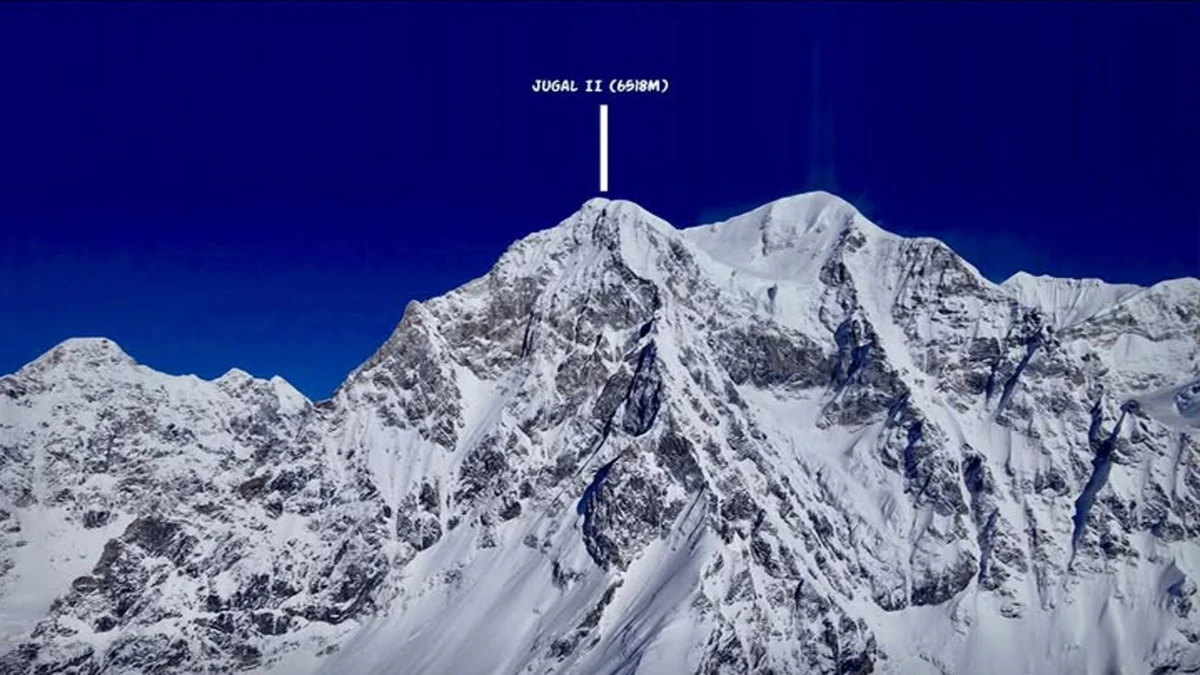
The JBC (Jugal Himal Base Camp) trek is a 6-day round trip from Kathmandu to a 4,500 m base camp below the Jugal Himal, the nearest Himalayan base camp to the capital. You drive to Tembathang village in Sindhupalchok, then walk 4 days up through Dipu, Chhendang, Guru Rinpoche's Tongsokpa Cave, Nepemacchal and Bomba Sherpu to the base camp, and return the same way. It is a moderate trek with village homestays low down and tented camps higher up, and it is best walked from late September to November or March to May.
JBC is Nepal's newest trekking buzzword. The snow peaks of Jugal Himal are visible from Kathmandu on a clear day, yet until recently almost no trekkers walked to their foot. A short, sacred and still uncrowded route now makes it possible in under a week.
JBC trek at a glance
Fact | Detail |
|---|---|
Region | Jugal Himal, Sindhupalchok district, Bagmati Province, Nepal |
Duration | 6 days Kathmandu to Kathmandu (4–5 trekking days); 7 days recommended for a gentler pace |
Highest point | Jugal Himal Base Camp (trekker base camp), ~4,500 m (14,760 ft) |
Trailhead | Tembathang (Tempathang), ~2,330 m — 7–8 hours' drive from Kathmandu via Dolalghat and Chautara |
Daily walking | 4–9 hours |
Difficulty | Moderate; one long descent day; no technical climbing |
Accommodation | Homestay (Tembathang), guesthouse (Chhendang), tented camps (Nepemacchal, Bomba Sherpu) |
Mobile network | None after Dipu |
Best seasons | Late September–November; March–May |
Permits | TIMS card; Langtang National Park and local fees to be confirmed for this route |
Price | Starting with USD 1100 — ask for a quote |
What is the JBC trek?
The JBC trek is a short out-and-back hike to Jugal Himal Base Camp, a glacier-side meadow at about 4,500 m below the Jugal Himal range on the Nepal–Tibet border. The Jugal Himal sits between the Langtang and Rolwaling (Gaurishankar) ranges; its highest peak is Dorje Lakpa (6,966 m), and Shishapangma (8,027 m) rises just across the border in Tibet.
The route follows an old pilgrim path linked to Guru Rinpoche (Padmasambhava), the 8th-century teacher revered by Himalayan Buddhists. Local tradition holds that he meditated in this valley, and the Tongsokpa (Tongsyup) Cave on Day 3 is part of that story.
Where is Jugal Himal Base Camp?
JBC is in Sindhupalchok district, Bagmati Province, north-east of Kathmandu. The road runs east along the Araniko Highway to Dolalghat, climbs to the district headquarters of Chautara (1,470 m), then continues on rougher road to Tembathang (2,330 m), a Sherpa village above the Brahmayani River. That makes JBC the nearest Himalayan base camp you can reach from Kathmandu without a flight.
Trekker base camp vs climber base camp
There are two "base camps" in Jugal. This 6-day trek ends at the trekker base camp (~4,500 m), a viewpoint and campsite reached from Bomba Sherpu. The climber base camp, also called Yang Kharka (~4,700 m), lies further up beside the Jugal Glacier and is used by expeditions; reaching it adds rough moraine walking and usually an extra day. Local guides recommend the trekker base camp for most hikers.
Why trek to Jugal Himal Base Camp?
- Closest base camp to Kathmandu. No domestic flight, no Lukla weather delays — just a day's drive.
- Short enough for a week off. You reach 4,500 m and are back in Kathmandu in 6 days.
- Sacred landscape. Guru Rinpoche's meditation cave, prayer flags, mani walls and Sherpa villages.
- Still uncrowded. Most of the trail passes herders' pastures and forest rather than lodge villages.
- Community-run. Homestays and guesthouses are run by local Sherpa families, and The Jugal Guardians, a local community group, promotes eco-tourism, clean trails and trekker safety on the route.
Highlights of the JBC trek
- Homestay night in the Sherpa village of Tembathang.
- Rhododendron, oak and fir forest between Dipu and Nepemacchal (in bloom March–April).
- Tongsokpa Cave (~3,400 m), linked with Guru Rinpoche.
- High pastures of Bomba Sherpu (~4,130 m) with first close views of the Jugal peaks.
- Sunrise at Jugal Himal Base Camp (~4,500 m), with glaciers and prayer flags.
Want something longer?
Our 16–18 day Jugal Himal circuit continues to the holy lakes of Panch Pokhari and Bhairav Kunda as a fully supported camping trek. Ask us about it, or see our Langtang region treks.
JBC trek itinerary: 6 days from Kathmandu
The 6-day JBC itinerary drives to Tembathang on Day 1, reaches base camp at sunrise on Day 5 and returns to Kathmandu on Day 6. Altitudes are approximate.
Day | Route | Altitude | Time | Overnight |
|---|---|---|---|---|
1 | Drive Kathmandu → Dolalghat → Chautara → Tembathang | 2,330 m | 7–8 hrs drive | Homestay |
2 | Tembathang → Dipu (2,240 m) → Chidakpu (2,540 m) → Chhendang | 2,630 m | 5–6 hrs | Guesthouse |
3 | Chhendang → Nimala → Chachung Kharka → Gangzi Khola → Tongsokpa Cave → Nepemacchal | 3,470 m | 6–7 hrs | Camp/basic shelter |
4 | Nepemacchal → Bomba Sherpu | 4,130 m | 4–5 hrs | Camp |
5 | Bomba Sherpu → Jugal Himal Base Camp (4,500 m) → descend to Chhendang | 2,630 m | 8–9 hrs | Guesthouse |
6 | Chhendang → Dipu → Tembathang, drive to Kathmandu | 1,350 m | 3–4 hrs + 7–8 hrs drive | — |
Day-by-day notes
Day 1 — Drive to Tembathang (2,330 m). Leave Kathmandu early on the Araniko Highway to Dolalghat, then climb to Chautara (1,470 m) for lunch. The road continues on rough jeep track and crosses the Brahmayani River before Tembathang. Overnight with a Sherpa family.
Day 2 — Tembathang to Chhendang (2,630 m). A gentle first day through farmland and forest. Stop for lunch in Dipu (2,240 m) — call home here, because there is no mobile network beyond it. Continue via Chidakpu (2,540 m) to Chhendang and its small guesthouse.
Day 3 — Chhendang to Nepemacchal (3,470 m). The longest climb of the trek. The trail rises through Nimala (2,700 m), the pasture of Chachung Kharka (3,000 m) and the Gangzi Khola (3,130 m) to Tongsokpa Cave (3,400 m), linked with Guru Rinpoche's meditation. A short walk on reaches Nepemacchal.
Day 4 — Nepemacchal to Bomba Sherpu (4,130 m). A shorter day by design, gaining about 650 m to help you acclimatise. The forest thins into open yak pastures, and the Jugal peaks fill the skyline. Arrive by lunch and rest.
Day 5 — Jugal Himal Base Camp (4,500 m) and back to Chhendang. Start before dawn and climb about 2–3 hours to base camp for sunrise over the glaciers and prayer flags. After time at the top, descend all the way to Chhendang — a long, knee-testing day, so poles help.
Day 6 — Back to Kathmandu. Walk down via Dipu to Tembathang (3–4 hours) and drive back to Kathmandu, arriving in the evening.
7- and 8-day options (recommended for most trekkers)
- 7 days: On Day 5, descend only to Nepemacchal; walk to Tembathang on Day 6 and drive to Kathmandu on Day 7. This halves the hardest day.
- 8 days: Break the drive with a night in Chautara on Day 1, and add the 7-day split on the way down. This matches the pace filmed by Nepal 8th Wonder in their January 2026 trail film.
- Climber base camp add-on: One extra day to continue to Yang Kharka (~4,700 m) beside the Jugal Glacier.
Want a different pace? Ask for a tailor-made itinerary.
How difficult is the JBC trek?
The JBC trek is moderate. There is no technical climbing, but you gain about 2,200 m from Tembathang to base camp in four days and descend almost 1,900 m on Day 5. Fit beginners can do it with preparation; trekkers new to altitude should choose the 7-day version.
- Steepest section: Day 3, Chhendang to Nepemacchal (~840 m gain).
- Longest day: Day 5, base camp and the descent to Chhendang (8–9 hours).
- Rough roads: the jeep track beyond Chautara is bumpy and can be muddy or blocked after rain.
- Snow: the base camp can hold deep snow; The Jugal Guardians reported 1–2 ft (30–60 cm) at JBC in early November 2026, so check conditions before you go.
To prepare, train for 6–8 weeks with hill walks carrying 5–7 kg, stair sessions and 2–3 cardio workouts a week.
Best time for the JBC trek
The best seasons are autumn (late September–November) and spring (March–May).
Season | Conditions | Verdict |
|---|---|---|
Autumn (Sep–Nov) | Clearest views; cold nights; snow at base camp likely from November | Best |
Spring (Mar–May) | Rhododendrons in bloom; warmer days; afternoon cloud | Very good |
Winter (Dec–Feb) | Deep snow above Bomba Sherpu; very cold camps | Experienced trekkers only, with a guide |
Monsoon (Jun–Aug) | Rain, leeches, landslides on the road to Tembathang | Not recommended |
Permits for the JBC trek
JBC is not a restricted area, so no special restricted-area permit is needed. Because the route is newly popular, local rules are still settling; we confirm the current requirements before every departure. Expect:
- TIMS card — issued through a registered trekking agency.
- Langtang National Park entry permit (NPR 3,000 for foreigners) if the upper route falls within the park.
- Local rural municipality fees, if levied in Tembathang or Chhendang.
Carry your passport and two passport photos.
Accommodation and food on the JBC trek
The JBC trek is a mix of homestay and camping:
Night | Stay | Notes |
|---|---|---|
Tembathang | Sherpa family homestay | Dal bhat, potatoes, tea |
Chhendang | Small guesthouse | Simple rooms, shared toilet |
Nepemacchal | Basic shelter or tents | Bring or hire tents and sleeping bags |
Bomba Sherpu | Tented camp | Our crew cooks; no shops |
We bring tents, mattresses, a cook and porters for the upper nights. If you trek independently, local operators in Tembathang can rent tents and sleeping bags and arrange porters.
Is there mobile network or electricity?
There is no mobile network after Dipu. Call family from Dipu on Day 2 and tell them when you expect to be back in range. Electricity is limited to the villages, so bring a power bank. Our guides carry a satellite phone for emergencies.
How much does the JBC trek cost?
The JBC trek is one of the most affordable base camp treks in Nepal, because there are no flights and only two camping nights. The biggest costs are the private jeep to Tembathang and the camping crew; both are shared by the group, so 4–6 trekkers pay less each than 2.
Our 6-day package price is USD 1100 — send us your dates and group size for a quote.
Typically included: private jeep Kathmandu–Tembathang–Kathmandu, homestay and guesthouse nights, tents and camping kit for the upper nights, three meals a day on trek, licensed guide, porters (with wages and insurance), permits and TIMS, first-aid kit and satellite phone.
Typically not included: Kathmandu hotels, Nepal visa, travel insurance with helicopter evacuation cover (mandatory), personal gear, drinks and snacks, and tips.
Packing list essentials
- Sleeping bag rated to -10 °C (-15 °C from November).
- Down jacket, fleece, waterproof shell jacket and trousers.
- Broken-in waterproof boots and gaiters (for snow at base camp).
- Microspikes in November–April if snow is reported.
- Warm hat, gloves, sun hat, category 3–4 sunglasses and SPF 50 sun cream.
- Trekking poles for the long Day 5 descent.
- Headtorch for the pre-dawn start, power bank, 2 × 1 L water bottles and purification tablets.
Altitude and safety on the JBC trek
Altitude sickness is the main risk, because you sleep at 4,130 m on Day 4 after starting at 2,330 m on Day 2. Our itinerary keeps Day 4 short to help acclimatisation, and your guide checks symptoms and oxygen saturation every evening.
- Descend at once if headache, nausea or breathlessness get worse.
- Travel insurance must cover helicopter evacuation up to 5,000 m.
- Trek with a local guide: trails above Nepemacchal are faint and there is no phone signal.
- Leave no trace — carry all rubbish out. The Jugal Guardians run a "leave only footprints" campaign on this route.
JBC trek FAQs
What does JBC stand for?
JBC stands for Jugal Base Camp (Jugal Himal Base Camp), a ~4,500 m base camp below the Jugal Himal in Sindhupalchok, Nepal.
How many days is the JBC trek?
The JBC trek takes 6 days from Kathmandu, with 4–5 days of walking. A 7-day version is recommended for a gentler pace.
How high is Jugal Himal Base Camp?
The trekker base camp is about 4,500 m (14,760 ft). The climber base camp at Yang Kharka is about 4,700 m.
Where does the JBC trek start?
It starts at Tembathang (Tempathang), a Sherpa village at about 2,330 m, a 7–8 hour drive from Kathmandu via Dolalghat and Chautara.
Is JBC the nearest base camp from Kathmandu?
Yes. JBC is reachable by road in one day with no domestic flight, making it the closest Himalayan base camp trek to Kathmandu.
Do I need camping gear for the JBC trek?
Yes for the upper nights. Tembathang and Chhendang have homestay or guesthouse beds, but Nepemacchal and Bomba Sherpu need tents and a warm sleeping bag.
Is there mobile network on the JBC trek?
No. Network ends at Dipu, on Day 2. Guides should carry a satellite phone.
Can beginners do the JBC trek?
Fit beginners can, ideally on the 7-day itinerary with a local guide. The main challenges are altitude and the long descent from base camp.
What is the religious significance of Jugal?
The trail is linked with Guru Rinpoche, the 8th-century Buddhist master believed to have meditated here; Tongsokpa Cave is a pilgrimage stop on the way.
What is the best month for the JBC trek?
October gives the clearest views before heavy snow; April is best for rhododendron blooms.
Why trek JBC with All Nepal Hiking?
All Nepal Hiking is a Kathmandu-based, government-registered trekking company with 25 years of Himalayan experience and 270+ Tripadvisor reviews. On the JBC trek, that means:
- Local guides who know the trail above Nepemacchal, where there is no signal.
- Full camping support for the upper nights, so you carry only a day pack.
- Private departures any date from 1–2 trekkers, with 6-, 7- or 8-day options.
- Responsible travel — homestays with local families, insured porters and a carry-out-all-rubbish policy.
Ready for the JBC trek? WhatsApp Shankar on +977 9851074814, send an inquiry or build a tailor-made trip.
Shankar Neupane
Call us on WhatsApp+977 9851074814OrChat with us