based on 270 reviews


Every year, tens of thousands of people arrive in Kathmandu with one dream: standing at Everest Base Camp. And every year, a fair number of them discover the same problems. The flight to Lukla gets delayed, the trail is crowded, the altitude is serious, and the schedule needs two weeks they simply don't have.
So here is a question worth asking: what if you could see Mount Everest at sunrise, walk through rhododendron forests and Sherpa villages, and reach a high viewpoint above 4,000 metres, all without flying to Lukla and without the crowds?
That is the promise of the Pikey Peak Trek in the lower Solukhumbu region. In this guide we look honestly at what it offers, who it suits, and whether it really deserves the title of "best alternative to Everest Base Camp."
What Is the Pikey Peak Trek?
Pikey Peak, approximately 4, 065 meters, some sources say it's slightly higher, is an elevated grassland with a small stupa and prayer flags located within Solukhumbu District which also houses Everest. It is located to the south of the main Khumbu Valley hence it is known as a part of the "lower Everest region".
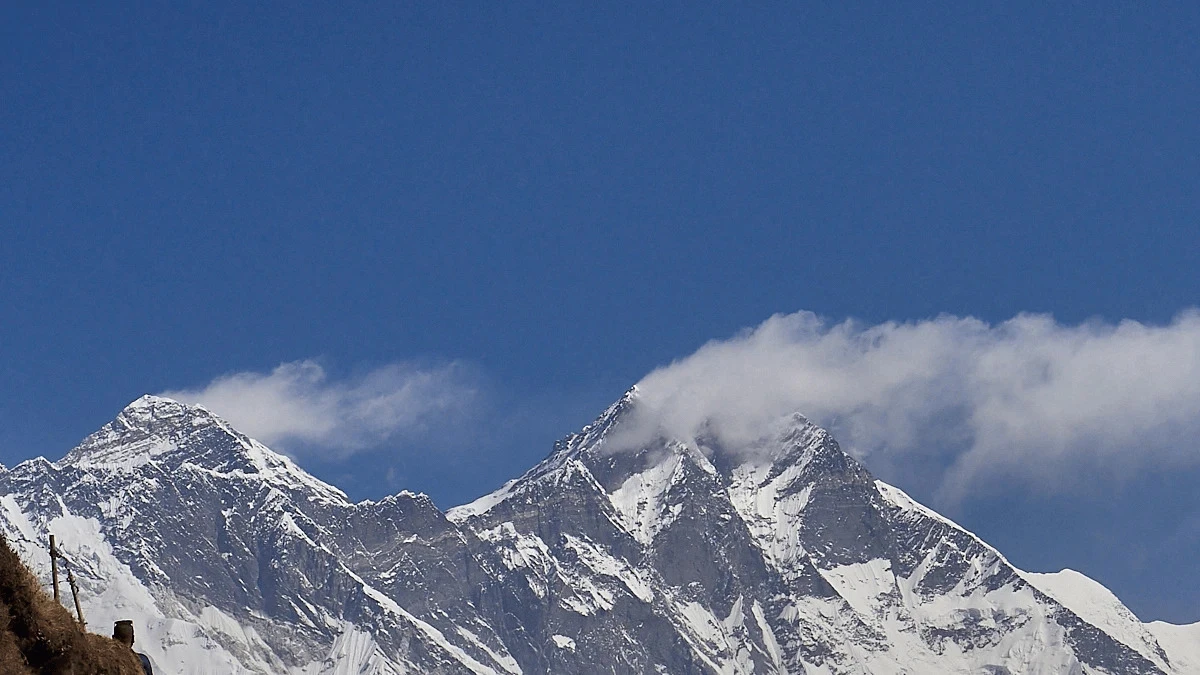
The magic is its position. Because Pikey stands apart from the giants, it gives you a wide, uncluttered panorama of the Himalayan chain instead of a close-up of one valley wall. On a clear morning the line of peaks stretches from the east to the far west, with Everest, Lhotse and Makalu among the crowd pleasers.
The trek itself is a loop or a point-to-point walk through forests, ridgelines and old Sherpa and Rai villages. Most itineraries begin near Dhap or Jhapre, climb to Pikey Base Camp, summit for sunrise, then descend to Junbesi, and finish at Phaplu.
Why Trekkers Call It an Alternative to Everest Base Camp
Let's be clear about one thing first. Pikey Peak does not replace Everest Base Camp, because you don't reach Base Camp. What it offers is a different way to experience the Everest region. For many travellers, that is exactly what they want.
1. No flight to Lukla needed
Luka is known for having a short runway time period, rapidly changing weather conditions, and frequent delays. Mostly, you can reach Pikey via road from Kathmandu that eliminates most of the major scheduling issues associated with an Everest climb. The drive is long (around 8-10 hours) due to traffic and road conditions, unlike a mountain flight which can be unpredictable.
2. Quiet trails
On the main Everest trail in October, you share every teahouse and every bend with hundreds of people. On the Pikey trail, you might meet a few trekkers a day, and plenty of villagers, mule trains and school children. It still feels like a walk through a living landscape.
3. A gentler altitude profile
The highest point is about 4,065 meters above sea level. It is above the level of altitude effects that some people experience; therefore, it still deserves respect, but it is much lower than Kala Patthar at about 5,545 meters and Everest Base Camp at approximately 5,364 meters. Climbing up is smooth while climbing down is easy.
4. A cultural trek, not just a mountain trek
Below the viewpoint, the route passes through Junbesi, a charming Sherpa village, and near Thupten Chholing Monastery, one of the most important Buddhist centres in the region. You come away with a better feel for Solu life than most Base Camp trekkers get.
5. Shorter and often cheaper
Because the trek is shorter, with fewer flights and lower altitude logistics, the total cost is usually lower than a full EBC itinerary. Exact prices depend on group size, season and service level, so ask for a current quote.
Pikey Peak vs Everest Base Camp: Honest Comparison
Feature | Pikey Peak Trek | Everest Base Camp Trek |
Highest point | About 4,065 m | About 5,364 m (Base Camp), 5,545 m (Kala Patthar) |
Typical length | 6 to 11 days | 12 to 16 days |
Getting there | Mostly by road (long drive) | Usually a flight to Lukla |
Crowds | Very light | Heavy in peak season |
Difficulty | Moderate | Moderate to challenging |
Everest view | Wide, distant panorama | Close-up, dramatic |
Sense of achievement | Great sunrise and scenery | The famous "I reached Base Camp" moment |
Culture | Solu Sherpa villages, monasteries | Khumbu Sherpa towns, Tengboche |
Best for | Quiet views, shorter time, first Himalayan trek | Bucket-list goal, fit trekkers |
The honest verdict: if the goal is the Base Camp milestone, nothing replaces it. If the goal is a beautiful Himalayan trek with real Everest views, fewer people and less risk of delays, Pikey is a brilliant choice.
What You Will See From the Summit
On a clear morning, the view from Pikey Peak may include Everest, Lhotse, Makalu, Kanchenjunga, Numbur, Gaurishankar and many more mountains based upon weather conditions. The Dhaulagiri and Langtang ranges are visible during good weather conditions as well.
A major difference between Kala Patthar and me is perspective. From afar and at low altitudes, you see an expansive landscape where mountain ranges appear as broad layers instead of tall peaks. Many trekkers find this more beautiful, while others claim that it is photographed better at sunrise by some guide. Also, it is true that Everest appears to be smaller when viewed from this location; therefore, manage expectations.
A tip from experience: start before dawn. Clouds often build by mid-morning, and the best light and clearest air are in the first hour after sunrise.
Sample 9-Day Pikey Peak Trek Itinerary
This sample plan gives you an idea of the pace. Exact routes and stops can vary by season and by group, so check the final plan with us before booking. You can also see our full Pikey Peak Trek – 9 Days package.
Day 1: Arrive in Kathmandu. Meet your guide, check gear, and get a briefing.
Day 2: Drive Kathmandu to Dhap (about 2,900 m). A long road day through hills and river valleys. Evening rest and early dinner.
Day 3: Dhap to Pikey Base Camp (about 3,640 m). Your first real walk, through forest and open ridges. Take it slowly and drink plenty of water.
Day 4: Sunrise at Pikey Peak (about 4,065 m), then descend to Jasmane Bhanjyang. The best day of the trek. Start in the dark, summit for sunrise, then descend through rhododendron forest.
Day 5: Trek to Junbesi (about 2,700 m). A long day, mostly downhill, ending in a lovely Sherpa village.
Day 6: Explore Junbesi and Thupten Chholing Monastery. A softer day with a cultural focus. Try local food and talk to villagers.
Day 7: Junbesi to Phaplu (about 2,400 m). An easy walk, finishing the trek.
Day 8: Drive Phaplu to Kathmandu. Another long road day, with time to reflect on the trek.
Day 9: Departure.
Want a longer version? Some itineraries add Taksindu and extra days around Junbesi, which suits slower travellers and photographers.
Best Time for the Pikey Peak Trek
Autumn (late September to November) is a popular time due to its pleasant weather conditions, beautiful mornings and good chances for taking pictures from high altitudes. In November there is a lot of freshness to it but at higher altitudes temperatures drop during night time. For more information about trekking in Nepal during November, see this guide.
Spring is March-May, which is second-best. Lower forest blooms with rhododendrons, and the trail is full of color. Views may be hazy during afternoons while they tend to be good in the morning.
The winter season lasts from December to February when there are few people on these paths. Cold nights may occur with possible snowfall in the upper part of this area and less daylight hours. Come with proper gear.
Monsoon (June-August) is not recommended. The trails are wet and slippery; there are also leeches at lower elevations, while clouds often obscure the view.
Weather in Nepal can change quickly, so always check the latest conditions before you travel and stay flexible with dates.
How Hard Is the Pikey Peak Trek?
Most trekkers rate it as moderate. No technical knowledge required; however, it is necessary for someone who can walk 5-7 miles per day over rough terrain such as hills.
The hardest parts are usually:
Climb to Pikey Base Camp Day 3.
Early morning of a summit day.
Long descent day 5 is hard for your knees.
The altitude of this mountain is less extreme compared to traditional Everest climbs, but still exists. Headache, poor sleep and mild nausea may occur at altitudes of 3,600-4,000 meters above sea level. Move slowly, drink lots of water and inform your guide immediately when you are sick.
Preparation tips:
Begin walking or hiking for at least four to six weeks prior to going on a hike.
With a backpack and boots for practice.
Stair climbing and hill walking to build up your legs.
Descending is better than climbing.
What to Pack
You don't need an expedition kit, but the weather can be cold at night and in the early morning.
Broken-in trekking boots and warm socks
Layered clothing: base layer, fleece, insulated jacket, waterproof shell
Warm hat, gloves and a buff
Sleeping bag suited to cold nights (or confirm one is provided)
Headlamp with spare batteries for the pre-dawn summit walk
Sun protection: sunglasses, sunscreen, lip balm
Reusable water bottle and purification tablets
Basic first-aid kit and any personal medication
Power bank and a phone with offline maps
Accommodation and Food
Teahouses and lodges are used by this route. The rooms are simple ones, usually two-bedroom with blankets, and a shared bathroom is common. The facilities are better for bigger towns such as Junbesi and Phaplu while being less convenient at Pikey Base Camp.
The meals are hearty and local. Dal bhat (rice, lentil soup and vegetables) is a traditional trekking meal because of its filling nature; it also comes with refills which are convenient to carry while hiking. Also you can get noodles, momos, eggs, potatoes and Tibetan bread. Hot tea and ginger lemon honey drink is good for cold mornings.
Permits and Entry Rules
Pikey Peak sits outside Sagarmatha National Park, which is one reason this trek can cost less than a full Everest itinerary. However, permit and entry requirements in Nepal change from time to time, and trekking regulations in recent years have affected foreign trekkers, including guide requirements in many areas. Before you travel, confirm the current requirements with your operator and check official sources.
With All Nepal Hiking, we handle the paperwork and tell you what applies to your dates.
Who Should Choose the Pikey Peak Trek?
This trek is a great fit if you:
Want Everest views but are short on time
Prefer fewer crowds and a quieter, more local feel
Want a first Himalayan trek that isn't overly demanding
Are travelling with family or friends of mixed fitness levels
Like photography, culture and nature as much as altitude
Want to avoid the risk of Lukla flight delays
It is probably not the right choice if you:
Specifically want to stand at Everest Base Camp
Want the high-altitude challenge of 5,000 m or above
Dislike long road journeys
Tips for a Better Pikey Peak Trek
Go in the clear season. Autumn and spring mornings give the best chance of seeing the full panorama.
Add a buffer day. A flexible extra day lets you wait for clear weather on summit morning.
Pace yourself. The steady climb is easier when you go slowly.
Dress in layers. Pre-dawn temperatures at the top can be low, even when the afternoon feels warm.
Respect local culture. Walk clockwise around stupas and prayer wheels, ask before photographing people, and dress modestly in villages.
Carry some cash. Teahouses and small shops in this region may not take cards.
Book a local guide. A good guide improves safety, helps with the route, and brings the villages to life.
Frequently Asked Questions
Is the Pikey Peak Trek a good alternative to Everest Base Camp?
Yes, if you want Everest views, fewer crowds and a shorter, easier trek. No, if your main goal is to reach Everest Base Camp itself, because Pikey Peak does not go there. Think of it as a different experience rather than a smaller copy.
How high is Pikey Peak?
About 4,065 m. You may see slightly different numbers (4,068 m or 4,070 m) in different sources, because local measurements vary.
Can you see Mount Everest from Pikey Peak?
Yes, on clear days. Everest appears as part of a wide panorama together with Lhotse, Makalu and many other peaks. It looks smaller than from Kala Patthar because you are farther away, but the overall view is spectacular.
How difficult is the Pikey Peak Trek?
Moderate. It involves 5 to 7 hours of walking on most days, some steep climbs and an early summit start. No climbing experience is needed, but regular exercise before the trek makes it much more enjoyable.
How many days do you need for the Pikey Peak Trek?
Short versions take about 5 to 6 days, while a comfortable itinerary takes 9 days, and extended versions with Taksindu or rest days can take 11 days or more.
Do I need a flight to start the trek?
No. The usual way to reach the trailhead is a drive from Kathmandu, which takes roughly 8 to 10 hours depending on conditions. Some operators offer flights to Phaplu, but availability changes, so confirm in advance.
Is altitude sickness a risk on the Pikey Peak Trek?
The risk is lower than on higher Everest routes, but it is still possible above about 3,500 m. Ascend slowly, stay hydrated, and tell your guide about any symptoms like headache, dizziness or nausea. Descend if symptoms worsen.
What is the best time to do the Pikey Peak Trek?
October to November and March to May are the best periods. Winter is quiet but cold, and monsoon is best avoided.
Do I need a permit for the Pikey Peak Trek?
The trek is outside Sagarmatha National Park, so the national park permit usually isn't part of it. However, local rules and trekking regulations can change, so check the current requirements with your trekking company before you travel.
Is the Pikey Peak Trek suitable for beginners?
Yes, for reasonably fit beginners with a guide. It is one of the better first Himalayan treks because of its moderate altitude and gentle pace, though it is not a walk in the park.
Can children or seniors do this trek?
Healthy older children and fit seniors can do it with a slower itinerary and extra rest days. Talk to your doctor first, and let us know your group so we can adjust the plan.
How much does the Pikey Peak Trek cost?
Costs depend on group size, season, accommodation level and transport. In general, it is more affordable than a full Everest Base Camp trek. Contact us for a current, personalised quote.
Final Thoughts
Pikey Peak Trek isn't an imitation of Everest Base Camp; therefore, it does not require being so. Quietly, briefly, and culturally it is an alternative to visiting the top of Mount Everest. Sunrise from a high ridge, forest trails smelling of pine and rhododendron, visiting a monastery, enjoying warm meals at simple lodges and having an unforgettable view.
For those who don't have much time, like small groups of people for an enjoyable experience on the first Himalayan expedition, Pikey Peak is worth considering. If Base Camp calls again, it will come back next year.
Ready to plan your trek? Check our Pikey Peak Trek – 9 Days package or contact our team for a custom itinerary.