based on 270 reviews

The Teej Festival is one of Nepal's most vibrant, emotional, and culturally significant celebrations. Every year, thousands of women dressed in brilliant red saris, adorned with traditional jewelry, gather in temples, homes, and public squares to celebrate devotion, family, womanhood, and prosperity. For tourists, Teej offers an extraordinary opportunity to witness Nepal's living traditions, colorful rituals, joyful dances, sacred ceremonies, and authentic cultural hospitality.
Unlike many festivals that tourists simply observe, Teej allows visitors to immerse themselves in Nepalese traditions, experience local customs, taste festive cuisine, witness centuries-old rituals, and capture unforgettable photographs of one of South Asia's most visually stunning festivals.
Whether you are a photographer, cultural traveler, spiritual explorer, or simply someone looking for an authentic Nepalese experience, Teej is one of the best times to visit Nepal.
What is the Teej Festival?
Teej is a major Hindu festival primarily celebrated by women in Nepal. Dedicated to Lord Shiva and Goddess Parvati, the festival symbolizes love, devotion, marital happiness, and family well-being.
According to Hindu mythology, Goddess Parvati underwent years of intense devotion and penance before finally marrying Lord Shiva. Her unwavering commitment became the inspiration for Teej, encouraging women to pray for the happiness and longevity of their husbands, while unmarried women seek blessings for a loving and compatible life partner.
Today, Teej has evolved into a celebration of faith, family, friendship, tradition, music, dance, and female empowerment. Women gather together not only for religious observances but also to reconnect with relatives and lifelong friends.
When is Teej Celebrated?
Teej usually falls during August or September, depending on the Hindu lunar calendar. The festival lasts for three days, each with its own unique customs and celebrations.
Day One – Dar Khane Din (Feast Day)
The celebration begins with an elaborate feast called Dar.
Women gather with family members and friends to enjoy a wide variety of delicious Nepalese dishes before beginning their religious fast.
Popular foods include:
- Sel Roti
- Yomari
- Kheer (Rice Pudding)
- Mutton Curry
- Chicken Curry
- Puri and Vegetable Curry
- Fruits
- Traditional Nepalese sweets
- Homemade pickles
This evening is filled with laughter, music, dancing, and family reunions.
Day Two – The Main Teej Festival
The second day is the highlight of Teej.
Many women observe a strict fast, sometimes even without drinking water, while praying for health, prosperity, and family happiness.
Early in the morning, they wear:
- Bright red saris
- Green bangles
- Gold jewelry
- Traditional necklaces
- Decorative bindis
- Mehendi (Henna)
Women visit Shiva temples throughout Nepal where they offer flowers, fruits, holy water, milk, and prayers.
The atmosphere becomes incredibly festive with:
- Traditional Teej songs
- Folk dancing
- Cultural performances
- Religious chanting
- Community celebrations
Day Three – Rishi Panchami
The final day focuses on purification and spiritual reflection. Many women perform ritual baths and visit temples once more to seek blessings and conclude the festival with prayers for good health and prosperity.
Why Tourists Should Visit Nepal During Teej
Teej provides one of the most authentic cultural experiences available anywhere in Nepal.
Visitors can experience:
- Traditional Nepalese music
- Spectacular cultural dances
- Ancient Hindu rituals
- Temple ceremonies
- Local hospitality
- Traditional clothing
- Authentic Nepalese cuisine
- Street celebrations
- Colorful photography opportunities
Unlike commercial festivals, Teej remains deeply rooted in local communities, making it a genuine cultural experience.
Best Places to Experience Teej in Nepal
Pashupatinath Temple, Kathmandu
The Pashupatinath Temple is undoubtedly the most famous place to witness Teej. Thousands of women arrive before sunrise to worship Lord Shiva.
Visitors will witness:
- Endless lines of women carrying offerings
- Traditional devotional songs
- Sacred temple rituals
- Dancing in temple courtyards
- Beautiful cultural attire
- Spiritual ceremonies
The energy surrounding the temple is unforgettable. Since the main temple is reserved for Hindus, non-Hindu visitors can still enjoy spectacular views from the opposite side of the Bagmati River, where many rituals are visible.
Bhaktapur Durbar Square
Bhaktapur offers a more traditional and relaxed Teej experience. Ancient temples and historic courtyards become gathering places for women celebrating with music and dance.
Visitors can enjoy:
- Traditional Newari architecture
- Cultural performances
- Heritage streets
- Local food
- Authentic community celebrations
Patan Durbar Square
Patan combines religious devotion with beautiful medieval architecture. Women gather around Krishna temples and local shrines while singing traditional songs and dancing in colorful attire. It is one of the best locations for photography.
Swayambhunath Monkey Temple
Although Teej celebrations are smaller here, Swayambhunath provides panoramic views of Kathmandu alongside peaceful spiritual surroundings. Visitors can combine sightseeing with cultural experiences.
Local Neighborhood Celebrations
Some of the most memorable Teej experiences happen away from major tourist attractions. Neighborhoods throughout Kathmandu Valley organize:
- Community dances
- Live music
- Traditional competitions
- Family celebrations
- Cultural performances
These local gatherings provide a more intimate glimpse into Nepalese traditions.
Traditional Clothing During Teej
One of the most striking features of Teej is the sea of brilliant red clothing.
Women traditionally wear:
- Red Saris
- Green Glass Bangles
- Gold Jewelry
- Potey Necklaces
- Tilhari
- Nose Rings
- Anklets
- Henna Designs
The combination of vibrant colors creates one of Nepal's most photogenic festivals.
Traditional Teej Songs and Dance
Music is central to the celebration.
Women gather in groups singing traditional Teej songs that celebrate:
- Family life
- Marriage
- Friendship
- Women's experiences
- Religious devotion
- Social themes
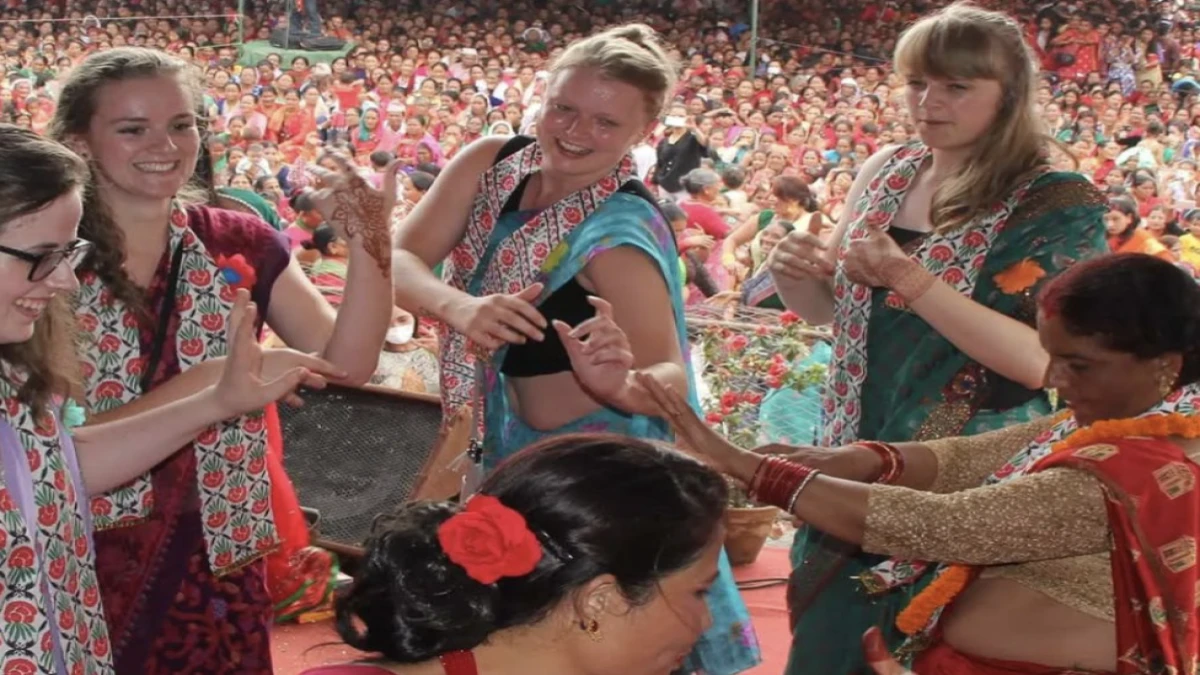
Dancing often continues throughout the day, creating joyful scenes across temples and community halls. Visitors are welcome to watch and, when invited, respectfully join in the dancing.
Food Tourists Should Try During Teej
Although many women fast on the main festival day, Teej is also known for its delicious traditional foods.
Popular dishes include:
Sel Roti
A crispy, ring-shaped homemade rice bread that is slightly sweet and traditionally prepared during festivals.
Kheer
Creamy rice pudding flavored with cardamom, nuts, raisins, and milk.
Puri Tarkari
Deep-fried bread served with flavorful vegetable curry.
Aloo Tama
A classic Nepalese curry made from potatoes, bamboo shoots, and black-eyed peas.
Yomari
A steamed rice flour dumpling filled with sweet molasses or sesame.
Traditional Pickles
Spicy homemade pickles accompany nearly every festive meal.
Photography Tips for Tourists
Teej in Nepal is one of the most colorful photography opportunities in Nepal.
For the best photographs:
- Visit temples early in the morning.
- Ask permission before taking close-up portraits.
- Respect people during prayers.
- Capture traditional dances naturally.
- Include temple architecture for context.
- Photograph details such as jewelry, bangles, flowers, and henna.
- Use natural light whenever possible.
Respectful photography creates meaningful interactions with local communities.
Cultural Etiquette During Teej
To enjoy the festival respectfully:
- Dress modestly when visiting temples.
- Remove shoes before entering temple areas where required.
- Avoid blocking worshippers during ceremonies.
- Speak quietly near prayer areas.
- Do not interrupt religious rituals for photographs.
- Accept invitations with gratitude.
- Respect local customs and traditions.
Showing cultural sensitivity enhances the experience for both visitors and locals.
Can Foreign Tourists Participate?
Absolutely.
While certain religious rituals are reserved for practicing Hindus, tourists are warmly welcomed to observe celebrations, enjoy music and dance performances, taste festive foods, visit public temple areas, and learn about Nepalese traditions.
Many local families happily explain customs and may even invite respectful visitors to join community celebrations.
Travel Tips for Visiting Nepal During Teej
To make the most of your visit:
- Book accommodation well in advance, especially in Kathmandu.
- Start your sightseeing early to avoid heavy crowds.
- Carry drinking water and sunscreen.
- Wear comfortable walking shoes.
- Keep your camera charged.
- Respect temple rules.
- Hire a knowledgeable local guide for deeper cultural insights.
- Use taxis or ride-sharing services, as traffic can be busy during festival celebrations.
Why Teej is One of Nepal's Most Beautiful Festivals
Teej is much more than a religious celebration—it is a vibrant expression of Nepal's cultural identity. The festival beautifully blends spirituality, music, dance, family traditions, and community spirit into an unforgettable experience. Streets come alive with the sound of devotional songs, temples overflow with colorful gatherings, and the warmth of Nepalese hospitality creates lasting memories for every visitor.
For travelers seeking authentic cultural experiences beyond trekking and mountain adventures, Teej offers a unique opportunity to witness Nepal's traditions at their most joyful and meaningful. From the magnificent atmosphere at Pashupatinath Temple to the lively celebrations in historic cities like Bhaktapur and Patan, every moment of the festival showcases the richness of Nepal's heritage.
Planning your trip during Teej allows you to discover a side of Nepal that many visitors never see—one filled with heartfelt devotion, timeless customs, vibrant celebrations, and unforgettable cultural encounters. It is an experience that leaves travelers with a deeper appreciation for the country's traditions and the enduring spirit of its people.
Frequently Asked Questions (FAQs)
Is Teej a good time to visit Nepal?
Yes. Teej is one of the best festivals for cultural tourism, offering visitors a chance to experience authentic Nepalese traditions, music, dance, and religious ceremonies.
Can non-Hindus visit Teej celebrations?
Yes. While access to the inner sanctum of some temples, such as Pashupatinath, is restricted to Hindus, non-Hindus can observe celebrations from designated public areas and enjoy cultural events across Nepal.
What should tourists wear during Teej?
Modest clothing that covers the shoulders and knees is recommended when visiting temples and participating in cultural events.
Is it acceptable to take photographs?
Yes, but always ask for permission before taking close-up portraits and avoid photographing people during private moments of prayer.
Which city is best for experiencing Teej?
Kathmandu is the most popular destination, particularly around Pashupatinath Temple. Bhaktapur and Patan also offer wonderful, less crowded cultural experiences.
Plan Your Nepal Cultural Journey with All Nepal Hiking
Experience Nepal beyond the mountains with All Nepal Hiking. Whether you want to witness the vibrant celebrations of Teej, explore UNESCO World Heritage Sites, or combine cultural tours with breathtaking Himalayan treks, our experienced local team is here to create an unforgettable journey. Contact us today to start planning your authentic Nepal adventure.