based on 270 reviews

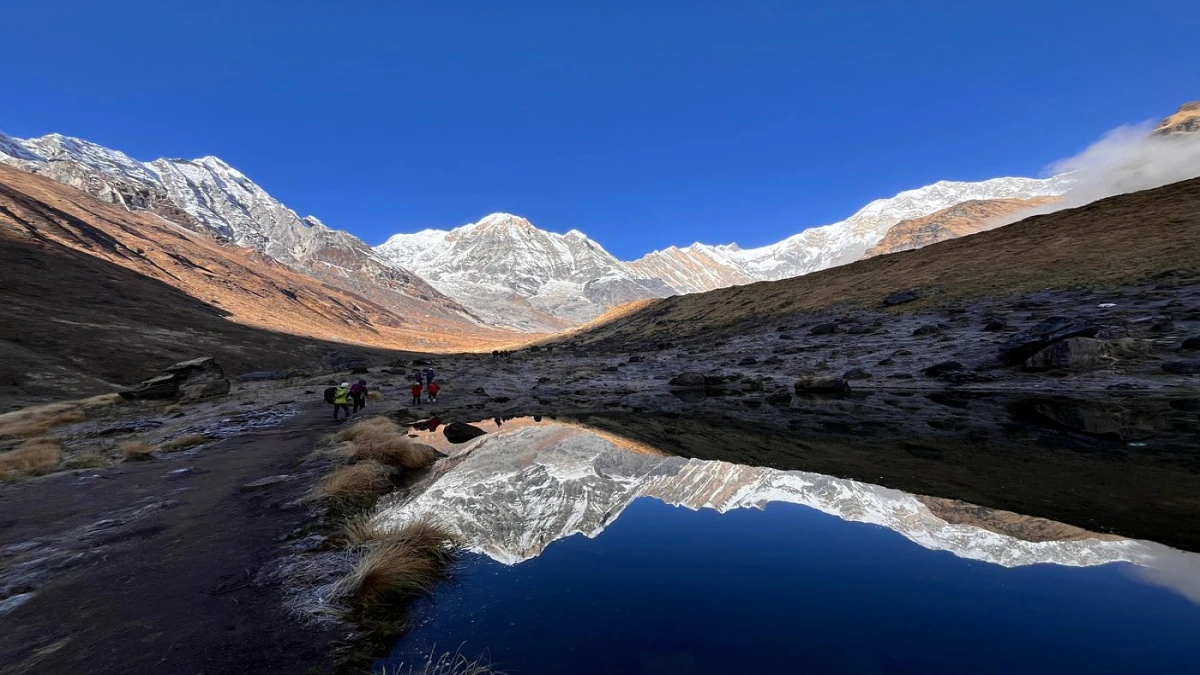
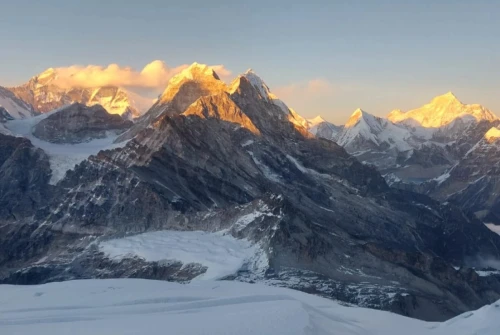
Autumn in Nepal, spanning September, October, and November, is widely regarded as the golden season for trekking. The monsoon rains have washed the Himalayas clean, the skies are a piercing, cloudless blue, and the trails are alive with rhododendron forests dressed in rust and amber. For international trekkers seeking the most rewarding Himalayan experience, autumn delivers everything: perfect weather, unobstructed mountain views, stable trail conditions, and a vibrant cultural atmosphere shaped by major Nepali festivals.
We have crafted this comprehensive guide to give you everything you need to plan, prepare, and execute an unforgettable autumn trek in Nepal.
Why Autumn Is the Best Season to Trek in Nepal
When trekkers ask us about the ideal time to visit Nepal, our answer is almost always autumn — October in particular. Here is why:
- Crystal-clear mountain visibility: Post-monsoon skies offer some of the sharpest views of Everest, Annapurna, Dhaulagiri, Manaslu, and Kanchenjunga you will ever witness.
- Stable weather patterns: Daytime temperatures on popular routes like the Everest Base Camp trek hover between 10°C and 18°C at mid-altitude, making walking comfortable and enjoyable.
- Dry trails: The monsoon ends in early September, leaving trails firm and free of the muddy, slippery conditions that characterize June through August.
- Festival season:Dashain and Tihar, Nepal's two most celebrated festivals, fall in October and November, respectively. Trekking during this period allows international visitors to witness authentic Nepali culture in full festive bloom.
- Rich biodiversity: The forests burst into autumn color, and wildlife activity — including red pandas, Himalayan tahr, and snow leopards in remote regions — is at its peak.
Essential Pre-Trek Information for International Tourists
Visas and Entry Requirements
Most international tourists can obtain a Nepal Tourist Visa on arrival at Tribhuvan International Airport in Kathmandu or at major land border crossings. Visa fees are as follows:
- 15 days: USD 30
- 30 days: USD 50
- 90 days: USD 125
Bring passport-sized photographs and US dollars or the equivalent in a major currency. Ensure your passport has at least six months of validity beyond your intended stay.
Trekking Permits
Depending on your chosen route, you will need one or more of the following:
- TIMS Card (Trekkers' Information Management System): Required for the most popular trails; costs approximately USD 20.
- National Park Entry Permit: Required for Sagarmatha (Everest), Annapurna, Langtang, and other protected areas. Fees range from NPR 3,000 to NPR 5,000.
- Restricted Area Permit: Required for Upper Mustang, Dolpo, and Kanchenjunga. These cost significantly more and must be arranged through a registered Nepali trekking agency.
Physical Fitness and Acclimatization
We strongly advise all trekkers to begin cardiovascular conditioning at least two to three months before departure. Trekking at altitude — particularly above 3,500 meters — demands aerobic endurance. Follow the cardinal rule of acclimatization: "climb high, sleep low." Never ascend more than 300–500 meters per day above 3,000 meters, and schedule rest days at key altitude checkpoints such as Namche Bazaar or Manang.
Acute Mountain Sickness (AMS) is a genuine risk. Carry Diamox (Acetazolamide) after consulting your physician, stay well-hydrated, and never ignore symptoms such as persistent headache, nausea, or loss of coordination.
Travel Insurance
This is non-negotiable. Purchase a policy that explicitly covers high-altitude trekking and helicopter evacuation. A helicopter rescue from Everest Base Camp can cost upward of USD 5,000, and without insurance, this falls entirely on the trekker.
Hiring a Guide and Porter
While independent trekking is possible on many routes, we highly recommend hiring a licensed local guide. Guides enhance safety, navigate route changes, bridge language gaps, and provide irreplaceable cultural insight. Porters carry loads of up to 25 kg and earn vital income from trekking tourism. Standard daily rates for guides range from USD 25–40, and porters from USD 15–20.
Top 5 Trekking Destinations in Nepal in Autumn
1. Everest Base Camp Trek (EBC)
Duration: 12–14 days | Max Altitude: 5,364 m | Difficulty: Moderate to Strenuous
No list of Nepal's greatest treks is complete without the Everest Base Camp Trek. Autumn is its finest hour. Beginning with a thrilling flight into Lukla's Tenzing-Hillary Airport, the trail climbs through the Khumbu Valley past the legendary Sherpa town of Namche Bazaar, ancient monasteries at Tengboche, the alien landscape of Gorak Shep, and finally the iconic base of the world's highest mountain.
In autumn, the Khumbu Icefall breathtakingly catches the early morning light, and views of Lhotse, Nuptse, Ama Dablam, and Everest itself are unimpeded. The route is well-served with teahouses offering warm lodging and hearty meals, making it accessible to well-prepared intermediate trekkers.
Do not miss: Kala Patthar (5,545 m) for the most celebrated sunrise view of Everest on the planet.
2. Annapurna Circuit Trek
Duration: 14–21 days | Max Altitude: 5,416 m (Thorong La Pass) | Difficulty: Moderate to Strenuous
The Annapurna Circuit is one of the world's most celebrated long-distance treks, circumnavigating the entire Annapurna massif through an extraordinary diversity of landscapes — from subtropical river gorges to high-altitude Tibetan-influenced villages. The dramatic crossing of Thorong La Pass (5,416 m) is the defining moment of the circuit.
In autumn, the pass is reliably open, and the views across Mustang and the Manang Valley are staggering. The descent into Muktinath, a sacred pilgrimage site revered by both Hindus and Buddhists, is profoundly moving, particularly during the festival season.
Do not miss: The apple orchards of Marpha village, try fresh apple pie and brandy after the pass crossing.
3. Langtang Valley Trek
Duration: 7–10 days | Max Altitude: 4,984 m (Tserko Ri) | Difficulty: Moderate
Often overshadowed by Everest and Annapurna, theLangtang Valley Trek offers an equally spectacular but far less crowded experience. Located just 50 kilometers north of Kathmandu, Langtang is Nepal's closest high-altitude trekking region to the capital, making logistics straightforward for international travelers on tighter schedules.
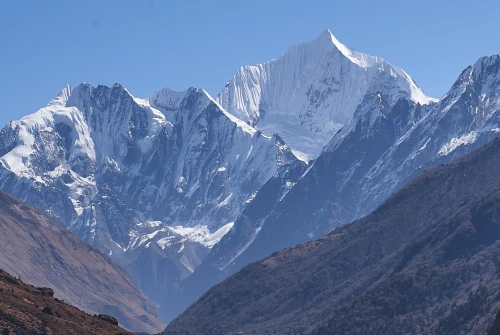
The valley is cradled by the Langtang Lirung (7,227 m) and Ganesh Himal ranges. The Tamang villages along the route offer a window into a culture deeply shaped by Tibetan Buddhism. In autumn, yak herders return to lower pastures, the forests glow in warm color, and the skies above Kyanjin Gompa are impossibly clear.
Do not miss: The sunrise hike to Tserko Ri, one of the most rewarding viewpoints in the entire Himalayan region.
4. Manaslu Circuit Trek
Duration: 14–18 days | Max Altitude: 5,106 m (Larkya La Pass) | Difficulty: Strenuous
For experienced trekkers seeking adventure beyond the mainstream, the Manaslu Circuit is a revelation. Encircling the world's eighth-highest mountain (8,163 m), this restricted-area trek offers raw, unspoiled Himalayan scenery and an authentic cultural experience largely untouched by mass tourism.
The crossing of Larkya La Pass (5,106 m) in autumn, with views of Manaslu, Himlung, and Cheo Himal spread across the horizon, is among the most dramatic mountain experiences available anywhere on Earth. This trek requires a special restricted area permit and must be completed with a registered agency and guide.
Do not miss: The ancient Pungyen Gompa monastery, perched dramatically above the Manaslu Glacier.
5. Gokyo Lakes and Cho La Pass Trek
Duration: 12–16 days | Max Altitude: 5,357 m (Gokyo Ri) | Difficulty: Strenuous
Combining the turquoise Gokyo Lakes, a series of sacred high-altitude glacial lakes, with the challenging Cho La Pass (5,420 m) and a potential loop back via the Everest Base Camp trail, this is one of the most complete Himalayan trekking experiences available.
Standing atop Gokyo Ri on a clear autumn morning, with the world's three highest peaks, Everest (8,849 m), Lhotse (8,516 m), and Makalu (8,485 m), all visible simultaneously, is an experience that reduces even the most seasoned trekkers to silence. Autumn's clarity makes this possible in a way no other season can guarantee.
Do not miss: An early morning at the fifth Gokyo Lake (Ngozumpa Tso), the reflections of Cho Oyu on still water are otherworldly.
What to Pack for an Autumn Trek in Nepal
Packing correctly is the difference between a comfortable trek and a miserable one. We recommend the following essentials:
- Layering system: Moisture-wicking base layer, insulating mid-layer (down jacket), waterproof outer shell
- Trekking boots: Waterproof, ankle-supporting, broken-in well before departure
- Trekking poles: Essential for steep descents and pass crossings
- Sleeping bag: Rated to at least -10°C for high-altitude routes
- Sunscreen and lip balm: UV intensity at altitude is severe even in cool weather
- Headlamp with spare batteries: Teahouse lighting is often minimal
- Water purification tablets or a filter: Safe hydration is critical
- First aid kit: Including blister treatment, altitude medication, and rehydration salts
- Cash in Nepali Rupees: ATMs are unavailable beyond Namche Bazaar and Besisahar
Getting to Nepal: Flights and Arrival
Tribhuvan International Airport (KTM) in Kathmandu is the primary international gateway. Major airlines connecting Nepal include Qatar Airways, Emirates, Air India, Turkish Airlines, and China Airlines. There are no direct flights from North America, Europe, or Australia; connections are typically made through Doha, Dubai, Delhi, or Istanbul.
Upon arrival in Kathmandu, most trekkers spend two to three days acclimatizing to altitude (1,400 m), completing permit paperwork, hiring guides and porters, purchasing final gear, and visiting cultural landmarks such as Boudhanath Stupa, Swayambhunath (Monkey Temple), and Pashupatinath Temple.
Responsible Trekking in Nepal
As international visitors, we carry a responsibility to protect the landscapes and communities that make Nepal's trekking industry possible. Follow these principles:
- Carry out all waste. Do not leave plastic, packaging, or non-biodegradable materials on the trail.
- Use refillable water bottles. Single-use plastic is devastating high-altitude ecosystems.
- Stay on marked trails to prevent soil erosion and habitat degradation.
- Pay fair wages to guides and porters. Undercutting local labor harms mountain communities.
- Respect sacred sites. Walk clockwise around mani stones and stupas, remove shoes before entering monasteries, and ask permission before photographing locals.
Conclusion
Autumn trekking in Nepal is not merely a holiday; it is a transformative encounter with the world's most magnificent mountain landscapes, a deep immersion in ancient Himalayan cultures, and a genuine test of personal resilience. Whether you choose the legendary trails of Everest Base Camp, the sweeping grandeur of the Annapurna Circuit, the hidden beauty of Langtang, the raw adventure of Manaslu, or the ethereal silence of the Gokyo Lakes, Nepal in autumn will exceed every expectation.
Plan carefully. Prepare thoroughly. Trek responsibly. And let the Himalayas change you forever.