based on 270 reviews

Lumbini is the sacred birthplace of Lord Buddha and one of the most important pilgrimage destinations in the world for Buddhist travelers. Nestled in the Terai plains of southern Nepal, this UNESCO World Heritage Site marks the exact spot where Siddhartha Gautama was born, making it a place of profound spiritual significance for millions of devotees. We have prepared this comprehensive guide to help pilgrims and travelers plan a meaningful visit to Lumbini.
The Historical Significance of Lumbini
According to Buddhist tradition, Queen Maya Devi, wife of King Suddhodana of the Shakya kingdom, gave birth to Prince Siddhartha in 623 BCE while resting in the gardens of Lumbini during a journey to her parental home in Devdaha. She is said to have held onto the branch of a sal tree as she gave birth, an event that Buddhist art and scripture have immortalized for over two millennia. We consider this moment the foundational event of the entire Buddhist tradition, as it marks the arrival of the man who would later attain enlightenment as the Buddha.
Maya Devi Temple: The Exact Birth Spot
At the center of Lumbini stands the Maya Devi Temple, built directly over the archaeologically confirmed marker stone that pinpoints the precise location of Buddha's birth. Inside the temple, visitors can view the excavated remains of ancient brick structures dating back to the 3rd century BCE, layered atop even older foundations. A carved stone panel depicting the nativity scene, showing Maya Devi holding the sal tree branch, remains one of the most revered images at the site. We recommend visiting the temple early in the morning, when the crowds are thinner and the atmosphere is more conducive to quiet reflection and prayer.
The Ashoka Pillar
Standing just outside the Maya Devi Temple is the Ashoka Pillar, erected in 249 BCE by Emperor Ashoka of the Mauryan Empire during his own pilgrimage to Lumbini. The pillar bears an inscription in Brahmi script that explicitly identifies the site as the Buddha's birthplace and records Ashoka's tax exemption granted to the village in honor of the occasion. This inscription remains the single most important piece of historical evidence confirming Lumbini's authenticity as the birthplace of Buddha.
The Sacred Puskarini Pond
Beside the temple lies the Puskarini pond, also known as the sacred bathing pool. Tradition holds that Queen Maya Devi bathed in this pond just before giving birth, and that the infant Buddha received his first ceremonial bath here. Surrounded by ancient trees, the pond remains a peaceful spot where pilgrims often pause for meditation and quiet contemplation.
Lumbini's Monastic Zone
Beyond the core sacred garden, Lumbini is home to an extensive Monastic Zone, divided into eastern and western sections. Buddhist communities from around the world have built monasteries here, each reflecting the unique architectural traditions of their home countries. Pilgrims can walk through monasteries built by Myanmar, Thailand, Cambodia, Vietnam, Japan, South Korea, Germany, France, and Sri Lanka, among others. This makes Lumbini one of the few places on earth where the full diversity of global Buddhist practice can be experienced within a single, walkable complex.
The Eternal Peace Flame and World Peace Pagoda
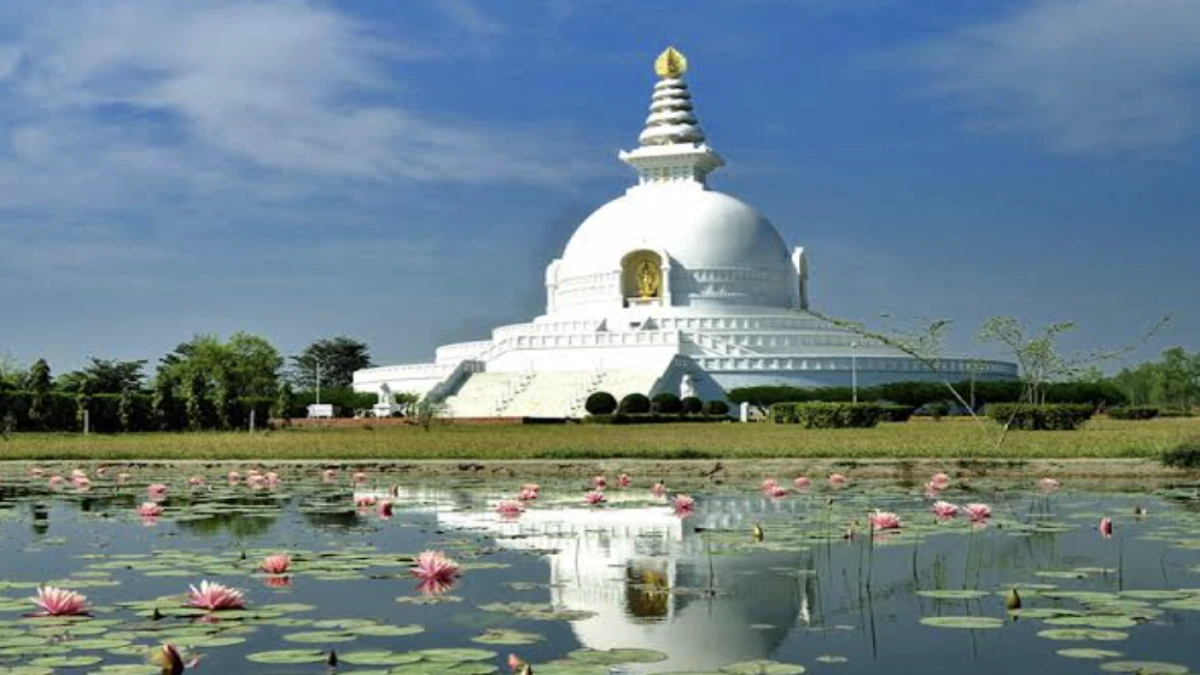
Within the monastic zone, the Eternal Peace Flame, lit in 1986, burns continuously as a symbol of world peace. Nearby, the World Peace Pagoda, built by Japanese Buddhist organizations, offers a serene white-domed structure that has become an iconic symbol of Lumbini, especially at sunset when pilgrims often gather for evening chanting.
Best Time to Visit Lumbini
The ideal months to visit Lumbini are between October and March, when the Terai region enjoys cool, dry weather suited to extended outdoor exploration. Buddha Jayanti, the celebration of Buddha's birth, falls in April or May depending on the lunar calendar and is the most significant time to visit, as Lumbini hosts large gatherings of monks, prayer ceremonies, and cultural processions from across the Buddhist world.
How to Reach Lumbini
By Air: Most travelers fly into Tribhuvan International Airport in Kathmandu, then take a short domestic flight to Gautam Buddha Airport in Bhairahawa, roughly 20 kilometers from Lumbini.
By Road: Overland travel by tourist bus or private vehicle from Kathmandu or Pokhara is also common, though the journey typically takes 7 to 9 hours depending on road conditions.
Local Transport: Once in Lumbini, cycle rickshaws, rented bicycles, and electric carts are the most popular ways to move between the sacred garden and the monastic zone, as the complex spans a considerable area.
Where to Stay in Lumbini
Accommodation options range from budget guesthouses near the main entrance to more comfortable hotels catering to international pilgrims. For a deeper spiritual experience, several monasteries within the monastic zone offer simple lodging to visiting pilgrims, allowing an immersive stay surrounded by prayer and daily monastic routine.
What to Bring and Wear
We recommend modest clothing that covers the shoulders and knees, as is customary at religious sites throughout Nepal. Comfortable walking shoes are essential given the size of the complex, and a light scarf or shawl is useful, as shoes must be removed before entering the Maya Devi Temple and certain monastery grounds.
Frequently Asked Questions About Lumbini
Is Lumbini definitely the birthplace of Buddha? Yes. The Ashoka Pillar inscription, combined with archaeological excavations beneath the Maya Devi Temple revealing structural layers dating back over 2,000 years, provides strong historical confirmation. UNESCO recognizes Lumbini as the authentic birthplace of Buddha.
How many days are needed to visit Lumbini? Most pilgrims plan 1 to 2 full days to comfortably explore the sacred garden, the Maya Devi Temple, the Ashoka Pillar, and the surrounding monasteries in the monastic zone.
Can non-Buddhist travelers visit Lumbini? Yes, Lumbini welcomes visitors of all faiths and backgrounds, though we encourage all guests to observe respectful conduct, modest dress, and quiet behavior throughout the sacred garden.
Is Lumbini accessible for elderly visitors or those with limited mobility? The core garden area features paved, relatively flat paths, though the wider monastic zone requires more walking, making bicycle or electric cart rental a practical option for those with mobility concerns.
Do I need a visa to visit Nepal for Lumbini? Most nationalities can obtain a visa on arrival at Tribhuvan International Airport or major land border crossings, though we recommend confirming current requirements with the nearest Nepali embassy before departure.
Final Thoughts on Visiting Lumbini
A visit to Lumbini is more than a stop on a travel itinerary; it is a journey to the very origin of Buddhism itself. Standing before the marker stone in the Maya Devi Temple, reading the ancient inscription on the Ashoka Pillar, or walking quietly through the monasteries of the monastic zone, pilgrims consistently describe Lumbini as a place of deep peace and reflection. We encourage every traveler making this journey to approach Lumbini with patience and reverence, allowing this sacred garden to reveal its significance in its own time.

.webp)
.webp)