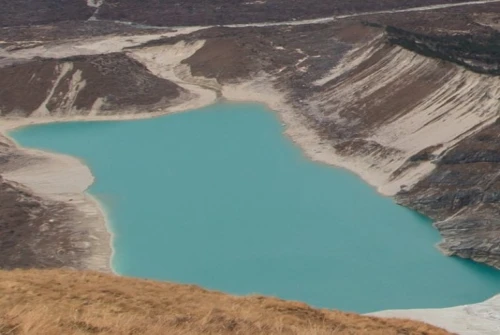
Manaslu Circuit Trek at a Glance
Before planning your Manaslu Circuit Trek in autumn, here's a quick overview of the route, itinerary, permits, and essential logistics.
Feature | Details |
Trek Name | Manaslu Circuit Trek, Nepal |
Best Season | Autumn (September–November) and Spring (March–May) |
Total Distance | Approximately 177–180 km (110–112 miles) |
Trek Duration | 12–16 days, depending on your itinerary |
Starting Point | Machhakhola (870 m), reached by a 7–9-hour drive from Kathmandu |
Ending Point | Dharapani, followed by a drive via Besisahar back to Kathmandu (approximately 7–8 hours) |
Highest Point | Larkya La Pass (5,106 m / 16,752 ft) |
Difficulty Level | Moderately challenging to strenuous; suitable for trekkers with good physical fitness and proper acclimatization |
Daily Walking Time | Approximately 5–7 hours, with 8–10 hours on the Larkya La Pass crossing day |
Accommodation | Traditional teahouses with basic private or shared rooms and shared bathroom facilities |
Required Permits | Manaslu Restricted Area Permit (RAP), Manaslu Conservation Area Permit (MCAP), Annapurna Conservation Area Permit (ACAP), and Chumnubri Rural Municipality Permit |
Guide Requirement | A licensed trekking guide is mandatory under Nepal government regulations |
Important: The Manaslu Circuit Trek is a restricted-area trek in Nepal, meaning independent trekking is not permitted. All trekkers must obtain permits through a registered Nepali trekking agency and travel with a government-licensed guide. Although optional, hiring a porter is highly recommended to make the trek safer, more comfortable, and more enjoyable especially when crossing Larkya La Pass (5,106 m).
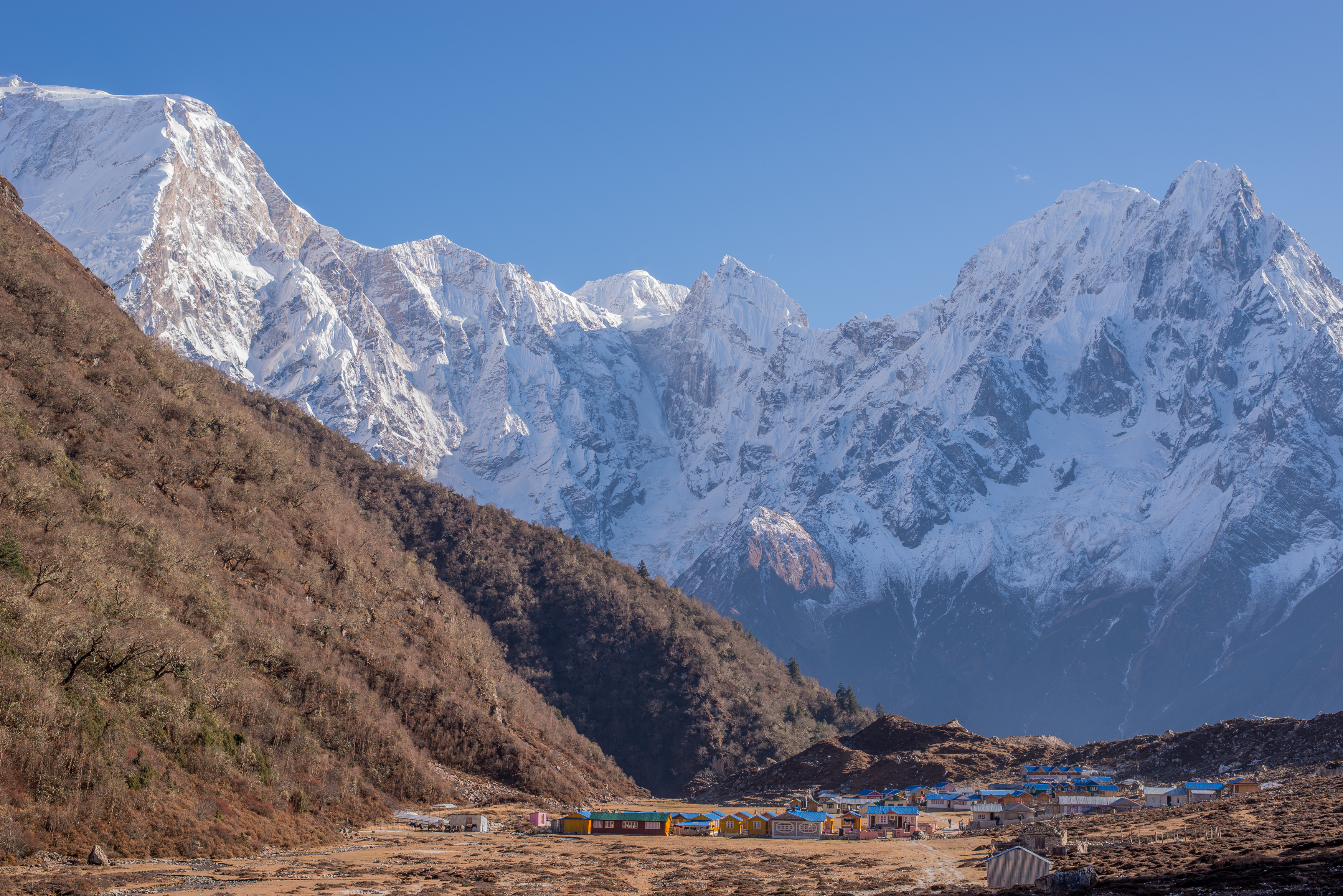
Why Autumn is the Absolute Best Time for Manaslu
While spring has its floral charms, Autumn (September, October, and November) is widely crowned as the golden season for the Manaslu Circuit. Here are the top 5 reasons why:
Crystal-Clear Mountain Views and Pristine Landscapes
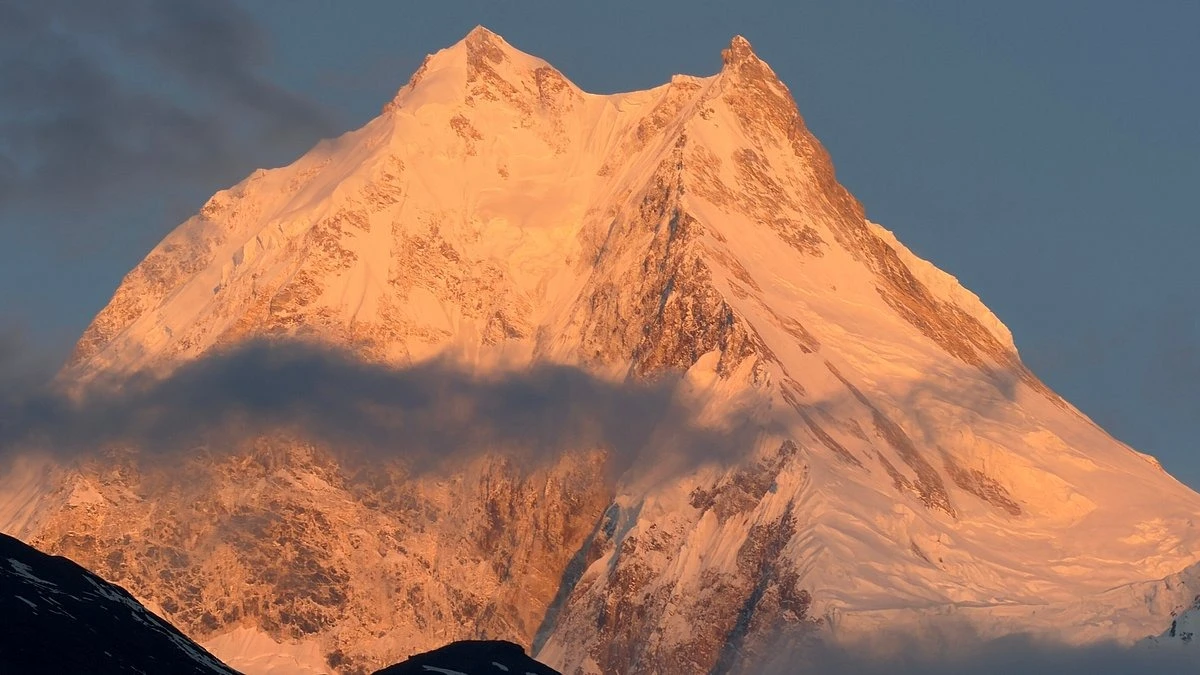
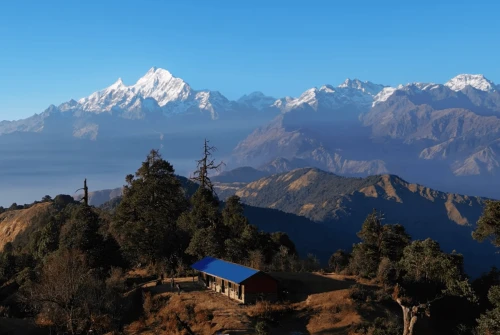
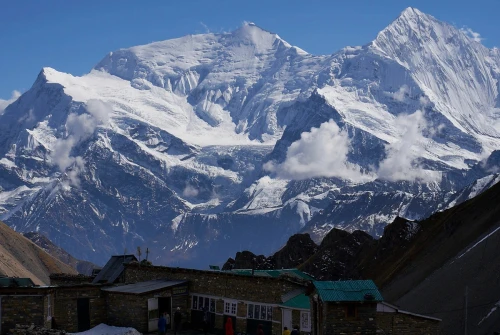
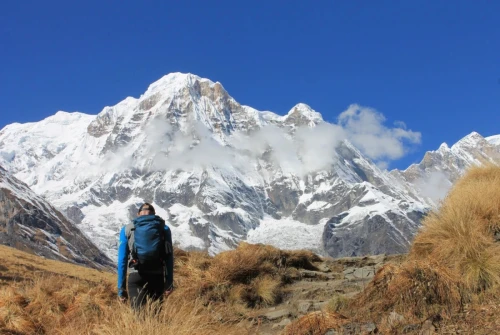
Following the monsoon rains, the atmosphere is scrubbed completely clean of dust and haze. Trekkers enjoy sharp, unobstructed, panoramic vistas of Mount Manaslu (8,163m), Himalchuli (7,893m), Ngadi Chuli (7,871m), and Shringi Himal (7,161m). Terrain below 3,000 meters remains lushly green from the rains, contrasting exquisitely against the frozen behemoths above.
Crossing the Larke Pass (5,106m) under Perfect Conditions
Crossing the high-altitude Larke Pass is the ultimate climax of this trek. In autumn, the trail over the pass is typically dry, firm, and relatively snow-free compared to the icy, unpredictable conditions of spring or winter. This drastically reduces slipping risks and makes the long ascent from Dharmashala (4,460m) much more manageable.
Local Tibetan Culture and Autumn Festivals
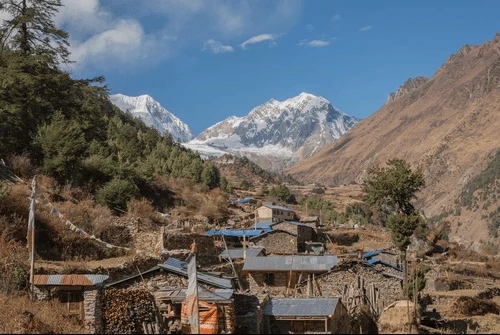
Autumn coincides with Nepal's biggest, most vibrant cultural festivals. In the lower regions, you’ll witness Dashain and Tihar village celebrations. As you climb higher into the Tibetan-influenced villages of Lho (3,180m), Sama Gaun (3,530m), and Samdo (3,860m), you can witness traditional post-harvest celebrations and monastic mask dances at Ribung and Pungyen Gompas.
Flawless Trekking Weather
Autumn offers highly predictable and stable weather systems. Daytime temperatures across the lower valley trail range from a comfortable 10°C to 20°C. While nights drop significantly below freezing at high-altitude stops like Dharmashala (reaching -5°C to -12°C), the sunny, wind-free days make the actual hiking incredibly pleasant.
Less Crowds and Peaceful, Untamed Wilderness
Even during peak season, the Manaslu Circuit receives a fraction of the foot traffic seen on the classic Annapurna Circuit or Everest Base Camp trails. You will still experience long stretches of quiet solitude through lush pine, oak, and rhododendron forests between Namrung and Bihi Phedi.
Manaslu Circuit Trek Weather in Autumn:Month-by-Month Guide
Understanding the Manaslu Circuit Trek weather in autumn is essential for proper preparation. From Mid September to November, temperatures gradually become colder as you gain altitude, but the skies become increasingly clear after the monsoon season. Autumn is considered the best season for the Manaslu Circuit Trek because of stable weather, dry trails, excellent mountain visibility, and safer conditions for crossing Larkya La Pass (5,106 m).
The temperature ranges below are based on historical averages and should be used as a general guide rather than an exact weather forecast.
Altitude Zone | September | October | November |
Lower elevations (700–2,000 m) | Day: 18–25°C | Day: 15–22°C | Day: 10–18°C |
Mid elevations (2,000–3,500 m) | Day: 10–18°C | Day: 8–16°C | Day: 5–12°C |
Samagaon (3,530 m) | Day: 12°CNight: -3°C to 0°C | Day: 10°CNight: -5°C to -2°C | Day: 6°CNight: -8°C to -5°C |
Larkya La Pass Region (4,800–5,106 m) | Day: 0–6°CNight: -5°C to 0°C | Day: -2–5°CPre-dawn: -6°C to -2°C | Day: -5–3°CPre-dawn: -10°C to -5°C |
Manaslu Circuit Trek in September: End of Monsoon and Fresh Landscapes
September marks the transition from monsoon to autumn. Early September may still bring occasional rainfall and cloudy conditions, but the weather improves significantly after mid-month. The landscapes are especially green, rivers are full, and temperatures remain comfortable at lower elevations.
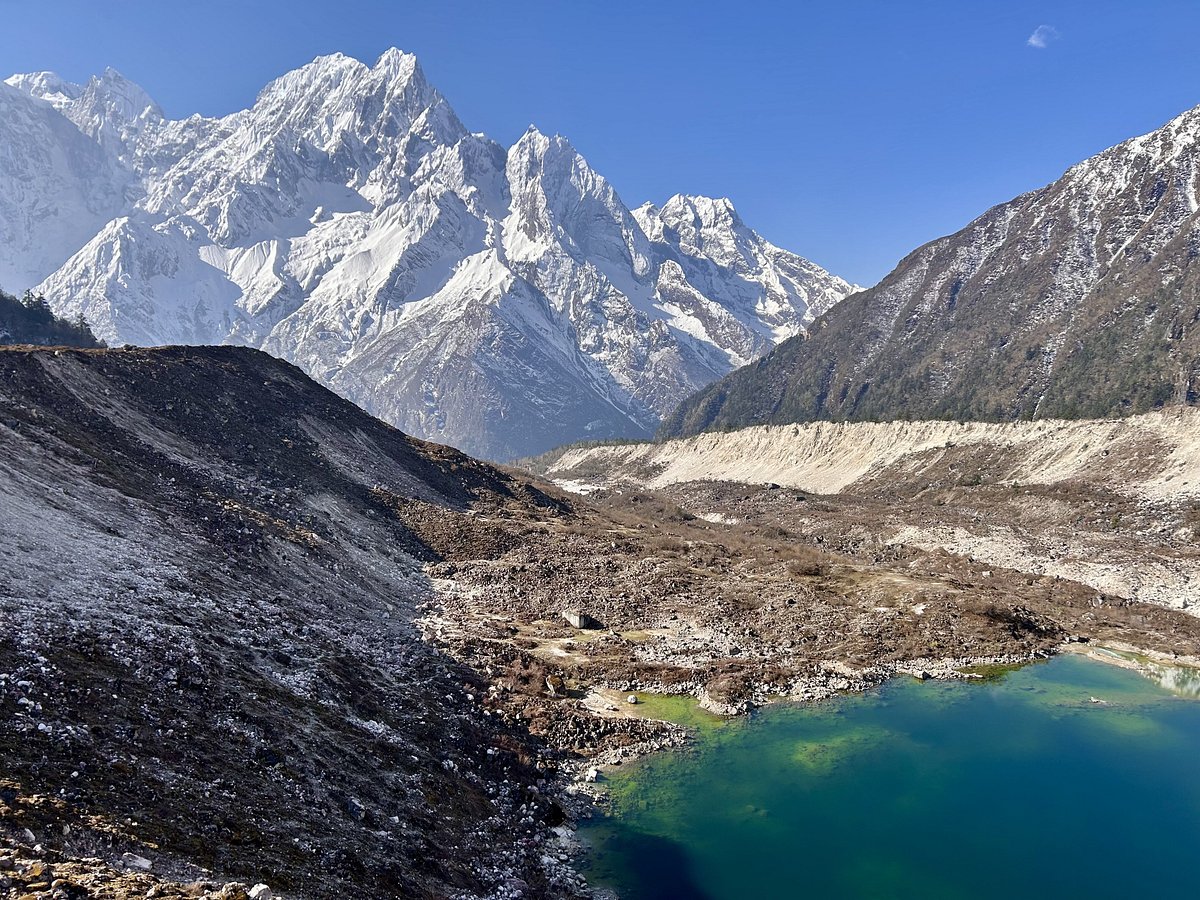
Manaslu Trek in October: The Best Weather for Manaslu Circuit Trek
October is the most popular month for the Manaslu Circuit Trek. The weather is generally dry, stable, and ideal for trekking. Clear skies provide outstanding views of Mount Manaslu (8,163 m) and surrounding Himalayan peaks, while moderate temperatures make long trekking days more comfortable.
Manaslu Circuit Trekking in November: Clear Skies and Colder Temperatures
November offers excellent visibility and fewer trekkers, but temperatures drop significantly, especially above Samagaon. Early to mid-November is still a great time to cross Larkya La Pass, while late November may bring early winter conditions and snowfall.
Important Weather Factors on the Manaslu Circuit Trek
Wind Chill at Larkya La Pass (5,106 m)
Temperature alone does not tell the full story at high altitude. Strong winds usually increase after 10:00 AM around Larkya La Pass, making conditions feel much colder. For example, a temperature of 5°C can feel closer to -5°C because of high-altitude wind chill.
Teahouse Room Temperatures at High Altitude
Most teahouses in villages such as Samagaon and Samdo are traditional mountain lodges without modern insulation or heating systems in bedrooms. Room temperatures are often only 3–5°C warmer than the outside temperature, making a warm sleeping bag and proper layers essential.
Strong UV Exposure at High Altitude
At elevations above 3,500 m, the thinner atmosphere allows stronger ultraviolet radiation. Even when air temperatures feel cold, direct sunlight can feel surprisingly warm during the day. Quality sunglasses, sunscreen, and sun protection are important throughout the trek.
Best Autumn Month for the Manaslu Circuit Trek
For most trekkers, October is the best month for the Manaslu Circuit Trek due to the perfect balance of stable weather, dry trails, comfortable temperatures, and exceptional Himalayan views. However, early November is an excellent alternative for those who prefer fewer crowds and don't mind colder nights.
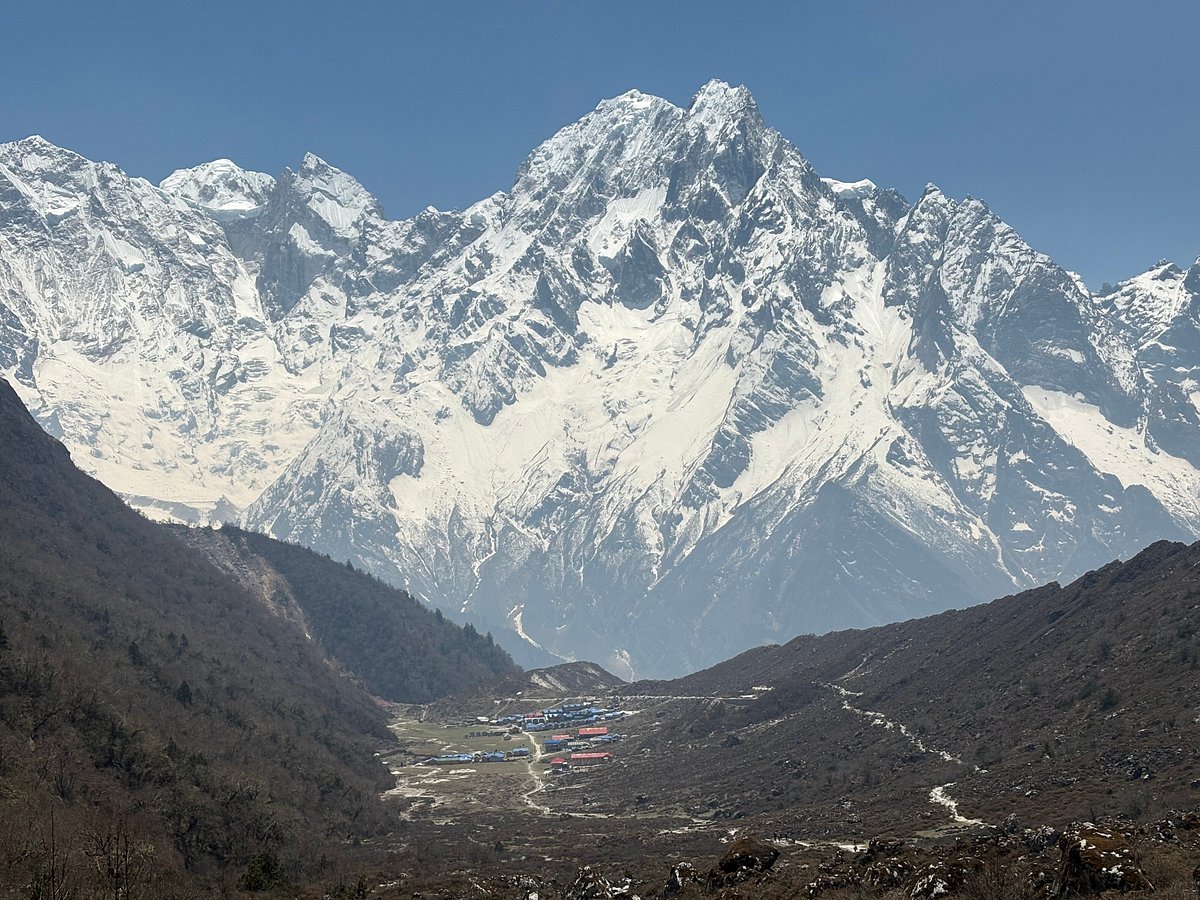
Pros and Cons of the Manaslu Circuit Trek in Autumn
Choosing the Manaslu Circuit Trek in autumn means experiencing some of the best trekking conditions Nepal has to offer. However, every season has its advantages and challenges. Understanding the benefits and limitations of autumn trekking will help you prepare properly and decide whether this is the right time for your Himalayan adventure.
Advantages of Trekking the Manaslu Circuit in Autumn
Stable Weather and Safer Trail Conditions
Autumn offers the most reliable weather conditions on the Manaslu Circuit Trek route. After the monsoon ends, rainfall decreases significantly, reducing the risk of landslides, muddy trails, and weather-related itinerary delays. Clear skies and dry paths make trekking more comfortable, especially during the challenging Larkya La Pass crossing (5,106 m).
Fully Open Teahouses and Better Food Options
During the autumn peak season, local teahouses throughout the Manaslu Circuit are fully operational and well-prepared for trekkers. You can enjoy fresh local meals, including traditional favorites such as Dal Bhat, Tibetan bread, noodles, and thukpa. Post-harvest vegetables are also more widely available in mountain villages.
Excellent Wildlife Viewing Opportunities
The post-monsoon environment makes autumn one of the best times for wildlife observation in the Manaslu Conservation Area. Trekkers may have opportunities to spot Himalayan species such as Blue Sheep (Bharal), Himalayan Tahr, musk deer, Himalayan birds, and other native wildlife along the trail.
Outstanding Mountain Views
Clear autumn air provides some of the best Himalayan visibility of the year. Trekkers can enjoy spectacular views of Mount Manaslu (8,163 m), Himalchuli, Ngadi Chuli, and surrounding peaks, making autumn the favorite season for photographers.
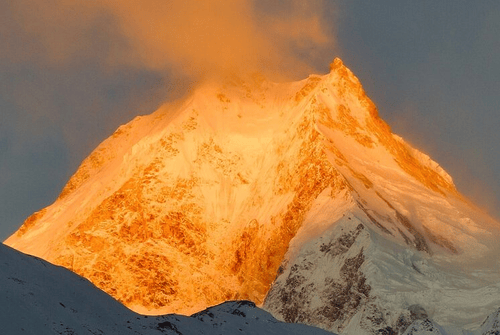
Challenges of Trekking the Manaslu Circuit in Autumn
Increased Trail Traffic in October
October is the busiest month for the Manaslu Circuit Trek. Although the route remains much quieter than Everest Base Camp, popular villages such as Samagaon, Lho, and Dharamsala (Larkya Phedi) can become crowded. Booking your trek, transportation, and teahouse accommodation in advance is highly recommended.
Higher Trekking Costs
Because autumn is the peak trekking season in Nepal, prices for some services may increase. Teahouses, guides, porters, and transportation providers can charge approximately 10–20% more compared with the low season due to higher demand.
Cold Nights at Higher Elevations
Temperatures drop significantly above 3,500 m, especially around Samdo, Dharamsala, and Larkya La Pass. In upper villages, unheated rooms can become extremely cold, and water bottles may freeze overnight. A warm down jacket, thermal base layers, gloves, beanie, and a quality sleeping bag are essential for comfort and safety.
Is Autumn the Right Time for the Manaslu Circuit Trek?
For most trekkers, the advantages of autumn outweigh the challenges. The combination of stable weather, dry trails, clear Himalayan views, open teahouses, and excellent trekking conditions makes autumn the most popular season for the Manaslu Circuit Trek in Nepal. With early booking and proper cold-weather preparation, you can enjoy one of Nepal's most rewarding high-altitude trekking experiences.
Standard 15-Day Manaslu Circuit Trek Itinerary
At All Nepal Hiking, we offer fully customizable Manaslu Circuit Trek itineraries to match different schedules, fitness levels, and travel preferences. However, this 15-day Manaslu Circuit Trek itinerary is designed as a perfectly paced route, allowing enough time for acclimatization, cultural exploration, and a safe crossing of Larkya La Pass (5,106 m).
This itinerary is ideal for trekkers visiting Nepal during the autumn trekking season (September to November) when weather conditions are stable, trails are dry, and mountain views are at their best.
Day 1: Arrival in Kathmandu (1,400 m)
Day 2: Trek Preparation and Briefing
Day 3: Drive from Kathmandu to Machha Khola (900 m)
Day 4: Trek from Machha Khola to Jagat (1,340 m)
Day 5: Trek from Jagat to Deng (1,860 m)
Day 6: Trek from Deng to Namrung (2,630 m)
Day 7: Trek from Namrung to Lho (3,180 m)
Day 8: Trek from Lho to Samagaon (3,530 m)
Day 9: Acclimatization Day at Samagaon (3,530 m)
Day 10: Trek from Samagaon to Samdo (3,875 m)
Day 11: Trek from Samdo to Dharamsala (4,460 m)
Day 12: Cross Larkya La Pass (5,106 m) and Trek to Bhimthang (3,720 m)
Day 13: Trek from Bhimthang to Dharapani (1,860 m)
Day 14: Drive from Dharapani to Besisahar and Kathmandu
Day 15: Final Departure
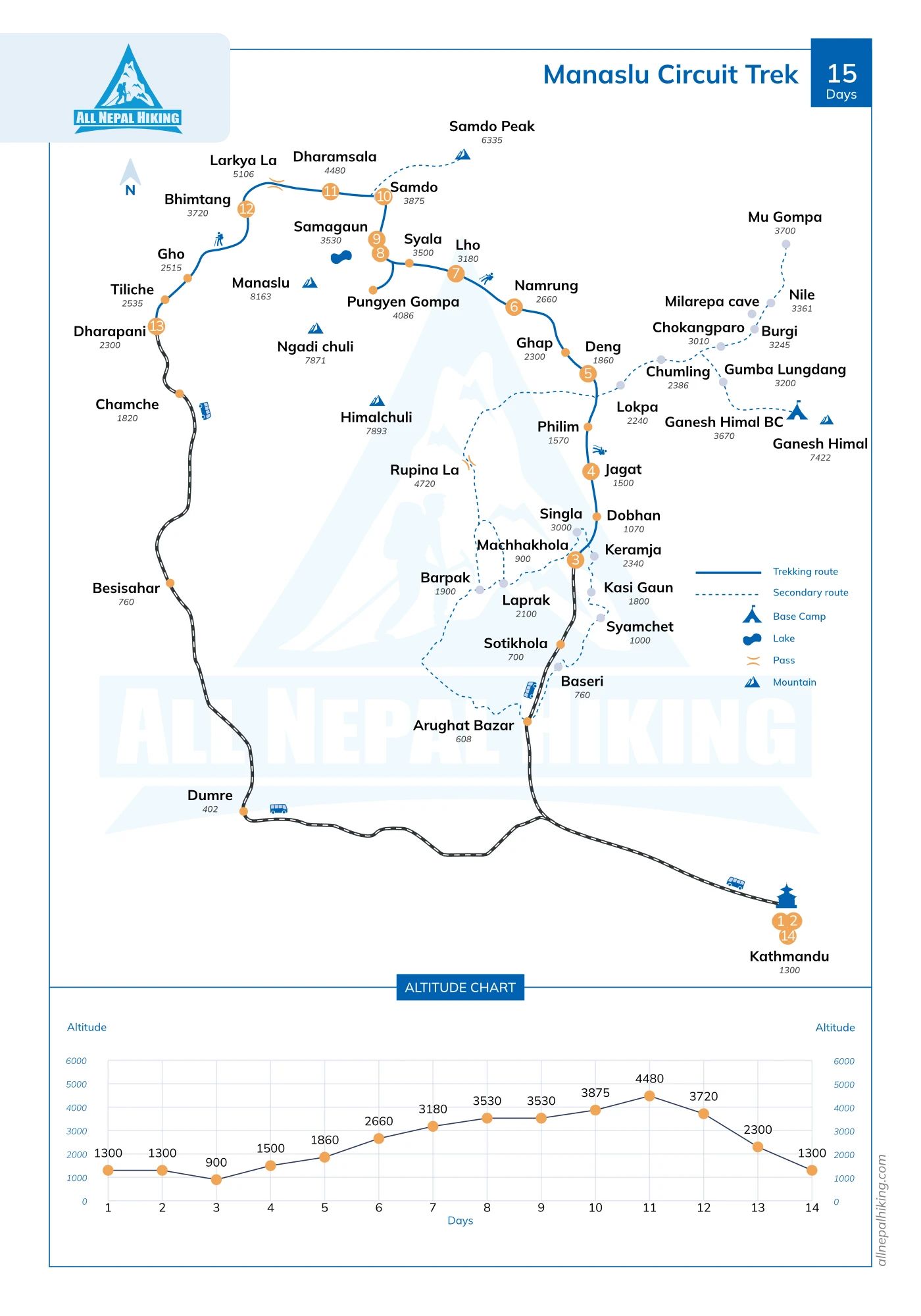
Why Choose Manaslu Circuit Trek 15-Days Route?
This itinerary provides the perfect balance of adventure, cultural immersion, and altitude safety. With a dedicated acclimatization day at Samagaon, a gradual ascent, and a carefully planned Larkya La Pass crossing, it is one of the safest and most rewarding ways to experience the Manaslu Circuit Trek in Nepal.
Can Beginners Do the Manaslu Circuit Trek in Autumn?
Yes, the Manaslu Circuit Trek in autumn is the most beginner-friendly time of year for trekkers with good preparation. Although the Manaslu Circuit Trek for beginners is considered moderately challenging, it does not require technical climbing or previous mountaineering experience. With proper training, acclimatization, and the support of experienced guides, first-time high-altitude trekkers can successfully complete the journey.
The Manaslu Circuit Trek altitude ranges from approximately 890 m (2,920 ft) at the trailhead to 5,106 m (16,752 ft) at Larkya La Pass, making altitude the biggest challenge rather than the terrain itself. Beginners should focus on building cardiovascular fitness, leg strength, and hiking endurance through 8–12 weeks of training before arriving in Nepal.
One of the biggest advantages of trekking the Manaslu Circuit in autumn is the stable weather. From October to mid-November, trekkers enjoy dry trails, clear mountain views, comfortable daytime temperatures, and a lower risk of rain or snowfall compared to other seasons. These favorable conditions make navigation easier, reduce weather-related delays, and create a safer trekking experience.
For the best chance of success, beginners should choose an October Manaslu Circuit Trek, follow a gradual pace, include an acclimatization day in Samagaon, and trek with a licensed local guide or experienced trekking agency. With the right preparation, the Manaslu Circuit Trekking in Nepal is an achievable and unforgettable adventure for beginners seeking a less crowded alternative to the Everest and Annapurna regions.
How Difficult Is the Manaslu Circuit Trek in Autumn?
The Manaslu Circuit Trek in autumn is considered a moderately challenging Himalayan trek that rewards trekkers with spectacular mountain scenery, stable weather, and excellent trail conditions. While the trek does not require any technical climbing or mountaineering experience, it demands good physical fitness, endurance, and proper acclimatization.
The Manaslu Circuit Trek difficulty comes from its long trekking days, high altitude, and significant elevation gain. During the 12-day Manaslu Circuit Trek, you will cover approximately 160–177 km (99–110 miles), walking 5–7 hours per day, with the longest day reaching 8–10 hours while crossing the 5,106 m (16,752 ft) Larkya La Pass. Overall, the route involves an elevation gain of around 4,200 meters, making altitude one of the biggest challenges.
Fortunately, autumn (September to November) is widely regarded as the best season for the Manaslu Circuit Trek. Clear skies, dry trails, mild daytime temperatures, and stable weather significantly reduce trekking difficulties compared to the monsoon or winter seasons. Comfortable teahouse accommodation, excellent mountain visibility, and lower chances of weather-related delays make the journey more enjoyable and safer.
With 8–12 weeks of physical training, including hiking, cardio, and strength exercises, most trekkers with a reasonable fitness level can successfully complete the Manaslu Circuit Trek in Nepal. Proper acclimatization, a steady pace, and experienced guides further increase your chances of completing one of Nepal's most rewarding high-altitude trekking adventures.
Trail Conditions and Crossing Larkya La Pass (5,106 m) in Autumn
The Manaslu Circuit Trek trail conditions in autumn improve steadily as the season progresses. During September, the lower and middle sections of the trail may still be muddy and slippery due to the retreating monsoon. By October, the trails become dry, firm, and well-defined, offering the best trekking conditions of the year. The high-altitude section between Samagaon, Dharamsala (Larkya Phedi), and Bimthang remains rocky but stable throughout the season, with light snowfall typically appearing only in late November.
Crossing Larkya La Pass (5,106 m) is the most challenging and rewarding part of the Manaslu Circuit Trek in Nepal. The best time to cross Larkya La Pass is from October to mid-November, when trekkers can expect minimal snow, clear mountain views, stable weather, and safer trail conditions. In contrast, September crossings may encounter wet sections after the monsoon, while late November can bring fresh snow, icy paths, and colder temperatures.
Although Larkya La Pass requires no technical climbing, it is a physically demanding 8–12 hour trekking day that tests endurance at high altitude. Most trekkers begin the ascent from Dharamsala (Larkya Phedi) around 3:00 AM to reach the pass before strong late-morning winds develop and to descend safely to Bimthang. A dedicated acclimatization day in Samagaon is essential for reducing the risk of altitude sickness and significantly improving your chances of successfully crossing the highest point of the Mount Manaslu Circuit Trek.
Manaslu Circuit Trek Elevation
The Manaslu Circuit Trek elevation ranges from approximately 700 m to 5,106 m (16,752 ft) at the highest point, Larkya La Pass. The trek begins in the lower Himalayan foothills and gradually climbs through subtropical forests, alpine villages, and high mountain landscapes before reaching the challenging pass crossing.
Understanding the Manaslu Circuit Trek altitude profile is essential because the rapid elevation gain can increase the risk of altitude sickness (Acute Mountain Sickness). A properly paced itinerary with acclimatization days, especially at Samagaon (3,530 m), helps your body adjust safely.
Manaslu Circuit Trek Elevation Profile
Location | Elevation |
Machha Khola (Trek Start Point) | 900 m |
Jagat | 1,340 m |
Deng | 1,860 m |
Namrung | 2,630 m |
Lho | 3,180 m |
Samagaon | 3,530 m |
Samdo | 3,875 m |
Dharamsala / Larkya Phedi | 4,460 m |
Larkya La Pass (Highest Point) | 5,106 m |
Bhimthang | 3,720 m |
Dharapani | 1,860 m |
Highest Point of the Manaslu Circuit Trek
The highest elevation on the Manaslu Circuit Trek is Larkya La Pass (5,106 m), one of the longest and most spectacular Himalayan passes in Nepal. Crossing the pass is the most demanding section of the trek, requiring an early morning start, good fitness, and proper acclimatization.
From Dharamsala (4,460 m), trekkers usually begin the pass crossing before sunrise to avoid strong afternoon winds. The journey involves steep ascents, icy sections depending on conditions, and a long descent toward Bhimthang (3,720 m).
Manaslu Circuit Trek in Autumn vs Spring: Which Season Is Better?
Choosing between the Manaslu Trek in autumn and the Manaslu Circuit Trek in spring is one of the most common questions among trekkers planning a Himalayan adventure. It's also frequently compared in the Manaslu Circuit Trek vs Annapurna Circuit debate. While the Annapurna Circuit Trek is more accessible and developed, the Manaslu Trek in Nepal offers a quieter, more remote, and culturally authentic trekking experience.
Autumn (September to November) is widely considered the best time for the Manaslu Circuit Trek. The season brings crystal-clear mountain views, stable weather, dry trekking trails, and excellent visibility of the Himalayan peaks. Trekkers also have the opportunity to experience Nepal's biggest festivals, Dashain and Tihar, adding a unique cultural dimension to the journey. The main drawbacks are higher Manaslu Restricted Area Permit fees (USD 100 per week from September to November) and larger crowds during the peak month of October.
Spring (March to May) is the second-best season for the Manaslu Circuit Trek. Warmer temperatures, colorful rhododendron forests in full bloom, and lower restricted area permit fees (USD 75 per week) make it an attractive choice for budget-conscious trekkers. However, afternoon haze can reduce long-distance mountain visibility, particularly toward late April and May, and weather conditions are generally less predictable than in autumn.
If your priority is the clearest Himalayan panoramas, reliable weather, and vibrant cultural experiences, the Manaslu Circuit Trek in autumn is the better choice. If you prefer blooming forests, warmer temperatures, and slightly lower trekking costs, spring offers excellent conditions as well. For a detailed month-by-month comparison of weather, trail conditions, costs, and crowds, explore our complete guide to the best time for the Manaslu Circuit Trek.
Festivals, Wildlife, and Culture on the Manaslu Circuit Trek in Autumn
The Manaslu Circuit Trek in autumn offers far more than spectacular mountain scenery—it is also the best season to experience the rich culture, traditional festivals, and unique wildlife of the Manaslu Conservation Area. As the monsoon ends, villages come alive with celebrations, clear skies, and colorful landscapes, making autumn one of the most rewarding times to trek in Nepal.
Trekkers visiting between late September and November may witness Nepal's two largest Hindu festivals, Dashain and Tihar. During Dashain (late September to mid-October), local communities celebrate with family gatherings, blessings, and traditional feasts. A few weeks later, Tihar (late October to early November) transforms mountain villages with glowing oil lamps, flower garlands, and vibrant cultural traditions. In some years, Buddhist communities in the Himalayan region also celebrate Mani Rimdu, featuring sacred masked dances, monastery ceremonies, and centuries-old rituals.
Autumn is also considered the best time for wildlife spotting on the Manaslu Circuit Trek. The fresh post-monsoon environment makes animals more active in the Manaslu Conservation Area, where trekkers may encounter blue sheep, Himalayan tahr, musk deer, Himalayan monals, and a variety of colorful bird species. Although sightings are rare, the region is also home to the elusive snow leopard.
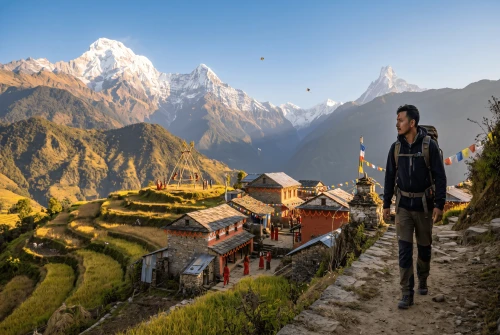
The landscapes are equally breathtaking. Golden rice terraces, lush forests, crystal-clear rivers, and dust-free mountain air create ideal conditions for photography. The trail between Deng, Namrung, and Samagaon offers some of the most scenic viewpoints on the Manaslu Circuit Trek route, with exceptional visibility of the surrounding Himalayan peaks. Be sure to check your Manaslu Circuit Trek map before setting out to identify the best viewpoints, cultural villages, and photography stops along the trail.
Manaslu Circuit Trek Permits and Cost in Autumn
Planning the Manaslu Circuit Trek in autumn requires understanding the latest permit requirements and trekking expenses. Since September to November is the peak trekking season in Nepal, Manaslu Circuit Trek permit fees are higher than in spring, but the stable weather, clear mountain views, and excellent trail conditions make the extra cost worthwhile.
To complete the Manaslu Circuit Trek in Nepal, you must obtain the following permits:
Manaslu Restricted Area Permit (RAP): USD 100 per person for the first 7 days (September–November), plus USD 15 per day for each additional day.
Manaslu Conservation Area Permit (MCAP): NPR 3,000 per person.
Annapurna Conservation Area Permit (ACAP): NPR 3,000 per person.
Chumnubri Rural Municipality Permit (2026): NPR 1,000 per person.
The Manaslu Circuit Trek cost for a standard 15-day itinerary typically ranges from USD 899–1,599 per person, depending on group size, transportation, guide and porter services, accommodation, and itinerary customization. Trekkers should also budget approximately USD 30 per day for meals, snacks, drinks, and personal expenses while on the trail.
If you're looking for excellent value, All Nepal Hiking's Manaslu Circuit Trek package starts from USD 899 and includes permits, a licensed guide, accommodation, transportation, and other essential trekking services, making it one of the most affordable all-inclusive Manaslu Circuit Trek packages in Nepal.
Expert Tips and Final Verdict for the Manaslu Circuit Trek in Autumn
The Manaslu Circuit Trek in autumn is widely regarded as the best time to trek the Manaslu Circuit. With crystal-clear Himalayan views, stable weather, dry trails, and vibrant local festivals, it is the ideal season for photographers, first-time high-altitude trekkers, and travelers seeking an authentic cultural experience in Nepal. If your priority is colorful rhododendron forests and slightly lower permit costs, spring (March to May) is also an excellent alternative.
Expert Tips for a Successful Manaslu Circuit Trek
Book your trek early. October is the busiest month on the Manaslu Circuit Trek, so reserve your package 6–8 weeks in advance to secure the best teahouse accommodation and experienced guides.
Avoid early September. Plan your trek after September 15 for drier trails, fewer leeches, and more reliable weather following the monsoon.
Start early on Larkya La Pass day. Leave Dharamsala (Larkya Phedi) around 3:00 AM to cross Larkya La Pass (5,106 m) before strong late-morning winds develop.
Choose the right travel insurance. Your Manaslu Circuit Trek insurance should cover high-altitude trekking up to 5,106 m and include emergency helicopter evacuation.
Prepare physically. Follow a structured 8–12-week Manaslu Circuit Trek training plan focused on hiking, cardiovascular fitness, and leg strength to improve your endurance and acclimatization.
Ready to Trek the Manaslu Circuit?
The Manaslu circuit trek Nepal is one of the country's most rewarding high-altitude adventures. While the trek is physically demanding, proper preparation, quality equipment, and experienced guides make it achievable for most healthy trekkers with a good fitness level. From remote mountain villages and ancient Buddhist monasteries to the unforgettable crossing of Larkya La Pass, every step offers an experience you'll remember for a lifetime.
Why Manaslu Trek with All Nepal Hiking?
At All Nepal Hiking, we specialize in a fully customizable Manaslu Circuit Trek package ranging from 12 to 16 days. Our all-inclusive services include:
Manaslu Restricted Area Permit, MCAP, ACAP, and local permit arrangements
Experienced government-licensed manaslu circuit trek guide and professional porters
Private jeep transportation to and from the trailhead
Carefully selected teahouse accommodation with advance reservations
Expert altitude management and personalized itinerary planning
24/7 local support throughout your trekking adventure
Whether you're planning a 15-day Manaslu Circuit Trek, a longer itinerary with side trips, or a tailor-made adventure, our experienced team is committed to making your journey safe, comfortable, and unforgettable.
Ready to stand at 5,106 meters? Explore our 15-Day Manaslu Circuit Trek Package and book your autumn Manaslu Circuit Trek with All Nepal Hiking today.
FAQs About the Manaslu Circuit Trek in Autumn
What is the Manaslu Circuit Trek in Autumn?
The Manaslu Circuit Trek in autumn is a spectacular Himalayan trekking adventure around Mount Manaslu (8,163 m), the world's eighth-highest mountain. The trek typically lasts 12–16 days (or up to 18 days with side trips) and is best enjoyed between September and November, when the weather is stable, mountain views are crystal clear, and trekking conditions are at their best. Because the route lies within a restricted area, all trekkers must travel with a licensed guide and obtain the required permits through a registered trekking agency.
What is the best month for the Manaslu Circuit Trek in autumn?
October is widely regarded as the best month for the Manaslu Circuit Trek. It offers the clearest skies, dry trails, comfortable daytime temperatures, and excellent visibility for crossing Larkya La Pass (5,106 m). Early November is another excellent choice, with fewer crowds and equally stunning mountain views.
Why is autumn the best season for the Manaslu Circuit Trek?
Autumn offers the most reliable trekking conditions in Nepal. Expect dry trails, stable weather, comfortable temperatures, clear Himalayan panoramas, and the chance to experience Nepal's biggest festivals, including Dashain and Tihar. These conditions make autumn the most popular season for the Manaslu Circuit Trek.
How difficult is the Manaslu Circuit Trek in autumn?
The Manaslu Circuit Trek is considered moderately challenging. You'll trek 160–177 km over 12–16 days, walking 5–7 hours daily, with an 8–10-hour day while crossing Larkya La Pass. Although no technical climbing is required, good physical fitness and proper acclimatization are essential.
Can beginners do the Manaslu Circuit Trek in autumn?
Yes. The Manaslu Circuit Trek for beginners is achievable if you have good fitness, complete 8–12 weeks of training, and trek with an experienced guide. Autumn's stable weather and dry trails make it the safest and most beginner-friendly season.
What is the highest point on the Manaslu Circuit Trek?
The highest point is Larkya La Pass (5,106 m / 16,752 ft). Other important high-altitude villages include Samagaon (3,530 m), Samdo (3,875 m), and Dharamsala (Larkya Phedi) (4,460 m), where trekkers spend the night before crossing the pass.
What is the weather like on the Manaslu Circuit Trek in autumn?
Autumn offers the most stable weather of the year.
September: Mild temperatures with occasional post-monsoon rain, especially early in the month.
October: Dry trails, sunny days, and excellent mountain visibility.
November: Crisp air, clear skies, colder nights, and occasional early snowfall at higher elevations.
What should I pack for the Manaslu Circuit Trek in autumn?
Essential items include:
Waterproof trekking boots
Down jacket
Warm base layers
Sleeping bag rated to -15°C
Trekking poles
Waterproof jacket and pants
Hat, gloves, sunglasses, and sunscreen
Personal first-aid kit and water purification tablets
Are there altitude sickness concerns on the Manaslu Circuit Trek?
Yes. The trail reaches 5,106 m, so altitude sickness is a genuine risk. Proper acclimatization, slow ascent, hydration, and an acclimatization day in Samagaon greatly reduce the risk.
What cultural experiences can I expect on the Manaslu Circuit Trek?
The trek passes through traditional Tibetan-influenced villages such as Samagaon, Samdo, and Namrung, where you'll visit ancient monasteries, prayer wheels, mani walls, and Buddhist stupas. During autumn, many trekkers also experience Nepal's major festivals, including Dashain and Tihar.
Can I see Mount Manaslu clearly in autumn?
Absolutely. Autumn offers the clearest mountain views of the year thanks to post-monsoon, dust-free air. You'll enjoy spectacular panoramas of Mount Manaslu (8,163 m), Himalchuli, Ngadi Chuli, Ganesh Himal, and surrounding Himalayan peaks.
How crowded is the Manaslu Circuit Trek in October?
October is the busiest trekking month, especially around Dharamsala (Larkya Phedi). However, because the Manaslu region requires restricted-area permits and licensed guides, it remains significantly quieter than the Everest Base Camp Trek or Annapurna Circuit Trek.
How do I book the Manaslu Circuit Trek in autumn?
Book your Manaslu Circuit Trek package through a licensed Nepali trekking company at least 6–8 weeks before departure, especially for October. Early booking ensures permit processing, experienced guides, transportation, and advance teahouse reservations during the peak trekking season.
Does it rain on the Manaslu Circuit in September?
Yes, especially during the first half of September, when the monsoon is ending. Trail conditions improve significantly after mid-September, making late September an excellent time to begin the trek.
Is Larkya La Pass open in autumn?
Yes. Larkya La Pass is usually open throughout autumn. The best crossing conditions are from October to mid-November, when snow is minimal and visibility is excellent.
Is November too cold for the Manaslu Circuit Trek?
No. Early and mid-November remain excellent for trekking. Night temperatures at higher elevations can fall to -8°C to -10°C, so a quality -15°C sleeping bag and warm clothing are recommended.
What permits are required for the Manaslu Circuit Trek?
You need four permits:
Manaslu Restricted Area Permit (RAP)
Manaslu Conservation Area Permit (MCAP)
Annapurna Conservation Area Permit (ACAP)
Chumnubri Rural Municipality Permit (2026)
All permits must be arranged through a registered Nepali trekking agency.
Can I trek the Manaslu Circuit without a guide?
No. Independent trekking is not permitted on the Manaslu Circuit. Nepal requires all trekkers to travel with a licensed guide and obtain permits through a registered trekking agency.
How much does the Manaslu Circuit Trek in autumn cost?
The Manaslu Circuit Trek cost generally ranges from USD 899 to USD 1,599 per person for a standard 15-day itinerary Manaslu Trek, depending on group size, transportation, accommodation, permits, guide services, and itinerary. Premium packages may cost more.
Is autumn more expensive than spring?
Yes. The Manaslu Restricted Area Permit costs USD 100 during autumn, compared with USD 75 in spring. Accommodation and meal prices remain largely unchanged throughout the year.
 based on 270 reviews