Manaslu Flood 2026: Latest News at a Glance
Location: Budhi Gandaki River corridor, Gorkha District, Nepal.
Suspected cause: A landslide may have temporarily blocked a river tributary.
Reported damage: Houses, suspension bridges, a motorable bridge, and hydropower construction infrastructure.
Human impact: People were reported missing, while rescue and evacuation operations continued.
Trekking impact: Access through affected sections requires verification before departure.
Advice for travelers: Contact your trekking agency and check official safety information before entering the region.
These are preliminary reports. Casualty figures, infrastructure damage, and trekking access conditions may change as authorities continue their assessment.
What Happened in the Manaslu Region ?
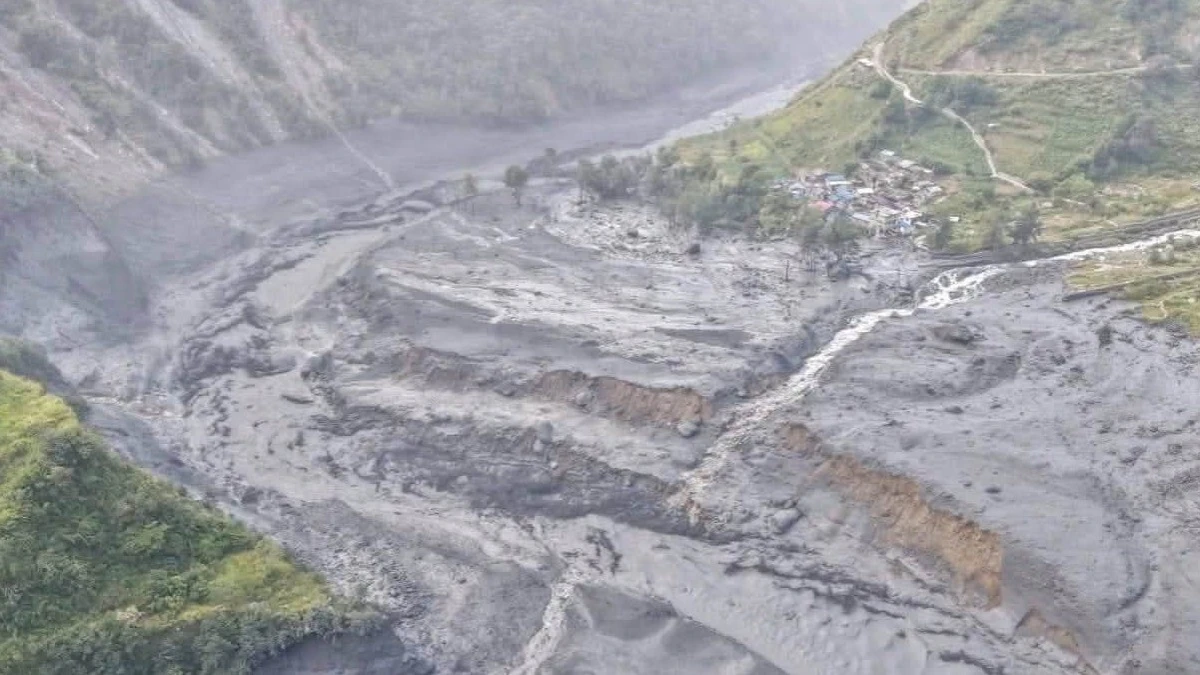
The Budhi Gandaki River rose suddenly during the early hours of Sunday morning, affecting settlements in Chumnubri and Dharche rural municipalities in Gorkha District.
Residents reportedly heard loud roaring sounds from nearby rivers and streams before the water surged downstream. Some people left their homes and moved to higher ground as the situation developed.
Authorities suspect that a landslide near Chumchet may have blocked a tributary, resulting in a sudden release of water. The exact cause has not been conclusively established.
The flood reportedly swept away houses and several bridges, damaged a hydropower project's construction camp, and disrupted access between settlements.
Rescue teams and local authorities began assessing the damage, warning residents of further risks and coordinating emergency responses.
For trekkers, the event is especially significant because the Budhi Gandaki valley forms a key approach to the Manaslu Circuit Trek, one of Nepal's most popular remote Himalayan trekking routes.
Which Areas Were Affected by the Budhi Gandaki Flood?
Preliminary reports identify damage in several locations along the Budhi Gandaki River corridor.
Jagat and Sirdibas
Jagat and Sirdibas are important settlements along the lower Manaslu trekking route. Reports indicate that multiple houses were swept away or damaged and that residents and tourists moved toward safer locations.
Damage in this corridor could affect access to villages farther up the trekking route.
Salleri and Ghattikhola
Several houses in settlements around Salleri and Ghattikhola were reportedly swept away. Other houses were inundated or considered at risk.
Local authorities are continuing to assess the extent of the damage.
Machha Khola and Kerauja
Machha Khola is a familiar overnight stop for trekkers approaching the Manaslu Circuit. A suspension bridge connecting Machha Khola and Kerauja was reported destroyed, while nearby houses and temporary structures were affected.
The loss of this crossing may complicate movement between settlements until authorities establish safe access.
Soti and Arughat
A motorable bridge at Soti was also reported swept away. This crossing serves local transportation connections in the Gorkha and Dhading area.
Damage to transport infrastructure may affect supply deliveries, access for emergency responders, and travel to the trekking corridor.
Budhi Gandaki hydropower project
Floodwaters reportedly damaged a construction camp and equipment associated with the Budhi Gandaki hydropower project.
The full impact on the project and nearby infrastructure remains under assessment.
Is the Manaslu Circuit Trek Open After the 2026 Flood?
Trekkers should not assume the Manaslu Circuit is safe or fully accessible until current conditions have been confirmed.
The reported damage to bridges and trails may affect access to particular sections of the route. However, damage in one location does not automatically establish that every part of the Manaslu Circuit is closed.
Before departure, travelers should ask their trekking agency to confirm:
Which trail sections are currently accessible.
Whether all necessary river crossings are intact and safe.
Whether local authorities have issued closures or evacuation instructions.
Whether accommodation and food supplies are available along the intended route.
Whether emergency assistance can reach the relevant sections.
Do not attempt to cross a damaged suspension bridge, ford a swollen river, or use an unofficial detour without approval from competent local authorities.
Even after floodwaters recede, unstable slopes, loose debris, damaged trail surfaces, and sudden changes in river levels can create additional hazards.
The safest decision is to delay entry into affected sections until the route has been assessed and declared safe by the appropriate authorities.
How Will the Flood Affect Manaslu Trekking in October and November 2026?
Autumn is traditionally a popular season for trekking in Nepal, including the Manaslu Circuit. The October flood may disrupt planned itineraries, particularly for travelers who intended to begin their trek shortly after October 11.
The duration of the disruption will depend on the extent of infrastructure damage, the availability of temporary crossings, repair work, and official safety assessments.
October 2026 departures
Travelers with imminent departures should contact their trekking agency before traveling to Gorkha. Ask for current information about trail access, bridge conditions, accommodation, and any local restrictions.
November 2026 departures
It may be possible for some routes to become accessible later, but reopening dates should not be assumed. Travelers should keep their arrangements flexible and request updated information before departure.
December 2026 departures
Even if infrastructure is restored, winter conditions at higher elevations may add challenges. Check both flood recovery progress and seasonal mountain weather before making final plans.
There is no responsible way to guarantee a reopening date without verified information from authorities.
Is Tsum Valley Trekking Also Affected?
Yes,The Tsum Valley Trek shares access corridors with parts of the Manaslu region. Damage to shared approaches, bridges, and trails could therefore affect travelers planning to visit Tsum Valley.
However, the impact depends on the condition of the specific route and the location of the damage.
Before traveling, confirm the status of:
The road or trail used to reach the starting point.
Bridges and river crossings along your itinerary.
Accommodation and supply availability.
Any official access restrictions.
Emergency and evacuation arrangements.
Do not assume that Tsum Valley is unaffected simply because your destination lies beyond the most heavily damaged settlements.
What Should Trekkers With Existing Manaslu Bookings Do?
If you have already booked the Manaslu Circuit Trek or Tsum Valley Trek for 2026, take the following steps before changing your travel plans.
Step 1: Contact your trekking agency.
Ask for an update based on your exact itinerary and travel dates. A responsible operator should check with local guides, lodge owners, and relevant authorities.
Step 2: Confirm route conditions.
Ask whether the necessary bridges, trails, and access roads have been inspected and whether travel is currently permitted.
Step 3: Discuss postponement.
If the route remains unsafe or access cannot be confirmed, discuss rescheduling your trip.
Step 4: Review your booking terms.
Check the conditions for changes, cancellation, refunds, and alternative itineraries before agreeing to additional costs.
Step 5: Consider other destinations only after checking safety.
An alternative trek may be suitable, but its trail conditions, weather, transportation, and local advisories must be assessed independently.
Your safety and the safety of local guides and porters should take priority over maintaining a fixed itinerary.
What Caused the Manaslu Flood?
Current reporting points to a possible landslide-related river blockage, although the precise cause remains under investigation.
A landslide can temporarily obstruct a river or tributary. Water then accumulates upstream until it passes through or breaches the obstruction, potentially creating a sudden downstream surge.
Such events can be dangerous even when there is little rainfall in the immediate area. The floodwater may carry rocks, soil, trees, and other debris, increasing the destructive force of the flow.
Authorities have also warned of elevated flood risk downstream along the Trishuli River corridor.
The incident highlights why people in Himalayan valleys must take river warnings seriously, even when local weather conditions appear calm.
How Can Travelers Check Reliable Manaslu Trekking Updates?
When a natural disaster affects a trekking region, information may change quickly. Social media posts can be useful for initial awareness, but they should not be treated as confirmation that a route is open or safe.
Before traveling, consult:
Local district authorities: For evacuation instructions and access restrictions.
Nepal's Department of Hydrology and Meteorology: For official flood and river-level advisories.
National Disaster Risk Reduction and Management Authority: For disaster response information.
Manaslu Conservation Area authorities: For relevant conservation-area and trekking access updates.
Your registered trekking agency: For itinerary-specific coordination with local contacts.
Established Nepali news outlets: For developing reports about damage and rescue operations.
Recheck the information close to your departure date. A route that was accessible yesterday may become unsafe after further flooding or a landslide.
Can You Choose Another Trek in Nepal?
If the Manaslu Circuit remains inaccessible during your planned travel dates, you can ask your trekking agency to assess other destinations.
Possible options include:
These are options to investigate, not guarantees of safety. Each destination requires its own assessment of weather, transportation, trail conditions, and local advisories.
Choose an alternative based on your fitness, experience, available time, budget, and the latest verified safety information.
Supporting the Manaslu Community After the Flood
The Manaslu region is home to families, farmers, guides, porters, lodge owners, and many other people whose lives and livelihoods depend on local infrastructure and tourism.
Damage to homes and bridges can affect communities long after the floodwater has receded. Restoring access, repairing infrastructure, and rebuilding livelihoods may take time.
Travelers and tourism businesses can contribute responsibly by supporting verified relief efforts, respecting restricted areas, and avoiding the spread of unconfirmed reports.
When local authorities confirm that trekking can resume safely, responsible tourism may help support local businesses and livelihoods as communities recover.
For now, the priority must remain the safety and well-being of affected residents and rescue personnel.
Frequently Asked Questions About the Manaslu Flood 2026
When did the Manaslu flood happen?
The reported flash flood occurred early on Sunday, October 11, 2026, along the Budhi Gandaki River in Gorkha District, Nepal.
How many houses were damaged in the Manaslu flood?
A report published by The Kathmandu Post on October 11 estimated that around 35–40 houses had been swept away. This was a preliminary figure, and the final extent of damage may change as assessments continue.
Were there any casualties in the Manaslu flood?
Early reports confirmed that people were missing while rescue operations continued. Casualty information was still developing in the reports available on October 11. Check current official announcements for verified updates.
Which bridges were damaged?
Reports identified damage to suspension bridges connecting Nyakchet and Sirdibas and Machha Khola and Kerauja, as well as a motorable bridge at Soti. Other infrastructure damage was also reported. Confirm current crossing conditions before traveling.
Is the Manaslu Circuit Trek safe now?
Safety depends on the condition of each route section. Do not enter affected areas until the relevant authorities and your trekking operator confirm that your intended route is safe and accessible.
Can I trek Manaslu in November 2026?
Possibly, but access and reopening dates depend on the extent of the damage and subsequent safety assessments. Check current conditions before finalizing your departure.
Should I cancel my Manaslu trekking trip?
Not necessarily. First, contact your trekking agency and review your booking conditions. Depending on the confirmed situation, postponement, rescheduling, or a suitable alternative may be possible.
Where can I find the latest Manaslu flood news?
Follow official government and hydrology advisories, established Nepali news outlets, local authorities, and your trekking agency. Verify reports before making travel decisions.
Final Conclusion: Manaslu Flood 2026 and the Future of Trekking
The October 11, 2026, Budhi Gandaki flash flood has caused serious concern in Nepal's Manaslu region. Preliminary reports describe damage to homes, bridges, and infrastructure, with rescue operations and damage assessments continuing.
For travelers, the most important consideration is not whether the trekking season is traditionally favorable, but whether the intended route is currently safe.
If you have a Manaslu Circuit or Tsum Valley Trek planned for 2026, contact your trekking agency, follow official updates, and remain flexible with your departure dates. Do not attempt to bypass damaged bridges or enter restricted areas.
Our thoughts are with the affected communities, local tourism workers, and everyone involved in rescue and recovery efforts.
 based on 270 reviews