based on 270 reviews

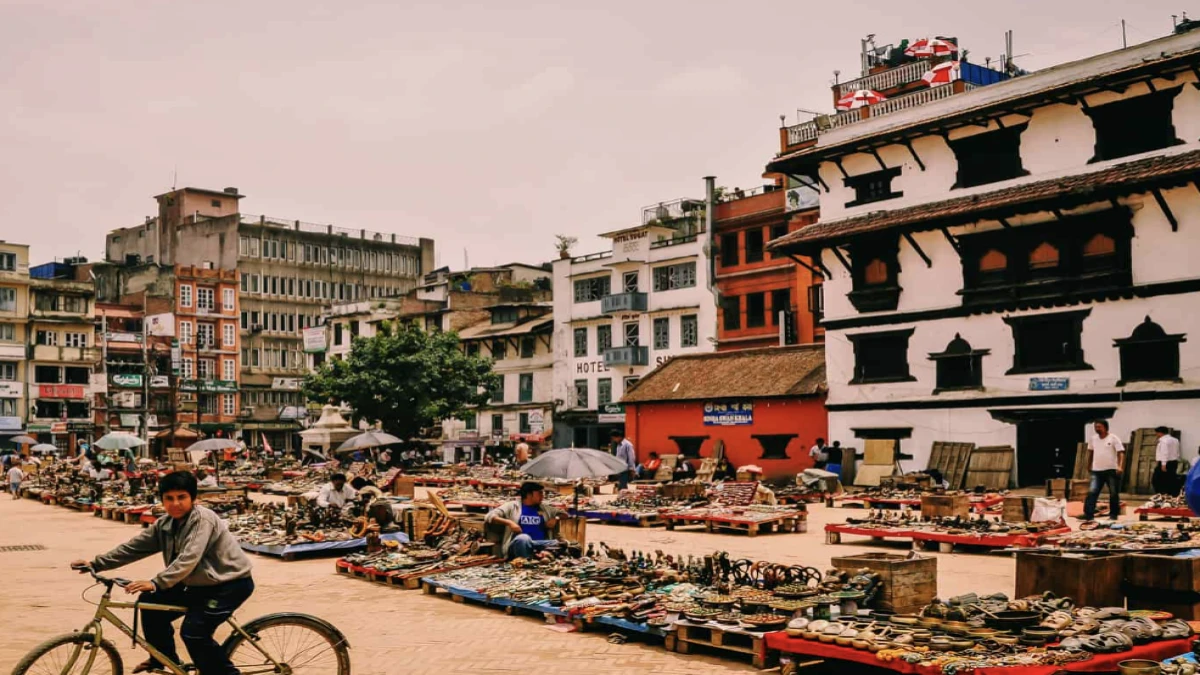
The origin of Kathmandu Valley is one of the most fascinating stories in the Himalayas, weaving together Buddhist mythology, Hindu legend, and hard geological evidence into a single narrative. Long before it became Nepal's political and cultural heart, the valley existed as a vast lake, later drained to reveal the fertile basin that would give rise to one of South Asia's oldest continuous urban civilizations. We have researched both the legendary and scientific accounts to explain how the Kathmandu Valley came to be.
The Paleo Kathmandu Lake: What Geology Tells Us
Long before any human settlement existed here, the Kathmandu Valley was submerged beneath a large body of water known to geologists as the Paleo Kathmandu Lake. Tectonic uplift along the valley's southern margin dammed the proto-Bagmati River, creating a lake that geological studies estimate formed roughly 200,000 years ago and may have reached depths of up to 200 meters. Sediment cores extracted from the valley floor reveal thick layers of silt, clay, and fossilized pollen, while fossil remains of ancient mammoths, crocodiles, and hippos confirm that the lake supported a rich ecosystem for tens of thousands of years. Over time, tectonic shifts widened a natural drainage channel near present-day Chobar Gorge, gradually draining the lake and exposing the fertile lakebed that now forms the valley floor.
The Legend of Manjushri and the Draining of the Lake
Alongside the geological record, Buddhist tradition offers its own account of the valley's creation through the story of Manjushri, the Bodhisattva of Wisdom. According to the Swayambhu Purana, Manjushri traveled from Mount Wutai in China, resting for three nights on a hill east of the valley, where he noticed a brilliant, self-arisen flame glowing from a lotus at the center of the great lake. Recognizing its spiritual significance, he descended toward the water and used his sword, the Chandrahrasa, to cut a gorge through the valley's southern rim at Chobar, allowing the lake to drain away. In some versions of the legend, Manjushri cut a total of four gorges — at Chobar, Gokarna, Ghaurighat, and Katuwal Daha — locations that correspond closely with actual geological drainage points identified by modern researchers. Once the water receded, the lotus and its flame settled atop a hill in the newly exposed valley, and the Swayambhunath Stupa was later built on that very spot, making it one of the oldest religious sites in the valley.
Karkotak and the Naga Kings of the Lake
Before the lake was drained, both mythology and Newar oral tradition describe the valley as the domain of the Nagarajas, or Serpent Kings, led by Karkotak. These serpent deities were considered guardians of the lake's waters and, by extension, symbols of fertility, rainfall, and the region's underlying life force. According to legend, Manjushri asked Karkotak to remain in the valley even after it was drained, tasking him with protecting the future human inhabitants of the land. This belief persists today in the continued Newar veneration of Naga shrines found throughout the Kathmandu Valley, particularly during the annual Naga Panchami festival.
From Myth to Settlement: The Valley's Earliest Inhabitants
Once the land emerged from beneath the lake, historical and archaeological evidence points to a succession of early ruling dynasties, beginning with the semi-legendary Gopala and Mahispala dynasties, followed by the Kirat dynasty, believed to have ruled the valley for several centuries. Archaeological evidence suggests that early settlements in the valley, including the predecessors of Kathmandu, Patan, and Bhaktapur, were established somewhere between 167 BCE and 1 CE. The valley's cultural and architectural identity took clearer shape under the Licchavi dynasty, which ruled from approximately the 4th to 9th century CE and is credited with establishing both Hinduism and Buddhism as major religious traditions, alongside a flourishing trade economy linking Tibet and the Indian subcontinent.
The Founding of Kathmandu City
According to Newar tradition, the Licchavi king Gunakamadeva founded the city of Kantipur — the historical name for Kathmandu — along the banks of the Bishnumati River, uniting two earlier settlements known as Yambu and Yangal. Local legend holds that the city itself was laid out in the shape of the Chandrahrasa, the very sword Manjushri used to drain the valley's lake, symbolically linking the city's founding to its mythological origins.
Where Does the Name "Kathmandu" Come From?
The name Kathmandu is widely believed to derive from Kasthamandap, a wooden pavilion built in the 7th or 8th century CE and still standing today in Kathmandu Durbar Square. According to tradition, the structure was built entirely from the timber of a single sal tree, without the use of iron nails. Pilgrims from western Nepal, struck by the wooden temple's construction, are said to have combined the Sanskrit-derived words "Kath" (wood) and "Mandu" (temple or covered shelter) to name the surrounding settlement, a name that eventually extended to the entire valley and modern-day capital.
Where Myth and Geology Meet
What makes the origin story of Kathmandu Valley so compelling is how closely its mythology mirrors its geology. The four gorges attributed to Manjushri's sword — Chobar, Gokarna, Ghaurighat, and Katuwal Daha — correspond directly to real drainage points identified through modern geological surveys, including the site where the proto-Bagmati River was originally dammed by tectonic uplift. This overlap between ancient legend and scientific data has led many historians and geologists to view the Manjushri myth not simply as religious allegory, but as an oral record of a genuine, gradually observed geological transformation, passed down and reinterpreted through generations of Newar and Buddhist storytelling.
Why the Valley's Origin Still Matters Today
Understanding the origin of Kathmandu Valley offers essential context for visitors exploring its major heritage sites. The Swayambhunath Stupa, built atop the hill where Manjushri's lotus flame is said to have settled, and the Chobar Gorge, the very site where the lake is believed to have first begun draining, remain places of active pilgrimage and religious significance today. Recognizing these sites as both mythological landmarks and geological landmarks adds considerable depth to any visit to the valley's UNESCO World Heritage Sites.
Frequently Asked Questions About the Origin of Kathmandu Valley
Was Kathmandu Valley really once a lake?
Yes. Geological surveys have confirmed the existence of a large freshwater lake, known as the Paleo Kathmandu Lake, which is estimated to have formed around 200,000 years ago before gradually draining through natural tectonic and erosional processes.
Who is Manjushri in the origin story of Kathmandu Valley?
Manjushri is the Bodhisattva of Wisdom in Mahayana Buddhism, credited in the Swayambhu Purana with draining the valley's lake by cutting a gorge through its southern rim at Chobar, making the land habitable.
How old is Kathmandu city?
Archaeological evidence suggests early settlements in the valley date back to between 167 BCE and 1 CE, with the city of Kantipur (Kathmandu) formally founded during the Licchavi dynasty.
Where does the name Kathmandu come from?
The name is believed to derive from Kasthamandap, a historic wooden pavilion built in the 7th or 8th century CE, combining the words for "wood" and "temple."
Is there a place to visit related to the valley's origin story?
Yes. Both Swayambhunath Stupa, believed to mark the spot of Manjushri's lotus flame, and Chobar Gorge, considered the site where the ancient lake first began draining, remain open to visitors today.
Final Thoughts on the Origin of Kathmandu Valley
The story of how Kathmandu Valley came to be is a rare example of mythology and geological science pointing toward the same conclusion: a great lake once filled this basin, and its gradual draining gave rise to one of the Himalayas' most culturally significant regions. Whether approached through the lens of the Manjushri legend or through sediment cores and fossil evidence, the origin of Kathmandu Valley remains a foundational story for understanding the depth of history embedded in Nepal's capital today.


.webp)